

Photo credit: Priscilla Du Preez
This blog forms part of a series celebrating the 75th anniversary of the Universal Declaration of Human Rights (UDHR). Recognising the numerous conflicts and the daily breaches of human rights taking place across the globe, this series aims to highlight both the challenges and the opportunities to respect, protect and fulfil the human rights elaborated in the UDHR.
Right to Education
‘Everyone has the right to education […].’
Article 26 of the Universal Declaration of Human Rights recognises the right to education. However, how true is it that everyone has a right to it and that it is a fundamental element for the full development of the human personality?
Education is a critical tool for people to fully develop their personality, talents and abilities, thereby boosting their chances of finding employment, participating more effectively in society and escaping the clutches of poverty. According to UNESCO, the potential reduction of the poverty rate by 50% is contingent upon ensuring all adults complete their secondary education.
Childhood and adolescence are pivotal stages in the life cycle, playing a crucial role in shaping an individual’s life trajectory and personal development. During these stages, children and adolescents prepare for the future and acquire, through education, the necessary tools to function successfully in their lives. When viewed from this perspective, a condition like poverty becomes a determining factor in people’s life trajectories. Additionally, the absence of access to quality education perpetuates the cycle of intergenerational poverty.
In other words, without education, the development and progress of people in society cannot be achieved. It is important to note that since the onset of the pandemic, there has been an increase in social inequalities. Consequently, it is imperative to address not only the existing structural problems within educational systems on a global scale but also the newly emerged or exacerbated challenges that have arisen due to the pandemic.
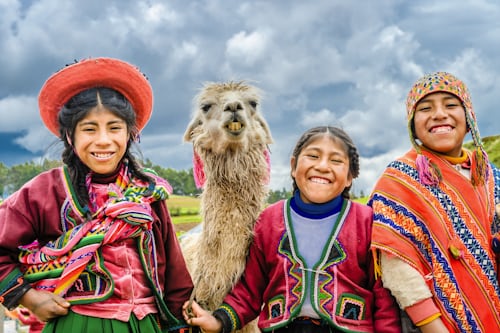
At present, children and adolescents are excluded from education for various reasons and within them poverty continues to be one of the main barriers. In Peru, it is possible to find differences between access to education at all levels, particularly between individuals living in poverty and those who are not. According to a recent report from the National Institute of Statistics and Informatics (INEI in Spanish), in 2021, 37.6% of individuals who lived in poverty, aged 15 and over, managed to study at most one year of primary education or they had no primary education level at all. In contrast, in the non-poor population, this percentage was 24.6%. The figure illustrates the insufficient guarantee of access to the fundamental level of primary education. To address this issue, the Peruvian State should adopt measures to reduce the disparities in the effective enjoyment of the right to education between the population in a situation of poverty and those who do not face that condition.
Furthermore, it remains a pending task for governments across the world to reverse the devastating effects of the pandemic on education. The present state of education is of significant concern because it not only constitutes a breach of this right, but the consequences of not achieving the learning outcomes extend into the adult lives of students, potentially impeding their aspirations and life goals.
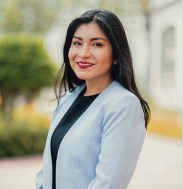
As part of the GJA UDHR@75 celebration, we invited present and past students to contribute their personal reflections on the relevance of the UDHR today. This blog is by Andrea Parra Estela, a UoE LLM in Human Rights and a qualified lawyer in Peru. Andrea is passionate and enthusiastic about the fields of Human Rights and Constitutional Law. She works as an activist and project coordinator at Asociación Civil Kumpay, a non-governmental organisation based in Peru.