Any views expressed within media held on this service are those of the contributors, should not be taken as approved or endorsed by the University, and do not necessarily reflect the views of the University in respect of any particular issue.
Press "Enter" to skip to content

Month: November 2018

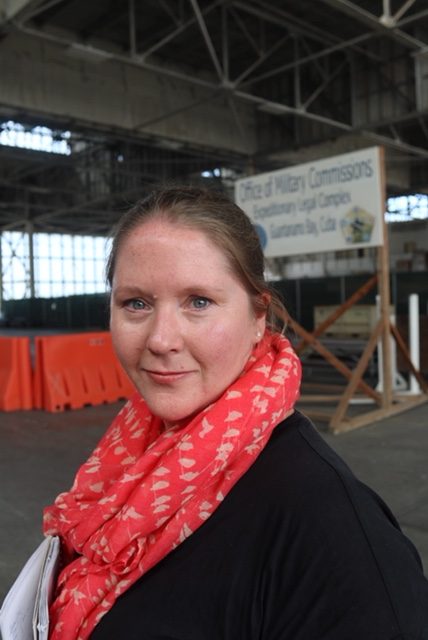
Off the Record: Observations on the 9/11 Military Commission

This blog series by Dr Kasey McCall-Smith examines some of the crucial legal issues and broader public questions raised regarding the US v. Khalid Shaikh Mohammad, et. al. military commission proceedings against the five men charged with various war crimes and terrorism in relation to the 11 September 2001 attacks on the US. The military commissions are in the sixth year of the pretrial phase and taking place at a purpose-built Expeditionary Legal Complex in Camp Justiceon Naval Station Guantánamo Bay, Cuba. The series is part of her project ‘Torture on Trial’ and funded by a grant from the Royal Society of Edinburgh.

Taking a Step Back – A Primer on the International Prohibition against Torture

Many members of the public not trained in international law fail to understand why the international prohibition against torture matters or should matter in the US legal system. This post seeks to explain how international law on the prohibition against torture relates to US law and the impact of the prohibition on the military commission proceedings against the five men charged with conspiracy and war crimes in relation to the 9/11 terrorist attacks on the US in US v. Khalid Shaikh Mohammad, et. al.(9/11 case).

Comments closed
Peacebuilding and Syria: What Hope?

Between 13-15 October 2018, the Global Justice Academy co-hosted a weekend of events joining Relief & Reconciliation for Syria with peacebuilding communities in Scotland. This post from Dr George R. Wilkes, reflects on the series of events that took place.

The prospect of an inclusive peacebuilding process in Syria looks bleak now. From the perspective of millions of Syrians who have fled regime controlled areas, atrocity, terror and armed extortion all confront attempts to straddle divisions to talk about peace. Refugees face daily existential pressures in the face of which peace talks appear distant and untimely. Critics of regime ‘reconciliations’ see the concept reduced to the mechanics of overpowering the regime’s outlaws. In regime territory, a more inclusive embrace of populations controlled by Islamist armed groups is undercut by the sense that violence and terror were the inevitable result of a religious fundamentalism shared widely within those populations, and by the international supporters of those forces.

Comments closed

Philippe Sands on the Making of Modern Human Rights

Guncha Sharma is a candidate for the Global Justice Academy’s LLM in Human Rights, and a GJA Student Ambassador for 2018-19. From India, she is also one of three recipientsof the GJA’s LLM Human Rights scholarship awards for this year, and has a keen interest in gender issues, the rights of children and other vulnerable groups, and public health. In this post, Guncha reflects on the recent Ruth Adler Memorial Lecture, which was delivered by Philippe Sands QC, with a response from Scotland’s Lord Advocate James Wolffe QC.

On October 24 2018, Philippe Sands delivered the Ruth Adler Memorial Lecture with a talk based on his bestselling book East-West Street and the Making of Modern Human Rights. Phillippe Sands is one of the most successful British lawyers working in the field of International Law. He has argued many high-profile cases before International courts and tribunals, and currently directs the Project on International Courts and Tribunals from his position as Professor of Laws at UCL.

Comments closed
css.php

Report this page

To report inappropriate content on this page, please use the form below. Upon receiving your report, we will be in touch as per the Take Down Policy of the service.

Please note that personal data collected through this form is used and stored for the purposes of processing this report and communication with you.

If you are unable to report a concern about content via this form please contact the Service Owner.

Please enter an email address you wish to be contacted on. Please describe the unacceptable content in sufficient detail to allow us to locate it, and why you consider it to be unacceptable.
By submitting this report, you accept that it is accurate and that fraudulent or nuisance complaints may result in action by the University.

  Cancel