Any views expressed within media held on this service are those of the contributors, should not be taken as approved or endorsed by the University, and do not necessarily reflect the views of the University in respect of any particular issue.
Press "Enter" to skip to content

Month: December 2016

Following Ghana’s Elections: an IIF Event

On 7 December 2016, the Global Justice and Global Development Academies supported a student-led initiative to follow the elections in Ghana, as part of their Innovative Initiative Fund. In this post, MSc student, Matthew Pflaum, reflects on the evening’s events.
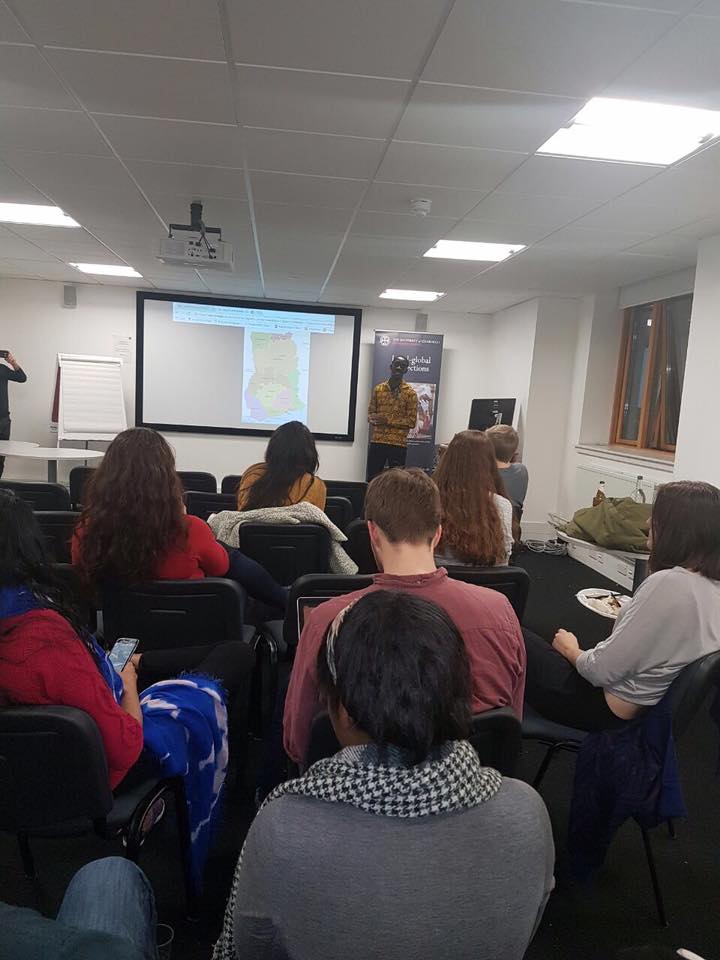
image-1Elections are critical processes for global social and political change, leading to new policies and reforms. Certain elections, referenda, and regions receive widespread attention and coverage – the US election and Brexit, for example – while others are less covered. Elections in the Global South tend to be disregarded by much of the world, and this is a mistake. All elections are significant, principally for local citizens, but also for the rest of the world through geopolitics and trade.


During the US election, crowds gathered in tenebrous bars and sterile classrooms to watch the event unfold, their eyes festooned to the glaring screens with constant updates of results. Americans and non-Americans watched with anticipation, feeling that the event was important to their lives. But aren’t all elections important? Should we not also gather to support elections in Burma and Botswana?

Comments closed
Peace in Colombia?

This blog post by Gwen Burnyeat, Wolfson PhD scholar at UCL, was first published by the London Review of Bookson 1 December  2016. In this piece, Gwen comments on the recent development in the post-referendum context and the adoption of a new peace agreement in Colombia.

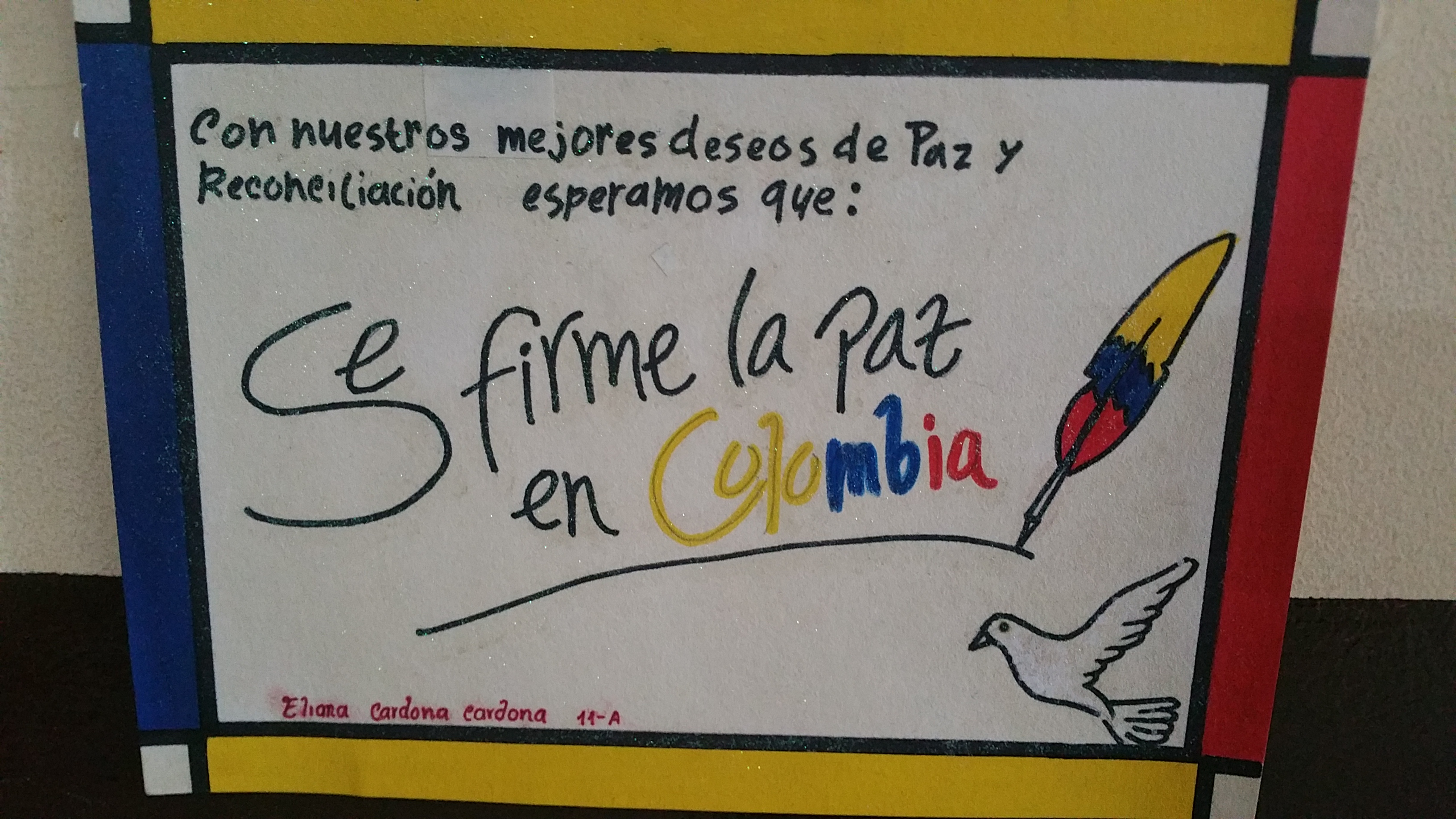
Photo: School-Children in Pereira draw their hopes for peace, August 2016, by Gwen Burnyeat.

The new peace accord between the government and the Revolutionary Armed Forces of Colombia was signed in Bogotá’s Colón Theatre on 24 November. It was a more sober ceremony than the extravagant signing of the first agreement in Cartagena on 26 September, a week before Colombians narrowly voted against it in a referendum. The second signing was a closed event, and only President Juan Manuel Santos and the Farc commander, Timochenko, gave speeches. A subdued group of Colombians in the main plaza in Bogotá watched it on a big screen. The right-wing TV channel RCN, meanwhile, held a panel featuring only figures opposed to the deal, for ‘balance’.

Comments closed
css.php

Report this page

To report inappropriate content on this page, please use the form below. Upon receiving your report, we will be in touch as per the Take Down Policy of the service.

Please note that personal data collected through this form is used and stored for the purposes of processing this report and communication with you.

If you are unable to report a concern about content via this form please contact the Service Owner.

Please enter an email address you wish to be contacted on. Please describe the unacceptable content in sufficient detail to allow us to locate it, and why you consider it to be unacceptable.
By submitting this report, you accept that it is accurate and that fraudulent or nuisance complaints may result in action by the University.

  Cancel