Any views expressed within media held on this service are those of the contributors, should not be taken as approved or endorsed by the University, and do not necessarily reflect the views of the University in respect of any particular issue.
Press "Enter" to skip to content

Month: June 2016

Getting to Grips with Guantánamo IV: Person Zero & Camp 7

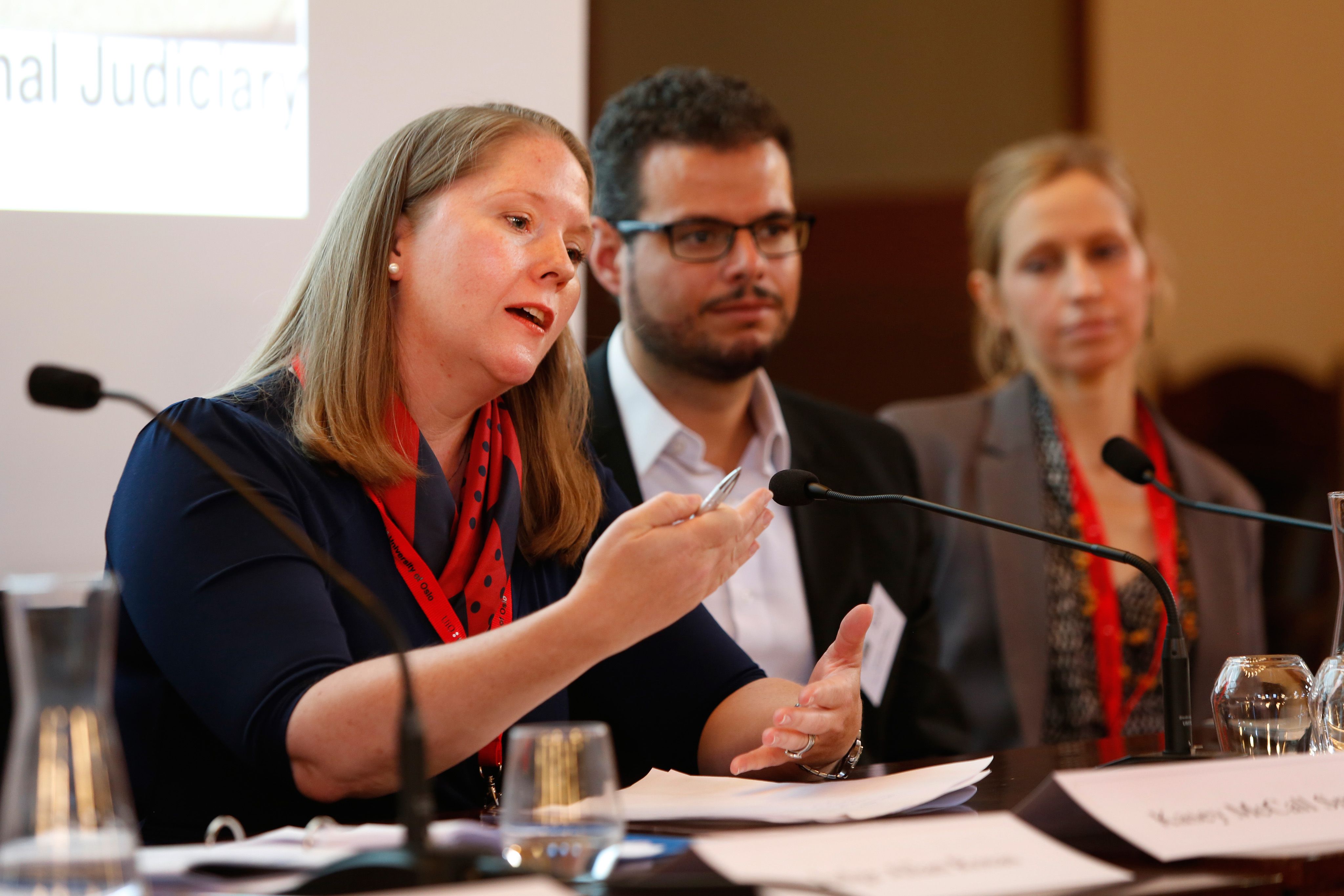
KMSThis post is by Kasey McCall-Smith: a lecturer in Public International Law and programme director for the LLM in Human Rights at Edinburgh Law School.

This post is the fourth in a series of blogs that chronicle the history and current state of play regarding the US rendition and detention programme in the immediate aftermath of 9/11. They were written during the author’s visit to Guantánamo Bay, Cuba, to observe military commission proceedings in the case of USA v. Khalid Shaikh Mohammad, et. al.  30 May – 3 June 2016, which is the initial phase of her project Getting to Grips with Guantánamo.

In my last post, the use of evidence obtained through torture in the case of US v. Khalid Shaikh Mohammad, et. al. (KSM case) was introduced. This post further considers how torture impacts detainees held at Guantánamo and the 9/11 trial. An interesting addition to the already complex pre-trial considerations is the possible appearance of a detainee who has not been seen in public since he was rendered into the custody of the CIA. Abu Zubaydah, a Palestinian, is believed to have been taken into CIA custody in 2002 following his capture in Pakistan. After three years on a CIA ‘black site’, he was delivered to Joint Task Force-Guantánamo (JTF-GTMO) in 2006 where he remains a High Value Detainee (HVD) despite never having been charged with a crime. As characterised by former FBI agent, Ali Soufan, Zubaydah is the ‘original sin’ of the US in its post-9/11 anti-terror campaign.

Comments closed
Getting to Grips with Guantánamo III: Torture Evidence

KMSThis post is by Kasey McCall-Smith: a lecturer in Public International Law and programme director for the LLM in Human Rights at Edinburgh Law School.

This post is the third in a series of blogs that chronicle the history and current state of play regarding the US rendition and detention programme in the immediate aftermath of 9/11. They were written during the author’s visit to Guantánamo Bay, Cuba, to observe military commission proceedings in the case of USA v. Khalid Shaikh Mohammad, et. al.  30 May – 3 June 2016, which is the initial phase of her project Getting to Grips with Guantánamo.

Right now, on a small island in the Caribbean, what will ultimately be one of the most comprehensive examinations of torture is taking place in the form of a military commission proceeding in the case of US v. Khalid Shaikh Mohammad, et. al. (KSM case). A common understanding among the observers that are witnessing KSM is that half are there to see the 9/11 trial and half are there to see the torture trial. In anticipation of what many view as a foregone conclusion, the defence lawyers are diligently representing their clients in order to ensure that if the ultimate penalty, death, is pursued in the sentencing phase of the trial; then the brutality that they suffered at the hands of the CIA is in the trial record. This record will be instrumental to mitigation of the death penalty and speak to the reality that much of the evidence presented may have been extracted or derived through torture, which is prohibited under international law.

Comments closed

Getting to Grips with Guantánamo II: Military Commissions & Law of War Detention

KMSThis post is by Kasey McCall-Smith: a lecturer in Public International Law and programme director for the LLM in Human Rights at Edinburgh Law School.

This post is the second in a series of blogs that chronicle the history and current state of play regarding the US rendition and detention programme in the immediate aftermath of 9/11. They were written during the author’s visit to Guantánamo Bay, Cuba, to observe military commission proceedings in the case of USA v. Khalid Shaikh Mohammad, et. al.  30 May – 3 June 2016, which is the initial phase of her project Getting to Grips with Guantánamo. Click here to read the first post in the series: ‘Rendition to the Caribbean’.

The military commission proceeding against the 9/11 five in the case of US v. Khalid Shaikh Mohammad, et. al. (KSM case) is viewed as having parallel purposes, bringing justice to the nation and victims’ families for the terrorist attacks of 9/11 and laying bare the flagrant torture campaign under the US Central Intelligence Agency’s (CIA) post-9/11 Detention and Interrogation Program (DIP). The KSM case stems from charges filed on 31 May 2011 against the five men charged with conspiracy, murder and destruction of property in violation of the law of war for the conception and facilitation of the 9/11 attacks which resulted in the deaths of close to 3000 people. The subsequent ‘war on terror’ launched by the Bush administration in the aftermath set in motion a ruthless anti-terrorism campaign by the CIA that has been acknowledged by the US government as comprising widespread use of torture in breach of both US domestic law and international law.

Comments closed

Realising Justice? Reflections on Negotiating Land Reform in Southern Africa

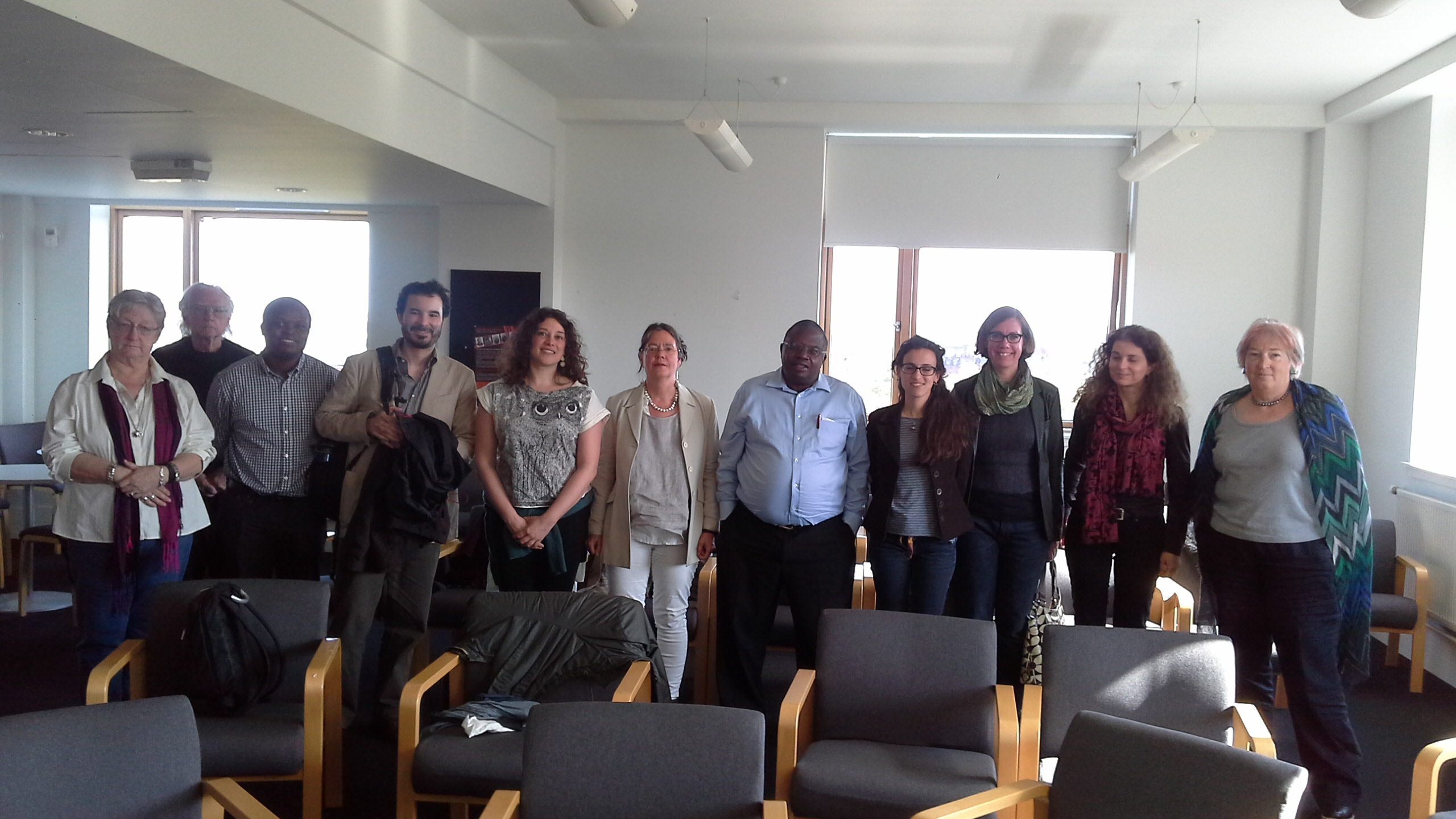
20160516_165223On 16 May 2016 the University of Edinburgh hosted a workshop funded by the British Academy and organised by Professor Anne Griffiths and the Benelex Project Research group, coordinated by Professor Elisa Morgera.

The full-day workshop addressed the issue of access to land as means to realise justice. The workshop intended to discuss four key questions:

  1. the norms that underpin international and transnational governance regimes regulating access to and use of land and the extent to which they have an impact on individual countries’ jurisdictions on land;
  2. who are the actors who are engaged in this field and to what extent do their perspectives overlap or conflict with one another when it comes to promoting equitable and sustainable governance over land;
  3. what impact does globalisation have on the recognition of the legitimacy of plural orders, such as statutory, religious or customary law, and the authority that is accorded to them?; and
  4. what are the most pressing challenges that counties face in administering land and implementing reform given the global pressures that are brought to bear by international and transnational agencies and institutions.

In this post, two visiting postgraduate students – Marghertia Brunori and Komlan Sangbana – offer some reflections from the day.

Marghertia Brunori

The four presentations of the workshop portrayed the same sensible question of access to land by four different angles, allowing to appreciate the subject in its multifaceted complexity.

Comments closed

Getting to Grips with Guantánamo I: Rendition to the Caribbean

KMSThis post is by Kasey McCall-Smith: a lecturer in Public International Law and programme director for the LLM in Human Rights at Edinburgh Law School.

This post is the first in a series of blogs that chronicle the history and current state of play regarding the US rendition and detention programme in the immediate aftermath of 9/11. They were written during the author’s visit to Guantánamo Bay, Cuba, to observe military commission proceedings in the case of USA v. Khalid Shaikh Mohammad, et. al.  30 May – 3 June 2016, which is the initial phase of her project Getting to Grips with Guantánamo.

Following the attacks against the US on 9/11, then-President Bush declared open-season on all individuals with any established link to al Qaeda. In furtherance of the Bush declaration, the US Central Intelligence Agency (CIA) commenced what would eventually prove to be the most egregious and calculated rendition and detention campaign in modern, post-WWII history. A campaign defined by blatant breaches of both US and international law. To this day, it serves as a black mark on America’s international image, and the resulting impact of the decisions taken by the Bush Administration in the early days of 2001 continue to resonate today.

Comments closed
css.php

Report this page

To report inappropriate content on this page, please use the form below. Upon receiving your report, we will be in touch as per the Take Down Policy of the service.

Please note that personal data collected through this form is used and stored for the purposes of processing this report and communication with you.

If you are unable to report a concern about content via this form please contact the Service Owner.

Please enter an email address you wish to be contacted on. Please describe the unacceptable content in sufficient detail to allow us to locate it, and why you consider it to be unacceptable.
By submitting this report, you accept that it is accurate and that fraudulent or nuisance complaints may result in action by the University.

  Cancel