Any views expressed within media held on this service are those of the contributors, should not be taken as approved or endorsed by the University, and do not necessarily reflect the views of the University in respect of any particular issue.
Press "Enter" to skip to content

Month: October 2015

Refugee Crisis Response Event I: The Roots of the Syria Crisis

As a contemporary and prominent topic, a panel event discussing the roots of the Syria crisis was always going to be well attended. In front of a packed lecture theatre, on October 6th 2015, Dr. Thomas Pierret, Dr. Manhal Alnasser, and Arek Dakessian presented their points of view on the causes and changing shapes of the crisis in Syria since the popular uprising in 2011, chaired by Dr Sarah Jane Cooper Knock. Each speaker brought their experiences as academics, practitioners and personal stories to the event.

Internal issues, not proxy war

Thomas began the discussion by raising the two prominent explanations for conflict in Syria: the first, which he subscribes to, that it was a domestic problem which became internationalised; and the second, that it was a proxy war from the outset. He argued that the conflict started with the popular uprising against Bashar al-Assad’s authoritarian regime, in which the power lies in family patronage networks rather than institutions. The immediately repressive state response, sectarian-social divides between police and protestors, and subsequent defections, all led to the formation of a crowdfunded armed movement against Assad, which was a well-established force before international actors became involved. Finally, he claimed that the regime is now compensating for its lack of manpower with increased firepower, and that this has led to mass displacement through the total destruction of rebel-held areas, especially cities.

Comments closed
Pregnancy, Choice, and the Lessons of the Past

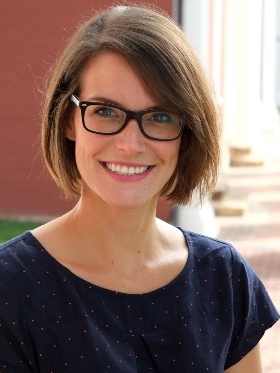
Mikki headshotDr Michelle Brock is an Assistant Professor of History at Washington and Lee University, specialising in British History. In this second guest post for the Global Justice Academy, Mikki tackles the current controversy in the US around abortion and the politicisation and policing of women’s bodies – drawing striking parallels with early modern Europe. 

In the United States, the last decade has witnessed a growing cacophony of calls from pro-life advocates seeking to overturn Roe v. Wade, the Supreme Court’s 1973 decision to legalise a woman’s right to an abortion. Every single current Republican candidate for president, fourteen men and one woman, has declared his or her opposition to abortion in most or all cases.

Comments closed

The Concept of Global Law: what is it and what are the rules?

A guest post from Lucas Miotto Lopes, Convenor of the Edinburgh Legal Theory Group, who received an award of £400 from the GJA Innovative Initiative Fund to host a seminar on ‘The Concept of Global Law’.

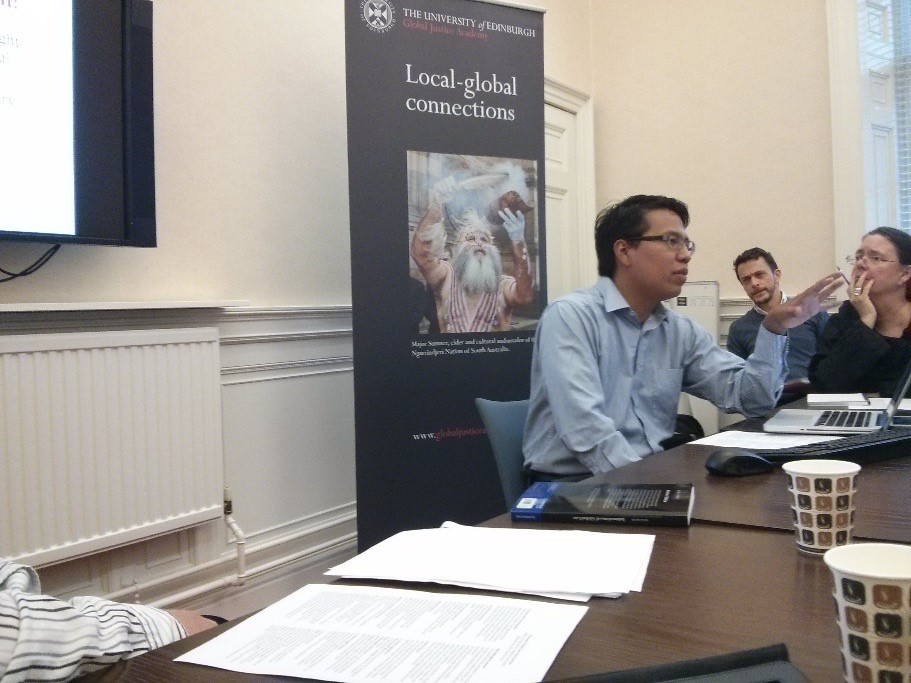
With the sponsorship of the Global Justice Academy the Edinburgh Legal Theory Group held the seminar entitled The Concept of Global Law on September 24th. Jorge Fabra, a PhD candidate at McMaster University, was the presenter and Professor Neil Walker, from the University of Edinburgh, acted as the discussant. We had the privilege of counting with a wide and diversified audience – from undergrads to staff members. Participants were keen to engage in discussion and offered both critical remarks and constructive feedback. As a result, discussion was very live, friendly and informal.

Jorge Fabra addresses the seminar group

Comments closed
css.php

Report this page

To report inappropriate content on this page, please use the form below. Upon receiving your report, we will be in touch as per the Take Down Policy of the service.

Please note that personal data collected through this form is used and stored for the purposes of processing this report and communication with you.

If you are unable to report a concern about content via this form please contact the Service Owner.

Please enter an email address you wish to be contacted on. Please describe the unacceptable content in sufficient detail to allow us to locate it, and why you consider it to be unacceptable.
By submitting this report, you accept that it is accurate and that fraudulent or nuisance complaints may result in action by the University.

  Cancel