Any views expressed within media held on this service are those of the contributors, should not be taken as approved or endorsed by the University, and do not necessarily reflect the views of the University in respect of any particular issue.
Press "Enter" to skip to content

Month: December 2014

Climate Change: Moving Beyond the Smoke Screen

GB Profile pictureIn this guest post, Geoffrey Buckley, Professor of Geography and Undergraduate Chair at Ohio University, Athens, Ohio, reports on a recent departmental seminar on climate change, and the important issues that it raised for research and policy-making.

Dr. Judith Curry, professor of Earth and Atmospheric Sciences at the Georgia Institute of Technology, visited Ohio University in Athens, Ohio recently to discuss, in her words, the “state of the climate debate.” She was a guest of the George Washington Forum, a group that, according to its website, endeavours to bring “civic education and intellectual diversity” to campus. Curry, an outspoken critic of the work of the Intergovernmental Panel on Climate Change (IPCC), confirmed her reputation as a “climate heretic” early on in her presentation, stating: “It’s a name I’m proud to bear. I’m not telling anybody what to do; it’s the honest broker role.” Unfortunately, it’s a role that does not suit her.

Comments closed

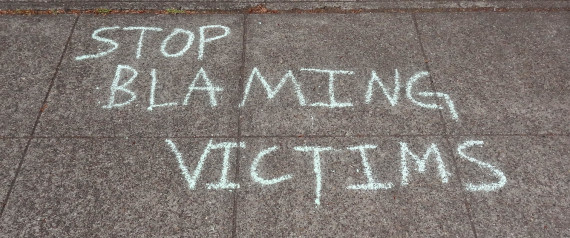
Why We Blame the Victim, and Why We Have To Stop: a Perspective from a Historian

Mikki headshot

Dr Michelle Brock is an Assistant Professor of History at Washington and Lee University, specialising in British History. In this guest post, Mikki examines the culture of ‘victim blaming’ that has been reinvigorated in the United States over the past six months, from the perspective of an early-modernist who researches belief and the Devil.

From the decisions not to indict the officers who killed Michael Brown and Eric Garner to the disturbing Rolling Stone article on a brutal gang rape at UVA, this country has produced a harrowing month of news. The reaction of much of the American public to these stories has been as distressing as their content. Many have turned not to self-searching or activism, but to stereotype and judgement. They rush to point out that Brown and Garner had, after all, committed crimes, drawing on centuries-old racial tropes to point out their size or comment that they were acting like “thugs” with “bad attitudes.” When they hear about the epidemic of sexual assaults on college campuses across the country, they question the victim’s dress, behaviour, and alcohol consumption, wondering if not explicitly saying that she might have been “asking for it.” In short, we are a country that blames the victims.

Wolfram Burner (Flickr)

Comments closed

Mental Health and Justice: the Execution of Scott Panetti

HC Profile PicThis post by Dr Harriet Cornell, Development Officer for the Global Justice Academy, examines the relationship between mental illness and justice in light of the planned execution of Scott Panetti in Texas on Wednesday, 3 December 2014.

A Public Policy Polling national survey was published yesterday, 1 December 2014, showing that Americans oppose the death penalty for mentally ill defendants by a 2-1 margin. The Death Penalty Information Center reported that ‘opposition to the execution of people with mental illness was strong across lines of race, gender, geographic region, political affiliation, and education. Democrats (62%), Republicans (59%) and Independents (51%) all opposed the practice’. Tomorrow, 3 December 2014, the state of Texas plans to execute Scott Louis Panetti for the 1992 murders of his parents-in-law, Joe and Amanda Alvarado. With a long, documented history of severe mental illness, Scott Panetti’s case has garnered international news coverage and a notable spectrum of support for clemency.

Comments closed
css.php

Report this page

To report inappropriate content on this page, please use the form below. Upon receiving your report, we will be in touch as per the Take Down Policy of the service.

Please note that personal data collected through this form is used and stored for the purposes of processing this report and communication with you.

If you are unable to report a concern about content via this form please contact the Service Owner.

Please enter an email address you wish to be contacted on. Please describe the unacceptable content in sufficient detail to allow us to locate it, and why you consider it to be unacceptable.
By submitting this report, you accept that it is accurate and that fraudulent or nuisance complaints may result in action by the University.

  Cancel