Any views expressed within media held on this service are those of the contributors, should not be taken as approved or endorsed by the University, and do not necessarily reflect the views of the University in respect of any particular issue.
Press "Enter" to skip to content

Month: September 2014

Is Climate Change Causing Conflict in Iraq-Syria?

Nicaylen RayasaThis guest post is by Nicaylen Rayasa. Nicaylen is studying for a Bachelor’s degree in Meteorology and Environmental Studies at Ohio University. Along with fellow GJA-blogger, Janice Brewer, Nicaylen took the ‘Place-Making and Making-Places’ summer school module at the University of Edinburgh during July 2014 – you can read more about the group and their investigations of Global Justice here. In this post, Nicaylen considered the rise of Islamic State and how this intersects with climate change.

This past winter in the Fertile Crescent was particularly harsh for farmers, in what is usually the wettest part of the year. It ended up to be the hottest and driest winter on record.

While prolonged droughts and record heat have been commonplace for many parts of the world, the Iraq-Syria region brings an interesting political dynamic to the climate regime.The region’s climate is  based historically on dry summers and rainy winters. However, climate change and the uptick in temperatures has transformed land use and increased desertification during extended droughts. Extreme versions of hot, dry summers have been more prevalent.

The Iraq-Syria conflict in the Middle East has been a growing regional issue for years now. ISIS (Islamic State of Iraq and Syria), the Sunni Jihadist organisation responsible for the newfound violence in the region, arose earlier this year. Their emergence coincidently occurred during the hottest March-May period on record in Iraq.

Comments closed


The Islamic State and Al Qaeda: the Return of Jihad to the Middle East

Ewan SteinThis guest post is by Dr Ewan Stein, Lecturer in Politics and International Relations at the University of Edinburgh. A longer version of this post will appear as an article in the journal Afkar/Ideas, published by the Institut Europeu de la Mediterrània, Barcelona.

By the time of the 2010-2011 Arab uprisings Al Qaeda was a peripheral actor in regional politics. It now finds itself in competition with a new, perhaps more powerful, jihadist actor in the Islamic State (IS). But IS and Al Qaeda pursue complimentary, rather than divergent, strategies and the IS phenomenon represents a logical evolution for global jihad.

Following 9/11 and the destruction of its Afghan stronghold Al Qaeda had become a decentralised network of affiliates. The uprisings initially pushed global jihad as a strategy to improve the plight of Muslims in the Middle East even further to the margins, and the death of Osama bin Laden in June 2011 registered as a footnote to the much larger political convulsions of the time.

Comments closed

When will we start to address the security of aid workers through a gendered lens?

This guest post is by Dr Alice Gritti. Alice holds a PhD in social psychology from the University of Milano-Bicocca. Her research focuses on gender studies and international aid workers. She arrived at the University of Edinburgh as a visiting researcher in 2013.

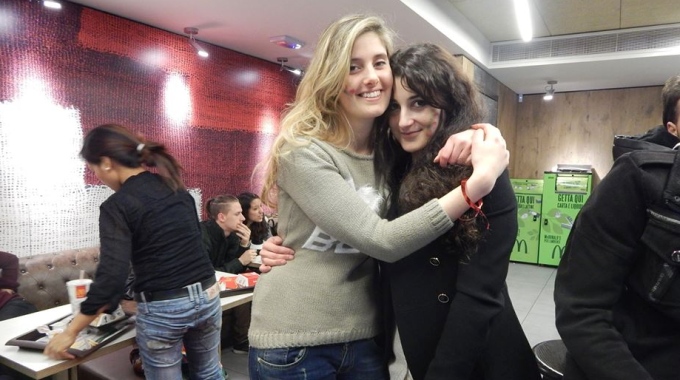
It has already been a month since the kidnapping of two female Italian aid workers in Syria last August. It was striking how the media reported the news of Greta and Vanessa, and how the world of social and the industry insiders commented on it. Before that of a respectful silence, it took the shape of a blame game, with only a few speaking up in defence of the two aid workers, admiring and sharing their values​​, while many were blaming the two with judgemental comments, and often sexist. Yes, of course. The two at issue are indeed “two girls”, and their female identity was what the “accusers” mostly made relevant in their notes: “two young girls”, “very young and inexperienced”, “naïve”, “the blonde and the brunette”, “they should have played with Barbie when they were little instead of playing at the little humanitarians”, and so on.

Greta Ramelli (L) and Vanessa Marzullo (R). Source: ANSA.it
Comments closed
css.php

Report this page

To report inappropriate content on this page, please use the form below. Upon receiving your report, we will be in touch as per the Take Down Policy of the service.

Please note that personal data collected through this form is used and stored for the purposes of processing this report and communication with you.

If you are unable to report a concern about content via this form please contact the Service Owner.

Please enter an email address you wish to be contacted on. Please describe the unacceptable content in sufficient detail to allow us to locate it, and why you consider it to be unacceptable.
By submitting this report, you accept that it is accurate and that fraudulent or nuisance complaints may result in action by the University.

  Cancel