
The human side of medicine
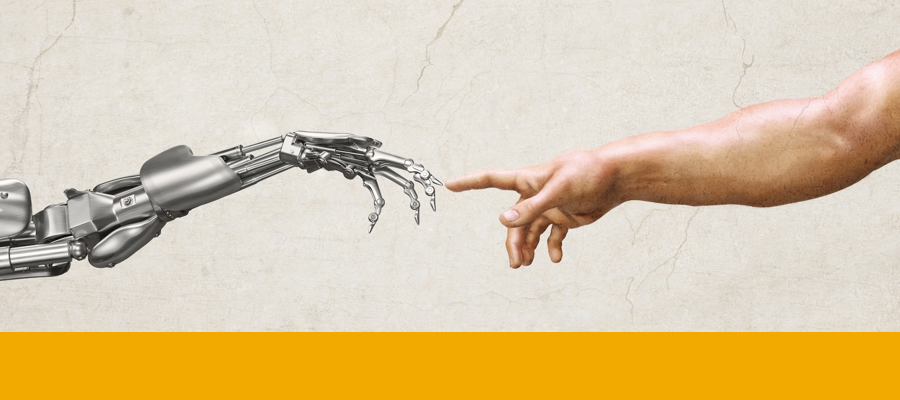
As healthcare enters a digital age shaped by AI and robotics, Professor Lorna Marson reflects on why compassion and connection must remain at the heart of patient care.
Medicine is entering a new era. Artificial intelligence, machine learning and robotics promise to transform everything from diagnosis to surgery. But as healthcare becomes increasingly digital, a fundamental question is emerging: how do we ensure the human side of medicine is not lost?
For Professor Lorna Marson, transplant surgeon and Deputy Head of the University of Edinburgh’s College of Medicine and Veterinary Medicine, the answer is simple. Technology may reshape medicine, but humanity must remain at its core.
“Patients want to see their doctor,” she says. “They want to know their doctor. They want that human contact. Particularly when difficult conversations are involved, people want to look you in the eye – they want to see the whites of your eyes.”
Professor Marson explored these themes in a recent talk with alumni, Humanity in Healthcare, held in London as part of the events marking 300 years of the Edinburgh Medical School. Drawing on more than 30 years of clinical experience, she reflects on what compassionate care means in a healthcare system increasingly shaped by technology.
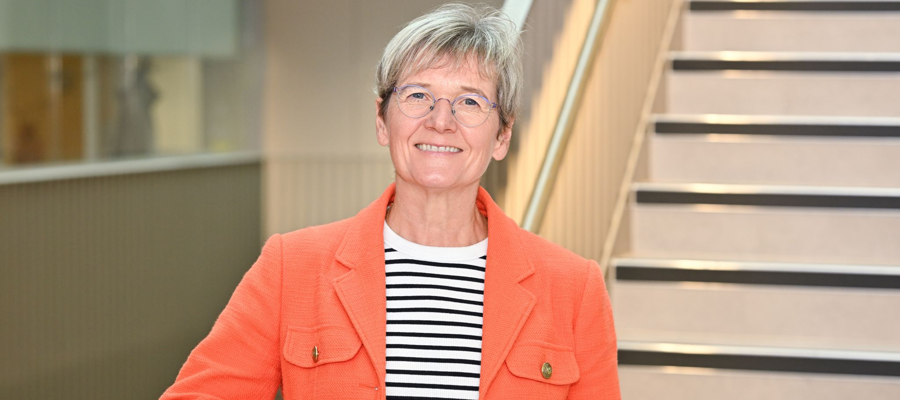
Professor Lorna Marson
Technology and humanity
It’s the eye contact. It’s the gentle touch on a patient’s arm when you’re delivering difficult news.
Few areas of medicine are untouched by digital innovation. AI tools are already being developed to assist with diagnosis, treatment planning and even elements of communication with patients.
For Professor Marson, these developments bring enormous opportunities, but only if they are introduced thoughtfully.
“If we simply allow technology to develop without reflecting on the implications, we do run a risk of losing an element of that humanity,” she says. “But if we acknowledge that early and embed it into how we train doctors, then technology and compassion can complement each other beautifully.”
In some cases, emerging tools may even help clinicians approach difficult conversations more thoughtfully. Professor Marson notes that some colleagues have experimented with AI tools when preparing for sensitive discussions with patients.
“They’ve used them to think about how to phrase things,” she explains. “Not to follow the script exactly, but as a guide. That can be very helpful.”
Yet technology can never replace the small human gestures that shape a patient’s experience.
“It’s the eye contact. It’s the gentle touch on a patient’s arm when you’re delivering difficult news,” she says. “We sometimes underestimate how challenging the hospital environment is for patients. That human interaction matters enormously.”
Lessons from transplant surgery
Professor Marson’s views have been shaped by decades working in transplant surgery, a field that confronts both the fragility and generosity of human life.
“I feel very privileged to be a transplant surgeon,” she says. “Organ donation is an extraordinary gift of life.”
Early in her career, she travelled across the UK retrieving organs from deceased donors. Those experiences often placed her close to families’ most difficult moments.
“You see humanity at its most tragic,” she says. “But when donor families later talk about the pride they feel knowing their loved one helped someone else live, that is incredibly powerful.”
The impact of transplantation is equally profound on the recipient side. For patients who have spent years on dialysis, a successful kidney transplant can transform daily life almost immediately.
“To see someone after their transplant, to look them in the eye and know their life has changed – it’s the greatest privilege.”
A lesson early in her career
Medicine isn’t just about the procedures or the paperwork. It’s about being present.
One of the experiences that shaped Professor Marson’s approach to medicine came during her first house job in London in 1990.
Fresh from medical school, she was determined to prove herself as an efficient young surgeon. One night she was called to the bedside of an elderly patient named Charlie, who had developed complications following hip surgery.
“He was dying,” she recalls.
Standing beside him in his final moments left a lasting impression.
“I remember thinking I had managed him well as a ‘case’,” she says. “But actually what mattered most was simply being there with another person at their time of need.”
The experience was humbling, and formative.
“It reminded me that medicine isn’t just about the procedures or the paperwork. It’s about being present.”
Rethinking ‘soft skills’
As medical education evolves, Marson believes the profession must rethink how it talks about empathy, communication and ethics. Too often, these areas are described as “soft skills”.
“I would really like to move away from that language,” she says. “Compassion and communication are not optional extras. They are core clinical skills.”
At Edinburgh Medical School, these values are already embedded within the curriculum, particularly during the early years of training. Ironically, technology may even create more space for them.
“In the past we had to memorise huge amounts of information,” she says. “Now much of that knowledge is available instantly. That frees up time to focus on communication, ethics and understanding the patient experience.”
Culture matters too
Humanity in healthcare is not only about individual clinicians – it also depends on institutional culture. Both universities and the NHS are currently operating under significant pressure, with constrained resources and rising demand. In such environments, tensions can easily emerge.
“When people are working under pressure, frustrations inevitably appear,” Professor Marson says. For her, compassionate leadership plays a vital role in maintaining a healthy culture.
“It’s about listening, collaboration and bringing that sense of compassion into every interaction.”
Sometimes that simply means acknowledging when things haven’t gone perfectly.
“I’ve finished difficult operations and gone back to the team to say, ‘I’m sorry if I spoke harshly – that was a challenging case.’”
Learning to apologise openly, she believes, can be surprisingly powerful.
“We have to make it easier for people to say sorry – to patients and to each other.”
A new generation of doctors
Today’s medical students are entering the profession with strong digital skills and a growing awareness of wellbeing and work-life balance. Professor Marson sees this as a positive shift.
“I think younger doctors are often better at balancing work with other parts of their lives than my generation was,” she says. When she began surgical training, the expectations were very different.
“I was once told that if I trained part-time, I couldn’t be a surgeon,” she recalls. “Greater attention to wellbeing will ultimately benefit both clinicians and the patients they care for.”
Looking ahead
There’s a phrase: if you have a hammer, everything looks like a nail.
As medicine continues to evolve, Professor Marson believes the key challenge will be ensuring new technologies are used responsibly. She recalls how the introduction of laparoscopic “keyhole” surgery transformed surgical practice during her training.
“When a new technology appears, there’s always a temptation to use it everywhere,” she says. “There’s a phrase: if you have a hammer, everything looks like a nail.”
Artificial intelligence presents similar risks.
“These tools can be incredibly impressive,” she says. “But they’re only as reliable as the data that goes into them.”
For Professor Marson, the solution is clear: technology must remain a tool, not a replacement for clinical judgement.
“They should assist us,” she says. “They should never replace the human connection.”
Celebrating 300 years of Edinburgh medicine
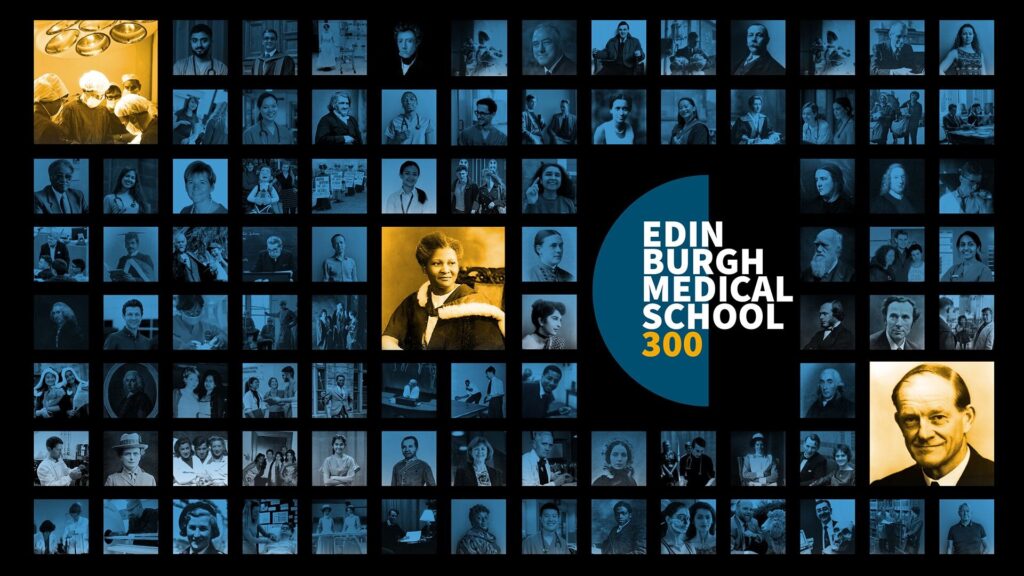
Professor Marson’s reflections come during an important year. Throughout 2026, the Edinburgh Medical School 300 project marks 300 years of medical education at the University of Edinburgh. It explores Edinburgh’s history in shaping modern medicine, highlights Edinburgh Medical School’s community and sets the stage for future innovations in medical education and healthcare.
“From the outset, we wanted to do more than celebrate history,” she says. “We wanted to learn from it, including the more challenging aspects.”
The project involves close collaboration across the University, with students from disciplines including textiles, poetry, animation and music contributing creative work inspired by the medical school’s legacy.
At its heart, the initiative is about ensuring the School’s values continue to shape the future.
“We’re not doing this just to reach the end of 2026 and say, ‘Wasn’t that great?’” she says. “We want to ask what difference it will make going forward.”
Alumni at the heart of the story
Our alumni are our people… Their stories are woven through the history of the medical school.
For Professor Marson, Edinburgh’s alumni are central to that future.
“Our alumni are our people,” she says. “Their stories are woven through the history of the medical school.”
The Edinburgh Medical School 300 “300 Faces” campaign highlights alumni, staff and students whose work has shaped healthcare in visible and behind-the-scenes ways – from pioneering clinicians to laboratory technicians whose expertise enables scientific discovery. Their engagement continues to enrich the community today.
“One of our alumni recently corrected me on a historical detail after a lecture,” Marson laughs. “But that’s exactly the kind of conversation we want. It shows people care.”
A constant in a changing profession
Medicine will continue to evolve at extraordinary speed. New technologies will reshape how healthcare is delivered. But for Professor Marson, one thing must remain constant.
“The humanity,” she says. “That connection between people.”
Because even in an age of algorithms and robotics, the most important part of medicine may still be something far simpler: a doctor sitting beside a patient, listening.
Our events to mark 300 years of medicine are open to all. Visit the Edinburgh Medical School 300 website to find out more about the project and our upcoming activities:
Explore the Edinburgh Medical School 300 programme
For 300 years, Edinburgh has shaped the future of medicine. Now, we’re investing in the next generation. You can support life changing opportunities for students through the Future Medicine: Student Fund:
All opinions expressed in this article are those of the individual and do not necessarily reflect those of the University of Edinburgh.

