
Meet the Edinburgh Medical School 300 student insiders
Medicine has been taught at the University of Edinburgh for 300 years. And today, students across the University are playing a key role in the Edinburgh Medical School 300 project, helping us to explore our past and present with as many people as possible to help us shape our future for medicine in Edinburgh.
How do you capture 300 years of history, whilst looking to the future and creating a legacy? We spoke to the students shaping our 2026 activities through poetry, design, storytelling and archival research to find out about their involvement, the impact that they hope their work will have and alumni who are inspiring their work.
Heen XX
XXXX student, and co-lead of the student project
2026 was always going to be a special year for me- since it is the year I graduate as a doctor! However, with the 300th anniversary coinciding, it has made me more motivated to leave behind a strong legacy. Ever since I attended the initial workshops back in 2024, I got a sense that this project was forward looking and full of positive change. The recurring themes of reflecting and learning from our past, celebrating the present, and planning for the future, really resonate with my own way of thinking about medicine as a whole.
The whole team has been exceptional, from the project leads to external collaborators, it has been a truly inspirational journey so far and I am looking forward to seeing our plans come alive. The wide range of what we have achieved in such a short time is a testament to the incredible hard work of everyone involved.
Mona Eskandaripour
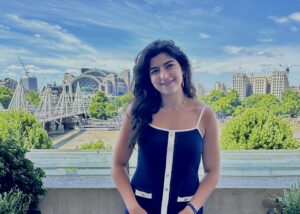
2nd year medical student
Mona is the Student Storyteller for the Edinburgh Medical School 300 project. She observes workshops and meetings, follows the unique characters who are part of our shared history and reports back on some of the fascinating and strange stories from over the years.
The most interesting part has been the range of people involved and the connections I’ve made through this work – with all levels of staff, with alumni, with historians, with poets and musicians. Being matriculated at a medical school, it can be easy to enter into a bubble – where friends, conversations, and extracurriculars all involve medicine. It is great for developing your medical knowledge and experience, but we live in a world that goes beyond medicine. Getting involved in EMS300 has been my chance to enter the world, meeting new people from all walks of life, and I’ve used that opportunity to learn from them and their experiences.
I think it’s been incredible to look behind the veil of bureaucracy. As a small fish within a large institution like a university, bureaucracy is seen as the tagline against progress and change. Working with a group of supportive and encouraging individuals whose collective vision is to make that change not only for the College student body but the community that surround us, while incorporating considerations from things like the race review. It has been really great to see that people have these conversations and think deeply about how best to approach the more murky stories from the past of Edinburgh Medical School. That has surprised me the most – there are still chances of acknowledging and incorporating uncomfortable topics within a large body that don’t have to be tokenistic or tick-boxing.
Who is your biggest Edinburgh Medical School alumni inspiration?
I’ll choose Professor Sarah Tabrizi because she is an exceptionally talented and accomplished woman in her field. Not only is she excelling in a field (Neurology) that I hope to one day, at one of the best institutions for it, but as an Iranian woman, it is even more inspiring to me – as was mentioned at a recent Edinburgh Medical School 300 Women’s History Talk, ‘to be what you can see’ is a powerful thing.
Charlotte Squires
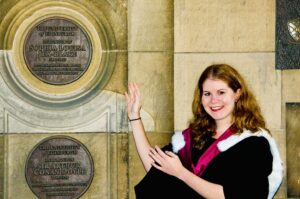
PhD student within the Centre for Population Health Sciences
Charlotte Squires is currently taking time away from her medical training in Geriatric Medicine, to undertake her PhD. She entered and was selected as a winner of the Edinburgh Medical School 300 poetry competition, which has culminated in an anthology of unique poems which will be given to all graduating Edinburgh Medical School students. Winning poems have also been brought to life through engaging animations, created by students from the Edinburgh College of Art.
Charlotte’s winning poem, ‘Rivers’, focuses on women in medicine and the barriers that they have faced throughout history.
Working alongside the animation students has been so incredible. It is such a different type of degree to Medicine, and the skills and passion of the students animating my poem (Lauren, Isa and Leon) is just incredible. It was fascinating to be shown around the department at the art college and learn how students approach different projects and styles, and to see my own poem transformed into something so much more than the sum of its parts. The fusion and interaction of medicine with the arts is something I have long been interested in, and my small role in this part of EMS300 has been so inspiring.
“Understanding the past is key to ensuring the brightness of the future. I hope that by highlighting how the experiences of women in medicine has changed over time, that I will remind students both of progress – but also that there remains substantial gender-based inequalities, across medical careers, and this needs to continue to be researched, campaigned for, and ultimately eradicated.
Who is your biggest Edinburgh Medical School alumni inspiration?
Professor Susan Shenkin is an extraordinary example of someone who provides both exceptional clinical care whilst undertaking a diverse portfolio of research seeking to improve the health of older people. She is committed to mentoring junior colleagues, to providing opportunities and encouraging colleagues and students to meet their potential. Clinical academic pathways can be challenging to navigate and she has been pivotal in the success of the PhD students under her supervision.
Minty Warner
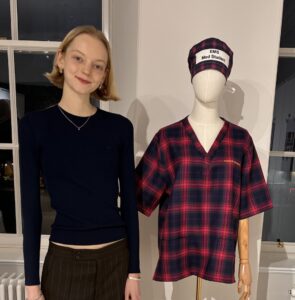
3rd year Textiles student at Edinburgh College of Art
Minty got involved in the Edinburgh Medical School project in Spring 2025 when students were approached to design a new tartan that represented the past 300 years of the school’s history. Minty’s design was selected as the winning tartan and she has since helped to finalise the design to be sent to the mills. The Edinburgh Medical School tartan has since been used in new scrubs, merchandise, exhibitions and events.
Learning about how a digitally designed pattern could then be translated into a physical piece of material was really interesting. Studying textiles, I knew a bit about the process but have never been through the steps before. Loccharron [the producer] was able to send us thread samples to choose specifically what colour would be used and even showed us a few different scales of the design and how that would affect the final design.
Design and science seem to be much more linked than I had originally thought. When thinking about medical equipment, machines and charts, I previously did not appreciate how much design went into them. Each feature must have a purpose just like the colours and stripes that are featured in my tartan.
My tartan design visually represents the past and future of the Medical School and the hope is that this will give students something to feel proud of, a little reminder of what they have achieved that only those in the know will understand.
I’d love for future students to know how far the school has come, where it began and where it is now. One of the more significant features of my design is the representation of inclusivity through the colours of purple (for the acceptance of women into the university in 1869) and grey (for the exclusion of other groups).
Who is your biggest Edinburgh Medical School alumni inspiration?
Seeing as a lot of my research was based on the acceptance of women into the Medical School, I would have to say Sophia Jex-Blake who was part of the Edinburgh Seven. These were the women who fought for their places at the Medical School and overcame so many other challenges during their time at university. I feel really grateful for them as a female student here now.
Lilia Foster
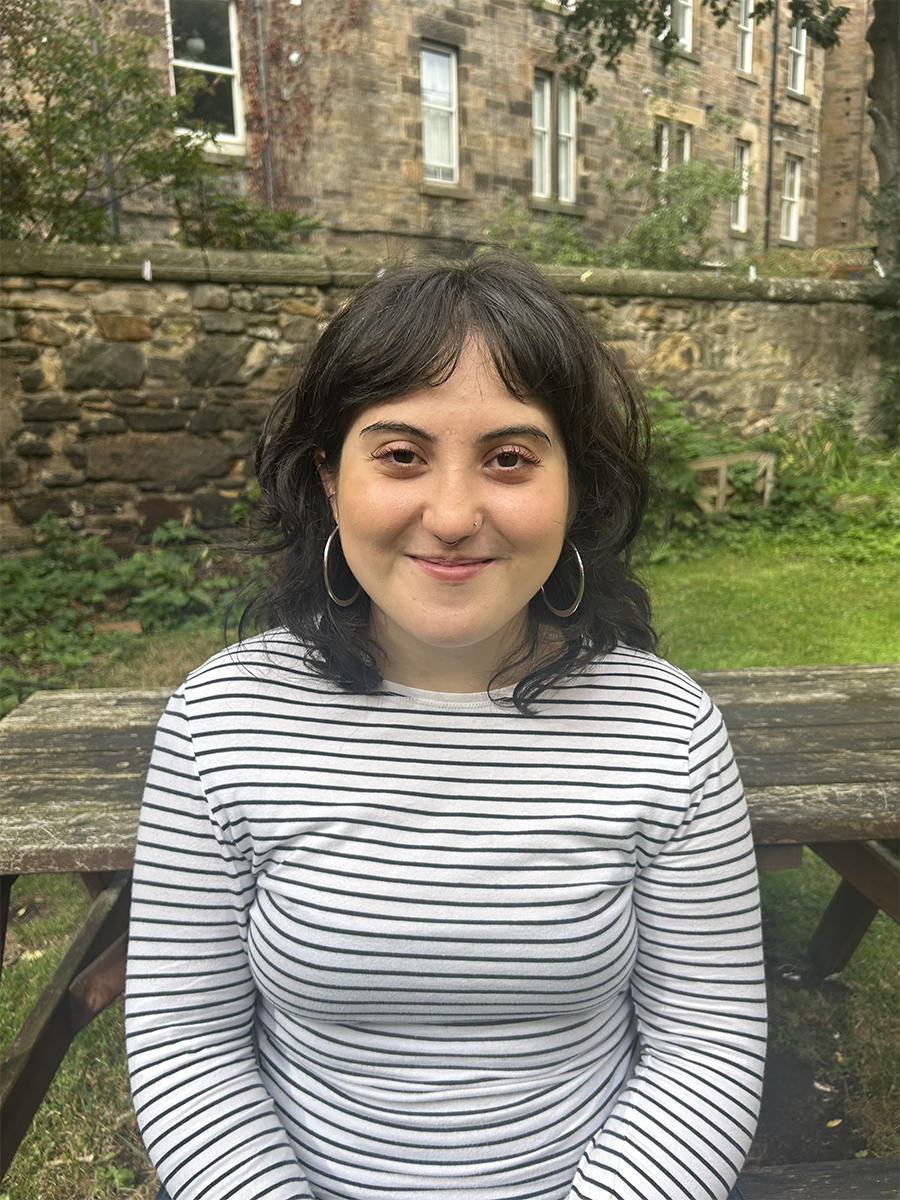
3rd year History student
Lilia is an archival research intern for the EMS300 project. She has been looking into the University’s vast collections to find unusual stories and supporting information for the programme of public lectures, activities and events marking 300 years of the Medical School. She has also taken part in the planning and execution of some of these events, with an exciting “Archives unboxed” session planned for September 2026.
I have found researching material made by students themselves the most interesting part of my work. A great example of this is the collection of Synapse magazines we have in the archives. Synapse was the official medical students’ magazine from the 1940s to the 90s, featuring articles on global affairs, scientific breakthroughs, students’ experiences studying medicine, poems, and artwork. One edition even featured an interview with a medic who had been on the TV show Blind Date! It is interesting to see that students shared many of the same concerns over politics and university administration as we do today.
Student-produced materials also show the remarkable development in medical practice over time. Lecture notes from the early days of the medical school, for example, show that post-partum depression or low mood after pregnancy was believed to be caused by not having bled enough during labour, so the recommended treatment was bloodletting by leeches!”
Many individuals who shaped the history of the Medical School remain underrepresented in the historical record. Their contributions and legacy have been overshadowed until today by the same racial or gender prejudices that they faced in their own time, which the University itself was often complicit in. EMS300 aims to draw attention to some of these neglected stories in the archive, defining Edinburgh Medical School’s rich history in terms of broader conceptions of achievement, trends, and attitudes rather than a few famous ‘trailblazers.’ I hope this approach will encourage us to learn from these patterns of exclusion in our history so that we can foster an inclusive university community and think critically about whose voices and contributions we foreground today.
Who is your biggest Edinburgh Medical School alumni inspiration?
Dr Runa Mackay. She graduated in 1944 and dedicated her career to caring for Palestinians displaced by the spreading occupation of Palestine. She worked at the Nazareth Hospital for over 30 years, and then in Lebanon helping to set up clinics in refugee camps where many Palestinians were living, having fled across the border due to violence or forced deportation. When she returned to Scotland she continued to support Palestinian liberation campaigns, founding Scottish Medical Aid for Palestinians. Her story illustrates how medical work can serve as a form of political action and remains deeply relevant today.
Maria-Ariadna Ghiuta
4th year medical student
Like Charlotte, Maria-Ariadna had also submitted a winning entry to the Edinburgh Medical School 300 poetry competition.
The poem was my way of reflecting on what it feels like to study medicine in a place shaped by 300 years of history. I wrote about the people who came before us, the spaces we still walk through today and the shared experiences that connect generations of students.”
What I found most interesting was realising how connected everything felt. Writing the poem helped me slow down and think about the history we are now part of as medical students, and about the people who studied here long before us. It made me more aware that the places we walk through every day carry stories we do not always notice.
Working with the animation students showed me how that same history can be interpreted and shared in different ways. It made the 300 years feel much more present, rather than something that only belongs in the past. Sharing the process with others made the anniversary feel less like an event and more like something we were part of.
I hope the poem reminds people that they are part of something much bigger than themselves. Studying and practising medicine can be demanding and fast-paced and it is easy to move from one milestone to the next without always noticing the history around us. The anniversary made me more aware of the generations who have trained here before us. If the poem encourages even a few people to pause and feel connected to that shared story, then I believe it will have made a difference. I also hope it shows that creativity still holds an important place within medicine.
What do you want students 50 years from now to know about the University of Edinburgh today?
I would want students 50 years from now to know that we did not take our time here for granted. Alongside the exams and long placements, there was also a real awareness that we were part of something with history and meaning. I hope they know that we tried to support one another, that we were not afraid to question things, and that we wanted to contribute in our own small ways. Even when things felt overwhelming, we knew it was a privilege to be here.
Grace Wilkinson

Grace Wilkinson
Picture Phil Wilkinson
5th year medical student
Grace is Executive Producer for the 2026 Medics’ Musical, an annual tradition for 5th year medical students. The plot this year will tie into Edinburgh Medical School 300, and Grace has been supporting alumni reunions and attending “archive-athon” sessions for inspiration. She has enjoyed hearing stories about past students’ times at the old Royal and how Edinburgh experiences have shaped their career.
Music and medicine have been linked throughout my studies and those of many of our talented cast and band. We have a Musical Medics Society at the University, while many students are also involved in wider University choirs and orchestras. It has been wonderful for 5th year medics and our live band members (from all years) to explore and develop our creative potential. Many of our members are new to performing and we are all learning together: the musical is written, choreographed, arranged and performed by year 5 students! We are very grateful to have been awarded a Student Experience Grant from the University in recognition of the community created by our musical and connection to EMS 300. This enables us to donate all our revenue to the Edinburgh Children’s Hospital Charity, making a positive difference to our wider community.
Writing our script and researching the plot has been a fascinating process. We have collaborated with the ‘Learning from Our History’ workstream of the Edinburgh Medical School 300 project to ensure we reflect on the past while celebrating EMS history, they have guided us throughout our process. The mystery theme was inspired by our surprise at realising Sir Arthur Conan Doyle, former Edinburgh medical student, based the detective prowess of Sherlock Holmes on a real-life Edinburgh surgeon, Joseph Bell. Such interesting discoveries, about famous figures and lesser-known characters in the archives, has made writing our script very interesting indeed.
Who is your biggest Edinburgh Medical School alumni inspiration?
Elsie Inglis (1864-1917), Founder of the Scottish Women’s Suffrage Federation and Scottish Women’s Hospitals. I am inspired by her pioneering, political and philanthropic practice of medicine. She was famously told “My good lady, go home and sit still” upon her proposal for women’s medical units at the Western Front when the First World War broke out. It is likely her influential war efforts that she is most famous for today.
I hope that we will all approach challenges we encounter along our paths in medicine with creativity, courage and not “go home and sit still”! Dr Inglis may even make an appearance in our musical…
In 2026, we are exploring our past and present with as many people as possible to help us shape our future for medicine in Edinburgh. Edinburgh Medical School 300 events are open to all. You can learn more about the project and the exciting activities planned for 2026 on our website:

