

A family’s century of veterinary care
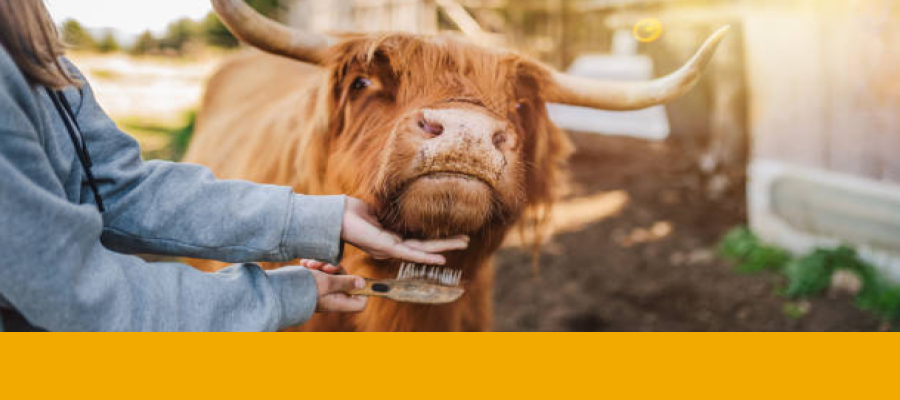
For exactly a century, the Cook family’s connection to the Royal (Dick) School of Veterinary Studies has been shaped by a shared commitment to animals, rural communities and the veterinary profession.
That story began in 1926, when John Cook graduated from the Dick Vet and went on to practise as a large animal veterinary surgeon in rural Yorkshire. Fast forward to 2023 and his son, Alasdair Cook, supported by his daughter Audrey Cook (RDSVS ’89), made a £100,000 endowment to establish the John and Catherine Cook Family Highlands and Islands Bursary, supporting students undertaking large animal placements in rural Scotland. The bursary is named for John and his wife Catherine – Alasdair’s mother – who was also a proud Highlander and completed her teacher training at Edinburgh.
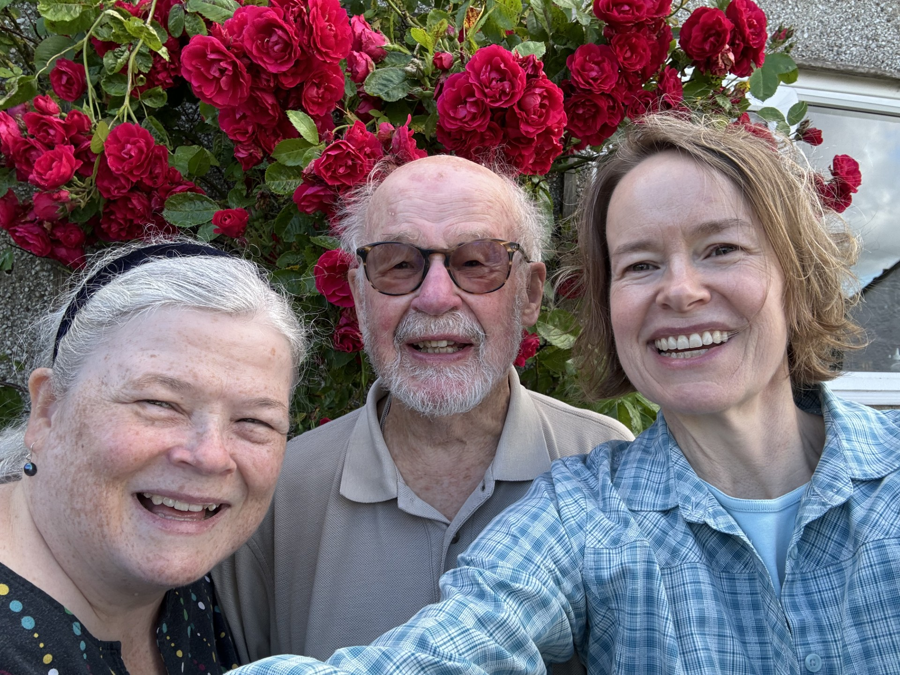
Alasdair Cook (centre) and Audrey Cook (right) pictured with Alison (Alasdair’s daughter and Audrey’s sister)
Pride across generations
Audrey Cook, a board-certified specialist in small animal internal medicine, spent a decade in private referral practice after graduating from the Dick Vet before joining the faculty at Texas A&M College of Veterinary Medicine where she is currently Professor. She reflects that her grandfather’s legacy was something she grew up with.
“I can’t remember the first time I heard the phrase ‘the Dick Vet’,” she says, “but each time it was spoken, you could hear the pride in the speaker’s voice.”
Her father spoke often about the determination it took for John – “one of eight children of a Cumbrian tenant farmer” – to make his way to Edinburgh and qualify. Though Audrey saw him only occasionally, she remembers him as “a kind, gentle, and humorous man” who trained sheepdogs in retirement. “His love of animals was passed on to my dad and then on to me.”
A profession that shaped family life
Alasdair’s memories offer a vivid picture of growing up around rural veterinary practice.
“His career controlled the family life,” he reflects. “The needs of farms and livestock set the rhythm – calls at all hours – and everything else fitted around that.”
When his father bought a practice in Market Weighton [in the East Yorkshire Wolds], then a busy agricultural town, veterinary work was woven into everyday life. He recalls weekly market days and a town shaped by farming, where the vet was a constant presence.
Those early experiences shaped how he understands the profession: as a practical service rooted in community, trust and continuity.
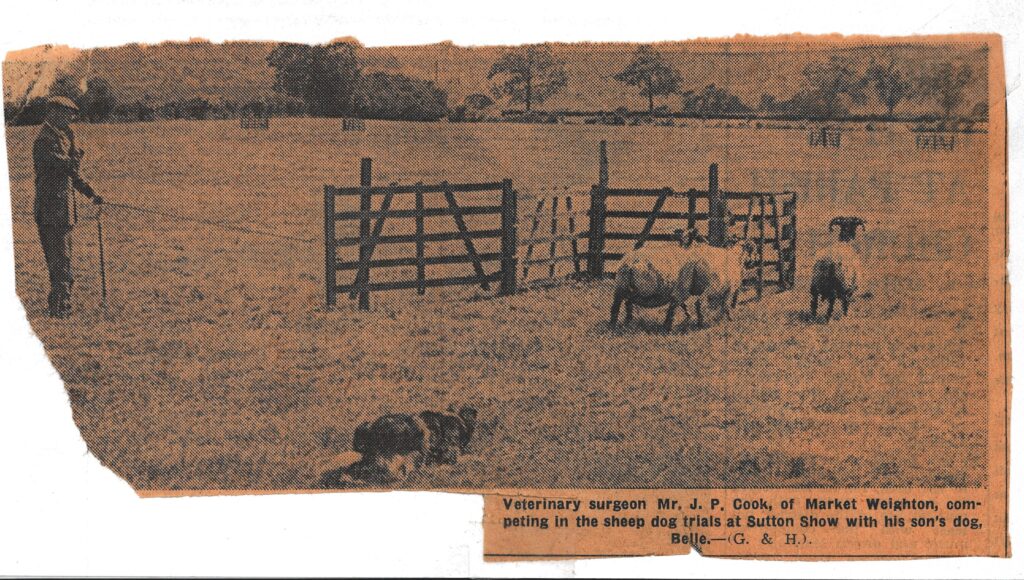
A newspaper clipping showing John Cook with Alasdair’s sheep dog, Belle
Following in familiar footsteps
For Audrey, choosing Edinburgh felt almost inevitable.
“The Dick Vet was always my first choice,” she says. “I loved my five years there, and always remember the wonderful feeling of community, tradition and pride.”
Moments of connection to her grandfather were powerful. “I realised I was sitting in the very same lecture theatres as him, and I even found some graffiti from his year – 1926 – on the underside of my anatomy table.” He lived long enough to see her begin her studies, something she remains deeply grateful for.
Watching a profession change
Reflecting on the evolution of veterinary practice, Alasdair speaks candidly.
“Rightly or wrongly, I had gained the impression that vets were in danger of being corralled into veterinary groups,” he says, concerned that services might become “more preoccupied with the financial aspects of the work” and less able to serve sparsely populated areas. “Such groups are much more likely to cover high-density populations than low-population areas like the Highlands and Islands, and the bursary is intended to try to ensure that they are not forgotten.”
Audrey sees the same challenges from her own perspective. “The dearth of rural vets is a huge issue in both the US and the UK,” she says. “Limited access to veterinary care makes farming even more difficult and undoubtedly impacts animal welfare.”
She adds that rural practice is about far more than food production. “It’s about the impact on farmers of having a strong veterinary partnership, and the impact on entire rural communities of having access to a thriving mixed animal practice.”
The idea for the fund grew out of conversations between father and daughter, including sadness that John Cook’s former practice is now exclusively small animal. Supporting rural placements felt like a meaningful way to honour his legacy while addressing a present-day need.
Lessons carried forward
Alasdair’s reflections also include glimpses of another era of practice – wartime shortages, the struggle to obtain petrol coupons, and the determination required to keep serving farming communities despite difficult conditions, reinforcing his respect for the resilience of rural vets.
“Lucky you!”
Audrey’s message to students heading to the Highlands and Islands is heartfelt: “Lucky you!”
She describes the placements as “a truly priceless opportunity to experience a different way of life” and encourages students to notice how access to veterinary care supports both farmers and the wider community. Even a few years spent in an underserved area, she says, can make a meaningful difference.
A gift rooted in gratitude
Helping to establish the bursary has been deeply meaningful for the family.
“It is hard to put into words all that this has meant to me,” Audrey says. “I am so proud of my father for providing these amazing opportunities for the next generation of veterinary surgeons.”
She is especially glad the gift was made during his lifetime. “He can enjoy the updates from the bursary recipients and read about their experiences.”
For Alasdair, the motivation is simple: to honour the example set by his parents and to support students who may one day serve communities much like those that shaped his family’s story.
Supporting the Dick vet
If If you would like to contact someone to talk about supporting the Dick Vet please email Nicole Bell: nicole.bell@ed.ac.uk
All opinions expressed in this article are those of the individual and do not necessarily reflect those of the University of Edinburgh.

