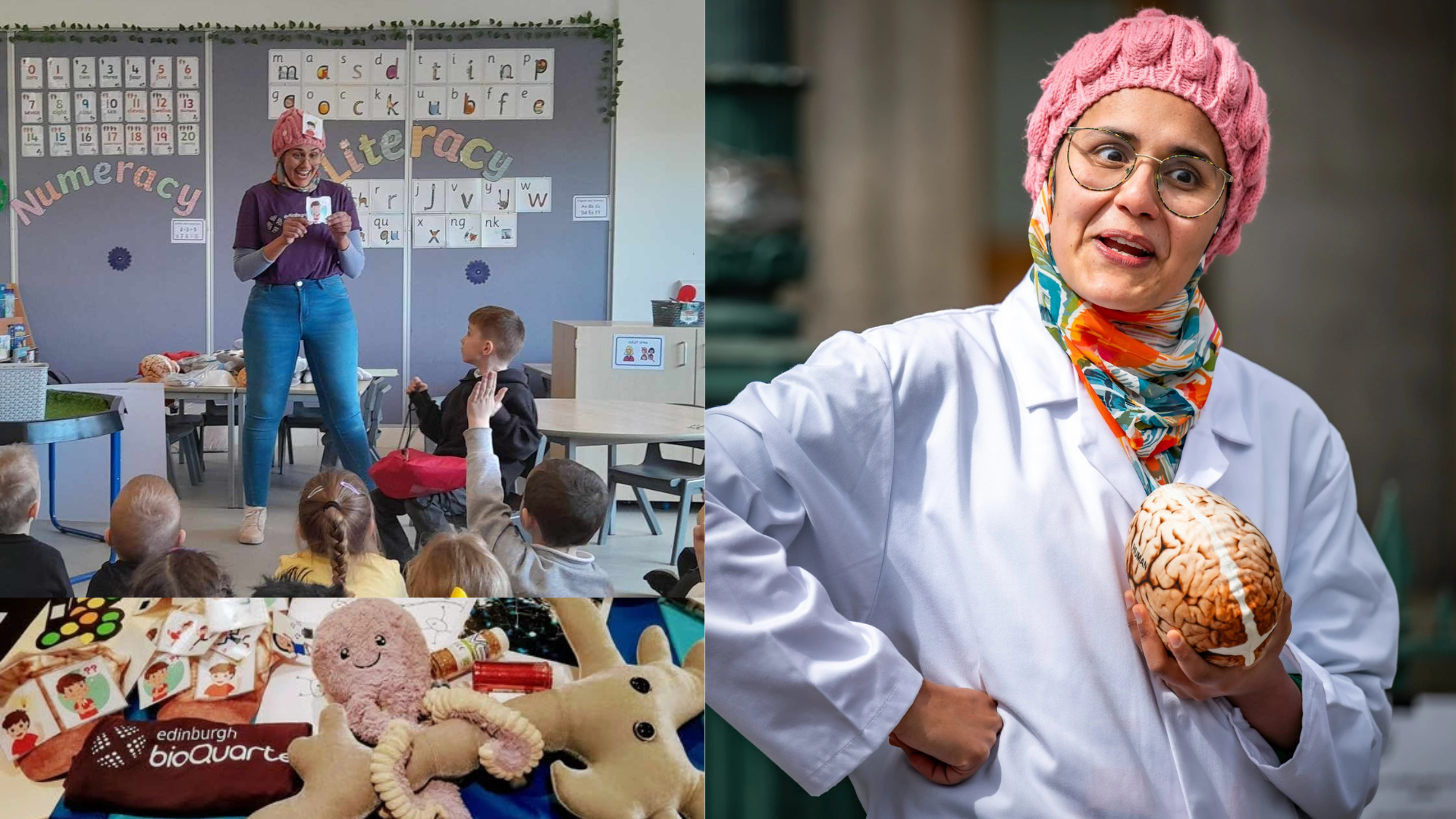
“Why?” is a question that can drive many parents to exhaustion. I was the child people called difficult or stubborn because I asked too many of them. When the answers I received didn’t satisfy my curiosity, I went looking for my own. Years later, as a neuroscientist and a mother of two equally inquisitive children, I see those endless questions differently. They weren’t a problem, they were the beginning of scientific thinking. Curiosity is not something we need to teach children; it is something they are born with. When my children started school, I realised that their endless questions weren’t unique. Almost every child wants to understand how the world works. I discovered science by chance through a summer internship in an immunology lab when I was in my twenties…
Why should curiosity have to wait that long to meet science?
This question sparked an idea: a small workshop for primary school children about the brain and how scientists study it. I called it Brain Blocks. The challenge was that I had no experience designing a school workshop, how long it should be, how to approach schools, or what activities would work.
Lesson #1 in public engagement: your network is your biggest resource
With support from the Institute for Regeneration and Repair (IRR) public engagement team and colleagues at Edinburgh Neuroscience, I gathered advice, borrowed materials, and learned how to design activities that were both engaging and adaptable. Slowly, the workshop came together.
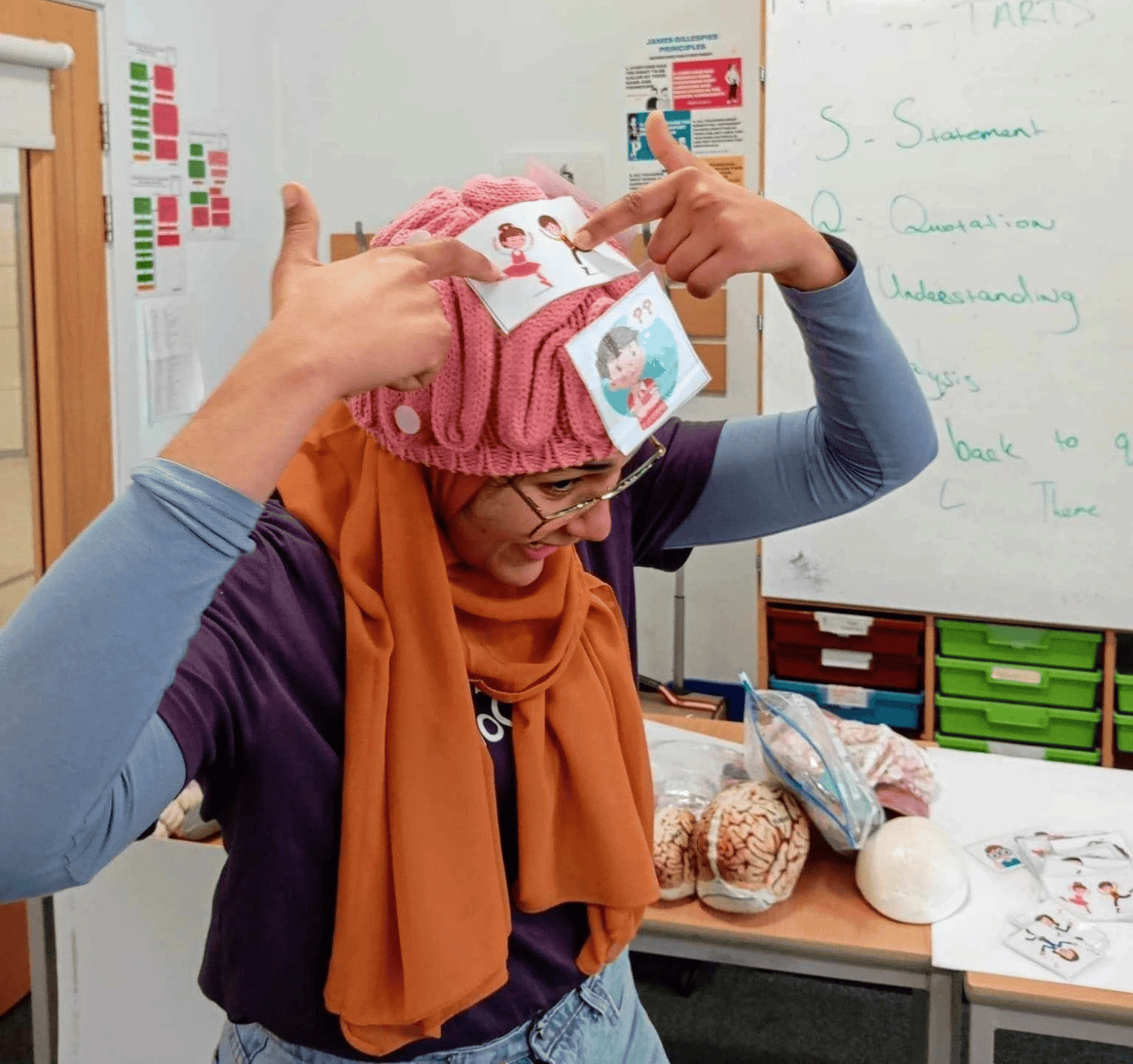
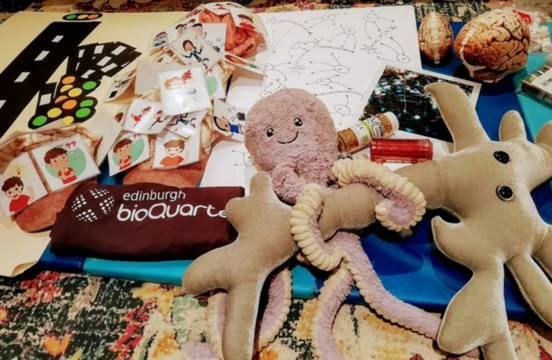
Children stuck action cards on brain hats to label different brain functions. They learned about neurons using craft materials and plush toys (which I stole from my children).
Their favourite activity by far was creating their first “immune stain” using glitter and glue: messy, interactive, and memorable. Each short session mixed brief explanations with hands-on activities to keep attention high. And, of course, it was filled with questions, lots and lots of “why?”
The positive response encouraged me to try new audiences. I was invited to run a workshop for nursery children about neurodiversity. At that age, attention spans are short, so instead of talks I wrote simple songs about how every brain works differently. The children danced, moved, and reflected on their own strengths: some were great with numbers, others with pictures, others with movement. It became a joyful introduction to the idea that there is no single “normal” brain. Along the way, I learned a second lesson…
Lesson #2 in public engagement: materials are recyclable
Activities can be adapted for different audiences, communities, and topics. As an Arab Muslim woman who enjoys challenging stereotypes about who can be a scientist, I also wanted to reach underrepresented groups. I delivered the workshop through the Muslim Women’s Association in Edinburgh, adapting the same activities for different groups of children and diverse backgrounds.
Later, support from the ScotPEN–Explorathon Enabling Fund helped expand the project into a larger programme with technicians and researchers studying different topics. Children built paper brain hats, crafted neurons with pipe cleaners and googly eyes, and explored stem cells and MRI scans through interactive demonstrations. They also received “cell cards” with fun scientific facts to take home, alongside small prizes from a spin-the-wheel game—neuron keyrings, brain stickers, and more.
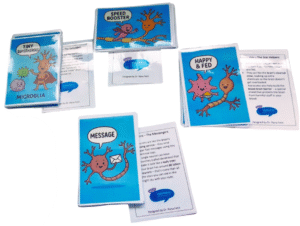
Lesson #3 in public engagement: collaboration makes science more impactful
Bringing together researchers with different expertise creates richer experiences for young learners. I have since shared these workshop ideas with other researchers who have adapted them to their own fields.
The activities continue to evolve, just like the questions children ask.
Because in the end, the goal isn’t to give children all the answers. It’s to show them that their “why?” is powerful, and that science is one way to start exploring it.
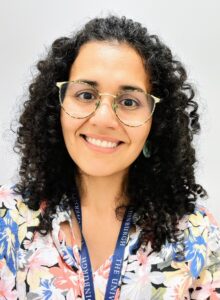
Dr Rana Fetit is a Postdoctoral Research Fellow at the Institute for Regeneration and Repair (IRR), University of Edinburgh.
Her research focuses on modelling human conditions using stem cells and 3D-organoid models.
This post is Part II in a series on Public Engagement. At an EN:PM session in February, the programme included a public engagement showcase. We had a lot of positive feedback on the different types and approaches so we thought it would be a great idea to serialise them on the blog. Part I : Organising a rare disease community conference by Cathy Abbott
Borrow public engagement materials from Edinburgh Neuroscience
Feature image in white coat with brain hat courtesy of Soapbox Science Edinburgh