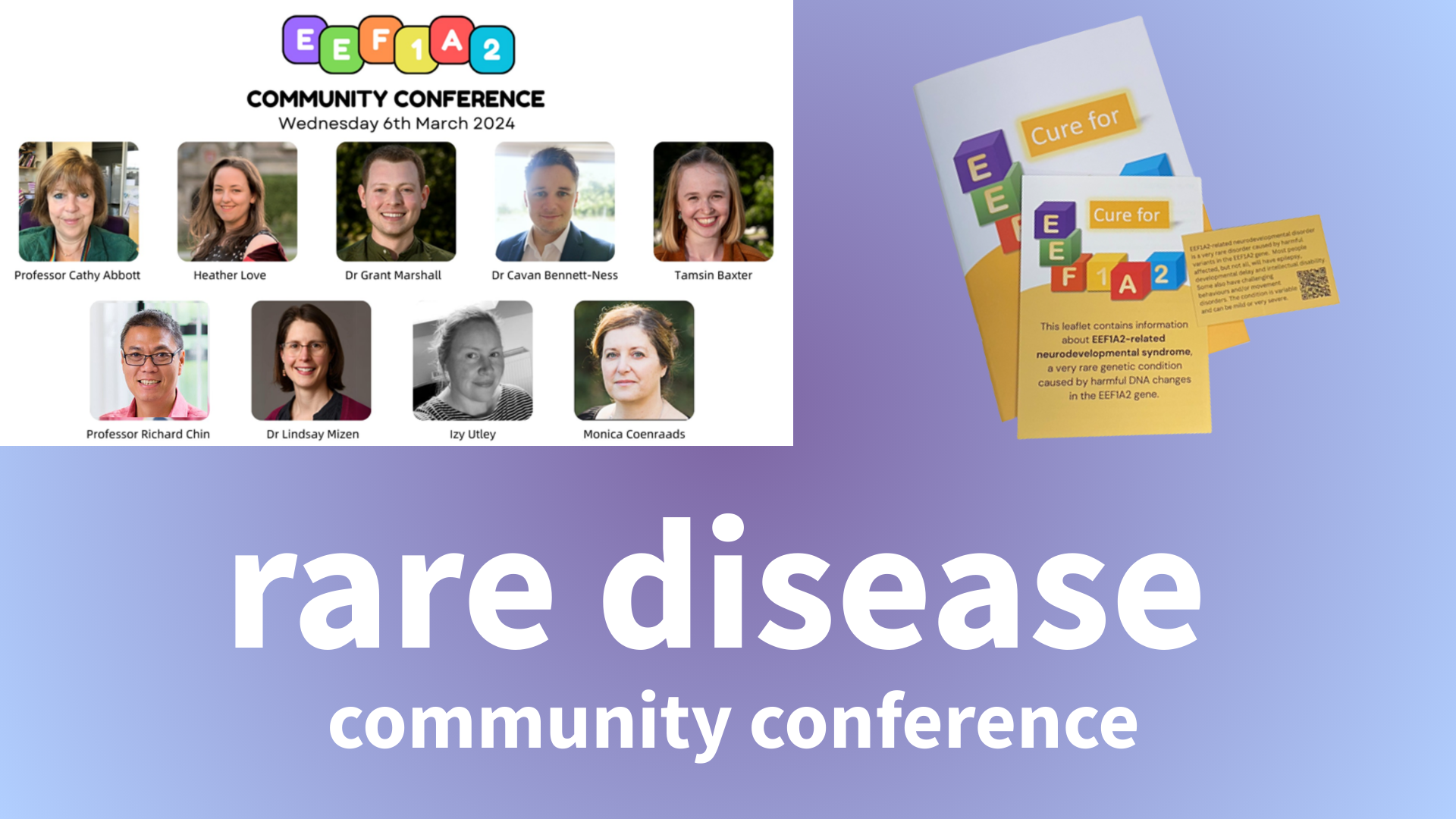
At our EN:PM session in February, the programme included a public engagement showcase. We had a lot of positive feedback on the different types and approaches so we thought it would be a great idea to serialise them on the blog. It seems fitting that this should feature as one of our early posts as Edinburgh Neuroscience was of course at the vanguard of public engagement and outreach when it was established exactly 20 years ago. Public engagement is now an integral part of contemporary research activity; the mutually beneficial rewards, universally acknowledged.
And so, Cathy Abbott gives us insight into organising and hosting a conference with a difference…
Within Edinburgh Neuroscience we have so many fantastic examples of engagement with the public, from classes of schoolchildren, to visitors to the Science Festival and beyond. But what do you do when your intended target audience is small and has members scattered across the world who may not be able to travel, and who speak a whole range of different languages?
This was the challenge we faced with the rare genetic disorder my lab works on, the snappily titled, EEF1A2 Related Neurodevelopmental Disorder. This condition affects about 1 in 35,000 people and was only discovered 14 years ago, so we only know of a few hundred affected children and their families.
The disorder is very variable, but in almost all cases leads to early onset epilepsy, which doesn’t always respond to anti-seizure medication. Affected individuals always have a degree of intellectual disability, which can be severe, and many have behavioural issues. Mobility is often affected – some children need wheelchairs and whilst others can walk, they may have movement disorders. All in all, it is easy to imagine the daily issues faced by many families, and the challenges posed by overseas travel.
For many years, I had wanted to host a conference of some description for the EEF1A2 community. I knew from the active Facebook group of affected families that there was a real demand, not just for more information, but for coming together in some way. So, when CMVM first created a new PhD programme, Engagement for Impact, in which students would do a conventional PhD with embedded engagement training and activities, I put in a proposal with Sue Fletcher-Watson (and her extensive engagement expertise) on board as second supervisor. We were lucky enough to recruit Heather Love, who worked wonders to develop the initial idea into a workable format.
Crucially, the content of the conference was co-created with families via the Facebook group. Heather devised a survey to determine priorities and to collect free text suggestions. The families were very clear that they wanted to know more about epilepsy treatment, about sleep, and about how research is done, so we set about assembling a team of speakers, from our lab and beyond.
The decision to make the conference online was an easy one, in the light of the families’ circumstances, but that was only the start. We had to consider time zones:
- How late could we hang around at work delivering the content to suit people in the US?
- Would IT people stay around to help us?
- What about people on the other side of the world?
It was obvious that compromises just had to be made, but then we had to think of how we could make the content as widely accessible as possible. Many respondents to the survey (using automated translation tools) told us that they were really keen to attend but didn’t understand English.
The solution Heather hit on was to run the conference on Zoom, recording the whole thing and with subtitles enabled. Once the conference was over, she would edit the subtitles for clarity and accuracy, then upload the videos to YouTube. This meant that viewers could use YouTube’s automated translation of the subtitles, synced to the videos of people speaking.
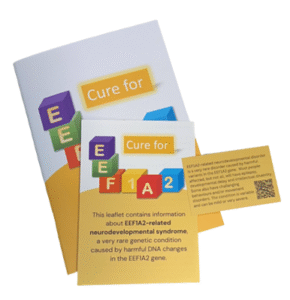 We finally ran the conference in March of 2024. Over a hundred people registered for the live event. This may not sound like many, but it corresponds to about a third of the total target audience worldwide. Considering how many people couldn’t attend because of timing or language issues, we took this as a win! People who registered in advance were sent a little conference pack consisting of an EEF1A2-branded notebook and pin badge; a leaflet about the disorder; a credit card sized information card with a brief description of EEF1A2 and a QR code linking to our website.
To put not only a name but also a lovely community to my child’s disorder is a blessing
Comments such as this in the chat during the talks, and in the feedback survey after the event, were incredibly heartening and moving. One father in New Zealand had got up at 4am to watch as much as he could before getting his children up for school.
You couldn’t ask for more, really. This is why engagement is so important.
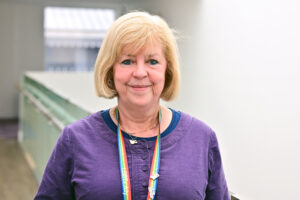
Cathy Abbott is Professor of Mammalian Molecular Genetics at the Institute for Neuroscience and Cardiovascular Research, University of Edinburgh
Further Information
NORD https://rarediseases.org/rare-diseases/eef1a2-related-neurodevelopmental-disorder/
EEF1A2 Youtube Channel https://www.youtube.com/@EEF1A2/videos
CMVM Public Engagement with Research sharepoint