Any views expressed within media held on this service are those of the contributors, should not be taken as approved or endorsed by the University, and do not necessarily reflect the views of the University in respect of any particular issue.

Visitor Experience & Exhibition Reflection

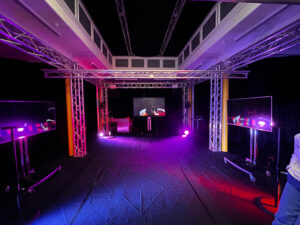
We wanted the space to feel open, so people could explore it in their own way without too many instructions. The sound of a slow, steady heartbeat played in the background and became the rhythm of the room. We placed stage lights on the floor, and later discovered they changed colour when they picked up vibrations. So, we kept them there, and they ended up reacting to the bass in the heartbeat sound, which made the space feel alive.

There were four sensors placed around the room. One Kinect in the front was taking visual input from the space. Three screens showed visuals that shifted in real time. The major shift happened when all four sensors were triggered at once. That meant people had to explore and figure out how to interact together. When it clicked, you could feel the energy shift  with sound and change in visual. It looked like everyone had unlocked something at the same time.

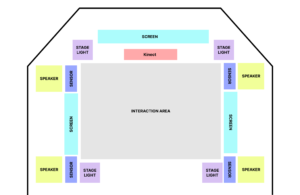
This was our proposed room plan:
Sensors

  • Kinect: Provides Visual input to process through the TouchDesigner effects
  • Distance Sensor: Lets visitors trigger visual changes, such as making on-screen flames grow when they move closer or shift to the next effect when triggered at the same time.

Electronics

  • Computer or system units: Runs the interactive software and connects to the sensors.
  • Speakers: Play a continuous heartbeat sound that sets the mood and drives interaction.
  • Cables and power: All necessary connections and adapters.
  • Mounting hardware: Used to position the Kinect and other components securely.

Displays and Lighting

  • Three screens: Positioned around the room to show responsive visuals that change based on visitor behaviour.
  • Stage lights: Originally designed to change with a tap, but we used them on the floor to respond to bass vibrations from the heartbeat sound.

Designing the Brochure

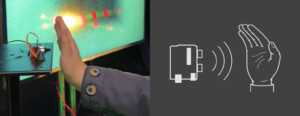
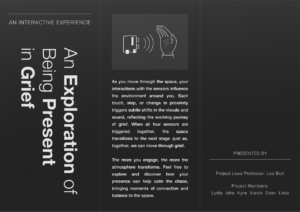
We put together a trifold brochure to help visitors interact with the space more easily. Since the sensor only responded when the hand was placed in a specific way, a lot of people were unsure how to engage with it at first. So we included a simple diagram in the brochure showing exactly how to position their hand for the interaction to work.
Reflections and Learnings

One of the biggest takeaways was the importance of clear communication in guiding the visitor experience. While we had hoped the sensory feedback would be intuitive, we quickly realised that many visitors needed a bit of direction to fully engage with the space. The diagram in the brochure was a simple but effective solution, as it helped demystify the interaction process.

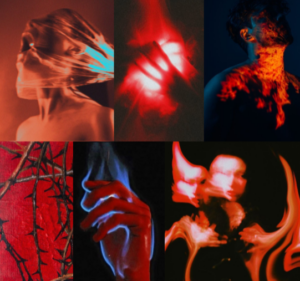
 

Visual Research and Inspiration: Visualization Mood boards

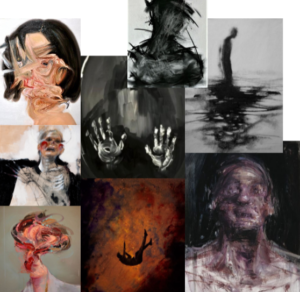
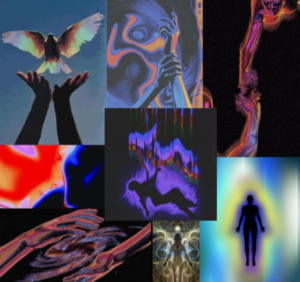
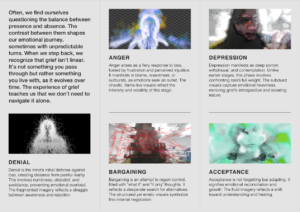
In conceptualizing this installation, we developed storyboards to explore how visual elements can convey the five stages of grief. Our focus was on creating immersive, evocative visual experiences that capture the essence of each emotional stage by curating images, colour palettes, textures, and abstract representations.

For each stage of grief – denial, anger, bargaining, depression, and acceptance – we created individual mood boards. These compilations serve as visual anchors for the future to ensure a cohesive yet distinct representation of each emotional phase. The mood boards incorporate a range of visual elements including:

  • Color schemes to reflect emotional tone of each stage
  • Textures and patterns that evoke specific sensations or feelings
  • Abstract and representational imagery that symbolizes key concepts

(https://miro.com/app/board/uXjVLixa9bM=/)

1. Denial: A thin veil shielding from harsh reality.

Colour scheme: Muted greys and whites for numbness and disbelief.

Textures: Fabric-like patterns, semi-transparent cloth or veil texture.

Imagery: A scene viewed through a textured veil, blurred shapes suggesting an obscured view, or someone partially hidden behind a cloth. The veil could symbolize a ‘preferable reality’

image sources:
1.https://pin.it/6tKUtohzu
2.https://pin.it/7bgzGUoXV
3.https://pin.it/5sVXEn7fF
4.https://pin.it/4Ng3FQue6
5.https://pin.it/5c1swarlw
6.https://pin.it/2908WJ3Ln


2. Anger

Color Scheme: Vibrant reds, oranges, and deep browns; a sense of burning and intensity.

Textures: Turbulent smoke, distorted glass or warped metal, creating a sense of chaos.

Imagery: Swirling smoke obscuring objects, jagged edges piercing the air, or distorted views through broken mirrors, symbolizing frustration and rage.

image sources:
1.https://pin.it/2wanXLXzE
2.https://pin.it/6KplPdwCK
3.https://pin.it/4bEmssVxS
4.https://pin.it/5pPvOTJjV
5.https://pin.it/Jh4HzCkEQ
6.https://pin.it/Krae5xifo


3. Bargaining: A futile grasp, everything slips away.

Colour Scheme: Pale yellows and soft blues, symbolizing fleeting hope and fragility.

Textures: Flowing, liquid-like patterns; smooth but uncontrollable surfaces.

Imagery: Liquid dripping or running through open hands, symbolic of time or opportunities slipping away, reinforcing the sense of helplessness and loss of control.

image sources:
1.https://pin.it/1wfk5fLBu
2.https://pin.it/2zZSOpM6i
3.https://pin.it/2wanXLXzE
4.https://pin.it/7gBz254kQ
5.https://pin.it/28BFFqNOK
6.https://pin.it/1i5oIvl9a

4. Depression: A spiral of thoughts bending into unbearable shapes.

Colour Scheme: Primarily blacks, dark grays, and deep blues, with minimal light and desaturated colors, heavy shadows.

Textures: Distorted gouache texture, thick and uneven layers, rough and clotted surfaces, symbolizing emotional stagnation.

Imagery: Abstract shapes submerged in darkness, distorted figures struggling against the weight in heavy, dark pigments, reflecting despair and hopelessness.


image sources:
1.https://pin.it/1o4N3Dfh1
2.https://pin.it/7uljdZqUp
3.https://pin.it/7my5pn7jV
5.https://pin.it/6a8p2261a
6.https://pin.it/4WIGVj0Sp
7.https://pin.it/5eUzBKMc1

Acceptance: From shadow to light

Colour Scheme: Soft purples transitioning to lighter hues, symbolizing transformation.

Textures: Smooth gradients, gentle curves.

Imagery: Sunrise, open spaces, balanced compositions.


image sources:
1.https://pin.it/6CW58fcqH
2.https://pin.it/3YWkJy4Yj
3.https://pin.it/745npWwI9
4.https://pin.it/79KAq3H8E
5.https://pin.it/1cYJpkZeF
6.https://pin.it/6I1afqwSd

Conceptual Foundations and User Interaction Flow

Conceptual Foundations: Defining Presence and the Exploration of Grief

The concept for our project developed through an iterative process of group discussions centered on the theme of “presence.” Our initial conversations revolved around the idea that presence goes beyond physical existence. It is a state of full awareness and engagement. From this, we began to discuss the contrast between presence and absence, particularly how the absence of someone or something can heighten the significance of being present. This interplay between presence and absence became a key inspiration for our work.

As we delved deeper into the technical aspects of the project, we explored how emotions manifest through sensory experiences, considering how abstract feelings can be externalized through sound, visuals, and other sensory stimuli. This led us to focus on one particularly profound emotional journey: Grief.

Grief became the central focus of our project as it perfectly captures the tension between presence and absence. Its unpredictable and non-linear nature aligned with our goal to move away from traditional, structured storytelling, while its universal relevance made it something participants could connect with on a personal level. We wanted to represent the emotional weight of grief in a way that allowed visitors to actively engage with the experience, influencing the emotional ‘weather’ of the space rather than simply observing it. The sensory design featuring chaotic visuals and layered audio will reflect the mental turbulence often felt during grief, while the interactive elements highlight how acts of empathy and connection can bring stability. By translating abstract emotions into tangible sensory experiences, the installation will encourage participants to reflect on how being present, even in small moments, can have a meaningful impact on emotional well-being.

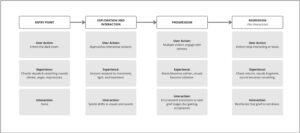
User Interaction Flow 

Entry Point: Introduction to the Installation

Action: The user enters the dark, intimate space of Alison House’s Atrium. 

Experience: The room is in a chaotic state, representing the early stages of grief (denial, anger, depression). The visuals on the projection are fragmented and erratic, with dark tones and disjointed animations. The surround sound creates an unsettling atmosphere with low-frequency drones, sharp noises, and overlapping audio elements. 

Interaction: Initially, no interaction is required. The system reflects a “worst mental state” as it starts in chaos due to minimal activity. 

Exploration: Interaction Begins

Action: Visitors approach the center of the room where interactive sensors (heartbeat sensor, buttons, knobs, light sensors, proximity sensors) are placed. 

Experience: The sensors pick up on the Presence. 

  1. Heartbeat Sensor: Detects a visitor’s pulse and translates it into rhythmic audio or visual elements (e.g., pulsating light or sound).
  2.  Proximity Sensors: Trigger subtle changes in visuals or sound as visitors move closer or farther from specific areas. 
  3. Visual Sensors: React to changes in ambient light caused by visitors’ shadows or movements, influencing visuals on the projection. 

System Response: The more interactions occur, the system begins to transition from chaos to calmer states. 

Dynamic Progression Through Stages of Grief

Action: As visitor activity increases (e.g., multiple people interacting simultaneously), the system dynamically evolves toward later stages of grief (bargaining and acceptance). 

Experience: The projected visuals become less fragmented and chaotic, shifting toward more cohesive imagery with lighter tones. Soundscapes evolve from dissonant noise to harmonious and soothing ambient music. Visitors feel a sense of collective impact as their interactions contribute to improving the “mental state” of the system. 

Interaction Feedback: Real-time feedback ensures users see their impact on the environment (e.g., visuals brighten or calm as more sensors are activated). 

Regression if Activity Stops  

Action: If visitors stop interacting with the sensors or leave the space entirely, the system begins to regress back into earlier stages (chaos and depression).  

Experience: Visuals become darker and more fragmented again. Soundscapes return to unsettling tones, reinforcing a sense of emotional instability. This regression emphasizes that grief is non-linear and requires ongoing engagement for resolution. 


Installation Features:

  • The installation is non-linear; users can enter at any time during its progression. 
  • Sensors are designed to be intuitive so that all interactions feel natural and engaging. 
  • The evolving system reinforces themes of grief as a shared experience that requires active participation for healing. 
  • This flow ensures an immersive journey where visitors feel both individual agency and collective responsibility in shaping the emotional narrative of grief.

Miro Board: https://miro.com/app/board/uXjVLixa9bM=/

css.php

Report this page

To report inappropriate content on this page, please use the form below. Upon receiving your report, we will be in touch as per the Take Down Policy of the service.

Please note that personal data collected through this form is used and stored for the purposes of processing this report and communication with you.

If you are unable to report a concern about content via this form please contact the Service Owner.

Please enter an email address you wish to be contacted on. Please describe the unacceptable content in sufficient detail to allow us to locate it, and why you consider it to be unacceptable.
By submitting this report, you accept that it is accurate and that fraudulent or nuisance complaints may result in action by the University.

  Cancel