Category: Submission 1
sound design—Yunqi Tang
Key Sound Elements
Ambient Sound Design
(1) Dynamically changing ambient sounds
Daytime: breezes, running water, birdsong (but somewhat misplaced, e.g. birdsong at night).
Nighttime: strange echoes, vague whispers, occasional clashing of metals, creating a sense of an unstable world.
(2) Abnormal sound cues
Sound of waves (on a clear, windless day) → Indicates some false space or hidden passage.
Early morning birdsong (occurs at night) → Indicates a faulty memory or an incomplete world.
Spatial reverberation changes → The distance, direction and reverberation effects of the sound vary when the MM is standing in different positions to guide the player’s exploration.
Character interaction sounds
NN’s drawing sound:
Sound of brush rubbing on paper (normal state).
Brush strokes become rapid and erratic (when he has questions or anxiety about the world).
MM’s auditory feedback:
When MM hears an unusual sound, the background sound briefly becomes muffled or distorted, showing his anxiety.
MM’s volume increases as he moves closer to the source of the sound, and the reverb effect is enhanced to suggest the true direction.
Interaction and Puzzle Sounds
(1) Sound as a clue
Spatial sense construction:
3D sound effects help the player determine the location of sounds.
Echoes simulate hidden passages or maze structures (e.g. more echoes in closed spaces, less in open spaces).
As MM approaches the correct path, the sound becomes clear and steady.
When going in the wrong direction, the sound may gradually become distorted or disappear
(2) Dynamic Music System
Music changes with MM’s exploration progress:
When discovering new clues, a mysterious but gentle melody is added.
When entering a dangerous area, music adds low, disturbing electronic sounds or ambient noise.
Sound references
unravel2
https://www.youtube.com/live/iUeFObew5mI?si=0Q5hS9ioQjOA_94-
it takes two
https://youtu.be/yZ2VB6nbsUI?si=ed-hYOd0d3ehk6ia
Character Voice Reference
https://youtu.be/WHHGOYu6Fl0?si=W_yl0X3bdQSW0X93
ArtStyle_YTL
- Art Style
- Visual Design (Overall Aesthetic)
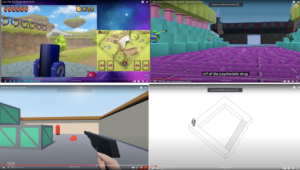
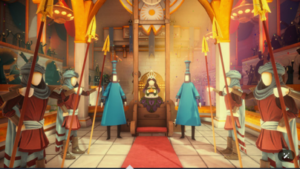
low poly aesthetic, simple solid colors and textures
Considering the references to philosophical themes like Plato’s Allegory of the Cave or The Matrix, the visual design might use contrast between reality and illusion. Using surreal, abstract, or dream-like imagery to represent the fractured perception of the characters.
- Character Design
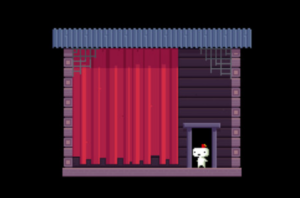
Only two characters, both protagonists.
NN: Loves painting, trusts what he sees, and fully believes in reality. His design could reflect a more grounded or realistic style, with sharp details and a vibrant, almost idealized appearance. He could be depicted with art-related elements like brushes or easels, reflecting his passion.
MM: Possesses extraordinary hearing, sharp intuition, and a strong desire to uncover the truth. MM’s design might emphasize sensory elements, like large eyes or ears, or more ethereal characteristics that represent his deep intuition. His clothing and features could be more abstract, showing a deeper connection to the unseen or unknown aspects of the world.

- Environment Design
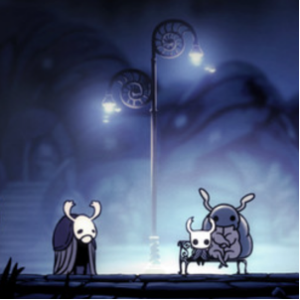
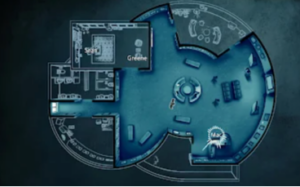
The game could have interconnected regions that flow into one another in a non-linear fashion, with diverse environments — natural gardens, chaotic urban settings, and abstract landscapes.
The environment could also mirror the inner states of the protagonists. For example, a distorted, fragmented world could represent MM’s sharp intuition and desire to uncover the truth, whereas more serene, stable environments could reflect NN’s belief in reality.
- Color Palette
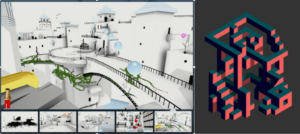
Bright, warm colors could be used in scenes that represent NN’s world, filled with a sense of comfort or belief in the self.
On the other hand, cooler, muted tones could represent MM’s more questioning world, filled with ambiguity and an exploration of truth. A mix of these tones could also signify the characters’ contrasting perspectives on reality.
- UI Design
UI should be minimalistic, stay consistent with the visual design 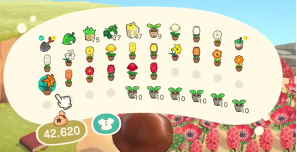

Introduction_and_Plots_FanLin
1.Introduction
In the enigmatic world of NN & MM, perception is a puzzle, and reality is anything but certain. This third-person, two-player cooperative game challenges players to step into the roles of NN, a being with complete vision, and MM, a creature gifted with extraordinary hearing. Together, they must navigate a surreal maze garden, where cooperation and communication are not just strategies—they are the keys to survival.
As NN and MM delve deeper into this mysterious world, they begin to uncover unsettling inconsistencies in their memories. These discrepancies spark doubt, forcing them to question the very fabric of their reality. Is the maze all that exists, or is it merely a veil hiding something greater beyond its walls?
Inspired by Plato’s “Allegory of the Cave,” NN & MM explores the tension between perception and truth. NN sees the world in vivid detail, while MM relies on sound to uncover hidden realities (Rauch, 1994). Their asymmetrical abilities create a unique gameplay experience, where players must learn to see the world through each other’s senses. Together, they must bridge the gap between their differing perspectives, challenging the illusions they’ve come to accept as reality.
In NN & MM, the maze is more than a physical space—it’s a metaphor for the barriers we construct in our minds. Can you and your partner unravel its mysteries, or will you remain trapped in the shadows of your own perceptions? The journey begins now.
- Plot
In a vast, labyrinthine world that resembles an endless garden, a small creature named NN has lived for as long as he can remember. This surreal, maze-like garden is filled with cherished memories and friendships, and NN has always found comfort in its beauty. He loves to paint, capturing the vivid details of the world he sees, and he firmly believes in the reality of his visual perception. To NN, the labyrinth is everything—a complete and unchanging reality.
However, NN’s friend, MM, has begun to notice something strange. MM, who possesses extraordinary hearing, starts picking up peculiar sounds that defy the logic of their world:
– On bright, windless days, MM hears the distant crash of ocean waves, though no ocean exists within the labyrinth.
– At night, he hears the chirping of birds—sounds that should only belong to the dawn.
– When recalling shared memories with NN, their recollections don’t align. The locations, the environments, even the events themselves seem to shift and contradict.
These inconsistencies plant a seed of doubt in MM’s mind. He begins to question the very fabric of their world. Is the labyrinth truly complete, or is it merely an illusion—a carefully constructed facade hiding a deeper truth? Driven by his sharp intuition and a growing desire for answers, MM starts to explore beyond the boundaries of the maze, using his acute hearing to uncover what lies hidden.
Meanwhile, NN remains deeply immersed in the world he sees. He paints tirelessly, capturing the beauty of the labyrinth and sharing his artwork with MM, hoping to convince him to stay. To NN, the labyrinth is real, tangible, and safe. He fears what lies beyond its walls and clings to the certainty of his visual perception.
As their journeys unfold, NN and MM find themselves perceiving completely different realities. NN, with his vivid 3D vision, sees a complex and intricate world, but struggles to interpret the sounds that MM hears. MM, on the other hand, perceives the world as a 2D plane, relying on his extraordinary hearing to piece together the hidden structure of the labyrinth. Together, they must navigate this surreal maze, using their unique abilities to solve its mysteries.
NN provides visual clues, painting the world as he sees it, while MM relies on sound cues to uncover hidden pathways and secrets. As they work together, their perspectives clash, forcing them to confront their differences and question the nature of their reality. Is the world they perceive real, or is it an elaborate illusion designed to keep them trapped?
In this labyrinth where reality and illusion intertwine, NN and MM must decide: will they stay within the confines of the maze, accepting the world as it appears, or will they venture beyond its boundaries in search of the unknown truth? Their choices will shape not only their fates but also the very nature of the world they inhabit.
Themes and Inspirations:
Plato’s Allegory of the Cave: The game explores the tension between perception and reality, challenging players to question what they see and hear.
The Matrix: The labyrinth serves as a metaphor for a constructed reality, hiding a deeper truth.
Interstellar: The story delves into the emotional and philosophical struggles of characters grappling with the unknown.
Possible Endings:
- The Illusionist: NN convinces MM to stay in the labyrinth, accepting the world as it appears.
- The Seeker: MM convinces NN to leave the labyrinth and face the unknown truth beyond.
- The Divide: NN and MM go their separate ways—one staying, the other leaving—resulting in a profound change to the world itself.
Bleep & Blop is a journey of faith versus doubt, perception versus reality. It invites players to reflect on the nature of truth and the illusions we construct to protect ourselves. Will you cling to the comfort of what you see, or dare to listen for the truth hidden in the silence? The labyrinth awaits.
Character design draft
 NN
NN
 MM
MM
Reference
Rauch, L. (1994) ‘Imagery and allegory in philosophy’, in Smith, J. (ed.) Allegory Revisited: Ideals of Mankind. Dordrecht: Springer Netherlands, pp. 315-324.
The Matrix (1999) Directed by Lana Wachowski and Lilly Wachowski. [Film] USA: Warner Bros. Pictures.
Interstellar (2014) Directed by Christopher Nolan. [Film] USA: Paramount Pictures & Warner Bros. Pictures.
Sound Design – Astrud
For the NN & MM game sound design, we contemplated to work on different sound elements that will be programmed on Wwise and then linked to the game interface in Unity. These elements are:
- Ambience
- Location-specific
- SFX
- NN’s vibrations signs
- Players feedback
- NPC sounds
- User Interface sounds
- Environment
- Music
- Adaptative music
- Interface/menu
- Dubbing
- Walas
- NN’s vocals
Sound Description
Ambience
The labyrinth will have different ambiences: day and night ambience, different weather changes and other location-specific ambience.
SFX
The bird character NN makes sounds for the rabbit, MM to hear. The vibrations and vocals will be processed in two different ways: NN can barely hear, so she will have a muffled perception of the sound, but MM will hear everything perfectly.
Each character will produce feedback sounds like steps, fur or feathers movement and interaction with objects or creatures.
The dangers in the way can be due to the environment or the creatures around them, this will make a determined sound that will be processed differently for the two perceptions.
As one of the characters approaches the correct path, the sound becomes clear and steady. When going in the wrong direction, the sound may gradually become distorted.
Music
Generative music will be created for different situations. When discovering new clues, a mysterious but gentle melody is added. When entering a dangerous area, music adds low, disturbing electronic sounds or ambient noise.
The main menu will have its own background music.
Dubbing
NN’s language, walas and creatures’ voices will be recorded and processed in post production to create fictional unique characters.
Reference
The way the environment sounds will be located is similar to the video game Minecraft, where the SFX can been programmed to create the effect of depth and orientation, which means, that the monsters and other objects can be heard nearer or further depending on the distance of the characters.
Three Game Story Planning Proposals
In the group discussion, we came up with three game story ideas in total and choose one as the final game plot.
The First One(From Chengcheng Jiang)
Gameplay:
Leap motion – Waving is moving the perspective. Making a fist is touching
Keyboard – control up, down, left, right
Computer Screen/VR – Display Screen
The plot goes in two directions: one public-spirited and warm; one suspenseful and brainy
Plot: “Afterglow” – Last Song in the Dark (Public Service Warming)
Keywords: pianist, progressive blindness, love, regret, reconciliation, healing
It’s a story of love and goodbyes. It is a musician who is gradually losing his sight, searching for light in the darkness. It is also a piece of music that is the last piece of music left to a lover in the flow of years.
- Identity of the protagonist: Cheng, 28 years old, a professional pianist known for his keen sense of hearing and excellent musical talent.
His world never thought it would be plunged into darkness until two years ago, when he was diagnosed with retinitis pigmentosa – an incurable eye disease that means he’ll be completely blind within a few years.
At first, he chose to hide it.
Until one day he walked off the stage after a recital, only to almost fall in front of the audience – at that moment he realized that his vision was shrinking and even the faces of the audience had become blurred.
He was afraid of losing the stage, afraid of becoming a burden to others, and most importantly – he was afraid of dragging down his fiancée, Lin Zhiwei.
2. break up – he was afraid that one day he wouldn’t even be able to look at Lin Zhiwei’s face, and even more so, he was afraid of becoming a lifelong bondage to her.
He feigned indifference, pretended to be busy, and was even deliberately absent on her birthday just to make her dead to the relationship.
In the end, he chose to break up, leaving only one sentence behind:
“You deserve better, and I, for one, don’t want to be a burden to you.”
–and then disappeared into her world.
3.After the breakup, he was still in love with her.
After the breakup, Hsieh Hsing-chou retired from giving concerts and switched to teaching composition courses at the Conservatory of Music.
His eyesight is getting worse, he can barely see the road at night and can only perceive the world by sound.
But he still played a tune every day – a tune he had once composed for Lin Zhiwei.
Unfortunately, it never got the chance to play for her again.
4.The wedding
One day, he accidentally learned – Lin Zhiwei was getting married.
Her groom was her childhood friend, a man who took good care of her
That day, Xie Xingzhou sat at the piano in a state of disorientation, his fingertips trembling–
He should have blessed her, but it was as if his heart was clutched hard by something.
He wanted to go and see her one last time, even if his world had grown darker, even if he could no longer see her face.
5.His last song
He decided to apply for a job as a musician at a wedding venue.
He used a pseudonym and was hired by the wedding planning team as a regular pianist.
On the day of the wedding, he sat at the piano in the corner, wearing a simple black suit, his fingertips pressed against the keys.
The hall was bustling, and he heard her voice, light and gentle–
She, she is really happy, isn’t she?
At this point, the master of ceremonies announced the bride’s entrance and it was time for him to play the wedding march.
And yet, in that moment, he slowly – played the tune that had been composed for her.
The notes flowed slowly – a melody she knew well, a memory that belonged to them.
She stopped suddenly.
She shivered slightly and slowly turned her head in the direction of the piano.
6.Conclusion: the afterglow
She recognized him.
He, however, could no longer see her.
The music stopped. The ballroom is silent.
“Is that you?” She asked, choking back a sob.
He smiled, his voice soft, “Congratulations.”
Lin Zhiwei slowly walked up to him and looked at this man she had loved so much with tears in her eyes.
She watched as his bony fingers gently stroked the keys, as if he were sensing the world by touch.
It suddenly dawned on her – he’d never not loved her, he’d just, chosen to let her go.
But eventually, she took a soft step back and looked up and smiled.
“Thank you, rowboat.”
She turned around and continued on to her new life.
Xie Xingzhou sat in front of the piano and listened to the wedding continue, his world had been completely plunged into darkness.
But he doesn’t regret it.
With his last remaining moments, he gave her his own blessing.
(The game ends and the scene is framed in lights, the pianist’s figure elongated as if dissolving into the light.)
Features & Mechanisms
Experience for the Blind
Players take on the role of Xie Xingzhou, who feels the gradual decline of his eyesight and must rely on sound to recognize the world.
Piano Play Play Leap motion
Players need to play the proposal song themselves, and if they play it wrong, the melody will become mutilated, symbolizing Xie Xingzhou’s regret.
Game prototype reference – see
Episode 2: “Echoes” – a suspenseful brain-burning story
1.Protagonist status:
Your name is Cheng, you are 32 years old, a former documentary director who specializes in filming and exposing the dark side of the city with his camera.
Three months ago, your world was plunged into darkness.
You were blinded in a sudden car accident, but here’s the strange thing – you have almost no memory of what happened. Your doctor tells you that this could be psychological amnesia, where your brain refuses to recall the trauma.
But you never felt right.
–Was it really just a car accident that night?
All you have in your head are bits and pieces of sound clips:
“Boom-” The sound of glass shattering.
“Someone’s chasing me ……” whispered a gasp to himself.
“He knows too much.” A muffled, low voice.
You have to get to the bottom of this.
Why are you blind?
You don’t believe it was just a simple car accident.
You began to “remember” the night with your voice.
Thread: Final Project
You were doing a documentary on **”Urban Secrets “** before you went blind, investigating some truths that have been covered up.
You start to remember, when was the last time you recorded yourself? What exactly did you hear that you shouldn’t have?
But all the hard drives, the backups about the project have disappeared.
Closing in on the truth.
You decide to explore the city using echolocation to find lost memories.
Your world goes completely dark, and you can’t read documents, view security footage, or even distinguish the expressions on your friends’ faces.
But you have a voice.
You rely on tapping on objects, echoing footsteps, and air vibrations to find a hidden clue – the
The scene of your crash, not on the road, but in a remote underground parking lot.
That means – you weren’t hit by a car, you were “brought” there and faked an accident.
The ultimate truth: what did you find out?
You finally piece together your memories of that night:
You went to interview a person with knowledge of the situation that night, who had been the head of security for a real estate company. This company was planning a major illegal transaction involving government corruption and land fraud, and you videotaped him giving evidence.
But you’re being watched.
You had just left the interview location when you were stopped by several men who grabbed your recording equipment and knocked you out.
They were going to kill you, but someone changed their mind.
So they erased your memory and used some kind of drug to destroy your optic nerves, making you completely “blind” to the truth.
You go back to that parking lot and rely on your sense of hearing to find an old tape recorder abandoned in a hidden corner.
You press play–
On the recording, it’s the voice of the person who knows.
“…… They’ve been fiddling, rigging bids and deceiving the public.”
“…… If anyone finds out, they’ll ……”
(Bang! Gunshot, recording interrupted.)
Features & Mechanisms
Real Echolocation Play
Instead of visualization, the player must perceive the environment through acoustic feedback
For example, if the phone rings, the player needs to find the location of the phone through spatial audio and answer the call
3D Sound & Blind Discovery
You have to rely on the ambient sounds to judge the plot
People, vehicles, and obstacles on the street.
Your “eyes” have been taken away, and you have to rely on your voice to explore the world.
Game Prototype Reference – Blind
https://www.bilibili.com/video/BV1gW411S7oU/?spm_id_from=333.337.search-card.all.click&vd_source= 658ddde8f91039166ca842a8608ea290
https://store.steampowered.com/app/406860/Blind/#app_reviews_hash
The Second One(From JIngwen Deng)
Game Title: Darkness
Genre: Adventure, Puzzle
Perspective: First-Person
Gameplay: Puzzle-solving, Survival
Number of Players: 1
Game Story:
In Darkness, the player takes on the role of a cat named Buster. At the start of the game, Buster finds itself trapped in a dark, misty maze, having lost its sight (or retained only minimal vision, able to see the fog and some nearby objects, but primarily relying on sound to complete tasks) and memory. The goal is to escape the dark mist. As the game progresses, the player follows sounds from different directions and gradually uncovers fragments of memory, eventually finding a way out of the mist.
Game Background:
Buster is a cat with special abilities. It has completed many tasks with a girl named Betty, guiding her to grow independent and courageous. In order to help Betty gain more courage, Buster sets up a series of dark, mist-filled challenges to test her. Buster temporarily erases Betty’s memory and swaps identities with her, allowing the player to complete the tasks from the cat’s perspective. Gradually, Betty regains her sense of identity and with Buster’s guidance, completes the challenges.
Gameplay Mechanics:
- Auditory-driven: Due to the lack of vision, the game design emphasizes sound as the primary means of interaction. There is a small, limited visual interface in the game, but most of the world is shrouded in mist. Most of the interactions and information gathering rely on sound. The player will hear footsteps, environmental sounds, object collisions, and voices from other characters.
- Stereo and Directional Sound: To enhance immersion, the game uses stereo and directional sound, allowing the player to accurately judge the position of their surroundings and objects. For example, the player can use the sound of footsteps in the distance to determine when enemies are approaching and hide, or follow sound cues to find hidden paths and items.
- Fragment Collection Example: During exploration, when collecting fragments, there will be special auditory cues that appear intermittently.
Main Objective:
Collect the fragments, uncover your memories, and escape the mist.
Side Objectives:
Avoid footsteps and dangerous objects.
Reference game link: The Vale Part 2
The Third One(from Fan Lin)
Game Project Overview
Game Genre: Puzzle, Casual Game
Game Story: A small creature named NN has lived in this vast labyrinth world for as long as he can remember. This garden-like world holds all his cherished memories and friendships. However, his friend MM has recently experienced a series of strange occurrences—
MM notices that the garden emits peculiar sounds:
- On bright and windless days, he hears the sound of ocean waves.
- At night, he hears the chirping of birds that should only be present at dawn.
- When recalling the same event with NN, their memories do not align in terms oflocation and environment.MM gradually realizes that this world may not be complete. He begins to question whether the place he lives in is real or merely an illusion. Using his extraordinary hearing and memory, he starts exploring beyond the labyrinth, searching for the unknown truth.Meanwhile, NN is fully immersed in the world he sees. He loves painting and firmly believes in the reality of his visual perception. He constantly illustrates what he sees and shares it with MM, hoping that MM will stay and not leave.In this labyrinth where reality and illusion intertwine, the perspectives of two friends clash. How will they resolve their differences? Where will the truth lead them?
Concept References:
- Plato’s Allegory of the Cave
- The Matrix
- InterstellarCharacter Design References:
- NN: Loves painting, trusts what he sees, and fully believes in reality.
- MM: Possesses extraordinary hearing, sharp intuition, and a strong desire to uncover the truth.
- Gameplay Mechanics:
• NN and MM perceive completely different worlds.
o NN sees a complex 3D world, but the intricate environment makes it difficult
for him to determine the direction of sounds.
o MM sees a 2D plane, with extraordinary hearing that allows him to perceive
sounds beyond his visible surroundings and use imagination to piece together
the world’s structure.
• Players will play as NN and MM, utilizing NN’s visual information and MM’s
auditory perception to solve the labyrinth’s mysteries.
o NN provides visual clues and describes the world’s structure. o MM relies on sound cues to explore hidden pathways.
Map References:
- The labyrinth features both beautiful garden landscapes and structurally inconsistent, chaotic areas.
- There may be “rifts” or “boundaries” where MM can perceive the world’s inconsistencies.
- The exit of the labyrinth is a final puzzle that requires combining visual and auditory clues to unlock.
- Core Gameplay Mechanics:
- Dual Perspective : Players can experience different views between NN (3D vision) and MM (2D auditory perception).
- Environmental Interaction Puzzles: NN records visual details through painting, while MM analyzes the environment through sound to uncover hidden truths.
- Branching Narrative Choices: Players’ decisions affect the trust between NN and MM, shaping the story’s outcome.
Possible Endings:
- NN convinces MM to stay in the labyrinth and accept this world.
- MM convinces NN to leave the labyrinth and face the outside truth.
- They go separate ways, with NN staying and MM leaving, resulting in a changein the world.This journey explores the theme of faith vs. doubt, guiding players to reflect on the question: “Is the world we perceive real, or merely an illusion?”
After discussion, we finally chose the third one as the game’s setting for our group.
Leap motion & unity_Jingwen Deng、Chengcheng Jiang
Leap Motion is an advanced gesture control technology that allows users to interact with computers through hand movements. It captures hand and finger movements with extreme precision and responsiveness through a small sensor device.Leap Motion can be used in a wide range of applications such as virtual reality (VR), augmented reality (AR), gaming, design, healthcare, and more.
Leap Motion uses infrared sensors to capture hand movements. These sensors can accurately detect the position, speed, and trajectory of the fingers, and can even sense small changes in movement. Leap Motion analyzes this data to convert hand movements into computer-recognizable signals in real time, enabling gesture control.
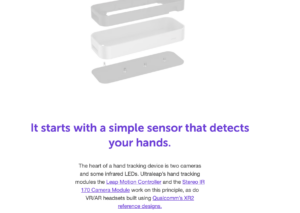
This is the official Leap motion tutorial for connecting to unity.
https://docs.ultraleap.com/xr-and-tabletop/xr/unity/getting-started/index.html


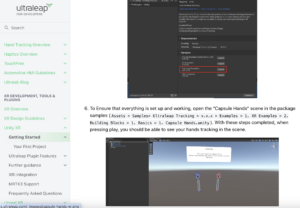
This is the official YouTube tutorial for Leap motion
https://www.youtube.com/user/LeapMotion
We also found the official Leap motion forums for technical queries
https://forums.leapmotion.com/latest
Specific examples of related games
An example of a similar implementation goal, such as using one gesture to control movement forward and a specific gesture to control the player’s jump.
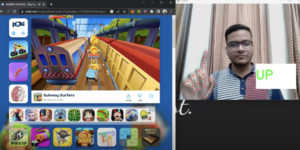
Tools preparation : Unity, Leap Motion

Everything is ready for testing!
Technical Realization and Game Mechanism (KYP)
Technical Realization
For the technical realization of the project, it currently divided into three parts:
- Leap motion and Unity connection
- Multiplayer in Wwise
Leap motion and Unity connection
As the controller in the game, leap motion captures players’ gestures and transfers them to trigger events in Unity. In this case, I am searching for instruction about leap motion and Unity connection and here are my results:
Leap Motion official instruction: https://docs.ultraleap.com/xr-and-tabletop/xr/unity/getting-started/index.html
Some settings that are good to know before started
- Tracking Camera
- Ultraleap Hand Tracking Software
- Unity XR Plugin Management Package
- OpenXR
Leap Motion & Unity project blog: https://felcjo-ringo.medium.com/leap-motion-unity3d-playing-with-virtual-blocks-using-my-real-hands-2329be3a07d6
Multiplayer in Wwise
Since our project includes two players, there are some special settings and technical issues in Wwise requiring further research. Links below are references about multiplayer audio.
Audiokinetic Instruction: https://www.audiokinetic.com/fr/library/edge/?source=WwiseFundamentalApproach&id=listeners
Audiokinetic Blog: https://www.audiokinetic.com/en/blog/implementing-two-audio-devices-to-your-ue-game-using-wwise/
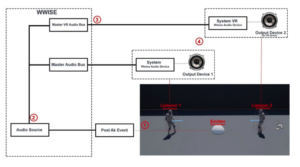
Based on the game mechanism, most of the modulation for sound and even sound source vary between two players for their different perspectives. This means there are two listener in Wwise and emitters have to send to two output devices in different modulation simultaneously.
A plugin (AkComponent) mentioned in the Blog link worth further research. Some programming (plugin) needs to be done if we want two players to have their own sound / two sound devices. My further learning will focus on realization and selecting the best solution for our project.
Game Mechanism
The basic aim of the game mechanism is creating information difference for two players in to perspectives in order to make them cooperate. According to my learning and experience, in most of the recent multiplayer game, players shares equal information or have different information in one perspective (mostly visual). But we can learn from their logic in designing game levels and obstacles.
Two examples below are from It Takes Two.
https://www.youtube.com/watch?v=yZ2VB6nbsUI
Time Point:
-
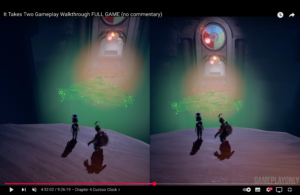
Chapter 4, 4:51:55 Providing visual / aural information with timing challenge -
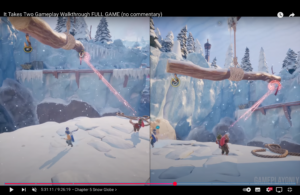
Chapter 5, 5:31:38: Replace the magnet with visual / aural ability (change colour / pitch)
I defined some logic of game level design here: timing which has some information provided by certain objects as standard to adjust players’ movement, rare power which only owned by one player and another player needs to help in some way.
For our project, instead of sharing information, it is always provided for one player due to two perspective. Timing can be a crucial part in our game level design,
Issue: Two players share the same information on screen. In our project, we may want some information difference based on sound and vision. We need a set of clear and easy communication between the players who receives different perspective from each other.
