Any views expressed within media held on this service are those of the contributors, should not be taken as approved or endorsed by the University, and do not necessarily reflect the views of the University in respect of any particular issue.
As the story creator of MM&NN, I’ve always believed that the world around the player should not merely serve as a backdrop—it should feel like part of the narrative, as alive and emotional as the characters themselves.
This week, I focused on redesigning the game’s environmental atmosphere to further blur the line between reality and dream, illusion and memory.
Painting the Sky: From Void to Dream
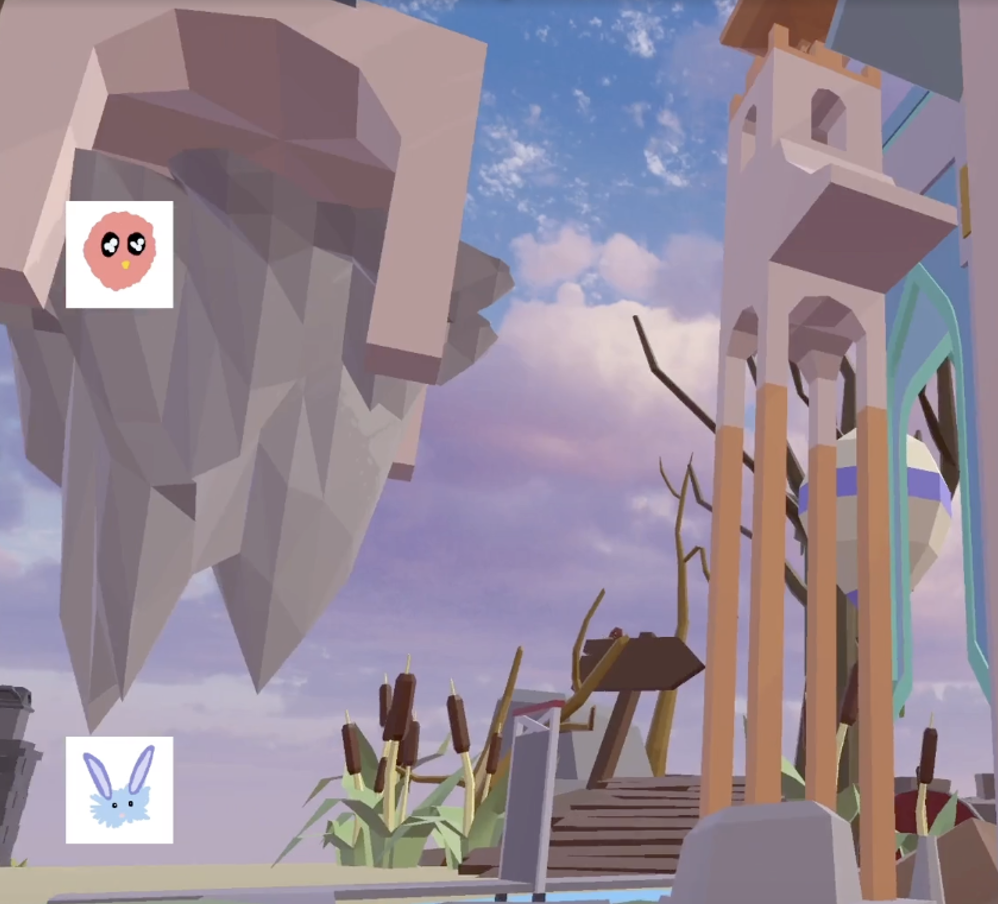
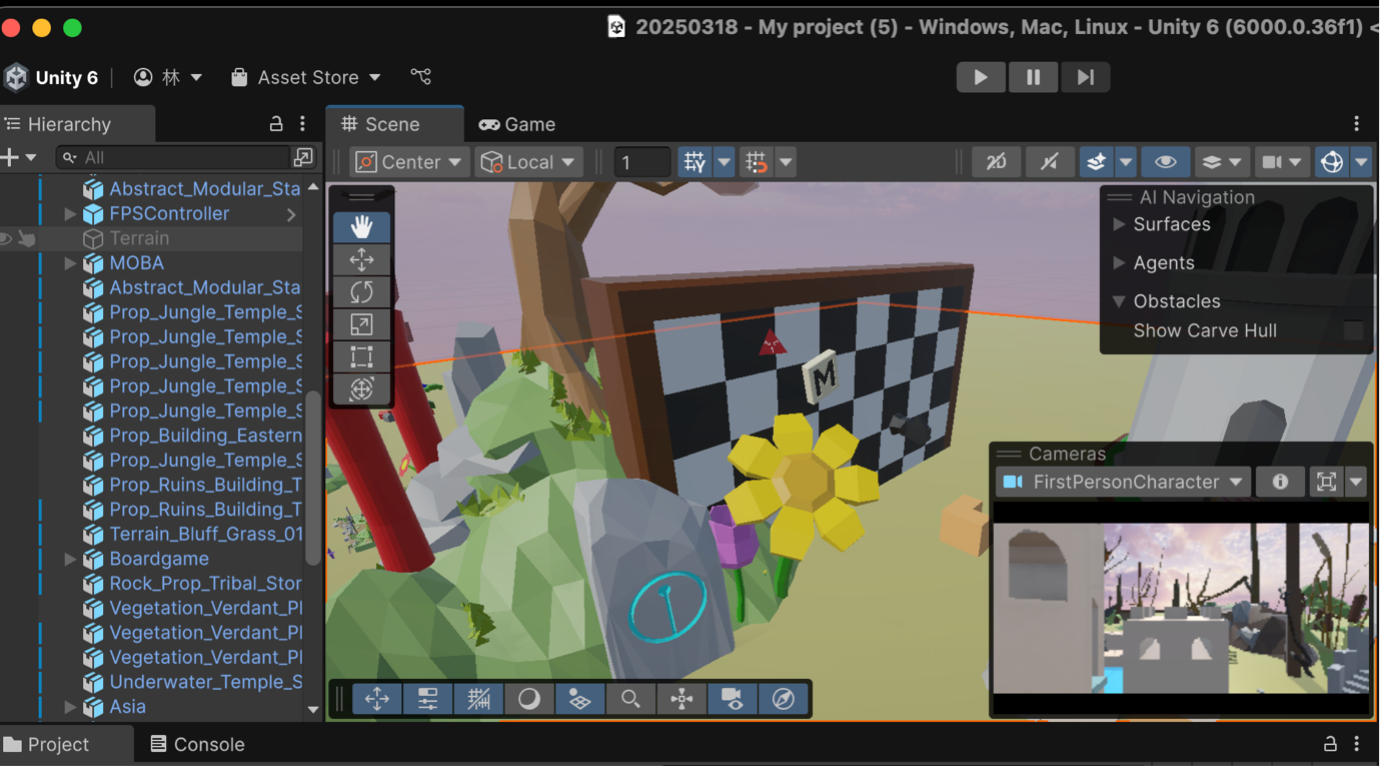
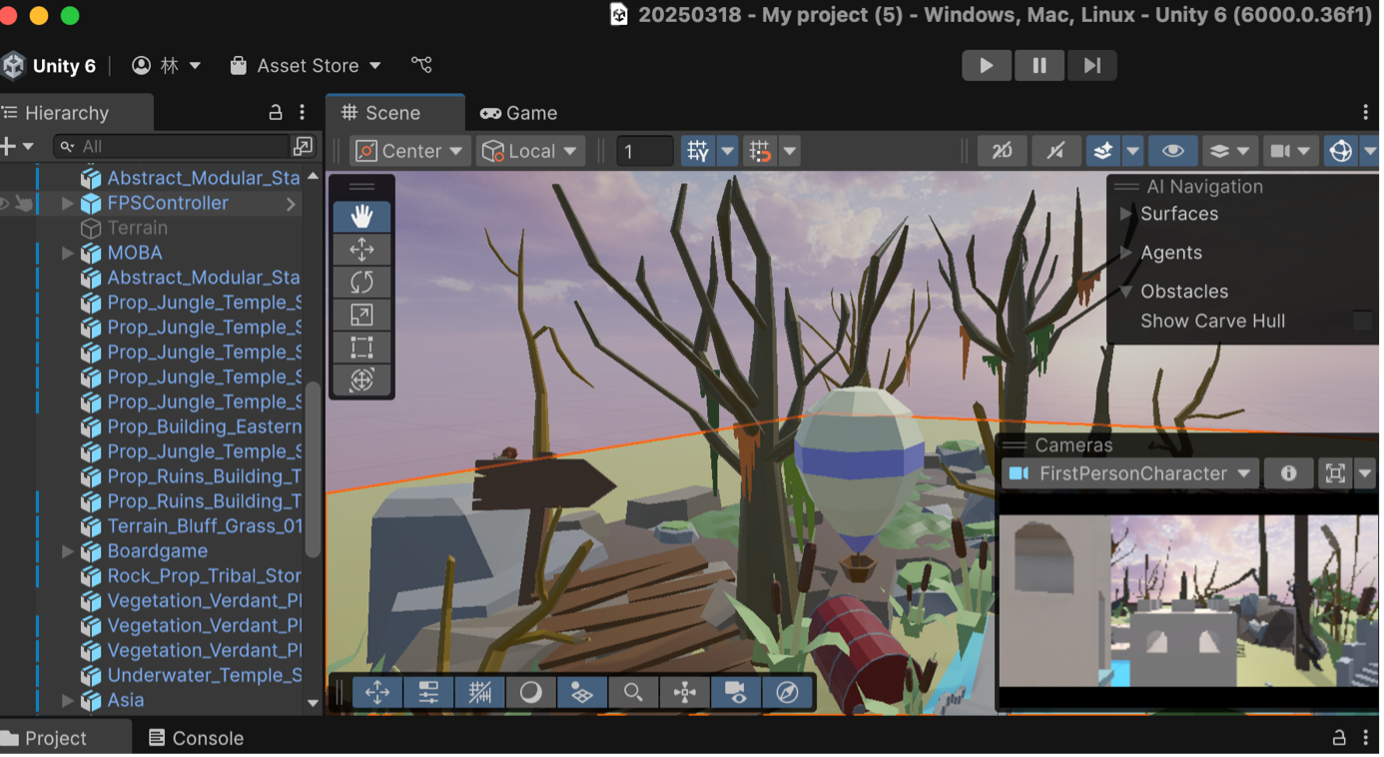
One of the most impactful changes was a complete replacement of the default skybox. I chose a soft, pink-toned sky, gently glowing with romantic hues—meant to suggest warmth, distance, and a kind of surreal comfort. This subtle shift changes the mood of the entire world: the maze no longer floats in a void; it now floats in a dream.
The pink sky, while beautiful, also feels slightly melancholic—mirroring the emotional tone of MM&NN, where beauty is often tinged with uncertainty.
Bringing Nature to the Edge of the Unknown
To support the narrative that MM and NN live inside a garden-like dream world, I expanded the natural environment both inside and outside the maze. While the maze itself is architectural and puzzle-like, I wanted to soften its edges and build a deeper feeling of immersion.
Newly added environmental details include:
Soft clouds drifting near the boundaries of the world
Scattered wildflowers breaking through cracks in the paths
Moss-covered stones that gently frame key turning points
A distant horizon of trees and floating earth, suggesting a world that continues beyond the player’s view
These are more than decorative—they are narrative cues. They suggest that this world has grown, not been built—that it once was alive, or still might be.
Figure 1. Modified Skybox Design
A Maze That’s Worth Wandering
The maze in MM&NN has always been about more than just finding the key. It’s about what you see, what you hear, what you feel while searching. That’s why I’ve put special attention into ensuring that both the inside and the outside of the maze offer something worth lingering for.
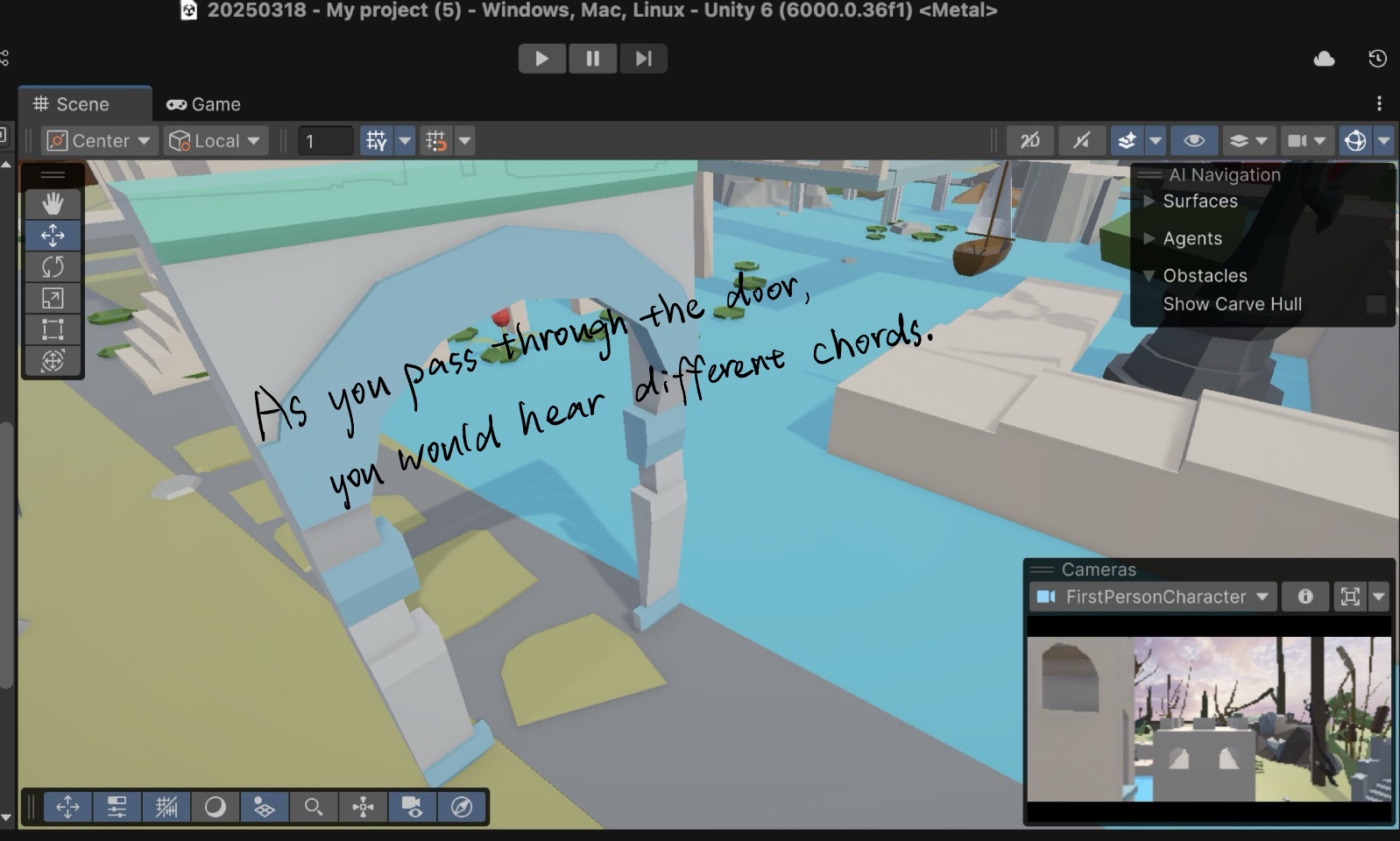
Whether you’re walking across floating lotus leaves, standing at the base of a blue tower, or pausing just outside a locked door, I want the player to feel like they are surrounded by a soft, surreal peace—a world that wants to be remembered.
Final Thoughts
With every environmental update, my goal is to make MM&NN feel more like a living dream—a place where exploration is not just a mechanical task, but a gentle experience of beauty, mystery, and reflection.
Players may come for the puzzles.
But I hope they stay for the dream.
As the narrative designer of MM&NN, one of my core goals has been to explore how characters might communicate in a world where language—at least in its conventional, verbal form—does not exist. In this game, MM and NN do not speak in words, but in sounds. And in those sounds, in their rhythms and reactions, lies a new kind of storytelling.
This week, I focused on prototyping their non-verbal communication system, a mechanic that lies at the intersection of narrative design, world-building, and tutorial functionality.
⚠️ Note: The placeholder vocalizations shown here are temporary. All final sound design will be developed and implemented by our audio team.
The Design Goal: Language Through Interaction
Rather than relying on subtitles or exposition, we wanted players to understand MM and NN’s intentions, emotions, and decisions through behavior, context, and sound. This creates a sense of intuitive immersion—players are not told what’s happening, they feel it, they interpret it.
In MM&NN, sound is language. And because each character has a different perception—MM navigates through audio, NN through visuals—their shared “language” must emerge from collaboration.
First Encounter: A Conversation in the Dark
At the start of the game, MM and NN awaken in a pitch-black section of the maze. In front of them: three diverging paths. One holds the key to the next area. But which?
The scene plays out with simple vocalizations and gestures:
Character
Line
Meaning
Behavior
NN
“Pu?”
Should we go forward?
Points ahead
MM
“Mu.”
No. That’s not right.
Shakes head
NN
“Ka?”
What about left?
Draws arrow on ground
MM
“Ni!”
Yes. That’s the safe way.
Nods and leads the way
Later, they encounter a hidden trap:
🟡 NN: (Points forward) “Pu?” (Should we go forward?)
🔵 MM: (Listens carefully, then shakes their head) “Mu.” (No, that’s not the right way.)
🟡 NN: (Thinks for a moment, then draws an arrow on the ground pointing left) “Ka?” (Then left?)
🔵 MM: (Closes their eyes, listens, then nods) “Ni!” (Yes! Left is safe.)
🟡 NN: (Takes a step forward, MM follows.)
Tutorial Prompt
✔ “Pu?” – Asking if they should move forward.
✔ “Mu.” – No, that’s not right.
✔ “Ka?” – Asking if they should go left.
✔ “Ni!” – Confirming the correct choice.
🔵 MM: (Suddenly stops and makes a sharp sound) “Sha!” (Danger!)
🟡 NN: (Stops immediately, looks back, confused) “Luu?” (Where is the danger?)
🔵 MM: (Points at the ground ahead, then steps back) “Ba! Ba!” (Move back!)
🟡 NN: (Carefully steps back. A second later, the ground ahead collapses, revealing a deep pit.)
🔵 MM: (Points to a different, safer path) “Ni!” (This is the right way.)
🟡 NN: (Follows MM, avoiding the trap.)
Tutorial Prompt
✔ “Sha!” – Warning! Danger!
✔ “Luu?” – Asking where the danger is.
✔ “Ba! Ba!” – Telling the other to move back.
They continue forward and finally find a glowing key in a small room! NN picks it up, the entire room lights up, and a door to the next area opens.
🔵 MM: (Taps NN’s arm) “Ni!” (We did it!)
🟡 NN: (Nods slightly, holding the key tightly, and moves forward.)
🎮 [Next Level Begins…]
Language as Mechanic: Teaching Through Play
This system is not just for flavor—it serves as the foundation for our immersive tutorial experience. Instead of showing UI prompts or explicit directions, players learn the meaning of each sound through repetition and interaction.
Current design goals include:
A non-intrusive tutorial where sounds and gestures naturally introduce language through context.
An evolving player vocabulary: the more the player observes, the more fluent they become in MM and NN’s communication.
The vocal system is also deeply embedded in MM&NN’s world and story themes. Since the entire game is built around dual perception—visual vs. auditory, illusion vs. reality—the absence of traditional language allows us to emphasize embodied communication.
These sounds become a metaphor for how connection forms in uncertain environments: not through clarity, but through shared rhythm, risk, and response.
Next Steps (with the Audio Team)
While I’ve mapped out the core vocabulary and use-cases from a narrative perspective, all final audio design and vocalization development will be handled by our sound design team.
Their next tasks include:
Defining the tonal quality and emotion of each vocalization (e.g., pitch, intensity, texture)
Creating differentiated sound palettes for MM and NN
Adding subtle audio-reactive environmental cues (like how the maze “responds” to certain sounds)
Exploring communication breakdowns (e.g., ambiguity, mimicry, silence) as narrative devices
Inspirations: Learning from Games That Speak Without Speaking
The idea of crafting a unique language for MM and NN didn’t come out of nowhere—it was deeply inspired by several games that have beautifully embraced non-verbal or pseudo-linguistic character expression.
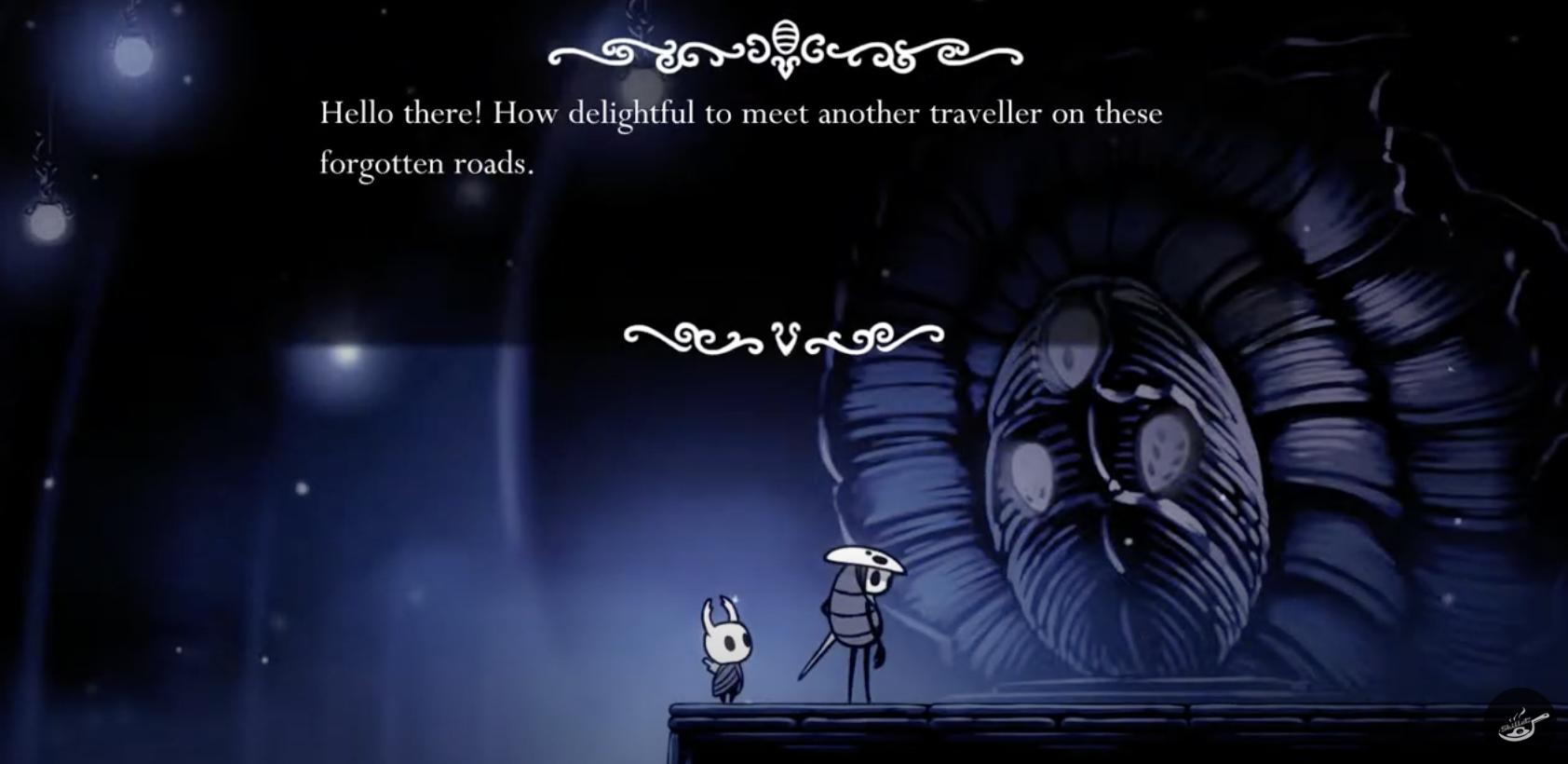
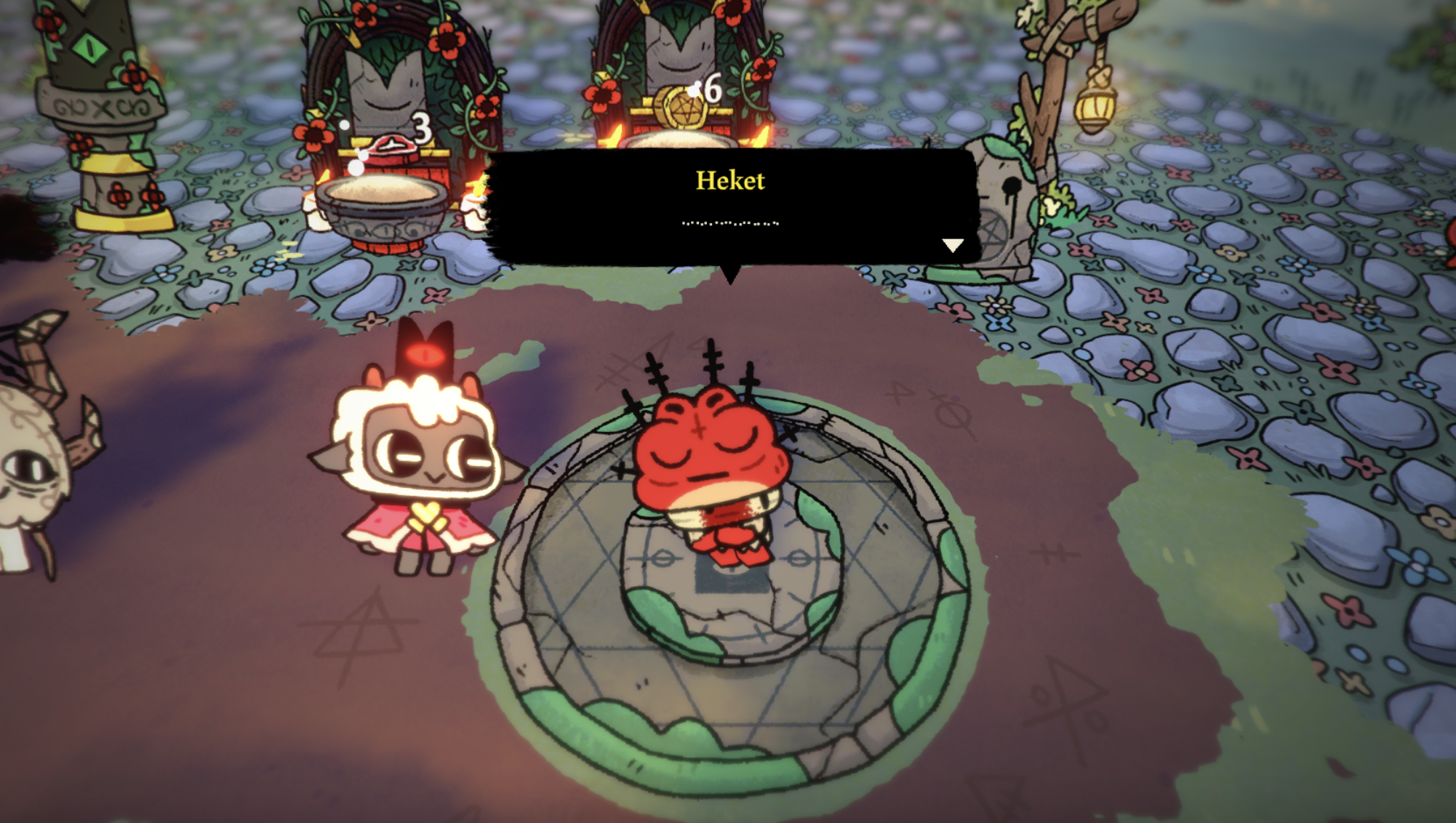
Games like Hollow Knight, Cult of the Lamb, Minions (from broader media), and Ori and the Blind Forest all demonstrate how character-specific sound design can become a language in itself—conveying tone, emotion, and intent without relying on traditional dialogue systems.
In Hollow Knight, brief utterances—grunts, chirps, and sighs—build a melancholic, wordless world of underground wonder.
Cult of the Lamb uses playful, randomized vocalizations to give each character a quirky personality without breaking flow.
The Minions franchise created a near-universal comedic language out of gibberish—highly expressive and emotionally direct.
These examples showed me how sonic identity can become a fundamental part of storytelling. In MM&NN, I hope to continue that tradition—where every “Ni!” or “Sha!” isn’t just a mechanic, but a narrative moment in its own right.
Final Thoughts
In MM&NN, communication is not about language. It’s about attention, response, and intuition. This developing system of vocal exchanges is just the beginning of a deeper emotional and mechanical dialogue between player, character, and world.
Through this system, I hope to guide players into a state of play where meaning is not told, but felt—and where even the simplest sound can become a bridge between two lost voices in the maze.
As the creator of this narrative world, I constantly seek ways to minimize the reliance on textual exposition, allowing players to intuitively grasp the core objective—escaping the maze—through interactive design alone. In MM & NN, narrative and gameplay are not separate components; they are deeply interwoven. Every gameplay mechanic is crafted to serve the story, and every narrative decision is reflected back through the player’s actions. My ongoing development focus is to refine this synergy, ensuring that the maze functions not only as a space for exploration, but also as a narrative medium—one that unfolds through interaction, perception, and choice.
Narrative Foundations: Dual Perception and Divergent Realities
The game follows two protagonists—NN and MM—each representing a different mode of perception. NN sees the world through visual manipulation; MM perceives the world entirely through sound. Their abilities form the core of the game’s thematic and mechanical duality: vision vs. hearing, illusion vs. reality.
Players gradually uncover a layered narrative through four distinct endings, each of which arises organically from player behaviour and mechanical interaction rather than cutscenes or text. These endings include:
The Illusion: Accepting a stable, false reality.
Truth Seeker A: Discovering the real exit and achieving freedom.
Truth Seeker B: Falling into deeper illusions.
The Divide: Experiencing a complete separation between NN and MM
Maze Design as Narrative Mechanism
The maze is not a backdrop—it is the narrative structure itself. Each player’s interaction with the space, from movement to puzzle-solving, creates story.
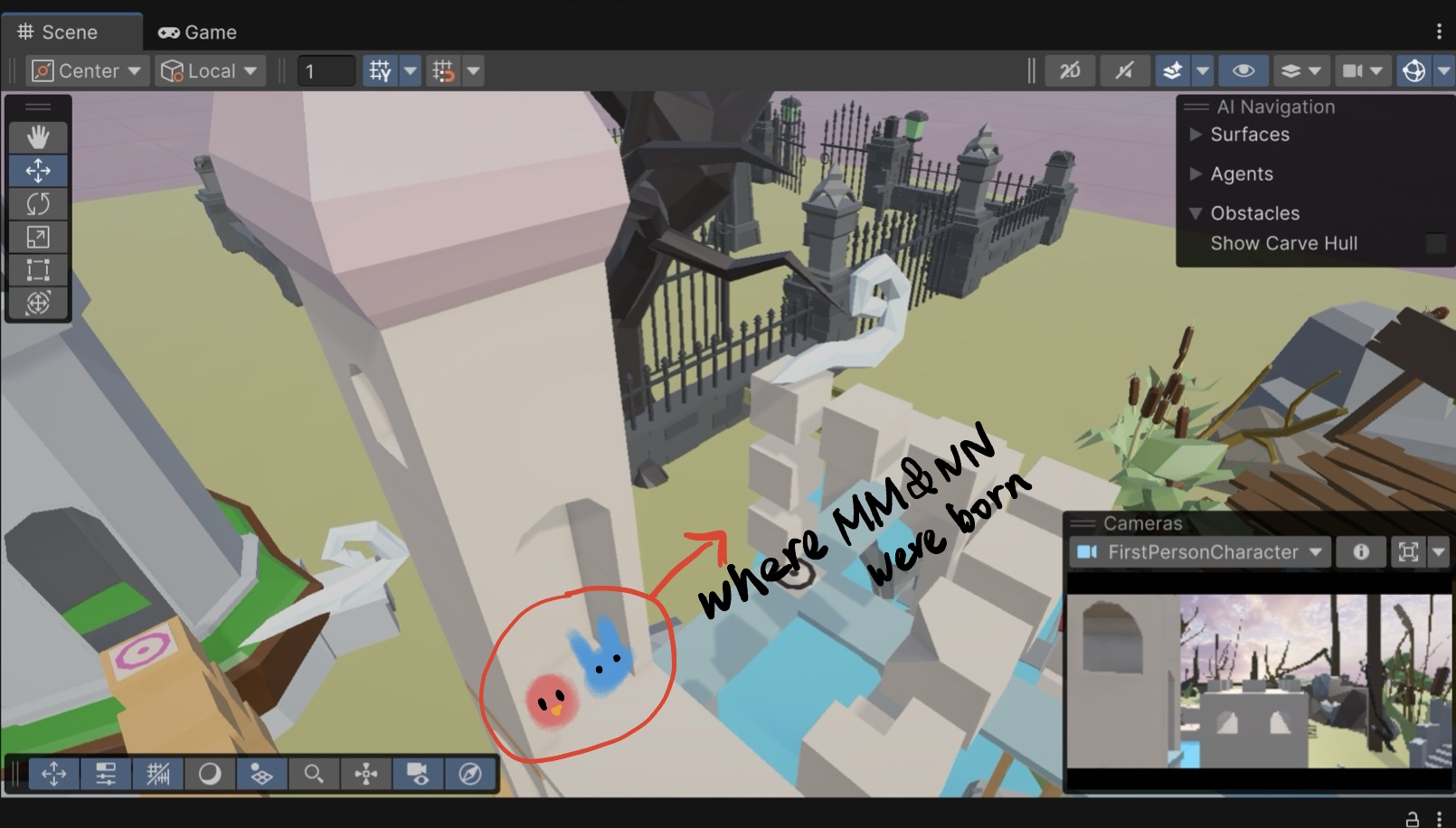
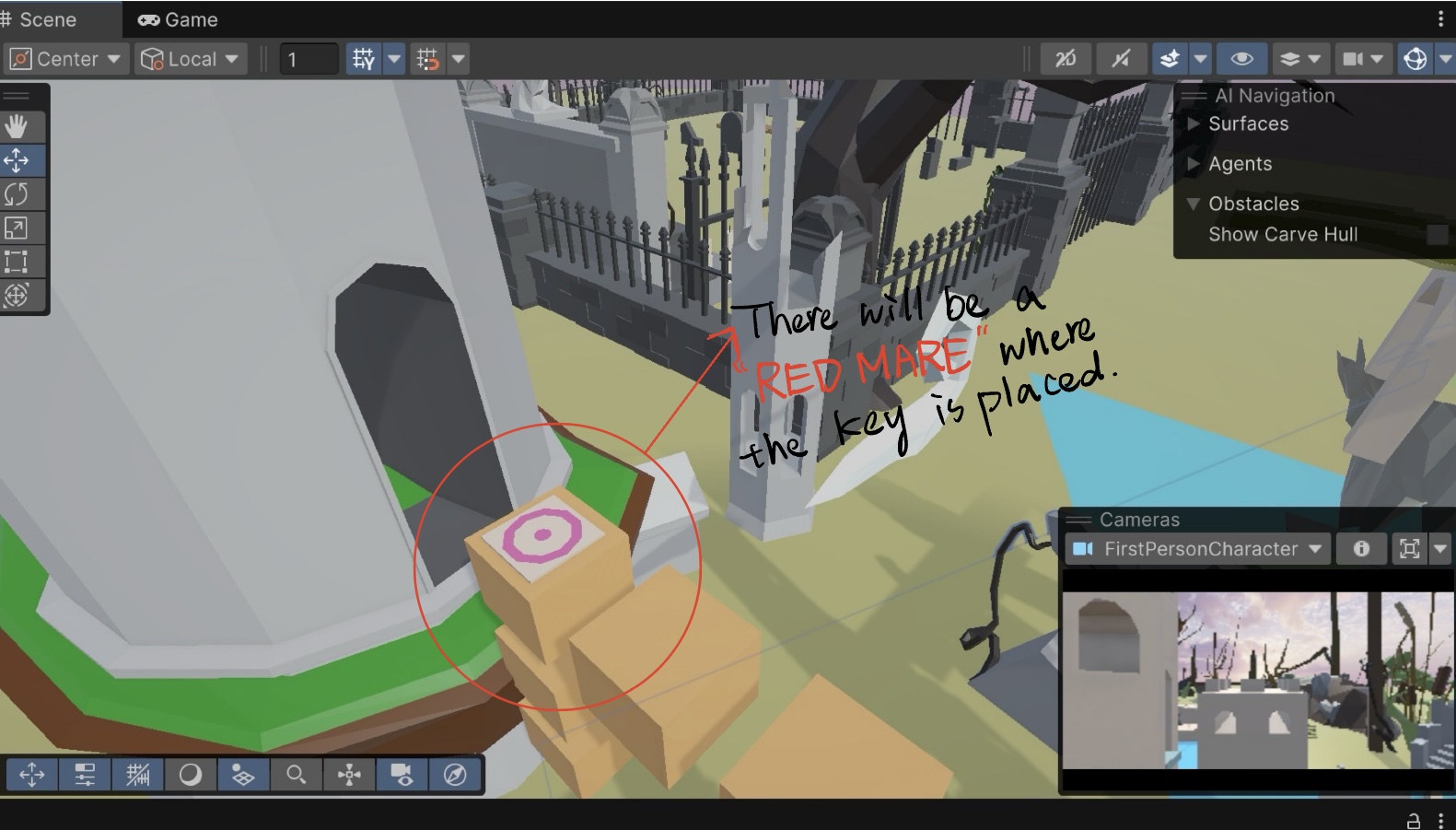
Spawn mechanics place players atop a tower, reinforcing the feeling of isolation and mystery.
Movement paths are governed by anti-gravity navigation, challenging spatial expectations.
Key puzzles involve auditory and harmonic cues (e.g., major vs. minor arpeggios), transforming musical elements into narrative-significant mechanics:
True Key: Discovered under the blue tower; associated with clarity and progress.
Fake Key: Leads players toward false exits or looping realities.
These systems are not merely gameplay obstacles, but metaphors for the characters’ internal states and their growing uncertainty about what is real.
ScreenshotScreenshotScreenshot
Mechanic-Triggered Story Outcomes
Each ending is mechanically triggered by how players interact with the game systems:
Ending
Core Mechanic
Narrative Consequence
The Illusionist
Aligning NN’s visuals with MM’s sounds until anomalies disappear
The maze becomes static and peaceful; a false reality where change ceases
Truth Seeker A
Actively finding contradictions in light, sound, and memory
The player uncovers the real exit; a world of freedom awaits
Truth Seeker B
Escaping too quickly or following misleading cues
The maze deepens; the illusion continues under a new guise
The Divide
Choosing divergent paths for NN and MM
NN and MM are trapped in the maze world;
The gameplay does not merely represent the narrative; it manifests it. For instance, when NN loses in “The Divide” path, it’s not just a mechanical limitation—it’s a diegetic expression of losing agency. Likewise, when MM navigates in darkness through sound only, players must rely on stereo cues, echoes, and frequency shifts—mirroring MM’s psychological journey through uncertainty.
Layered Mechanics: Sound, Vision, and Player Control
Newly implemented mechanics this week include:
NN’s Visual Obstruction: A gray ink overlay distorts the visible world, representing loss of visual clarity.
MM’s Hearing Obstruction: A dynamic RTPC filter simulates hearing loss, reinforcing MM’s sensory limitations in specific story states.
Death & Mist System: If NN and MM separate too far (>100 units), players trigger a narrative sequence (“Lost”) and the screen fades into mist.
Floating Lotus Platforms: These serve both as spatial puzzles and symbolic elements—ephemeral, beautiful, and fleeting, reflecting the dreamlike logic of the maze.
Design Philosophy: Narrative Emergence Through Play
Our core design philosophy is simple yet challenging: Don’t tell the story—let the player discover and perform it.
Rather than presenting exposition, we embed narrative meaning in:
Spatial contradictions
Perceptual puzzles
Mechanic-driven consequences
The player constructs their own interpretation by engaging with the world. The result is an emergent narrative where player action is the author of meaning.
Conclusion: From Labyrinth to Language
In MM&NN, narrative and mechanics are two sides of the same mirror. The gameplay is not an obstacle between the player and the story—it is the story. Every sound MM hears, every wall NN sees, every shortcut taken or illusion believed… all shape how the tale ends.
As development continues, we aim to deepen this fusion even further—designing puzzles that respond to emotion, and narrative arcs that only emerge through the full embodiment of play.
This week, I completed the foundational design and modelling of the garden maze, which functions as both a spatial puzzle and a narrative device. Rooted in the story world of MM & NN, the maze represents a shared dreamscape, inhabited by the two protagonists.
Inspired by the architectural logic and spatial surrealism of Monument Valley, the maze incorporates multi-directional sound cues that align with the game’s central theme of auditory hallucinations. These directional sound elements are embedded into the environment, encouraging players to navigate through hearing as much as sight—enhancing immersion through sound-driven spatial orientation.
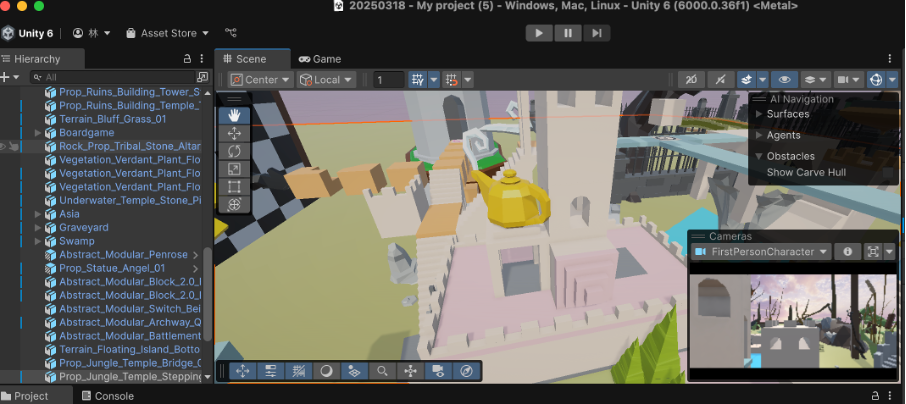
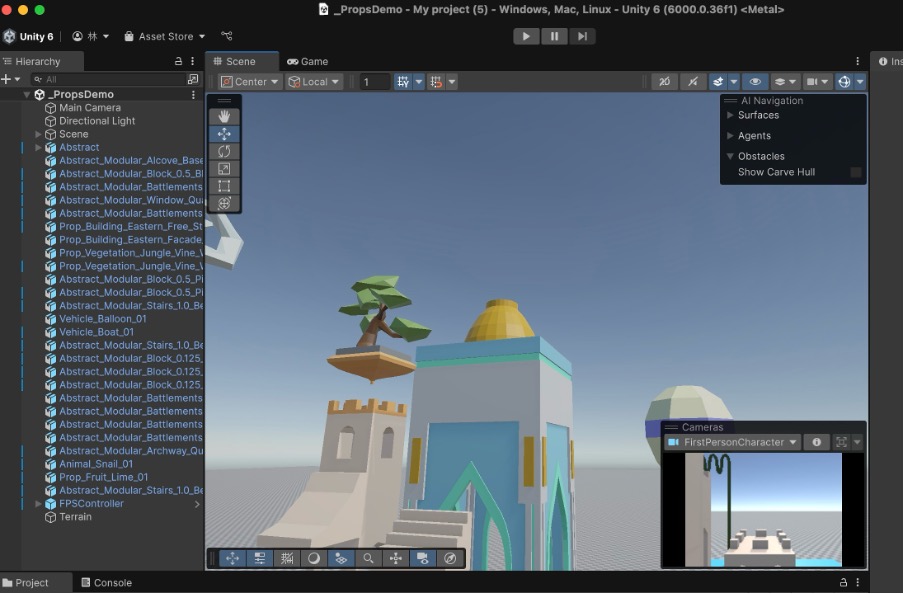
In Unity, I constructed the maze as a hybrid of castle and temple architecture, blending monumental forms with layered passageways. To emphasize the “dream” and “illusion” themes, I applied a soft, pastel-toned colour palette (light blue, pink, and white) throughout the maze. The overall aesthetic references minimalist architecture with a whimsical atmosphere, reinforcing the narrative’s ethereal quality.
Environmental Immersion: World-Building through Visual Framing
To preserve immersion and conceal the technical layout of the Unity scene, I intentionally masked the terrain system and modified the skybox to simulate a floating island suspended in the air. This approach eliminates visible grid structures or map edges, contributing to a sense of spatial detachment from reality.
In the near field, I surrounded the maze with a stylized natural environment that harmonizes with the architecture, serving both as a visual boundary and a compositional frame. These visual layers ensure players remain focused within the intended diegetic space.
Additionally, the maze contains two diverging paths, leading to distinct narrative endings. This design enhances replayability and supports the thematic duality embedded in the MM & NN narrative structure.
Character Modelling: Bringing MM & NN to Life
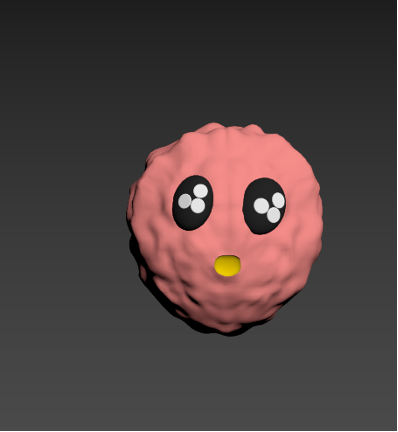
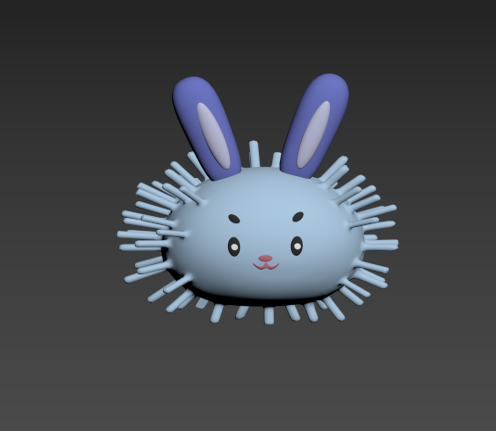
Parallel to the spatial modelling, I also began implementing the characters MM and NN. Based on previously developed 2D concept sketches, I created their 3D models and imported them into Unity.
Their designs reflect contrasting identities—subtle asymmetries in colour, posture, and silhouette hint at their divergent perspectives within the game’s unfolding story.
In the enigmatic world of NN & MM, perception is a puzzle, and reality is anything but certain. This third-person, two-player cooperative game challenges players to step into the roles of NN, a being with complete vision, and MM, a creature gifted with extraordinary hearing. Together, they must navigate a surreal maze garden, where cooperation and communication are not just strategies—they are the keys to survival.
As NN and MM delve deeper into this mysterious world, they begin to uncover unsettling inconsistencies in their memories. These discrepancies spark doubt, forcing them to question the very fabric of their reality. Is the maze all that exists, or is it merely a veil hiding something greater beyond its walls?
Inspired by Plato’s “Allegory of the Cave,” NN & MM explores the tension between perception and truth. NN sees the world in vivid detail, while MM relies on sound to uncover hidden realities (Rauch, 1994). Their asymmetrical abilities create a unique gameplay experience, where players must learn to see the world through each other’s senses. Together, they must bridge the gap between their differing perspectives, challenging the illusions they’ve come to accept as reality.
In NN & MM, the maze is more than a physical space—it’s a metaphor for the barriers we construct in our minds. Can you and your partner unravel its mysteries, or will you remain trapped in the shadows of your own perceptions? The journey begins now.
Plot
In a vast, labyrinthine world that resembles an endless garden, a small creature named NN has lived for as long as he can remember. This surreal, maze-like garden is filled with cherished memories and friendships, and NN has always found comfort in its beauty. He loves to paint, capturing the vivid details of the world he sees, and he firmly believes in the reality of his visual perception. To NN, the labyrinth is everything—a complete and unchanging reality.
However, NN’s friend, MM, has begun to notice something strange. MM, who possesses extraordinary hearing, starts picking up peculiar sounds that defy the logic of their world:
– On bright, windless days, MM hears the distant crash of ocean waves, though no ocean exists within the labyrinth.
– At night, he hears the chirping of birds—sounds that should only belong to the dawn.
– When recalling shared memories with NN, their recollections don’t align. The locations, the environments, even the events themselves seem to shift and contradict.
These inconsistencies plant a seed of doubt in MM’s mind. He begins to question the very fabric of their world. Is the labyrinth truly complete, or is it merely an illusion—a carefully constructed facade hiding a deeper truth? Driven by his sharp intuition and a growing desire for answers, MM starts to explore beyond the boundaries of the maze, using his acute hearing to uncover what lies hidden.
Meanwhile, NN remains deeply immersed in the world he sees. He paints tirelessly, capturing the beauty of the labyrinth and sharing his artwork with MM, hoping to convince him to stay. To NN, the labyrinth is real, tangible, and safe. He fears what lies beyond its walls and clings to the certainty of his visual perception.
As their journeys unfold, NN and MM find themselves perceiving completely different realities. NN, with his vivid 3D vision, sees a complex and intricate world, but struggles to interpret the sounds that MM hears. MM, on the other hand, perceives the world as a 2D plane, relying on his extraordinary hearing to piece together the hidden structure of the labyrinth. Together, they must navigate this surreal maze, using their unique abilities to solve its mysteries.
NN provides visual clues, painting the world as he sees it, while MM relies on sound cues to uncover hidden pathways and secrets. As they work together, their perspectives clash, forcing them to confront their differences and question the nature of their reality. Is the world they perceive real, or is it an elaborate illusion designed to keep them trapped?
In this labyrinth where reality and illusion intertwine, NN and MM must decide: will they stay within the confines of the maze, accepting the world as it appears, or will they venture beyond its boundaries in search of the unknown truth? Their choices will shape not only their fates but also the very nature of the world they inhabit.
Themes and Inspirations:
Plato’s Allegory of the Cave: The game explores the tension between perception and reality, challenging players to question what they see and hear.
The Matrix: The labyrinth serves as a metaphor for a constructed reality, hiding a deeper truth.
Interstellar: The story delves into the emotional and philosophical struggles of characters grappling with the unknown.
Possible Endings:
The Illusionist: NN convinces MM to stay in the labyrinth, accepting the world as it appears.
The Seeker: MM convinces NN to leave the labyrinth and face the unknown truth beyond.
The Divide: NN and MM go their separate ways—one staying, the other leaving—resulting in a profound change to the world itself.
Bleep & Blop is a journey of faith versus doubt, perception versus reality. It invites players to reflect on the nature of truth and the illusions we construct to protect ourselves. Will you cling to the comfort of what you see, or dare to listen for the truth hidden in the silence? The labyrinth awaits.
Character design draft
NN
MM
Reference
Rauch, L. (1994) ‘Imagery and allegory in philosophy’, in Smith, J. (ed.) Allegory Revisited: Ideals of Mankind. Dordrecht: Springer Netherlands, pp. 315-324.
The Matrix (1999) Directed by Lana Wachowski and Lilly Wachowski. [Film] USA: Warner Bros. Pictures.
Interstellar (2014) Directed by Christopher Nolan. [Film] USA: Paramount Pictures & Warner Bros. Pictures.
 NN
NN MM
MM