The core logic of our sound design is based on contrast. First, characters MM and NN hear different sounds. For example, the same sound may be much more blurred or unclear when heard by NN. Second, in the game, we designed true and false keys and doors. The real ones sound more harmonious, while the fake ones make players feel uneasy. However, we didn’t want the contrast between them to be too obvious or binary. Instead, we aimed for a kind of subtle consistency, where the differences are noticeable but not sharply divided.
The core logic of our sound design is based on contrast. First, characters MM and NN hear different sounds. For example, the same sound may be much more muffled or unclear when heard by NN. Second, in the game, we designed true and false keys and doors. The real ones sound more harmonious, while the fake ones make players feel uneasy. However, we didn’t want the contrast between them to be too obvious or binary. Instead, we aimed for a kind of subtle consistency, where the differences are noticeable but not sharply divided.
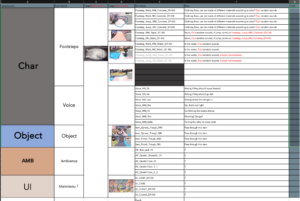
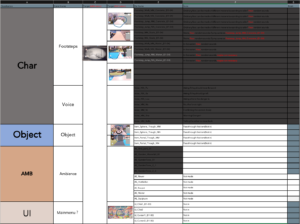
Before we began sound production, we made a detailed list of the sounds we needed, categorized according to character, object, ambient sounds (AMB), and UI. Based on this, we coordinated with the team member in charge of the Unity project to confirm what sounds needed to be added, removed, or modified. This ensured that our work was aligned and we could distribute the tasks clearly.
For the character’s movements, we paid attention to the footsteps. Since the character model looks cute and playful, we recorded the sound of a toy duck as a base. Then we layered it with the sound of stones to represent the contact with the concrete-like and give a sense of weight. Because the game’s art style and story have a certain absurd or surreal quality — like how buildings from different cultures appear in one scene — we wanted the sounds to reflect this with some exaggeration. Therefore, using a synthesizer became an obvious choice.
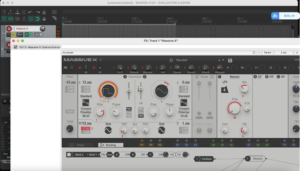
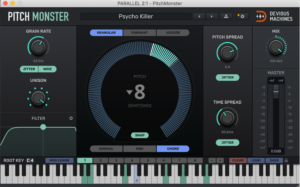
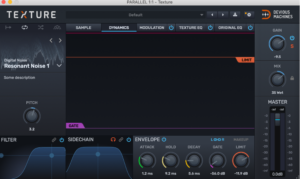
We used Massive X to process MIDI keyboard notes and create short pad tones. The real keys and doors sound calm and solid, while the fake ones are sharper and more uncomfortable. For NN’s version, we made the sounds more distorted and noisier. This was achieved by adding texture through noise and adjusting the details with the Pitch Monster plugin. These techniques allowed us to shape each character’s sonic perspective and match the game’s surreal tone.