As the creator of this narrative world, I constantly seek ways to minimize the reliance on textual exposition, allowing players to intuitively grasp the core objective—escaping the maze—through interactive design alone. In MM & NN, narrative and gameplay are not separate components; they are deeply interwoven. Every gameplay mechanic is crafted to serve the story, and every narrative decision is reflected back through the player’s actions. My ongoing development focus is to refine this synergy, ensuring that the maze functions not only as a space for exploration, but also as a narrative medium—one that unfolds through interaction, perception, and choice.
Narrative Foundations: Dual Perception and Divergent Realities
The game follows two protagonists—NN and MM—each representing a different mode of perception. NN sees the world through visual manipulation; MM perceives the world entirely through sound. Their abilities form the core of the game’s thematic and mechanical duality: vision vs. hearing, illusion vs. reality.
Players gradually uncover a layered narrative through four distinct endings, each of which arises organically from player behaviour and mechanical interaction rather than cutscenes or text. These endings include:
- The Illusion: Accepting a stable, false reality.
- Truth Seeker A: Discovering the real exit and achieving freedom.
- Truth Seeker B: Falling into deeper illusions.
- The Divide: Experiencing a complete separation between NN and MM
Maze Design as Narrative Mechanism
The maze is not a backdrop—it is the narrative structure itself. Each player’s interaction with the space, from movement to puzzle-solving, creates story.
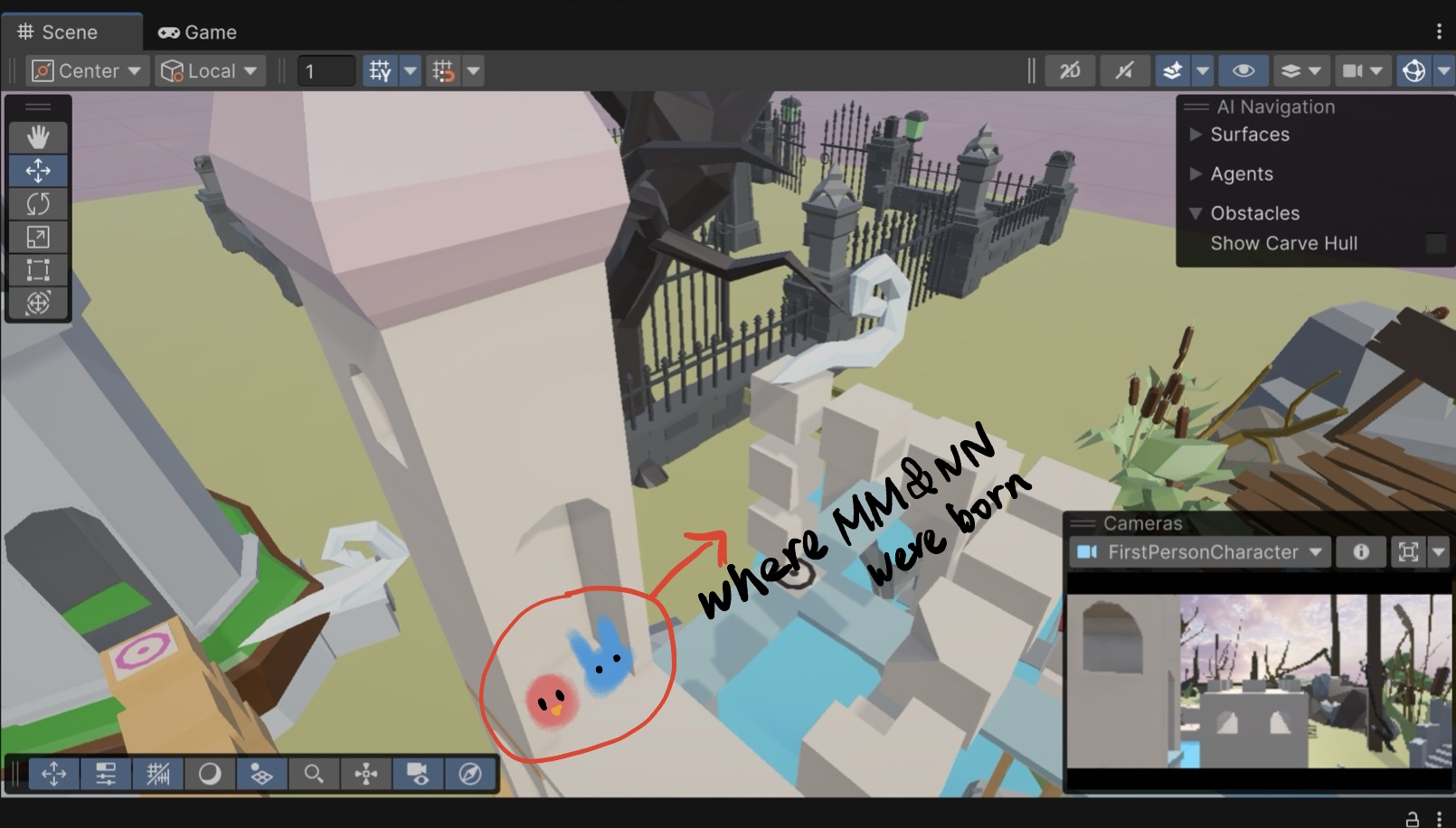
- Spawn mechanics place players atop a tower, reinforcing the feeling of isolation and mystery.
- Movement paths are governed by anti-gravity navigation, challenging spatial expectations.
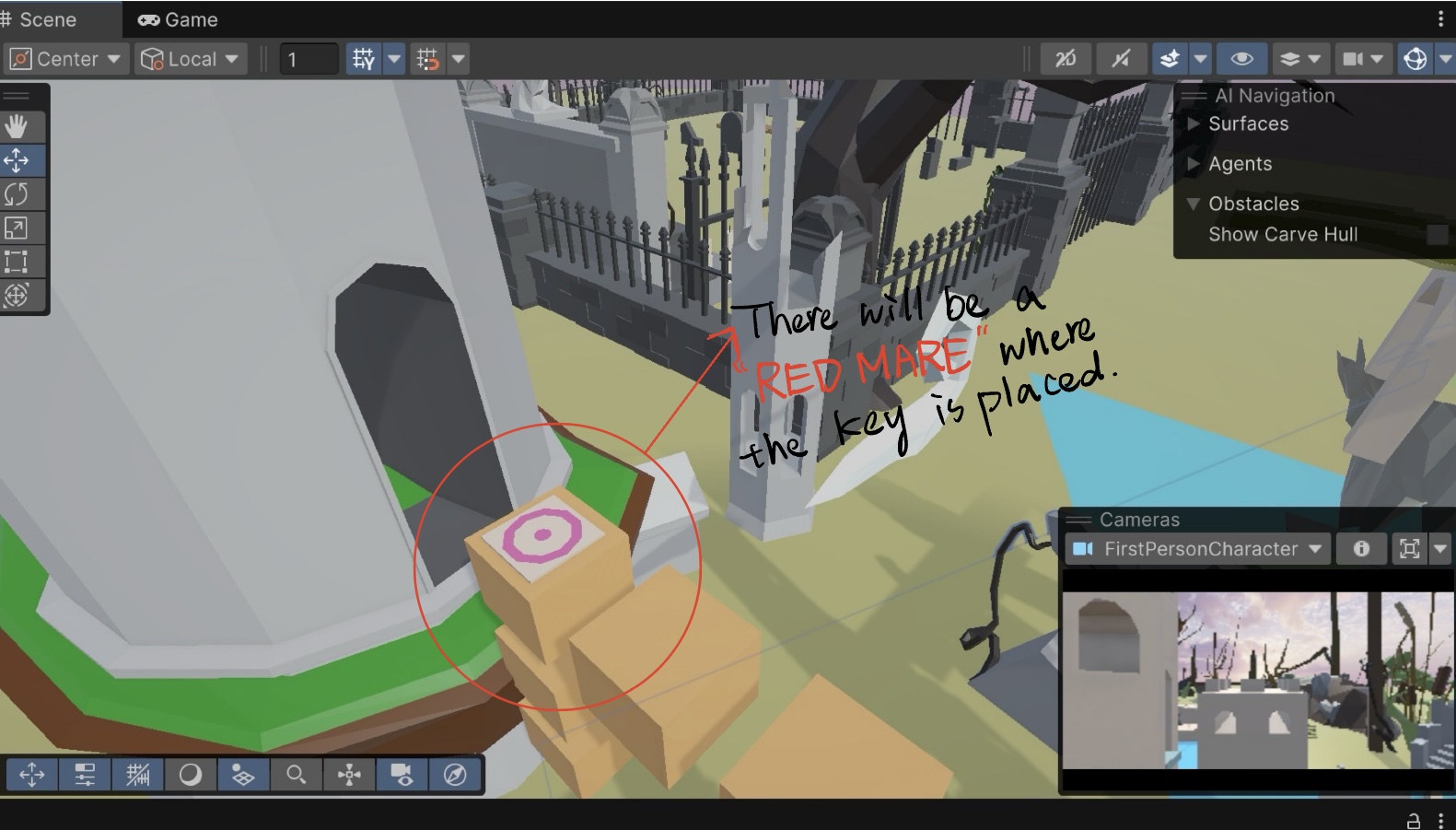
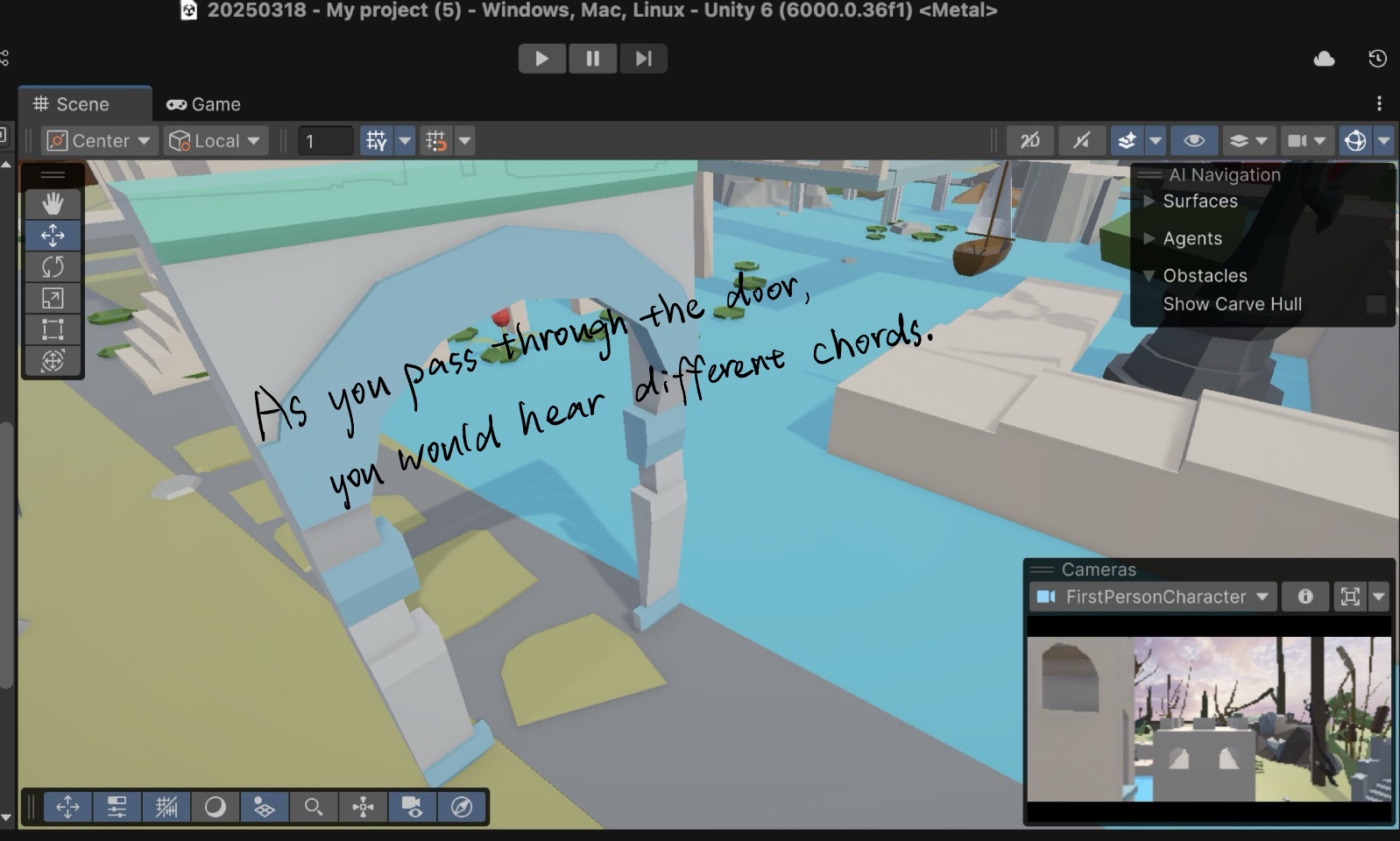
- Key puzzles involve auditory and harmonic cues (e.g., major vs. minor arpeggios), transforming musical elements into narrative-significant mechanics:
- True Key: Discovered under the blue tower; associated with clarity and progress.
- Fake Key: Leads players toward false exits or looping realities.
These systems are not merely gameplay obstacles, but metaphors for the characters’ internal states and their growing uncertainty about what is real.
Mechanic-Triggered Story Outcomes
Each ending is mechanically triggered by how players interact with the game systems:
| Ending | Core Mechanic | Narrative Consequence |
| The Illusionist | Aligning NN’s visuals with MM’s sounds until anomalies disappear | The maze becomes static and peaceful; a false reality where change ceases |
| Truth Seeker A | Actively finding contradictions in light, sound, and memory | The player uncovers the real exit; a world of freedom awaits |
| Truth Seeker B | Escaping too quickly or following misleading cues | The maze deepens; the illusion continues under a new guise |
| The Divide | Choosing divergent paths for NN and MM | NN and MM are trapped in the maze world; |
The gameplay does not merely represent the narrative; it manifests it. For instance, when NN loses in “The Divide” path, it’s not just a mechanical limitation—it’s a diegetic expression of losing agency. Likewise, when MM navigates in darkness through sound only, players must rely on stereo cues, echoes, and frequency shifts—mirroring MM’s psychological journey through uncertainty.
Layered Mechanics: Sound, Vision, and Player Control
Newly implemented mechanics this week include:
- NN’s Visual Obstruction: A gray ink overlay distorts the visible world, representing loss of visual clarity.
- MM’s Hearing Obstruction: A dynamic RTPC filter simulates hearing loss, reinforcing MM’s sensory limitations in specific story states.
- Death & Mist System: If NN and MM separate too far (>100 units), players trigger a narrative sequence (“Lost”) and the screen fades into mist.
- Floating Lotus Platforms: These serve both as spatial puzzles and symbolic elements—ephemeral, beautiful, and fleeting, reflecting the dreamlike logic of the maze.
Design Philosophy: Narrative Emergence Through Play
Our core design philosophy is simple yet challenging: Don’t tell the story—let the player discover and perform it.
Rather than presenting exposition, we embed narrative meaning in:
- Spatial contradictions
- Perceptual puzzles
- Mechanic-driven consequences
The player constructs their own interpretation by engaging with the world. The result is an emergent narrative where player action is the author of meaning.
Conclusion: From Labyrinth to Language
In MM&NN, narrative and mechanics are two sides of the same mirror. The gameplay is not an obstacle between the player and the story—it is the story. Every sound MM hears, every wall NN sees, every shortcut taken or illusion believed… all shape how the tale ends.
As development continues, we aim to deepen this fusion even further—designing puzzles that respond to emotion, and narrative arcs that only emerge through the full embodiment of play.