- Art Style
- Visual Design (Overall Aesthetic)
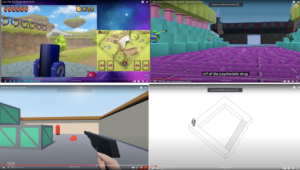
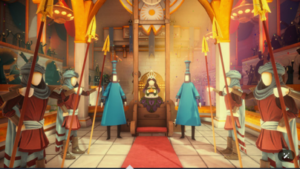
low poly aesthetic, simple solid colors and textures
Considering the references to philosophical themes like Plato’s Allegory of the Cave or The Matrix, the visual design might use contrast between reality and illusion. Using surreal, abstract, or dream-like imagery to represent the fractured perception of the characters.
- Character Design
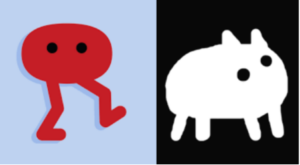
Only two characters, both protagonists.
NN: Loves painting, trusts what he sees, and fully believes in reality. His design could reflect a more grounded or realistic style, with sharp details and a vibrant, almost idealized appearance. He could be depicted with art-related elements like brushes or easels, reflecting his passion.
MM: Possesses extraordinary hearing, sharp intuition, and a strong desire to uncover the truth. MM’s design might emphasize sensory elements, like large eyes or ears, or more ethereal characteristics that represent his deep intuition. His clothing and features could be more abstract, showing a deeper connection to the unseen or unknown aspects of the world.
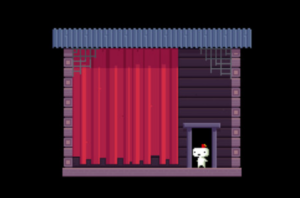
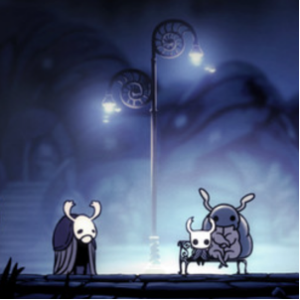
- Environment Design
The game could have interconnected regions that flow into one another in a non-linear fashion, with diverse environments — natural gardens, chaotic urban settings, and abstract landscapes.
The environment could also mirror the inner states of the protagonists. For example, a distorted, fragmented world could represent MM’s sharp intuition and desire to uncover the truth, whereas more serene, stable environments could reflect NN’s belief in reality.
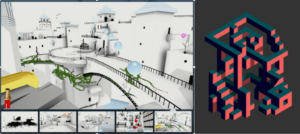
- Color Palette
Bright, warm colors could be used in scenes that represent NN’s world, filled with a sense of comfort or belief in the self.
On the other hand, cooler, muted tones could represent MM’s more questioning world, filled with ambiguity and an exploration of truth. A mix of these tones could also signify the characters’ contrasting perspectives on reality.
- UI Design
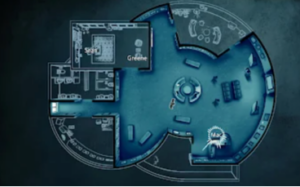
UI should be minimalistic, stay consistent with the visual design