Any views expressed within media held on this service are those of the contributors, should not be taken as approved or endorsed by the University, and do not necessarily reflect the views of the University in respect of any particular issue.
After the last group discussion, we were thinking about creating games that are logical in storytelling and simple games that are sound-driven.
I play mostly musical games in my regular game play, where a musical rhythm or sound is used as the lead to break through a level.
Maybe that can provide some ideas.
Taiko Daredevil is a music rhythm game where the player accumulates points by hitting the rhythm. Players can manoeuvre by key switching somatic strikes as well as purchasing external tools (as in the video I’ve provided)
Bits & Bops is also a rhythm game, but with more varied graphics.
There’s also a game called Rhythm Heaven, in which the gameplay is rather nonsensical, but very fun!
Perhaps a musical rhythm for the player to break through as part of a sound game we create could add interest to the overall game (if the subject matter is not serious).
I want to make a sound-driven game. No need to give a lot of meaning to this game, just to explore sounds and memorise them as you play.
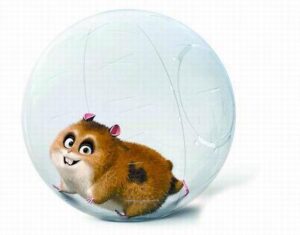
The main character of the game is a hamster who likes to explore sounds, and during the game you need to be inside a transparent but fuzzy plastic ball all the time, and you need to crawl and roll the plastic ball like a hamster. Use the cues you hear at the beginning of the game to find similar sounds. All the sounds will be blurred because of the plastic ball, so we have to keep crawling and exploring the map to find the most similar sounds.
Once all the sounds have been found, the hamster can climb out of the plastic ball and press the button in front of it, and the sounds will be combined to form a melody.
This allows the player to explore the sounds in a fun and relaxing atmosphere, and at the end of the game to experience the charm of the sounds.
Gameplay:
Sound exploration, memorising sounds.
Audience:
All ages
Game Idea:
1. Be a little hamster who likes sounds and get a creative sound by your own efforts in a frequent day.
2. It is also a good exercise game for people with hearing loss. Learn and grow through play.
An introduction to hearing loss.
The so-called auditory perception refers to the process in which an individual transmits auditory information to the central nervous system of the brain, processes it correctly, and then responds correctly. Human hearing is divided into hearing breadth, hearing attention, hearing discrimination and so on. Children with auditory perceptual disorders may have poor auditory discrimination, so that they cannot hear the content of other people’s speeches clearly; they may have problems with auditory breadth, that is to say, they cannot hear what other people say completely; or they may have received the auditory information completely, but when they transmit it to the brain, they do not transmit the complete information, but lose part of it.
A child with an auditory loss may not hear what is said to him or her, may only be able to complete part of several instructions, may have a lower than normal memory for numbers, or may often forget what their parents or teachers have said to them. Children with auditory disorders often also have vestibular disorders, and tend to be vestibularly retarded. Improvement of auditory perception requires sensory integration and attention training, during which vestibular and auditory perception are strengthened.
Most of the games currently on the market are based on graphics and supplemented by sound. The game I wanted to complete needed to be mostly audio-based, so it was a completely new experience. Through this game, people who have adapted to vision can have an opportunity to try the auditory experience, hoping to attract more people to the audio industry.
Target group:
My current idea is to make a game that is friendly to people with low vision, but the audience is everyone. The game will primarily use audio guidance rather than visuals to convey game information.
Specific ideas:
When I was searching for information, I discovered the game named “Ear Hockey”. This game requires players to pass through auditory perception, so it will give players who are usually used to using graphics to pass a new gaming experience.
The game uses 3D spatial audio technology, and players can identify the position of the ball by listening with headphones. This inspired me, so my idea was an escape room game with directions guided by sound.
Here are my specific ideas: The setting is a dark room with a constant sound of water dripping at the exit of the room. After putting on the headphones, the player can hear the specific location of the water droplets and walk in the direction of the sound of the water. The error messages will sound if you hit a wall or encounter a roadblock, which will give us a lot of room for sound design.
As the player gets closer to the exit, the water sound will also change, possibly becoming louder or higher in frequency, which will give the player a sense of urgency. The game is successful when the exit is successfully found. The game map will become more and more difficult with each level passed, requiring players to pay more careful attention to the sound part.
Players need to pick or organise items in this game by sound according to the prompts.
Possible level setups:
The game provides the player with multiple roughly identical objects (e.g. square models that differ only in colour), and the player can hear different sounds when picking up these objects. The player needs to follow the hints and put the object with the corresponding sound effect into the empty slot. For example, if the hint for the level is “yellow”, the player needs to put the objects that make the sound “rubber duck”, “potato crisp” and “wasp” into the empty slots among multiple objects. If the hint for the level is “Seasons”, the player may need to place the symbols “Spring”, “Summer”, “Autumn”, “Winter” and “Spring” in order.
Reference:
A Little To The Left
2.Plot/Voice-lead focus
(1) Use the plot to explain why the protagonist needs to escape or explore through sound elements when the visuals are incomplete
(2) Needs a better backstory and plot guide
(3) Blurred vision
Basic plot and gameplay:
The main character is a high school student with high myopia. One day, their classmates steal their glasses to play a prank on him. Players need to control the main character to explore the surrounding area according to the sound clues without being able to see clearly, avoiding the sight of classmates while listening to their conversations to determine where the glasses are hidden, and finally find the glasses and escape from the school building.
Reference:
Lurking
Idea from this comment of the video: https://www.youtube.com/watch?v=zHIACxrmwaM
“‘Now I’m not gonna talk loudly because that will probably lead to me dying.’ My school life.”
You can open your blog up to as many or as few people as you like in Dashboard > Settings > Reading > Site Visibility:
You can open your blog up to specific University members by adding them as users to your blog.
You can open your blog up to all University members who have an EASE login.
You can make you blog open to the world.
The featured image on this post comes from the University Collections. If you want to use more images in your blog posts, or perhaps use your own choice of image in your blog header, you can: