Any views expressed within media held on this service are those of the contributors, should not be taken as approved or endorsed by the University, and do not necessarily reflect the views of the University in respect of any particular issue.

Video and photo capturing

Zixuan:

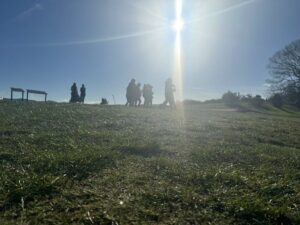
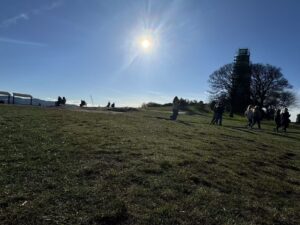
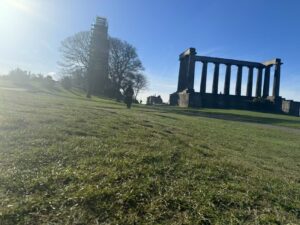
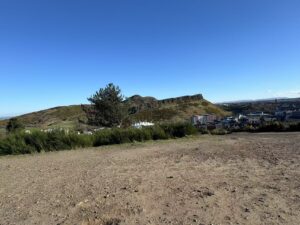
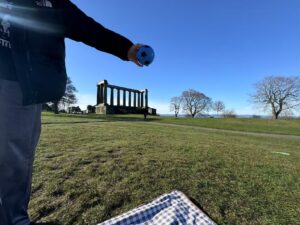
Today, as planned, we went to Calton Hill to capture photos and video materials for our project. In order to make the final piece feel more rhythmic and narrative-driven, we did some initial planning before heading out, designing two simple scene-based storylines to make the “dog’s perspective” feel more natural and immersive.

We chose to shoot in the afternoon because the lighting at that time is softer and more vibrant. The scenery at Calton Hill during this time also fits well with the atmosphere we wanted to convey.

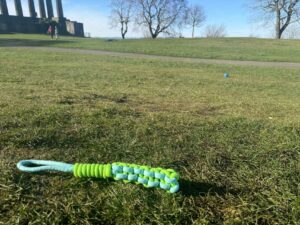
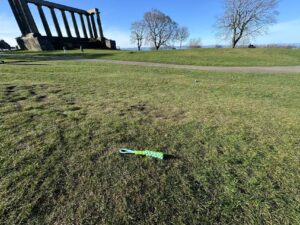
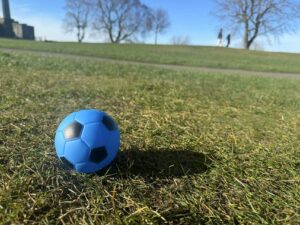
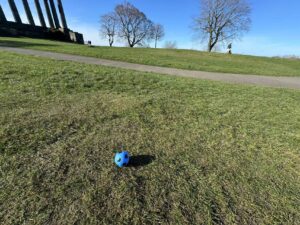
🎬 Scene One: “Distraction by Choice”
In the first scene, we set up a playful moment where a dog is chasing a ball but suddenly gets distracted by another toy. To enhance the audience’s sense of immersion, we decided to film the ball-throwing and the dog’s gaze following the ball as video, while the rest of the sequence would be presented through photographs. We believe that photos give more space for the sound design to come forward, allowing audio to take the lead in crafting an immersive experience。
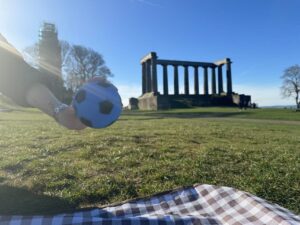
IMG_2415

IMG_2418

🐶 Scene Two: “A Quiet Moment”
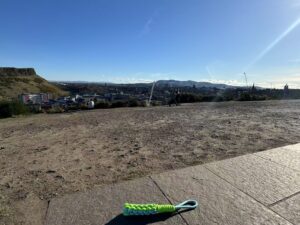
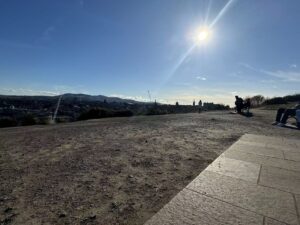
In the second scene, the dog looks around before quietly lying down in front of its favourite toy. The movement is subtle but emotionally more contained. Here, too, we chose to film the moment of the dog lying down to strengthen the feeling of presence while using photographs to complement the setting and visual composition.
IMG_2442

📷 Shooting Method & Lens Choices
We started with the “big dog vs. small dog” group. To ensure visual consistency in composition, we kept the camera position fixed and adjusted the height of each dog model so that both appeared to be at the same eye level. This allowed for a clearer comparison of their sizes and perspectives.

We also made specific choices regarding lens focal lengths to simulate the field of view from each dog’s perspective:
The Chihuahua was shot with a 24 mm lens, which offers a narrower field of view to match its small size.
The Irish Wolfhound was captured using a 14 mm wide-angle lens, highlighting the broader perspective granted by its larger body.
– The Labrador Retriever, as the mid-sized reference, was shot with a 19mm lens, striking a balance between the two and representing a “medium perspective.”

With this setup, we hope the audience can not only observe the dog’s behaviour but also visually experience how dogs of different sizes perceive the world differently.

Overall, today’s shoot was quite compact but very productive. The whole team worked smoothly together. From choosing the right lighting and adjusting lenses to positioning the dog head models, every detail brought us one step closer to realising the final vision. Next, we’ll move into organising the materials and starting the sound design phase—we’re excited to see what comes next!

Carly:

I really enjoyed today’s shooting, it also felt a little bit “new” in a sense as we changed the medium from a camera to an iPhone, we changed from only photos to photos and videos and we also added two different dog toys (which is an excellent thing specially with my dogs back in Spain as they are gonna get a new toy).

I am delighted with the results from the images taken, not only because they look good and are going to make wonders when edited, but also because it was really amazing seeing that, with the previous organisation and communication, we took the pictures and videos we needed really fast – not rushed, but efficient.  Can’t wait to edit them!
Making the dog heads

Zixuan:

🐶 Dog Head Microphone – Making Process Log

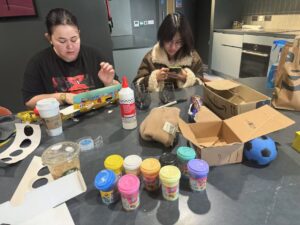
Today we completed the first round of making our dog head microphone. In terms of materials and structural design, we did a bit of experimentation in order to simulate the physical shape and auditory perspective of a real dog’s head using simple materials. This will help us more accurately capture sound from a “dog’s point of hearing” for our project.

📐 Dog Head Sizes and Breed Categories

Based on the three types of dogs featured in our project, we created head models of different sizes:

– Chihuahua (small breed): The actual head diameter is about 6–8 cm. We chose 8 cm as our reference.
– Labrador Retriever (medium breed): Scaled up to a 20 cm head diameter.
– Irish Wolfhound (large breed): For the greatest contrast, we made the head about 35 cm in diameter.

By creating models with these size differences, we aim to simulate how dogs of different breeds and sizes might experience sound spatially. This gives us a physical foundation for our sound design.

🔧 Materials and Construction Approach

We used three main materials to build the dog heads:

– Cardboard: Served as the skeletal framework—lightweight, easy to cut and shape, yet strong enough for structure.
– Plasticine: Simulated the “muscle layer” and soft tissue of a dog’s head, giving weight and flexibility to the shape.
– White glue (PVA): Brushed on the outside as a sealing layer to strengthen the structure, prevent deformation, and add texture.

An unexpected bonus of this combination is the tactile and acoustic feedback—when you tap the completed dog head, it produces a sound somewhere between soft flesh and solid form, very similar to striking actual animal tissue. This quality gave us ideas for using these models not only for microphone placement but potentially as physical sound sources for future sampling.

🛠 Challenges and Solutions During Construction

During the process, we ran into a shortage of cardboard. To make the most of what we had, we carefully selected the best pieces and **patched them together using transparent tape** to form the frame.

Initially, we were concerned about whether the taped structure would hold, but once the clay was added over it, the overall form became much more solid and stable, more than we expected.

In terms of practical functionality, we also designed the heads with recording in mind. We left microphone slots on both sides of the head, aligning roughly with where a dog’s ears would be, and created openings at the bottom and side for cable routing. This setup allows us to mount mics easily and connect them to recording devices, achieving a binaural recording experience that closely mimics a dog’s hearing position.

Despite the simplicity of the materials, this handmade process gave us valuable insights into structural design, texture, and acoustic response. It also laid a solid foundation for the next phase of our work—testing how the different-sized dog heads affect recorded sound in the same environment, and further exploring the relationship between body structure and auditory space.

Ruiqi:

I hate to say this, but… I’ll never forget how embarrassing it was, running into every single shop on South Clerk Street asking for cardboard.

Carly:

It was a shock to discover that the plasticine here is different from the one in Spain. I think one of the biggest problems we encountered was how long the heads took compared to how long we actually planned them to take. We started at 10 am, thinking we would finish around 2 pm or 3 pm. We didn’t even finish that day…

Group meeting 9

Zixuan:

Today’s team meeting finalised the core direction of our project. After the discussion, we decided to focus on “a dog’s perspective” by combining video and photography to show how dogs experience the world. We chose Calton Hill as our presentation location because it offers both open natural scenery and the opportunity for the audience to gain a human perspective and find out the difference between humans and dogs.

For content design, we will explore two key comparisons:

1.How size affects perception:
We’ll compare Chihuahuas and Irish Wolfhounds, studying differences in their behaviour and hearing to understand how body size shapes their experience of the world.

2.Special sensory experiences:
We’ll focus on blind and deaf Labrador Retrievers to show how disabled dogs perceive their surroundings. We’ll observe how blind dogs rely on hearing and smell to navigate space, and how deaf dogs use vision and touch to understand their environment. This will highlight the unique ways dogs adapt when missing key senses.

To capture authentic sounds, we’ll build a “dog-head microphone” that mimics a dog’s ear structure for realistic audio recording. For special-needs dogs, we’ll also use vibration sensors to track their responses to different environments.

Additionally, we’ll film in multiple settings to compare how blind and deaf dogs behave in the same situations. This will help showcase their unique ways of adapting, making the project more engaging and impactful.

Group meeting 8

Zixuan:

This week, we held an online group meeting to discuss our new project. After thorough discussion, we unanimously agreed to focus on the concept of viewing the world from a dog’s perspective.

Additionally, we considered Andrew’s suggestions. His first idea was to create a project similar to Night Walk Edinburgh, where we would start at the foot of Calton Hill and gradually move to the top, capturing the journey from a dog’s point of view. His second suggestion was to focus solely on Calton Hill, using it as our only setting while showcasing different perspectives overlooking the city.

After discussing both options, we decided to base our project on Calton Hill and explore its various perspectives from the top. We also talked about when to gather materials for the project and agreed to go to Calton Hill on Monday for recording.

This meeting helped us establish a clear direction for our project, and we are excited to begin working on it.

Irish wolfhound is MUCH bigger than you can imagine

While having a binaural wolfhound-sized head is certainly worthwhile for capturing and crafting richer sonic possibilities, I must say— it demands a LOT of plasticine!

Mixing on Labrador

As we have recorded the background sounds according to different kinds of dogs’ sizes and hearing traits, coupled with sound effects that they would hear or make, we presented them in the mixing as much as possible.

For the blind Labrador part, I went with binaural audio — so the sound feels like it’s happening all around your head, helping listeners feel a bit more “dog” in the process.

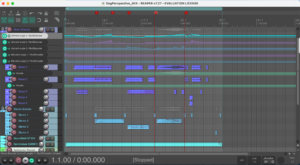
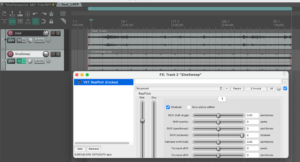
Reaper Project of Deaf/ Blind Dog

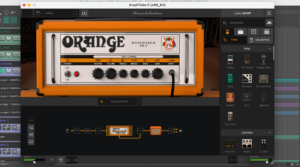
For dogs who have issues with watching, an orange speaker was added to its soundtrack to boost the sensation of acuity and sensitivity.

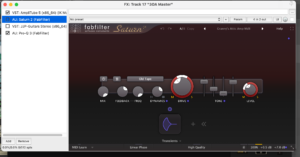
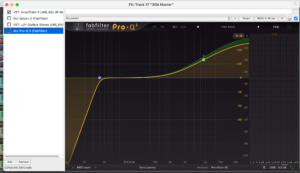
Adding up the high frequency and granularity

And other details about processing are listed below for reference.

Amping up the distorted vibe
Complying with the dog’s hearing range, 40- 60 kHz

The deaf dog version is processed based on the blind dog’s configuration (but not binaural anymore, because it can only hear things on one side as discussed). However, I’ve panned the previous soundtrack to the left channel, while adding a pure sine sweep—two octaves above—into the right, amplifying the sensation of distraction and disorientation. (I suspect those dogs can’t perceive orientation at all.)

Initially, I applied a Doppler effect to the sine sweep in the presentation version. However, after discussions with the group and following Jule’s advice, I decided to retain the pure sine sweep.

At last, I want to explain why I was so determined to add various distortion plug-ins to these soundtracks. I was deeply moved and inspired by the film Sound of Metal (2019, Darius Marder), which powerfully portrays how individuals with hearing loss might perceive sound — metallic, distorted, even robotic — yet rendered in an unexpectedly simple and affecting way.

Group 1_Week 11

Week 11 is the presentation week and our project has reached its final stage. We have completed 80% of the video and sound.

On Monday, we went to Calton Hill to test the video ourselves. During the test, we found that the video speed was faster than the actual speed, which made it impossible for viewers to keep up with the video speed. That evening, we adjusted the video and sound to the normal viewing speed, and the video and sound were finalized. After finalizing, we uploaded the video to the vimeo website, and also uploaded the video to Jules’ account for backup.

On Tuesday, we conducted a max test to test whether the microphone and camera could work properly. Before that, we also conceived a map and promotional cards for viewers. On Tuesday afternoon, the cards and maps were completed and printed.

On Wednesday, the day of the presentation, we prepared three computers, three microphones, three cameras, a sound card and a midi controller. At one o’clock in the afternoon, we took all the equipment to Calton Hill for advance arrangements, and pointed three microphones and cameras in three different directions of Calton Hill to capture different sounds and images. Viewers will first receive a project introduction card to learn about the project overview, and then take the project map to watch the video and take a walk on Calton Hill, which takes about 10 minutes. After the tour, return to the starting point of the project for a real-time max audio and video experience. After each viewer completes the experience, we record their feedback so that we can present better projects in the future.


Role:

0331

Chao Li, Yiting Liu and Ruotong Wu

– Test video

– Adjust video and audio

0401

Ruotong Wu and Chao Li

– Test Max


Group 1_Cathedral Recording

  • Recording -Chao Li, Ruotong Wu
  • Organizing Recorded Audio Materials – Yiting Liu

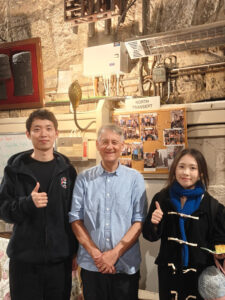
A dog’s hearing range is much wider and farther than a human’s, so it can hear sounds from beyond Calton Hill. Based on this characteristic, we explored the area around the hill and thought it would be great to add the sound of church bells in our project. We researched nearby churches with scheduled bell ringing times, and then checked if they were visible from Calton Hill. In the end, we chose St Mary’s Episcopal Cathedral.

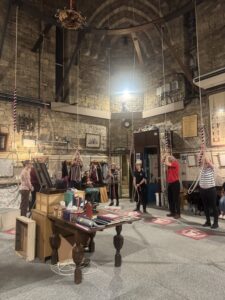
On the evening of March 27th, we arrived at the cathedral, hoping to record the sound of the bells. It was raining at the time, so we couldn’t really record anything from outside. Then we noticed a small side door and thought maybe we could go in to avoid the noise of the rain. Luckily, we met one of the bell ringers. After we explained what we were doing, he kindly offered to take us up to the bell tower.Getting up there wasn’t easy, we made great efforts to get there.

At first, we were a bit worried that our unexpected visit might be a bother, but every bell ringer we met was so kind and welcoming. They even took the time to explain the whole bell-ringing process to us. Before this experience, I always thought the sound of the bell came from one person ringing it. But I only learned today that this is a job that requires teamwork to complete. Each bell strike depends on timing, teamwork, and precision. Standing in the bell tower, watching them move in sync in such a small space, I could really feel the dedication and tradition behind their work. It’s not just about ringing the bell—it’s about trust, teamwork, and respect for time, rhythm, and tradition.

Even though the sound only made it into our project for a few seconds, the experience gave us a strong sense of connection to the city and its people. This is an experience I will cherish for the rest of my life.

Group 1_Video Production Process

  • Video Filming-Chao Li, Ruotong Wu
  • Video Editing and Color Grading- Chao Li

Video Production Process

Filming

  1. After deciding on a video-based format, we discussed how to create an immersive experience that also highlights the differences between a dog’s and a human’s perspective. Through two rounds of prototype testing, we finalized the current presentation style.
  2. The format involves a dog and its owner roaming Calton Hill together, switching between the dog’s and the owner’s viewpoints to help the audience appreciate the uniqueness of the canine perspective.
  3. We consulted Mia, a dog expert, to better understand canine behavior, she provided valuable insights. This greatly helped us mimic a dog’s state during filming.
  4. We attempted to use a GoPro mounted on a real dog to capture the roam, but encountered two major challenges: 1) We couldn’t find a dog that would fully cooperate, and renting one exceeded our budget. 2) Although a kind stranger on Calton Hill allowed us to test with their dog, the dog was unwilling to work with the GoPro harness, so we had to abandon this approach.
  5. Ultimately, we conducted three formal shoots and cleverly edited footage from all three sessions into the final film. We were fortunate to have good weather for all shoots, which made it easier to blend the footage seamlessly.

Post-Production

  1. Before editing, we conducted extensive research on canine hearing and vision to inform our audio-visual production choices.
  2. Dogs have a wider hearing range than humans, especially in the high-frequency region (up to 60kHz). We decided to enhance the high-frequency elements in the audio to make sounds sharper and clearer, simulating a dog’s sensitivity to high-pitched noises.
  3. We also added emotional elements, such as reverb and amplifying subtle sounds that humans might overlook, to simulate a dog’s heightened emotional response to certain auditory cues.
  4. In terms of vision, dogs differ from humans in several key ways:
  • Color Perception: Dogs have dichromatic vision, seeing primarily shades of blue and yellow, while red and green appear as shades of gray.
  • Visual Acuity: Dogs have poorer visual acuity (about 20/75), meaning they need to be much closer to objects to see them clearly compared to humans.
  • Motion Detection: Dogs excel at detecting motion due to more rod cells in their retinas and a higher flicker fusion rate (~75 Hz).
  • Field of View: Dogs have a wider field of view (about 240° depending on breed) but narrower binocular overlap (about 60°), resulting in reduced depth perception.
  • Light Sensitivity: Dogs are more sensitive to brightness and shades of gray, thriving in dim environments, while humans are optimized for bright light and color differentiation.
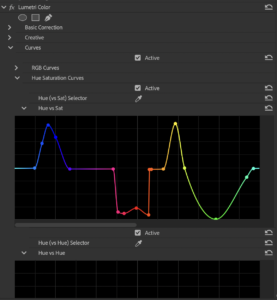
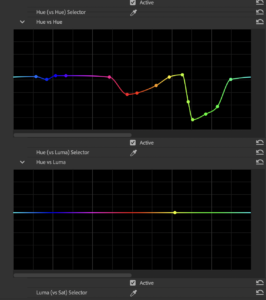
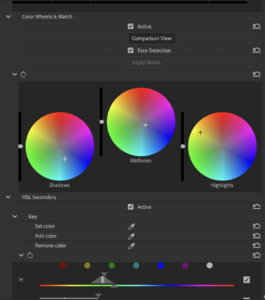
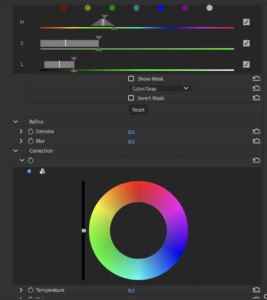
Based on this research, I used color curves in editing software to adjust for canine vision characteristics, including edge distortion and color grading. To simulate the difference in depth perception, I selectively blurred parts of the image. For the human viewpoint, I applied a LUT to make colors more natural and vibrant, emphasizing the contrast with the dog’s perspective.

Specific Editing Steps

Step 1: Adjust Color Perception
  1. Use the Lumetri Color effect on the dog’s clips or an adjustment layer.
  2. In the Curves Panel, utilize the Hue vs Saturation Curve:
  • Reduce saturation for red and green tones.
  • Enhance saturation for blue and yellow tones.
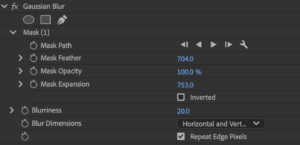
Step 2: Simulate Reduced Visual Acuity
  1. Apply the Gaussian Blur effect to the dog’s clips or adjustment layer.
  2. Set the blur radius to subtly reduce sharpness without making the footage unrecognizable.
  3. Use masking tools to isolate areas and feather edges for a natural look.
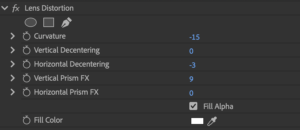
Step 3: Adjust Field of Vision
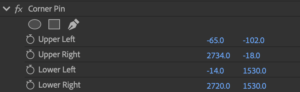
  1. Apply Lens Distortion.
  2. Adjust curvature settings to slightly widen the perspective, creating a fisheye-like effect.

Reflection and Summary

During the color grading process, I spent a significant amount of time trying to achieve a more pronounced yellow tone, but was never fully satisfied with the results. Since yellow and red are close on the spectrum, adjusting one often brought out unwanted green tones. After weighing the options, I settled on the current version, which features predominantly blue, cooler tones, creating a strong contrast with the human perspective. If I had more time, I would continue refining the grading to bring out more yellow tones and achieve a more satisfying result.

Group 1_Live Experience by MAX

  • MAX patcher design- Ruotong Wu
  • Testing and connecting MAX patcher- Chao Li, Ruotong Wu

We believe that a dog’s sense of smell is an important perspective. Through our research, we discovered that thermal imaging can be used to visualize gases, so we plan to use a thermal imaging effect to represent how dogs perceive smells. After seeking help from Jules, we found out that MAX can generate thermal imaging effects directly.

During our exploration, we realized that if we use MAX to process live footage into a dog’s perspective, it could create a better experience for the audience. Therefore, we decided to set up an interactive experience point based on a video tour of Calton Hill. We will use MAX’s Vizzie modules to apply visual effects to the video in real time, while also recording sound from three directions. The sound will influence the visuals, creating a live experience for the audience.

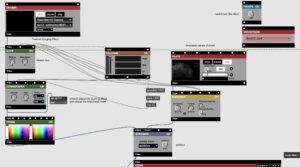
I divided the entire pacher into three parts. The design of each part is mostly the same, but they represent different aspects.

  • The First Aspect-Dog’s Vision

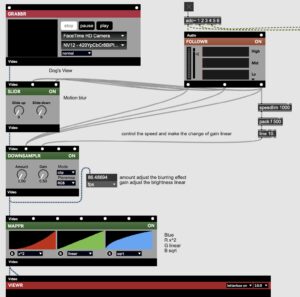
I referred to the patcher from Andrew’s workshop, Jules’ detailed explanation of the Vizzie modules and I combine the ‘help’ for each Vizzie component. Based on my research, I experimented and created a version of how I imagine the world looks through a dog’s eyes. I focused on three main aspects to represent a dog’s vision:

Color: Mostly blue, with yellow and gray as secondary tones

Blur: Dogs see with less clarity than humans

Glow: Dogs are more sensitive to light movement, and fast motion can create a glowing effect

The most difficult part was adjusting the colors. There wasn’t a single Vizzie module that could fully recreate the way I see a dog’s visual world. I originally tried to use the object of ‘jit.gl.pix’ to completely remove red, but after many attempts, it didn’t work as expected. In the end, I used the MAPPR module and its RGB function to achieve the color style of dog vision.

  • The Second Aspect-Thermal Imaging Effect

For this part, we still use vizzie to simulate the thermal imaging effect and add the effect of gas to combine it with the video to simulate the sense of smell of dogs. For the color part, I used ‘2 TONR’ to retain the blue and purple to simulate the video effect captured by the thermal imager. Then I collected the smoke effects online and mixed them using the addictive mode of MODEMIXR.

  • The Third Aspect-Dog’s Mood

The design of this part is very simple. I only kept the yellow color and then adjusted the frequency of the screen flickering through sound. Because dogs have very sensitive hearing, even the slightest change in sound will attract their attention, even many subtle sounds that we humans never notice.


In addition, each video corresponds to a different microphone. I input the sound into different modules to influence the changes in the video, making the auditory stimulation to the audience more visual. Then I also did a simple mix by MAX to enable it to adjust the frequency of the real-time sound. Additionally, I added the reverb and distortion effects to make the ambience heard by the audience closer to the hearing of a dog.

The day before our presentation, we got help from Jules and Andrew. We used the H6 Essential as an audio interface to record live ambience. Andrew suggested that we add a MIDI controller so the audience could interact and adjust things themselves. This would make the experience more fun and immersive. It was a really helpful suggestion for our project. Luckily, we managed to borrow a MIDI controller just one second before the staff at the music store closed for the day — it was such a close call! I used six knobs to control three video channels and three audio channels. The audience could turn the knobs to mix visuals and sound in real time.

The link of introduction of MAX patcher:

https://media.ed.ac.uk/media/t/1_a41mxuyi

MAX Patcher:

https://drive.google.com/file/d/18VtVyBSB_TXkSPUOz0npl_-im6KSij-Z/view?usp=share_link

Reference:

https://www.dropbox.com/scl/fi/l85vr4wvodzx3c3jjugt9/JR-DMSP-VIZZIE.mp4?rlkey=l58aqdullda4rcjn8m9keqev9&e=2&st=16s7toh5&dl=0

https://drive.google.com/file/d/1-OqBNyjkxgPgQw_my38LQSTLAf_-FZ_j/view?usp=share_link

css.php

Report this page

To report inappropriate content on this page, please use the form below. Upon receiving your report, we will be in touch as per the Take Down Policy of the service.

Please note that personal data collected through this form is used and stored for the purposes of processing this report and communication with you.

If you are unable to report a concern about content via this form please contact the Service Owner.

Please enter an email address you wish to be contacted on. Please describe the unacceptable content in sufficient detail to allow us to locate it, and why you consider it to be unacceptable.
By submitting this report, you accept that it is accurate and that fraudulent or nuisance complaints may result in action by the University.

  Cancel