Any views expressed within media held on this service are those of the contributors, should not be taken as approved or endorsed by the University, and do not necessarily reflect the views of the University in respect of any particular issue.
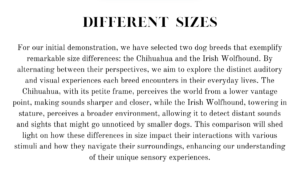
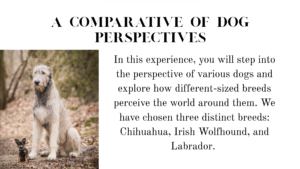
Before our final presentation, we assembled the VR headset in advance, and I drafted part of a short written introduction for our project. The aim was to help the audience quickly understand the core concept and structure of our work before engaging with the immersive experience.
In the introduction, we first explained the main theme of the project: an immersive auditory experience from a dog’s perspective. We then guided the audience through the two main sections of the piece:
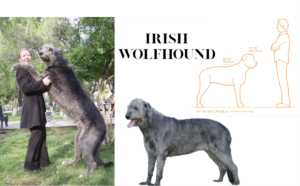
The first part explores the auditory differences between large and small dogs, comparing how they perceive spatial sound and frequency sensitivity within the same environment, highlighting how body size can affect hearing.
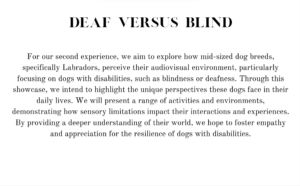
The second part focuses on the auditory perception differences between blind and deaf dogs, using specially designed soundscapes to simulate how sensory loss might lead to compensation or disorientation in their hearing experience.
After I finished the first draft of the text, Carly edited and refined the wording, selected appropriate images, and arranged the content into a visually coherent layout. Finally, we printed and laminated the introduction as a physical handout, which was displayed next to our setup during the presentation for visitors to read before engaging with the work.
Carly:
I started from Zixuan’s draft and curated the rest of the text. With the approval of both Zixuan and Ruiqi, I selected the images and created the presentation in Canva. I printed it at my accommodation, and we decided to laminate it to make it more durable and resistant to the weather. We also considered that laminating is available for free at the library.
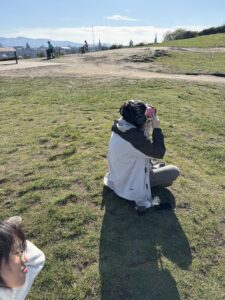
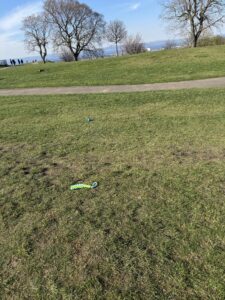
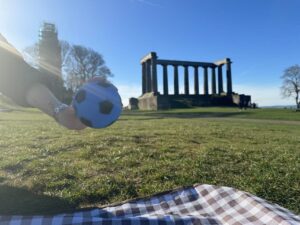
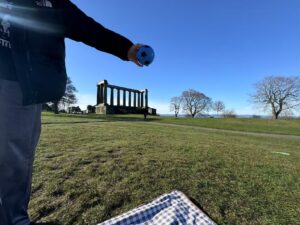
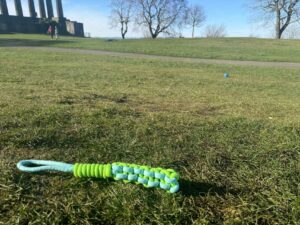
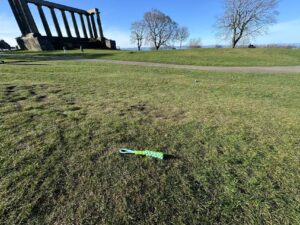
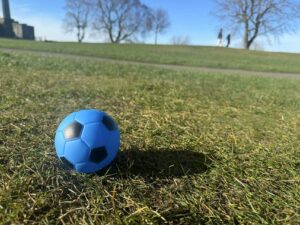
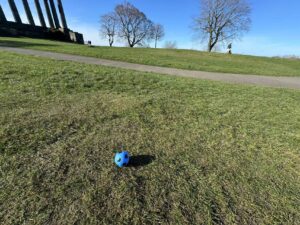
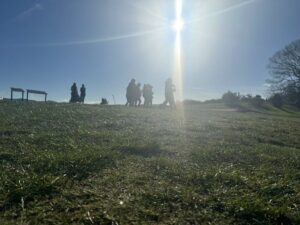
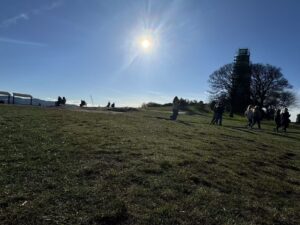
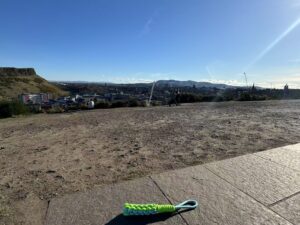
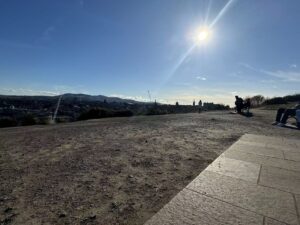
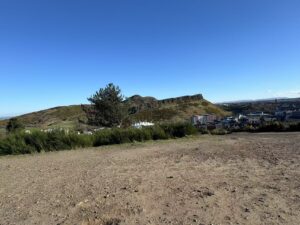
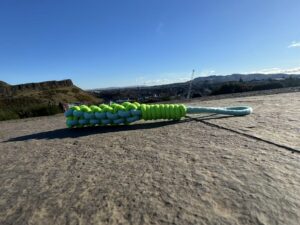
After laminating, we went to Calton Hill with the VR Headset, headphones, and dog toys to test if it worked. Glad to say it did.
In the “large dog vs small dog” section of the video, since the camera perspective switches back and forth between the two dogs, I applied a similar approach in the sound design. Specifically, I alternated between the two pre-recorded and processed environmental ambience tracks, matching the shift in perspective. This allows the audience to clearly perceive the difference in spatial hearing between the two dogs.
Beyond the environmental ambience, my main focus during the sound design process was adjusting all sound elements except for the dogs’ own vocalisations, especially the EQ and tonal treatment of sound effects and human speech.
From a dog’s perspective, language is not fully comprehensible—what they pick up on are mainly tones, short commands, and key phrases. So, I used AI to generate a segment of human dialogue. I preserved the parts that sounded like clear commands or recognisable short phrases, while processing the rest to obscure the words. The result is a voice that maintains intonation and emotional tone, but becomes unintelligible, simulating how a dog might hear someone speaking without understanding the language.
Additionally, I made a clear distinction between the owner’s voice and the voices of other people in the environment. In a dog’s world, the owner’s voice holds unique emotional weight and should sound different from everyone else.
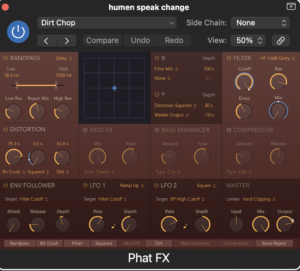
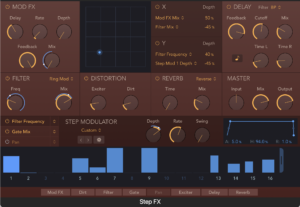
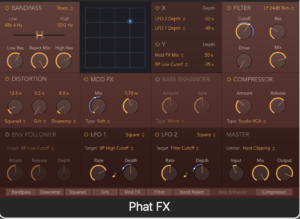
For the owner’s voice, I used a combination of Phat FX and Step FX. This blend created a sound that is partially unintelligible yet emotionally expressive, preserving the rhythm and tone without full clarity. It contrasts with the later segments where commands are delivered unprocessed, helping to distinguish the emotional impact of meaningful phrases.
For ambient crowd voices and general human chatter, I applied only Phat FX. This gives the sound a more distorted, less emotionally direct quality, where the language becomes vague and the tone more abstract, creating a sonic contrast to the owner’s voice.
Finally, I adjusted the EQ of all non-dog-originated sounds (environment, effects, and speech) based on the dog’s size and presumed hearing characteristics:
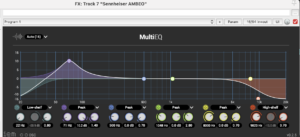
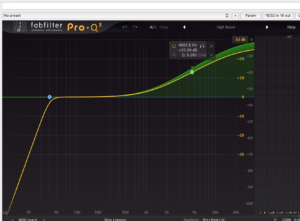
For larger dogs, I boosted low frequencies and reduced highs, creating a broader, fuller sense of hearing.
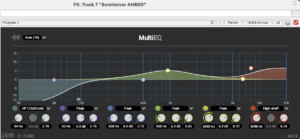
For smaller dogs, like Chihuahuas, I enhanced the high frequencies and cut some lows, narrowing the sound field to make it sharper and more focused.
Through all of these audio decisions, my goal was to ensure that the audience not only sees the world through each dog’s eyes but also hears the world as each dog might—highlighting how size, focus, and emotional connection shape the canine listening experience.
Today, we recorded environmental sound using the Sennheiser AMBEO VR microphone. We captured three separate recordings at the same location, with the only difference being the recording height, to simulate how dogs of different sizes perceive their surroundings.
Since the Chihuahua is very small, we couldn’t find a mic stand low enough to match its ear level. So we rested the microphone directly on the mic stand at a low angle to approximate its actual height.
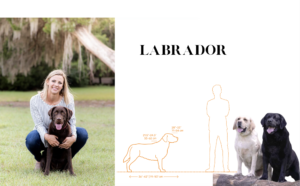
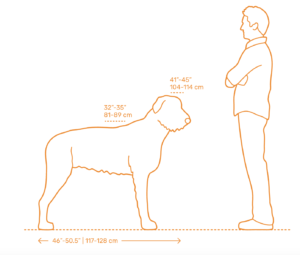
For the Labrador and the Irish Wolfhound, we recorded at approximately 60 cm and 120 cm from the ground, respectively, to match their standing ear positions.
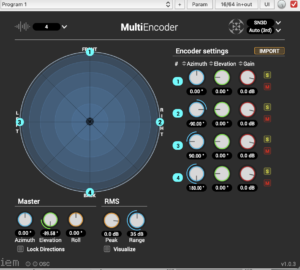
After recording, I processed the environmental sound recordings for the large dog and small dog perspectives, making adjustments based on their body size and likely auditory characteristics.
Larger dogs (such as the Irish Wolfhound) have larger body sizes and ear membrane areas, which make them generally more sensitive to low frequencies and less responsive to high frequencies. So, in post-processing, I boosted the low frequencies and slightly reduced the highs while also widening the stereo image to create a broader, fuller auditory space.
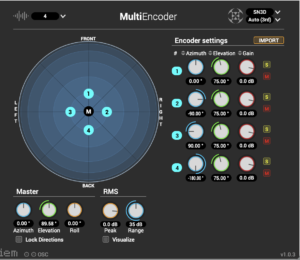
Smaller dogs (like the Chihuahua) are typically more sensitive to high frequencies but less responsive to lows. Therefore, I enhanced the high frequencies, reduced some of the lows, and narrowed the overall sound field to create a more focused, sharper listening perspective.
With these adjustments, we aim to authentically simulate how dogs of different sizes hear the world, enhancing the immersive quality of the experience and reinforcing the concept of “listening from a dog’s perspective.”
Ruiqi:
That was what I did on atmos for Labrador. Dogs typically hear frequencies from 40 Hz to 45,000 Hz, way far exceeding human hearing (20 Hz–20,000 Hz). They are most sensitive to higher frequencies (2k–45 kHz), which are critical for detecting sounds like prey movements, high-pitched whistles and orders. And I think amplifying 4k Hz can make sounds like human footsteps and verbal commands more perceptible.
Carly:
When recording the the ambience I made sure of having a measuring tape so we could get the correct size, the thing is that while recording the ambience it was still the plan to use the photos taken with the camera rather than the phone, which is the reason we had the measuring tape too so we could have the correct height.
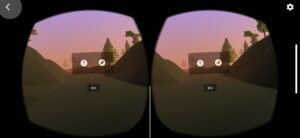
Today we tested how our images and video content perform in a VR environment. Ruiqi and I went to the library and picked up a set of free VR headsets, then began a full round of testing. It was our first time viewing the project content inside VR, and while we ran into a few issues, we also gained some very helpful insights.
We started by testing the video Carly had created. Right away, we noticed a major issue: there was a thick black border surrounding the video in VR, which seriously disrupted the sense of immersion. It felt like we were watching the content through a “window” instead of being inside the scene.
To solve this, we tried enlarging the image to remove the black edges. While this did fill the screen, it introduced a new problem: the content became blurry and hard to focus on, and there was noticeable ghosting and double vision. It made the experience uncomfortable to watch.
So, I decided to open the VR headset’s built-in testing app to study what properly formatted images for VR should look like. As expected, there were clear standards for image proportions and layout. I sent one of the reference images to Carly, and together we adjusted our content based on that template. It worked—the focus issue was completely resolved, and the visuals looked much more natural and immersive.
We also tried adding some explanatory text about our project during the black screen sections, but in VR it was impossible to view the full text properly, so we eventually decided to abandon that idea.
In the final stage, I added a small emotional touch to the video: every time a dog hears a positive word from its owner, I subtly increased the brightness of the screen to represent the dog’s happiness and excitement. This gentle lighting shift adds emotional depth without distracting from the experience.
After final testing, everything ran smoothly, and the VR playback now works perfectly. It feels like a huge step forward, and we’re excited to let others try it—to finally experience what the world might look and sound like from a dog’s point of view!
Today, as planned, we went to Calton Hill to capture photos and video materials for our project. In order to make the final piece feel more rhythmic and narrative-driven, we did some initial planning before heading out, designing two simple scene-based storylines to make the “dog’s perspective” feel more natural and immersive.
We chose to shoot in the afternoon because the lighting at that time is softer and more vibrant. The scenery at Calton Hill during this time also fits well with the atmosphere we wanted to convey.
🎬 Scene One: “Distraction by Choice”
In the first scene, we set up a playful moment where a dog is chasing a ball but suddenly gets distracted by another toy. To enhance the audience’s sense of immersion, we decided to film the ball-throwing and the dog’s gaze following the ball as video, while the rest of the sequence would be presented through photographs. We believe that photos give more space for the sound design to come forward, allowing audio to take the lead in crafting an immersive experience。
🐶 Scene Two: “A Quiet Moment”
In the second scene, the dog looks around before quietly lying down in front of its favourite toy. The movement is subtle but emotionally more contained. Here, too, we chose to film the moment of the dog lying down to strengthen the feeling of presence while using photographs to complement the setting and visual composition.
📷 Shooting Method & Lens Choices
We started with the “big dog vs. small dog” group. To ensure visual consistency in composition, we kept the camera position fixed and adjusted the height of each dog model so that both appeared to be at the same eye level. This allowed for a clearer comparison of their sizes and perspectives.
We also made specific choices regarding lens focal lengths to simulate the field of view from each dog’s perspective:
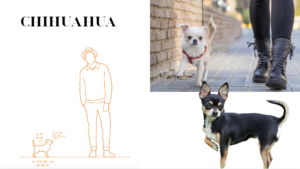
The Chihuahua was shot with a 24 mm lens, which offers a narrower field of view to match its small size.
The Irish Wolfhound was captured using a 14 mm wide-angle lens, highlighting the broader perspective granted by its larger body.
– The Labrador Retriever, as the mid-sized reference, was shot with a 19mm lens, striking a balance between the two and representing a “medium perspective.”
With this setup, we hope the audience can not only observe the dog’s behaviour but also visually experience how dogs of different sizes perceive the world differently.
Overall, today’s shoot was quite compact but very productive. The whole team worked smoothly together. From choosing the right lighting and adjusting lenses to positioning the dog head models, every detail brought us one step closer to realising the final vision. Next, we’ll move into organising the materials and starting the sound design phase—we’re excited to see what comes next!
Carly:
I really enjoyed today’s shooting, it also felt a little bit “new” in a sense as we changed the medium from a camera to an iPhone, we changed from only photos to photos and videos and we also added two different dog toys (which is an excellent thing specially with my dogs back in Spain as they are gonna get a new toy).
I am delighted with the results from the images taken, not only because they look good and are going to make wonders when edited, but also because it was really amazing seeing that, with the previous organisation and communication, we took the pictures and videos we needed really fast – not rushed, but efficient. Can’t wait to edit them!
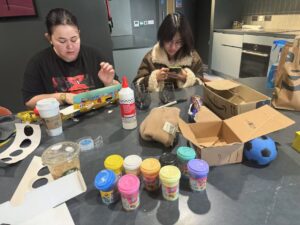
Today we completed the first round of making our dog head microphone. In terms of materials and structural design, we did a bit of experimentation in order to simulate the physical shape and auditory perspective of a real dog’s head using simple materials. This will help us more accurately capture sound from a “dog’s point of hearing” for our project.
📐 Dog Head Sizes and Breed Categories
Based on the three types of dogs featured in our project, we created head models of different sizes:
– Chihuahua (small breed): The actual head diameter is about 6–8 cm. We chose 8 cm as our reference.
– Labrador Retriever (medium breed): Scaled up to a 20 cm head diameter.
– Irish Wolfhound (large breed): For the greatest contrast, we made the head about 35 cm in diameter.
By creating models with these size differences, we aim to simulate how dogs of different breeds and sizes might experience sound spatially. This gives us a physical foundation for our sound design.
🔧 Materials and Construction Approach
We used three main materials to build the dog heads:
– Cardboard: Served as the skeletal framework—lightweight, easy to cut and shape, yet strong enough for structure.
– Plasticine: Simulated the “muscle layer” and soft tissue of a dog’s head, giving weight and flexibility to the shape.
– White glue (PVA): Brushed on the outside as a sealing layer to strengthen the structure, prevent deformation, and add texture.
An unexpected bonus of this combination is the tactile and acoustic feedback—when you tap the completed dog head, it produces a sound somewhere between soft flesh and solid form, very similar to striking actual animal tissue. This quality gave us ideas for using these models not only for microphone placement but potentially as physical sound sources for future sampling.
🛠 Challenges and Solutions During Construction
During the process, we ran into a shortage of cardboard. To make the most of what we had, we carefully selected the best pieces and **patched them together using transparent tape** to form the frame.
Initially, we were concerned about whether the taped structure would hold, but once the clay was added over it, the overall form became much more solid and stable, more than we expected.
In terms of practical functionality, we also designed the heads with recording in mind. We left microphone slots on both sides of the head, aligning roughly with where a dog’s ears would be, and created openings at the bottom and side for cable routing. This setup allows us to mount mics easily and connect them to recording devices, achieving a binaural recording experience that closely mimics a dog’s hearing position.
Despite the simplicity of the materials, this handmade process gave us valuable insights into structural design, texture, and acoustic response. It also laid a solid foundation for the next phase of our work—testing how the different-sized dog heads affect recorded sound in the same environment, and further exploring the relationship between body structure and auditory space.
Ruiqi:
I hate to say this, but… I’ll never forget how embarrassing it was, running into every single shop on South Clerk Street asking for cardboard.
Carly:
It was a shock to discover that the plasticine here is different from the one in Spain. I think one of the biggest problems we encountered was how long the heads took compared to how long we actually planned them to take. We started at 10 am, thinking we would finish around 2 pm or 3 pm. We didn’t even finish that day…
Today’s team meeting finalised the core direction of our project. After the discussion, we decided to focus on “a dog’s perspective” by combining video and photography to show how dogs experience the world. We chose Calton Hill as our presentation location because it offers both open natural scenery and the opportunity for the audience to gain a human perspective and find out the difference between humans and dogs.
For content design, we will explore two key comparisons:
1.How size affects perception:
We’ll compare Chihuahuas and Irish Wolfhounds, studying differences in their behaviour and hearing to understand how body size shapes their experience of the world.
2.Special sensory experiences:
We’ll focus on blind and deaf Labrador Retrievers to show how disabled dogs perceive their surroundings. We’ll observe how blind dogs rely on hearing and smell to navigate space, and how deaf dogs use vision and touch to understand their environment. This will highlight the unique ways dogs adapt when missing key senses.
To capture authentic sounds, we’ll build a “dog-head microphone” that mimics a dog’s ear structure for realistic audio recording. For special-needs dogs, we’ll also use vibration sensors to track their responses to different environments.
Additionally, we’ll film in multiple settings to compare how blind and deaf dogs behave in the same situations. This will help showcase their unique ways of adapting, making the project more engaging and impactful.