Project Proposal and Prototype
!!!The final form of our submission is this PDF:DMSP Submission1 Perception
To avoid accidents, the following text version is left just as a backup.
Digital Media Studio Project (2023-2024)[SEM2]
Group: Perception – Tutor: Dave House
Shirin Tawakol – s2602349
Joseph Vesey – s2579717
Qinqi(Agnes) Yang – s2506918
Preliminary introduction:
Our work is an interactive visual-sound physical art installation shaped like a cluster of mushrooms on an isolated island. In the passive state, it is a collection of models which resemble mushroom clusters, complete with moss, dirt and rocks. When interacted with, the installation’s lights visually change and play reactive sounds, resembling a much more unsettling scene, giving participants a glimpse into the unseen world of fungal communication.
The main purpose of this work is to convey to the audience the scientific discovery that “mushroom communities have their language system” through creative performance in visual and sound forms. In other words, we are committed to building bridges between people, art and science through creative works of art. This form facilitates people’s transformative understanding of the nature of science that cannot be directly perceived.
Furthermore, we hope to reveal the relationship between human activities and natural creatures through this work. In the context of interdisciplinary creative work, it emphasizes the mutual interaction and co-existence of two different organisms in the natural environment.
Research and case studies:
Mycological Genetics and Signaling Pathways
1. Cell-to-Cell Communication:
Filamentous fungi exhibit complex cell-to-cell communication and fusion processes. Molecular and genetic mechanisms mediate interactions between Ascomycete cells, facilitating intricate communication and fusion events within the fungal network (Pierre-Louis Alaux et al., 2020).
Conscious Patterns: Fungal mycelia display decision-making abilities and modify their developmental patterns in response to interactions with other organisms. This indicates a level of consciousness or responsiveness within the mycelium network, showcasing its adaptability and dynamic nature (Money, 2021).
2. Calcium Signaling:
Studies reveal that mycelial networks transmit information through local calcium signals. Visualization techniques identify downstream effects, providing insights into the signalling mechanisms within the fungal network (Itani et al., 2023).
Many fungi live as mycelia, which are networks of hyphae. Mycelial networks are suited for the widespread distribution of nutrients and water. The logistical capabilities are critical for the extension of fungal survival areas, nutrient cycling in ecosystems, mycorrhizal symbioses, and virulence (Itani et al., 2023).
3. Interplant Communication for Risk Prevention:
Common Mycorrhizal Networks (CMN) in arbuscular mycorrhizal fungi establish channels for interplant communication. Plants connected by CMN can communicate and prepare for various environmental challenges, such as aphid attacks (Pierre-Louis Alaux et al., 2020)(Zdenka Babikova et al., 2013).
Conclusion:
Communication within mycelium occurs as a means of mitigating environmental risks, facilitating nutrient exchange, coordinating virulence factors, fostering symbiotic relationships, and ultimately, fostering adaptation to maintain ecological equilibrium.
Language of fungi derived from their electrical spiking activity
“While studying another species of fungus, Ganoderma resinaceum, we found that the most common width of an electrical potential spike is 5-8 min. In both species of fungi, we observed bursts of spiking in the trains of the spike similar to that observed in the central nervous system. While the similarity could be just phenomenological, this indicates a possibility that mycelium networks transform information via interaction of spikes and trains of spikes in manner homologous to neurons.”(Adamatzky, 2022, p. 211926)
“We recorded extracellular electrical activity of four species of fungi. We found evidences of the spike trains propagating along the mycelium network. We speculated that fungal electrical activity is a manifestation of the information communicated between distant parts of the fungal colonies.”(Adamatzky, 2022, p. 211926)
“We therefore attempted to uncover key linguistic phenomena of the proposed fungal language. We found that distributions of lengths of spike trains, measured in a number of spikes, follow the distribution of word lengths in human languages. We found that size of fungal lexicon can be up to 50 words; however, the core lexicon of most frequently used words does not exceed 15-20 words.” (Adamatzky, 2022, p. 211926)
Case studies: Mushroom Music
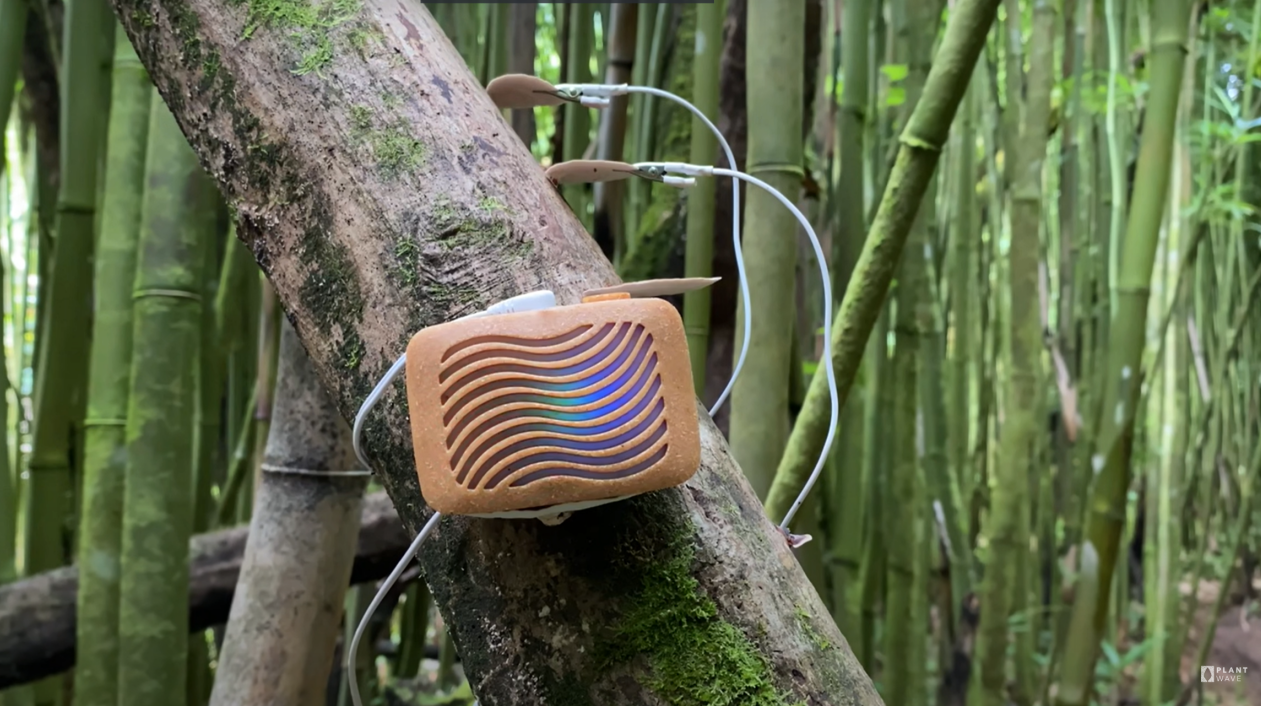
https://www.youtube.com/watch?v=w0tNEp4m5PY
The device used here transfers electrical responses taken from mushrooms into musical notes, which can then be seen changing depending on what kind of mushrooms they get this data from.
One possible avenue we could look down is the production of “mushroom music” for an installation. Multiple artists have ventured into this in recent years and find interesting results. The Idea of experiencing audio and visual feedback originating live from mushrooms is interesting enough, but the idea doesn’t go much “deeper”. Because of this, we decided to go down a different route with mushroom signaling and communication, which has more interactive potential.
Ecological Role of Mycorrhizal Networks
1. The ecological functions of mycorrhizal networks in plant-fungal symbiosis:
Microbacteria can maintain the life of some plant species through gradient transfer of C. It also promotes the transfer of carbon, nutrients, water, defense signals and allelochemicals to aid mycorrhizal colonization and the establishment or growth of autotrophic plants in forests, woodlands and grasslands. And in some cases, mycorrhizal networks have been shown to influence plant interactions (facilitation and competition), forest regeneration, or plant dominance; but in other systems, they provide positive feedback pathways that can destabilize ecosystems.(Simard et al., 2012)
2. How mycelium facilitates nutrient exchange and communication in ecosystems:
“AM fungi facilitate plant uptake of mineral nutrients such as phosphorus and nitrogen by increasing the absorbing surface area and by mobilizing sparsely available nutrients. In turn, plant hosts supply AM fungi with a carbon source that is essential for fungal growth.” (Wang et al., 2017, p. 1147)
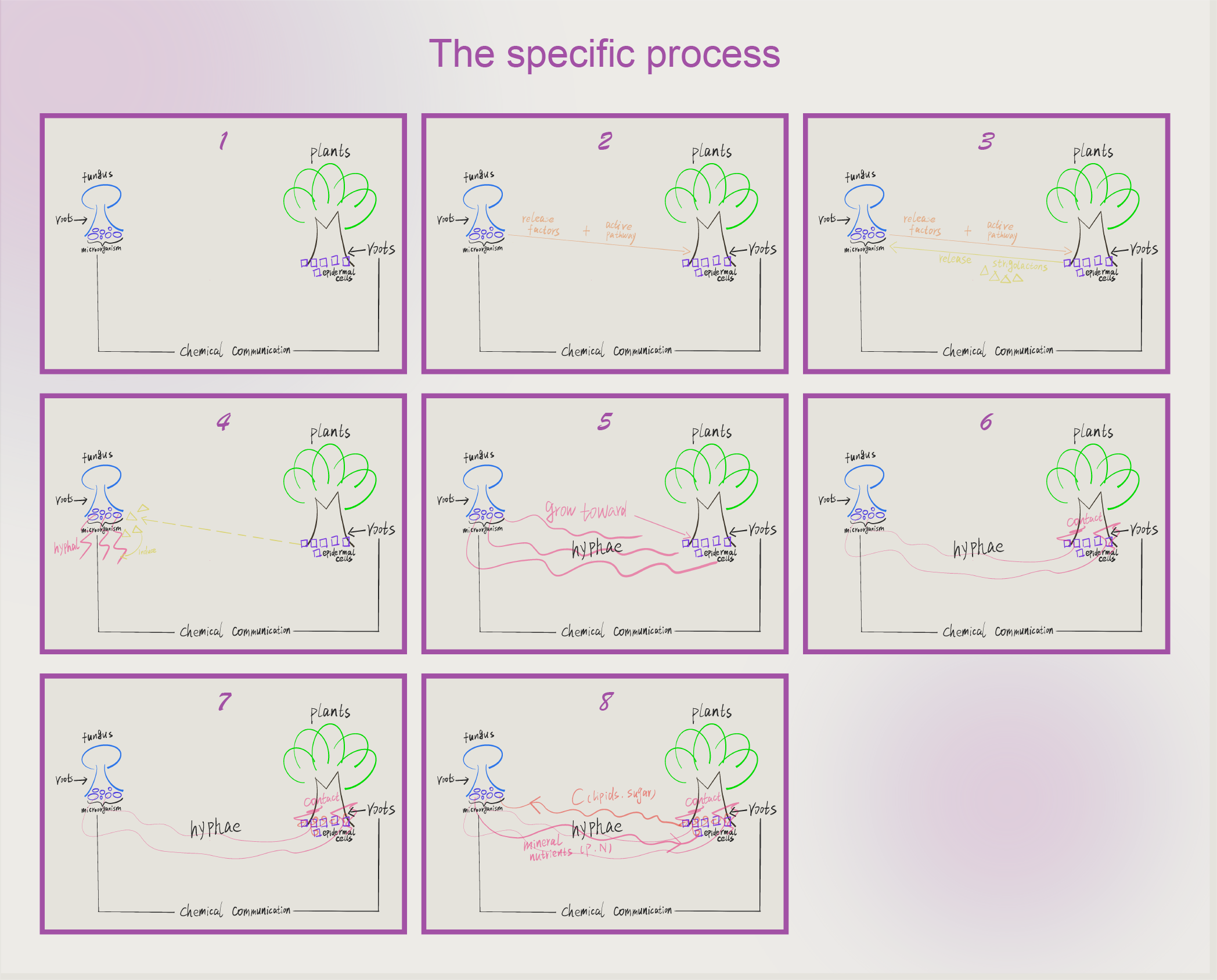
In addition, the nutrient exchange between the host plant and the fungus is regulated similar to the “free market” model, that is, the host plant and the fungal partner need to be controlled by each other’s two-way nutrient supply to maintain a stable state (Wang et al., 2017).
The nutritional status of the plant and the surrounding environment affects the fungal-plant symbiosis due to the ability of fungi to increase the uptake of Pi and N from the soil by the plant host (Wang et al., 2017).
3. Investigate the impact of environmental factors on the behavior of mycorrhizal networks:
Existing research shows that both the natural environment and human activities influence the diversity of mycorrhizal symbionts. The specific impact of the environment is reflected in the changes in atmospheric carbon dioxide concentration and atmospheric temperature that affect the rate and amount of carbon and nutrient exchange between mycorrhizal partners. Human production and agricultural activities have become more frequent, which will reduce the availability and diversity of naturally occurring mycorrhizae in the soil. In addition, nitrogen deposition caused by artificial afforestation and human activities may affect the mycorrhizal network, thereby affecting the distribution of related plants (Field et al., 2020).
Case studies: Artworks about human, nature and network
1. An installations of human and plants:
Installation work from artist Youyang Hu. Connect plants and human muscles to achieve a sympathetic effect between the two. Show humans experience plants from the perspective of plants and improve their understanding of plant perception.
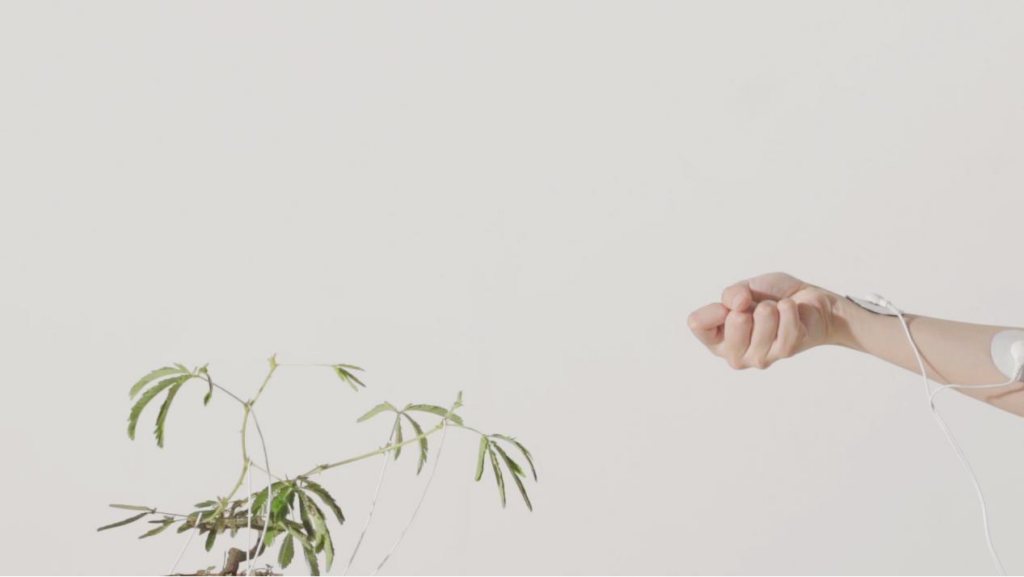
https://www.youtube.com/watch?v=TWsBZWFD6-I
2. Spatial installation of human and plants:
A large-scale installation from artist Youyang Hu. The Mimosa signal is used to identify human movement through artificial algorithms. Under the interaction and perception between humans and plants, a dance is completed.
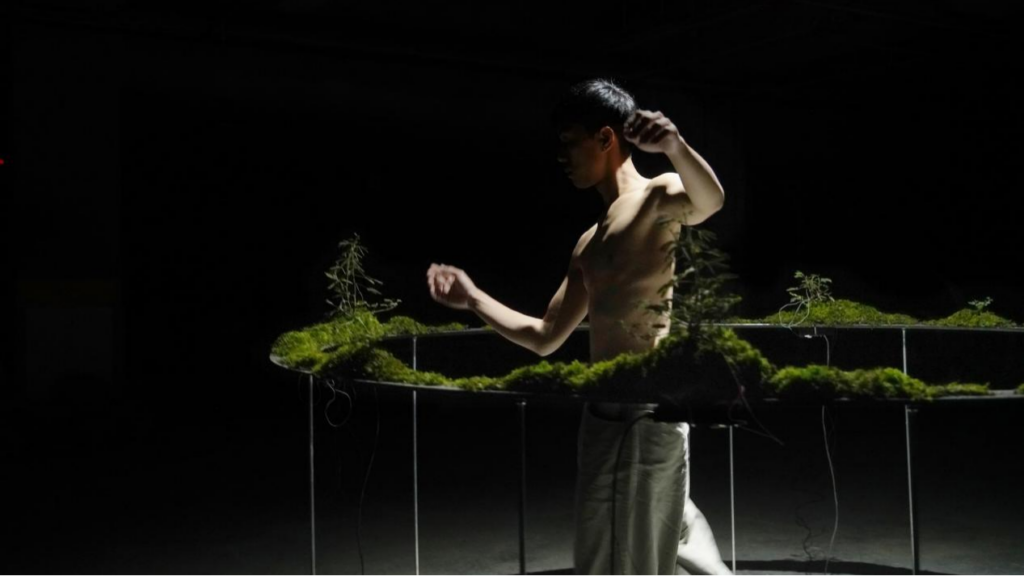
https://www.youtube.com/watch?v=QxFZZQnHyv8
3. Spider web instrument installation:
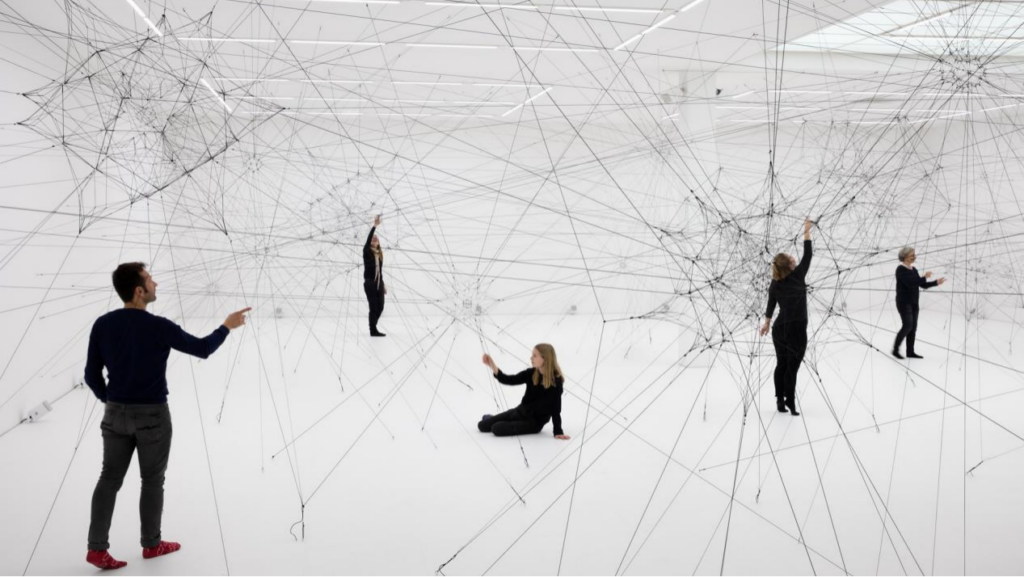
A mesh landscape installation from artist Tomás Saraceno. The work invites people to play with the web like a spider, gently touching, sliding and making sounds within the amplified string system. Simultaneously entering this interconnected network of perceptions by sending and receiving vibrations prompts participants to see, touch, listen and be present for a moment, thus drawing awareness to the adjacent world.
https://www.youtube.com/watch?v=05rgQUFPTjc
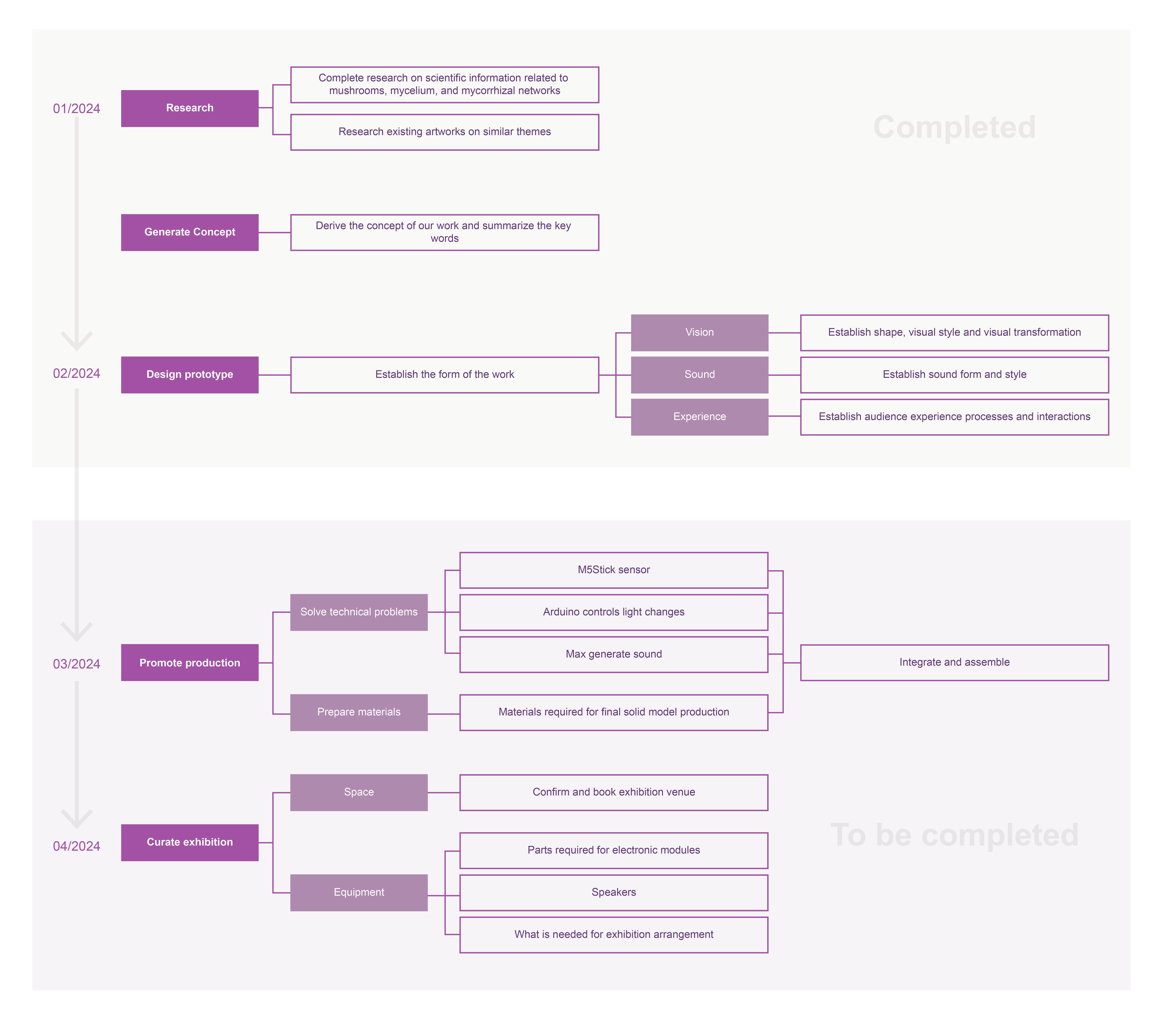
Development process plan:
Concept and background statement:
Through previous research on scientific knowledge related to mushrooms and mycorrhizal networks, we can conclude:
-
- There is tangible experimental evidence that mycelium networks spread. And fungal electrical activity is a manifestation of the exchange of information between distant parts of the fungal colony. That fungal language exists.
- Communication within mycelium occurs as a means of mitigating environmental risks, facilitating nutrient exchange, coordinating virulence factors, fostering symbiotic relationships, and ultimately, fostering adaptation to maintain ecological equilibrium.
- Fungi use hyphal networks to exchange materials with other plants and the soil in the environment.
- Human activities affect naturally existing mycorrhizal networks (mostly negative effects).
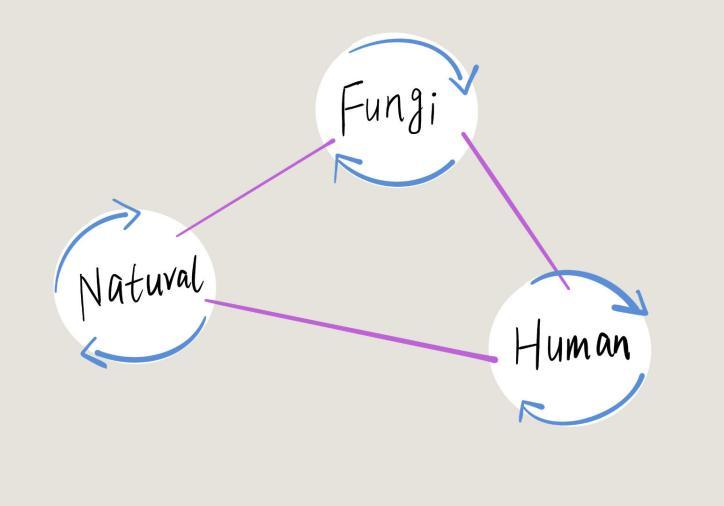
From this, we can build a structure where humans, fungi, and the natural environment interact, and each structure has its own communication method.
We have conceived a physical installation centered around an M5 Stick (sensor) and Arduino framework. This island-shaped art installation embodies the intricate signalling network of mycelium, each element communicating with others following user interaction with the piece. It symbolizes the transmission of information akin to the researched ‘language of the mushrooms’ – a method of communication observed in natural ecosystems to relay strategies for risk prevention. While it incorporates artificial moss and other naturalistic elements to evoke the ambience of a forest setting. We have opted to maintain a “naturalistic” aesthetic rather than veering towards abstraction. This choice enables users to intuitively grasp the installation’s dynamics without the necessity of textual explanations. The installation responds to user input and it is reflected visually and audibly, mirrors the dynamic communication observed in natural ecosystems. Users actively shape the atmospheric landscape, engaging in a dialogue with the artwork as it evolves in real time.
Keywords: Communication; Curious; Natural
Ideation:
1. Mood boards:
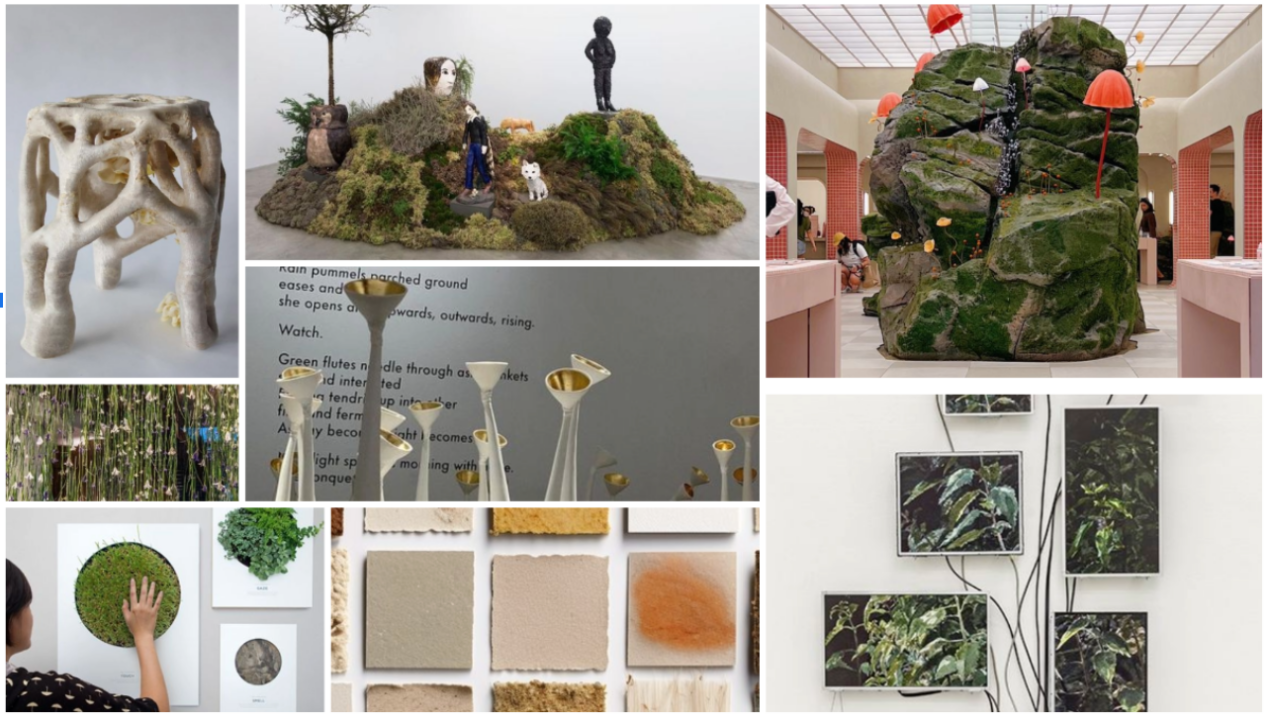
For the concept art and to further figure out which materials to use we created two mood boards, one for the installation itself and one that encompasses everything into one board.
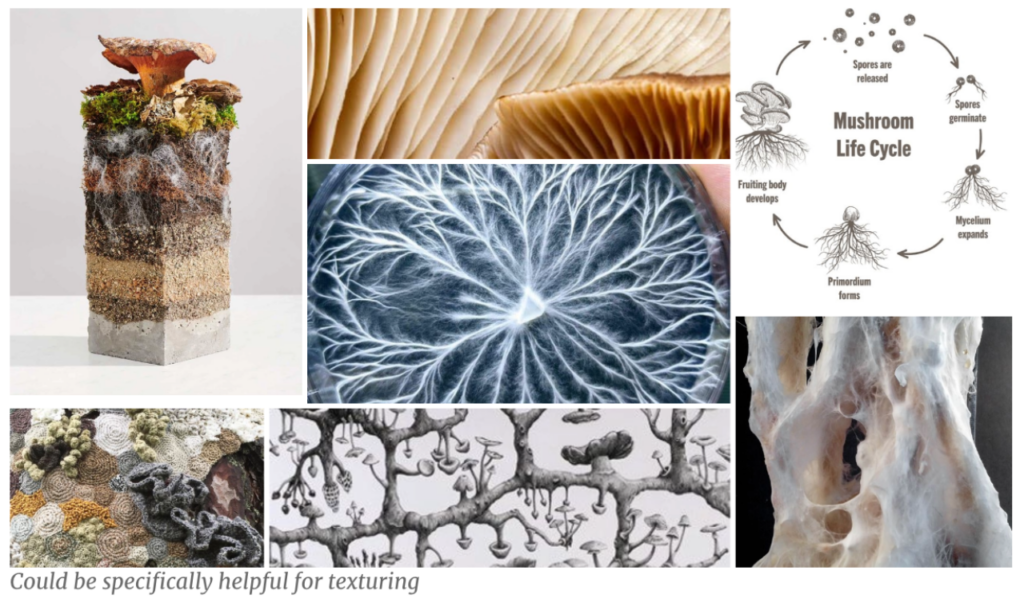
Case studies: Artworks showing plants in natural state
Landscape installation created by designer Lily Kwong. A large monolithic sculpture covered in moss and colourful mushrooms, which also includes plant-covered mounds and pink-purple flowers. Showcasing Pacific Northwest flora.
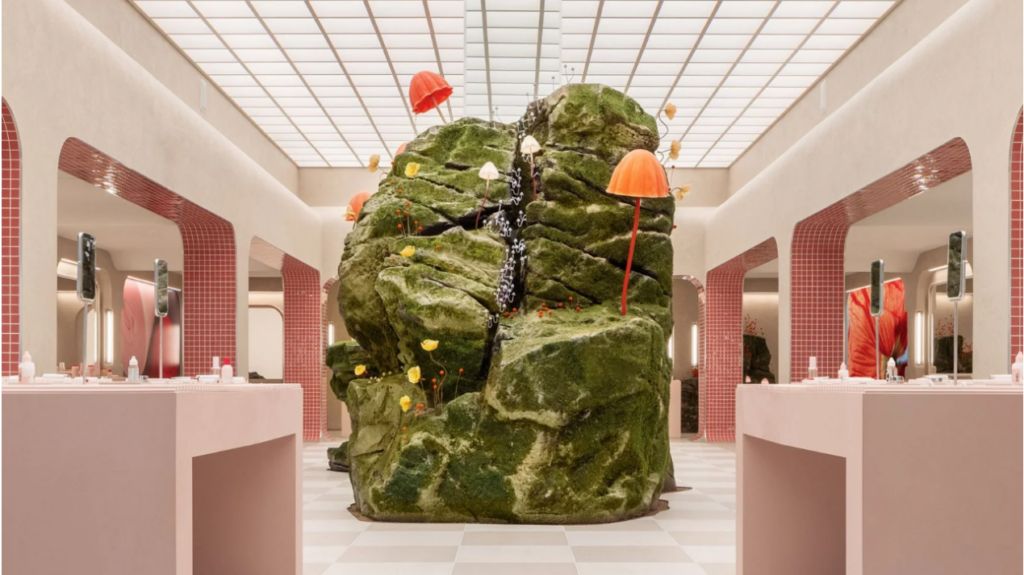
https://www.ai-architect.com/glossier-seattle-store-features-mossy-mushroom-covered-mound/
2. Sketch and mockup:
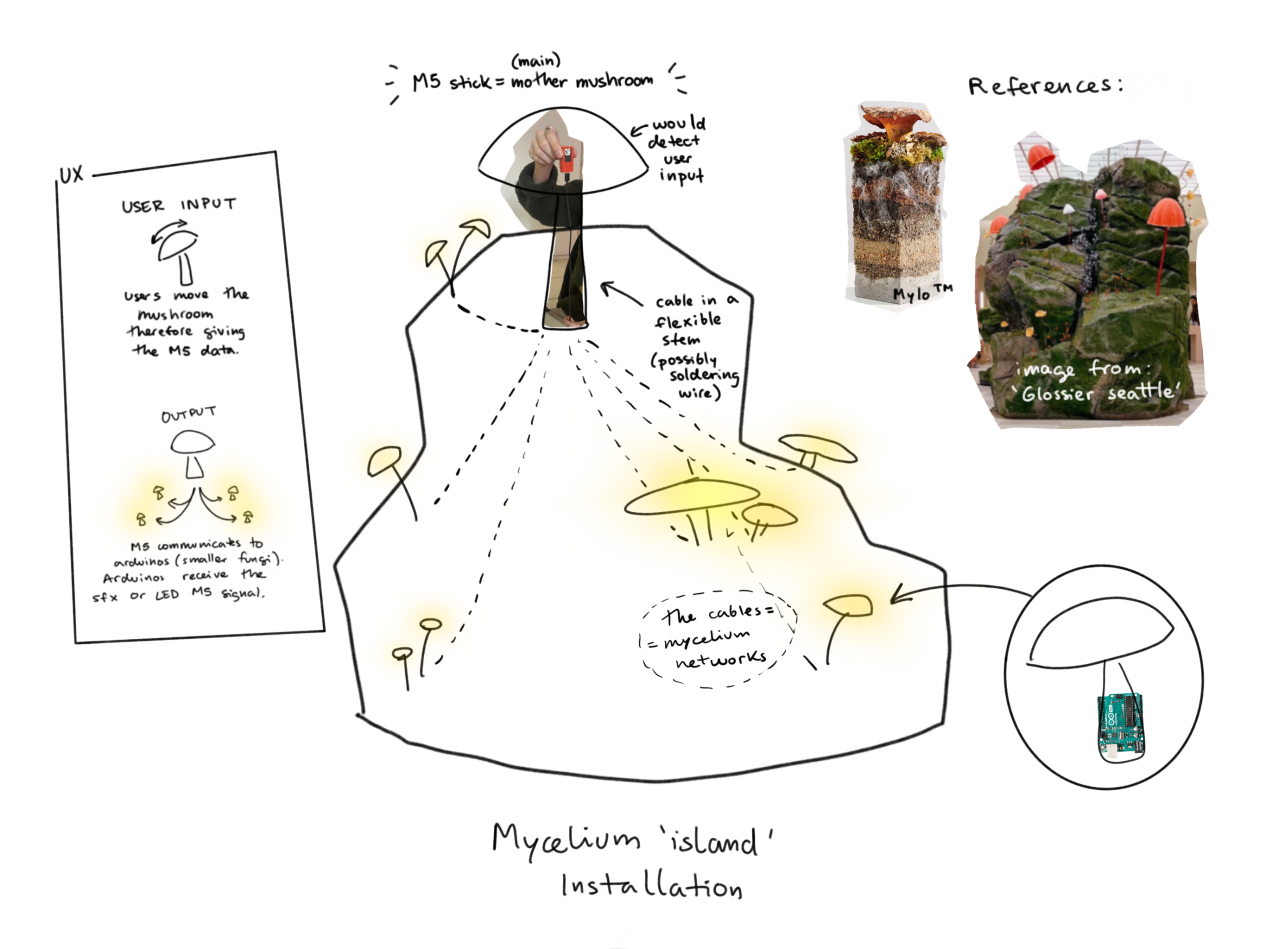
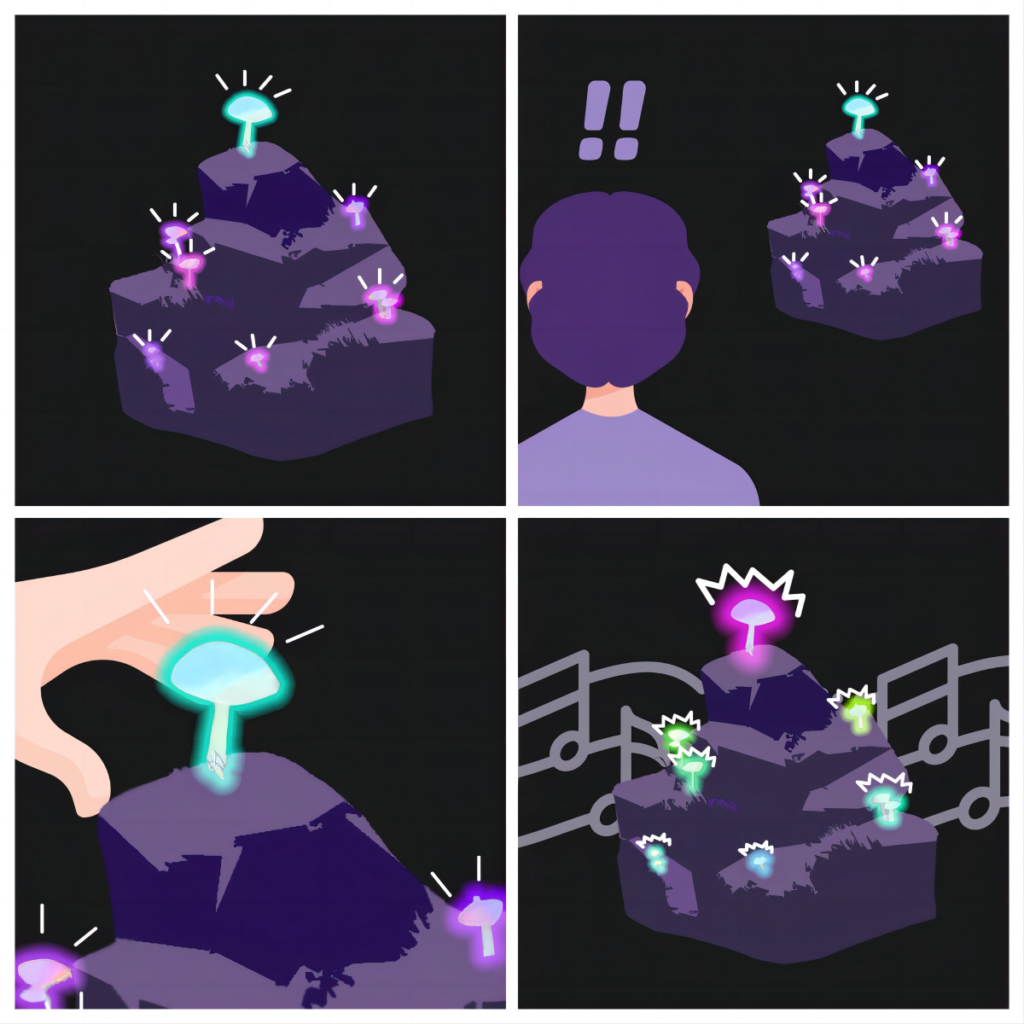
At the structure’s apex resides the “mother” or main mushroom housing the M5 Stick. This component has been meticulously programmed to emit signals to the Arduinos upon detecting movement. With each input detected, a distinct sound resonates, accompanied by an illuminating display of light. The remaining fungi, each housing an Arduino, respond by emitting the same sound.
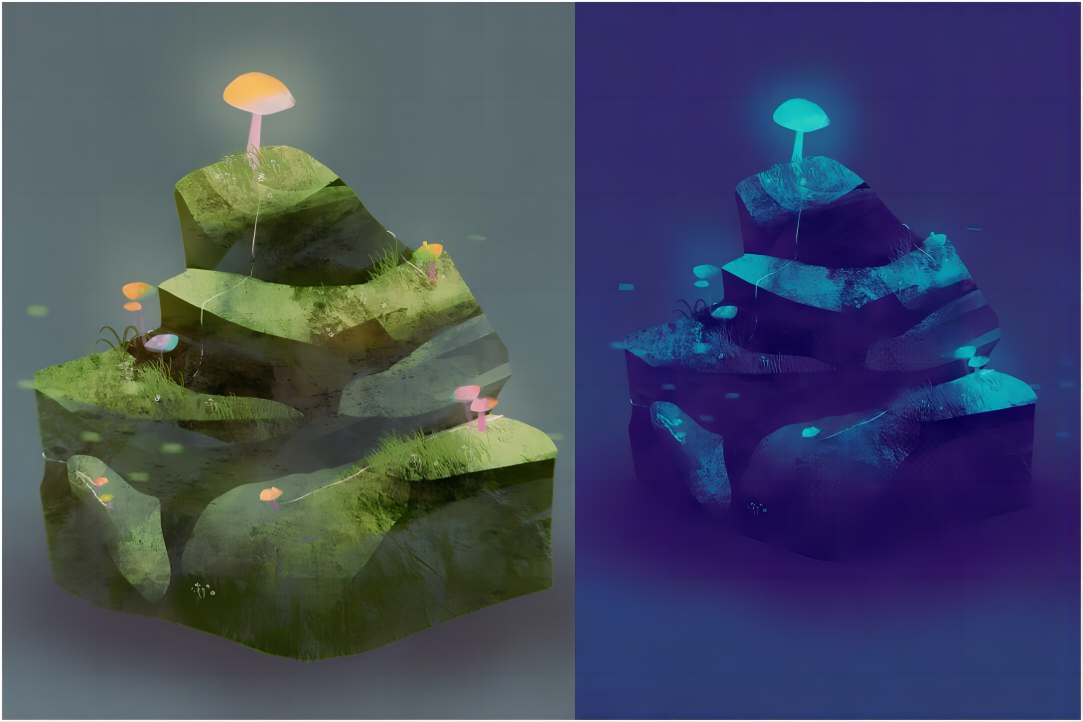
The monochromatic rendition allows the user to hone in on connections and signalling with greater clarity. This concept has also spurred the notion of creating the installation with a neutral state, one that can be disrupted and visually conveyed through lighting effects. As evidenced in the initial version, we have opted to maintain a “naturalistic” aesthetic rather than veering towards abstraction. This choice enables users to intuitively grasp the installation’s dynamics without the necessity of textual explanations.
The installation transitions from a serene, mellow blue state to a disrupted, vibrant red state in response to user input. This transformation reflected visually and audibly, mirrors the dynamic communication observed in natural ecosystems. Users actively shape the atmospheric landscape, engaging in a dialogue with the artwork as it evolves in real time.
3. Materials:
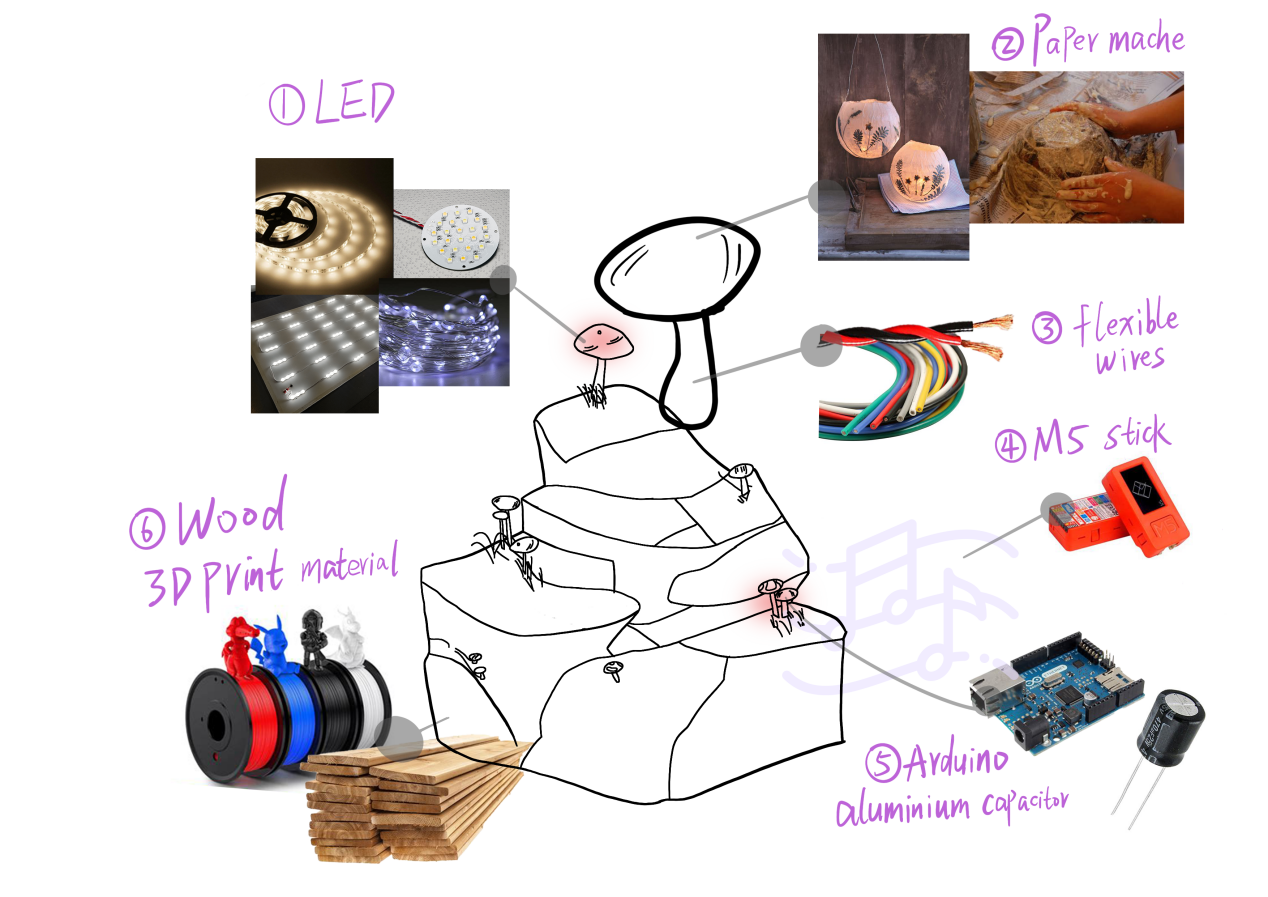
While still in the brainstorming phase regarding materials, we envision utilizing flexible wires for the stems, allowing for a degree of bendability. Other required materials and considerations when selecting materials:
1. LEDs (either in string or plate form) – for each mushroom
LED Options: Each mushroom in the installation would require an LED, either in the form of strings or plates, to achieve the desired visual effect. The choice between these options would depend on factors such as aesthetics, ease of installation, and cost.
2. Arduino boards or aluminium capacitors – to control the LEDs and manage interactions (discuss multiple options based on project requirements)
Control Systems: The project could utilize either multiple Arduino boards or aluminium capacitors to control the LEDs and manage interactions within the installation. The decision between these options would depend on factors such as the complexity of the interactions, power requirements, and budget constraints.
3. Wood or 3D printing materials – for constructing the structure (final decision pending)
Structure Material: The size and material of the installation structure are still under consideration. Depending on the final decision, the structure could be constructed using wood or 3D printing materials. This decision would impact factors such as durability, ease of assembly and most importantly size of the installation.
4. Paper mache – to create a mycelium-like texture for the mushroom feel
Texture Creation: To achieve the desired mushroom-like texture, paper mache has been discussed as a potential material. This would allow for the creation of the texture seen on mood boards, enhancing the overall visual appeal of the installation.
4.Sound: Interactive audio
Our installation will make use of a passive sort of sound/music system. The system will maintain a sort of ‘passive’ state with synth-like music playing perpetually, similar to the “mushroom music” some artists make by connecting fungi to synthesizers.
When the participants interact with the central node, or “mother mushroom” the installation changes into its “agitated” state, and as the lights change to harsher and darker colours, the sound becomes less calming and emits specific notes depending on what the participant does specifically to the node.
This will be achieved by using some kind of arduino or an m5 stick as the central sensor, and having it communicate different sound states through MAX patches depending on the positioning of the sensor, or its surroundings.
We’ve put together a prototype central node by making use of max patches and an M5 stick. The result is that when you turn the M5 stick, the sound tone changes, and an ‘led’ object in max turns on. The states go back to neutral if the stick is brought back to its upright position or is put down.
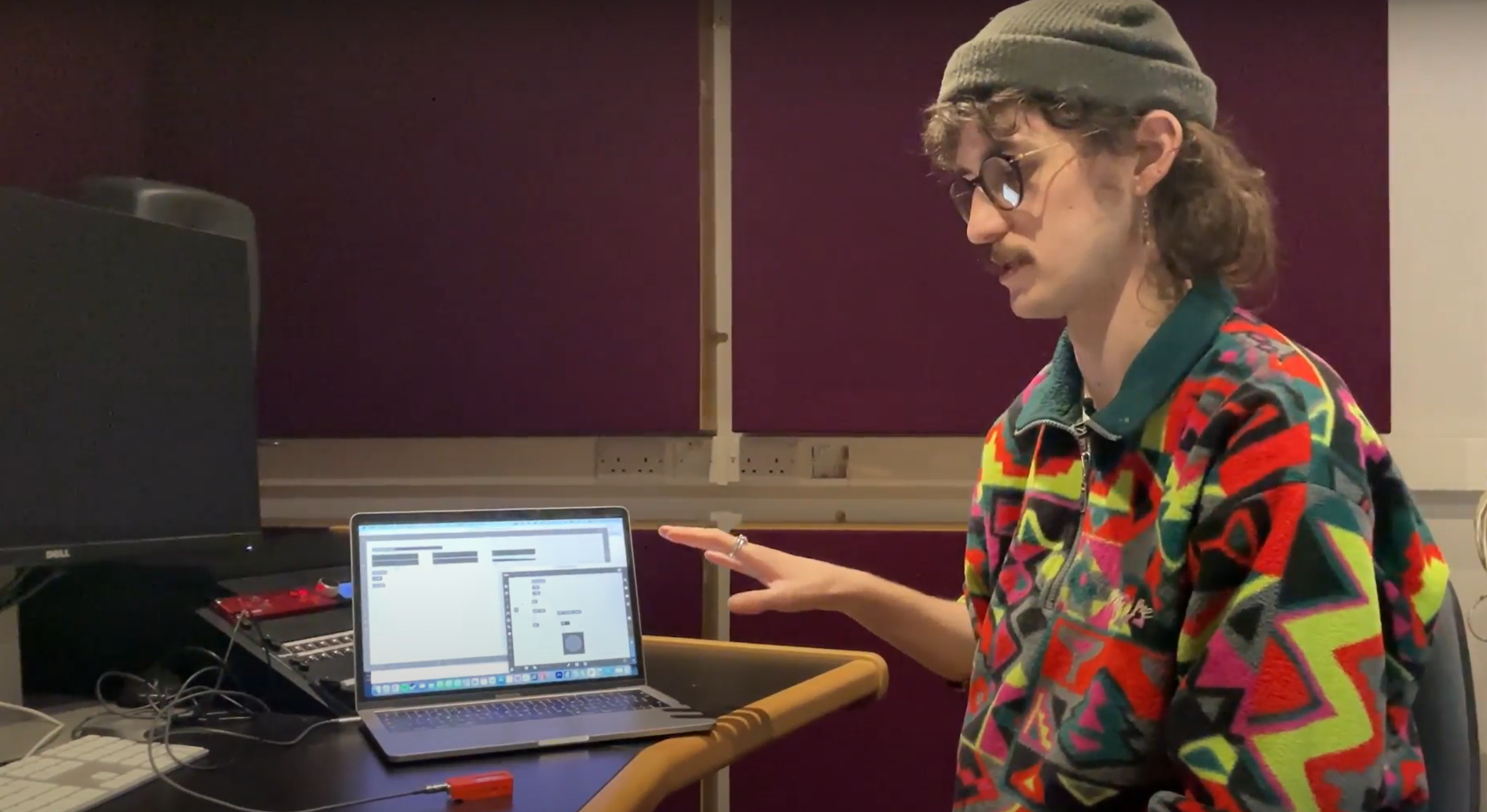
https://drive.google.com/file/d/1njfzsYa6IgpUdZr3WqScOHhst_y1xZQa/view?usp=sharing
5. Storyboard:
6. Exhibition space concept design:
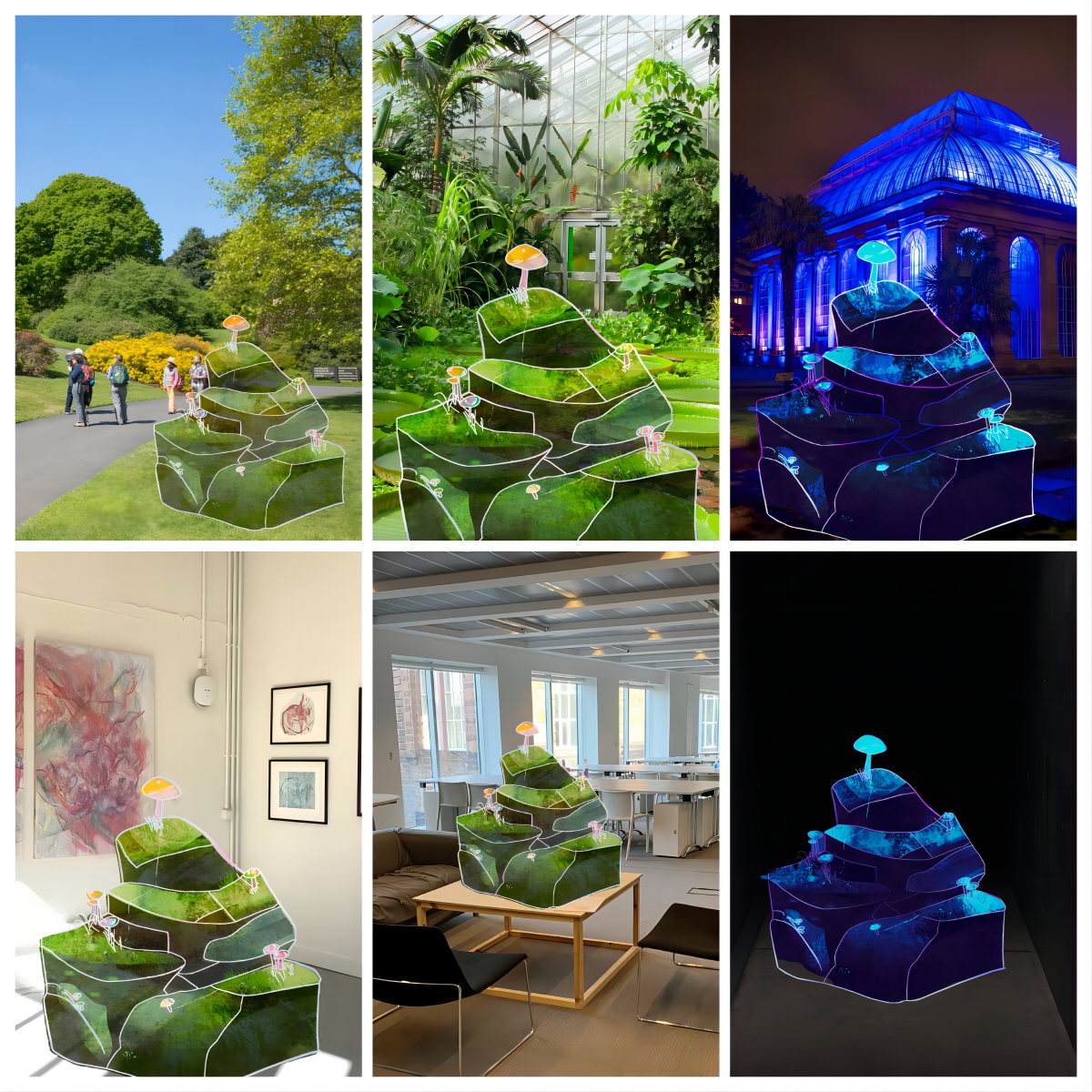
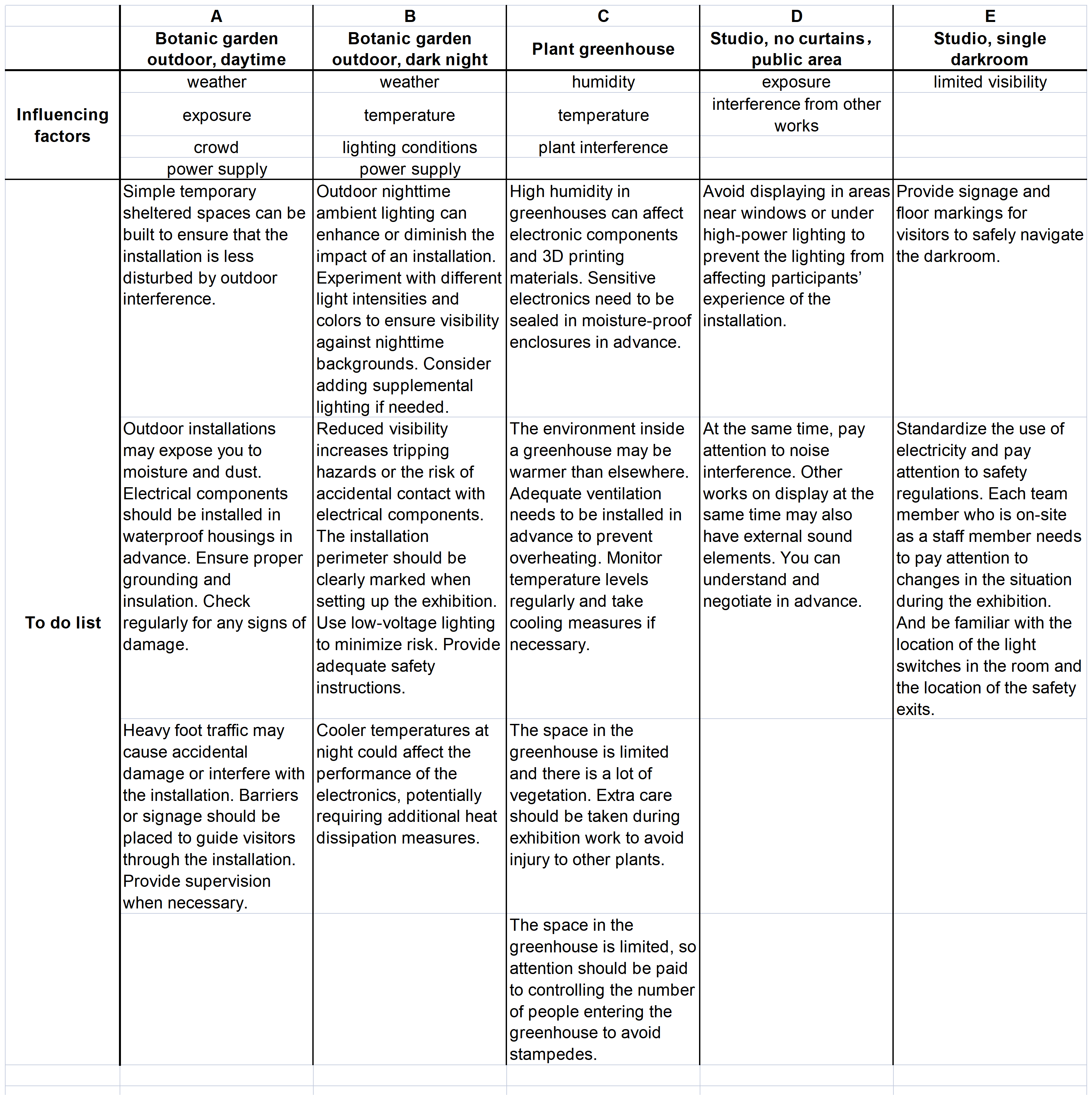
We initially considered the possible installation scenarios extensively, including indoor or outdoor, bright or dark, close to nature or studio.
Comparing different scenes, we found that the botanical garden or plant greenhouse is closer to our “naturalistic” design concept. Cooler visual effects and immersive experience can be achieved in dark environments. In the art studio, the artistry of the work is emphasized.
7. Setup risk assessment plan:
We have not yet determined the exhibition scene, but based on different exhibition venues, we can estimate the situations that may be encountered during the exhibition work, and be prepared for the preventive and response measures that need to be taken.
Next step:
Technology:
-
- Optimize and debug the generative sound of M5 stick
- Write code to control light changes
- Connect sound and light interactive modules
Installation:
-
- Confirm installation size
- Confirm the viewing path/experience process of the installation
Material:
-
- How to confirm the installation theme and texture creation
- Purchasing related materials
Production:
-
- Partition making installation components
- Assembly installation
Exhibition:
-
- Confirm and reserve exhibition space
- Preparing the equipment needed for the exhibition
- On-site debugging
- Decorate the exhibition hall
Sources:
Adamatzky, Andrew. “Language of Fungi Derived from Their Electrical Spiking Activity.” Royal Society Open Science 9, no. 4 (April 2022). https://doi.org/10.1098/rsos.211926.

Field, K. J., Daniell, T., Johnson, D., & Helgason, T. (2020). Mycorrhizas for a changing world: Sustainability, conservation, and society. Plants, People, Planet, 2(2), 98-103.  https://doi.org/10.1002/ppp3.10092

Itani, A., Shunsuke Masuo, Yamamoto, R., Serizawa, T., Fukasawa, Y., Naoki Takaya, Toyota, M., Shigeyuki Betsuyaku and Takeshita, N. (2023). Local calcium signal transmission in mycelial network exhibits decentralized stress responses. PNAS nexus, [online] 2(3). doi:https://doi.org/10.1093/pnasnexus/pgad012.

Money, N.P. (2021). Hyphal and mycelial consciousness: the concept of the fungal mind. Fungal Biology, [online] 125(4), pp.257–259. doi:https://doi.org/10.1016/j.funbio.2021.02.001.

Pierre-Louis Alaux, Françoise Naveau, Declerck, S. and Cranenbrouck, S. (2020). Common Mycorrhizal Network Induced JA/ET Genes Expression in Healthy Potato Plants Connected to Potato Plants Infected by Phytophthora infestans. Frontiers in Plant Science, [online] 11. doi:https://doi.org/10.3389/fpls.2020.00602.

Simard, S. W., Beiler, K. J., Bingham, M. A., Deslippe, J. R., Philip, L. J., & Teste, F. P. (2012). Mycorrhizal networks: mechanisms, ecology and modelling. Fungal Biology Reviews, 26(1), 39-60. https://doi.org/10.1016/j.fbr.2012.01.001

Toronto, University of, and University of Toronto. “Mushrooms May Talk to Each Other Using Their Own Fungal Language.” Treehugger. Accessed February 12, 2024. https://www.treehugger.com/mushroom-can-talk-language-50-words-5225439.

Wang, W., Shi, J., Xie, Q., Jiang, Y., Yu, N., & Wang, E. (2017). Nutrient exchange and regulation in arbuscular mycorrhizal symbiosis. Molecular plant, 10(9), 1147-1158. https://doi.org/10.1016/j.molp.2017.07.012

Zdenka Babikova, Gilbert, L., Toby, Birkett, M., Caulfield, J.C., Woodcock, C., Pickett, J.A. and Johnson, D. (2013). Underground signals carried through common mycelial networks warn neighbouring plants of aphid attack. Ecology Letters, [online] 16(7), pp.835–843. doi:https://doi.org/10.1111/ele.12115.
