Any views expressed within media held on this service are those of the contributors, should not be taken as approved or endorsed by the University, and do not necessarily reflect the views of the University in respect of any particular issue.
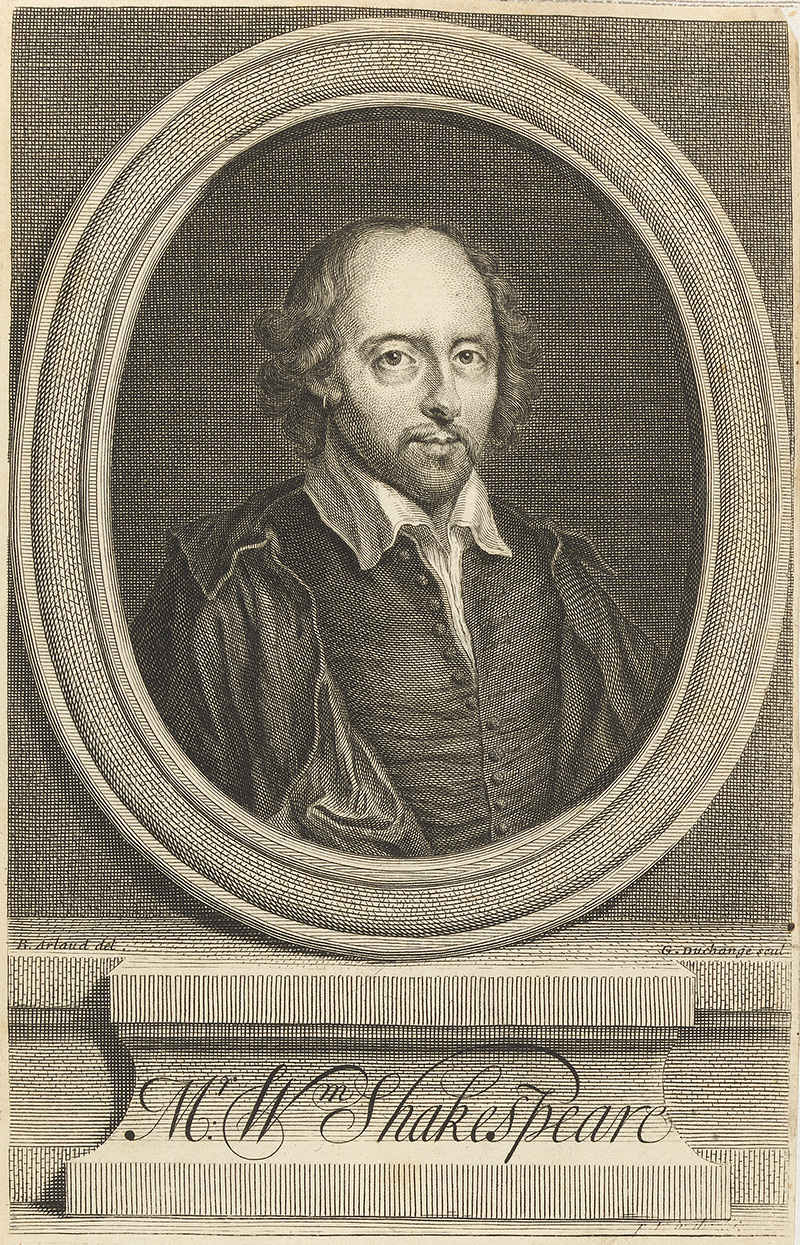
With the 400th anniversary this year of the death of one of our greatest and most influential playwrights, William Shakespeare, I found myself cropping images of some of his first printed quartos for the creation of an e-reader as part of the Shakespeare image collection. Now existing as high quality e-readers are the plays Love’s Labours Lost (1st Quarto Edition) and Romeo and Juliet (2nd Quarto Edition), both of which are used as part of the collaborative project concerning Shakespeare’s printed quartos, The Shakespeare Quarto Archive (http://www.quartos.org/index.html). These works themselves have very unique histories and are important in Shakespearean studies for many reasons. Their place in the Special Collections in the University of Edinburgh Library is invaluable.
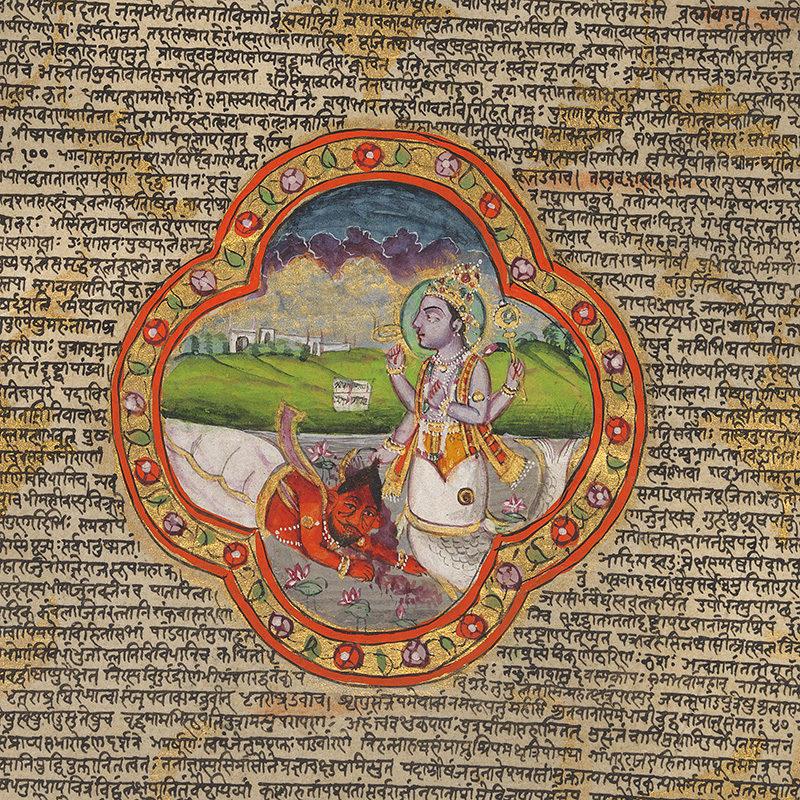
Recently I was asked to scope the digitisation of a beautiful scroll we have in our collection, Or.Ms 510, or better known as the Mahabharata. Gemma Scott, our former Digital Library intern, says that:
‘the Mahabharata tells the tale of a dynastic struggle between two sets of cousins for control of the Bharata kingdom in central India. One of the longest poems ever written, eclipsed only by the Gesar Epic of Tibet, it is said to have been composed between 900 and 400BCE by the sage Vyasa, although, in reality, it is likely to have been created by a number of individuals. To Hindus, it is important in terms of both dharma (moral law) and history (itihasa), as its themes are often didactic.’
Our scroll dates to 1795 and came to Edinburgh University in 1821 when it was donated by Colonel Walker of Bowland. It is 13.5cm wide and a staggering 72m long, housed in a wooden case, wound around rollers and turned by a key in the side. It has 78 miniatures of varying sizes and is elaborately decorated in gold, with floral patterning in the late Mughul or Kangra style. The text itself is dense, tiny, and underpinned with yet more gold leaf decorations.
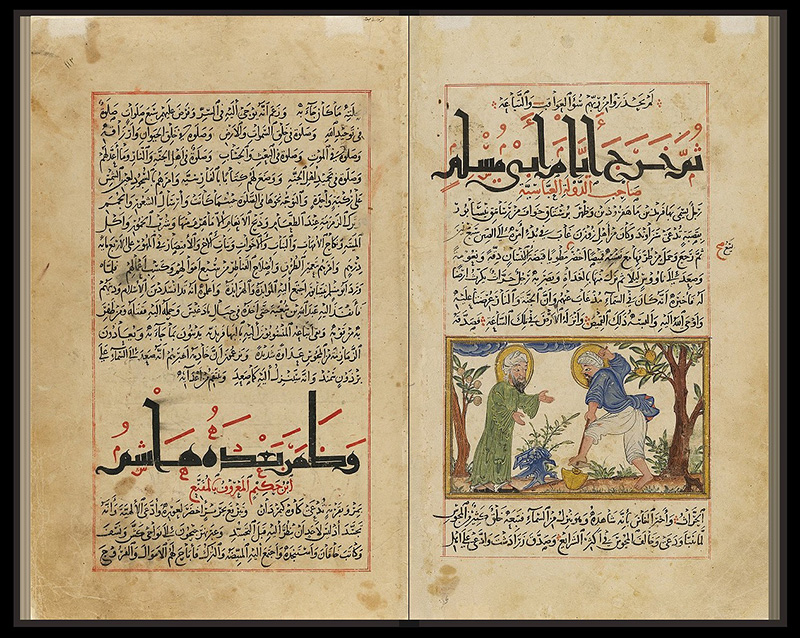
We are thrilled to announce that we now have online the entire manuscript of Abu Rayhan Al-Biruni, his ‘Chronology of Ancient Nations’. Al- Biruni was a famous astronomer and polymath and he completed this compendium in the year 1000. It records a vast number of calendars and chronological systems from a variety of different cultural and religious groups in the late antique and medieval periods in the Hellenic world, Central Asia and the Near East, even detailing festivals and liturgical practices.
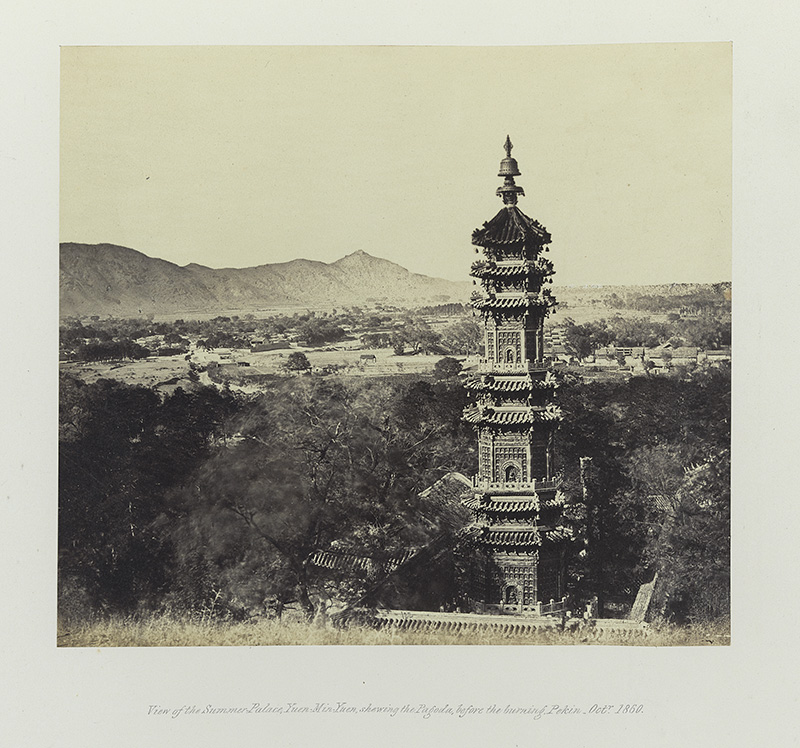
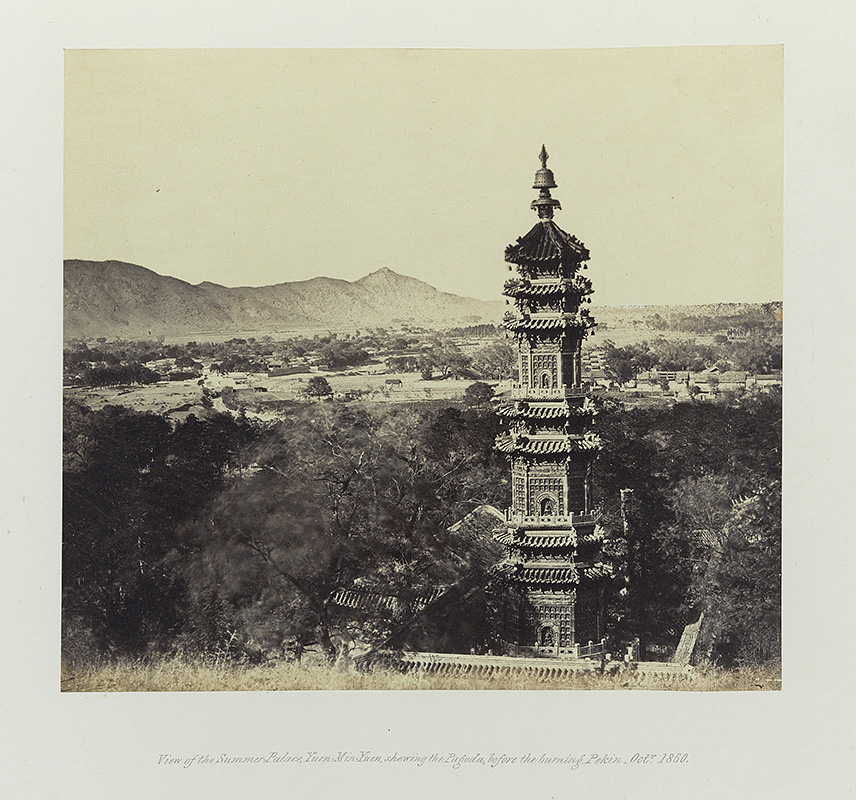
One of the works in the ECA Rare Book Collection that places us firmly in a place and time in history is a book of photographs taken around the time of the notable expedition of Lord Elgin, James Bruce, to China on a diplomatic mission and military campaign. If one does not know much about Chinese history, which I must admit I know little of, you might view this image at first glance as simply another beautiful view of Chinese landscape and architecture. Upon further reading into the life of the 8th Earl of Elgin and the Old Summer Palace, as well as the photographers whose works are featured in the album, it becomes a much different story. One of these photographers was the talented Felice Beato who was known for photography that created images of war as a continuous process. He documented each stage of his subjects, including gruesome scenes of the aftermath of battles and seizes. This method provides great insight into the progression of Lord Elgin’s presence in China as many images fit into his timeline. Although the above photograph taken in 1860 seems to show a sturdy structure overlooking a stunning mountain range, it does depict a cultural landscape that was near the end of its time and one that was extremely vulnerable at the time. The caption for the image tells a snapshot of the gruesome story. The caption reads “View of the Summer Palace, Yuen-Min-Yuen, showing the Pagoda before the burning, Pekin. Octr 1860.” This could easily be one of the last photographs of the site before its infamous looting and burning on October 18, 1860. Many of the items taken from this event are still held today in the UK and other prestigious museums in Europe, although there is an ongoing conversation of where these works of great art and cultural importance belong.
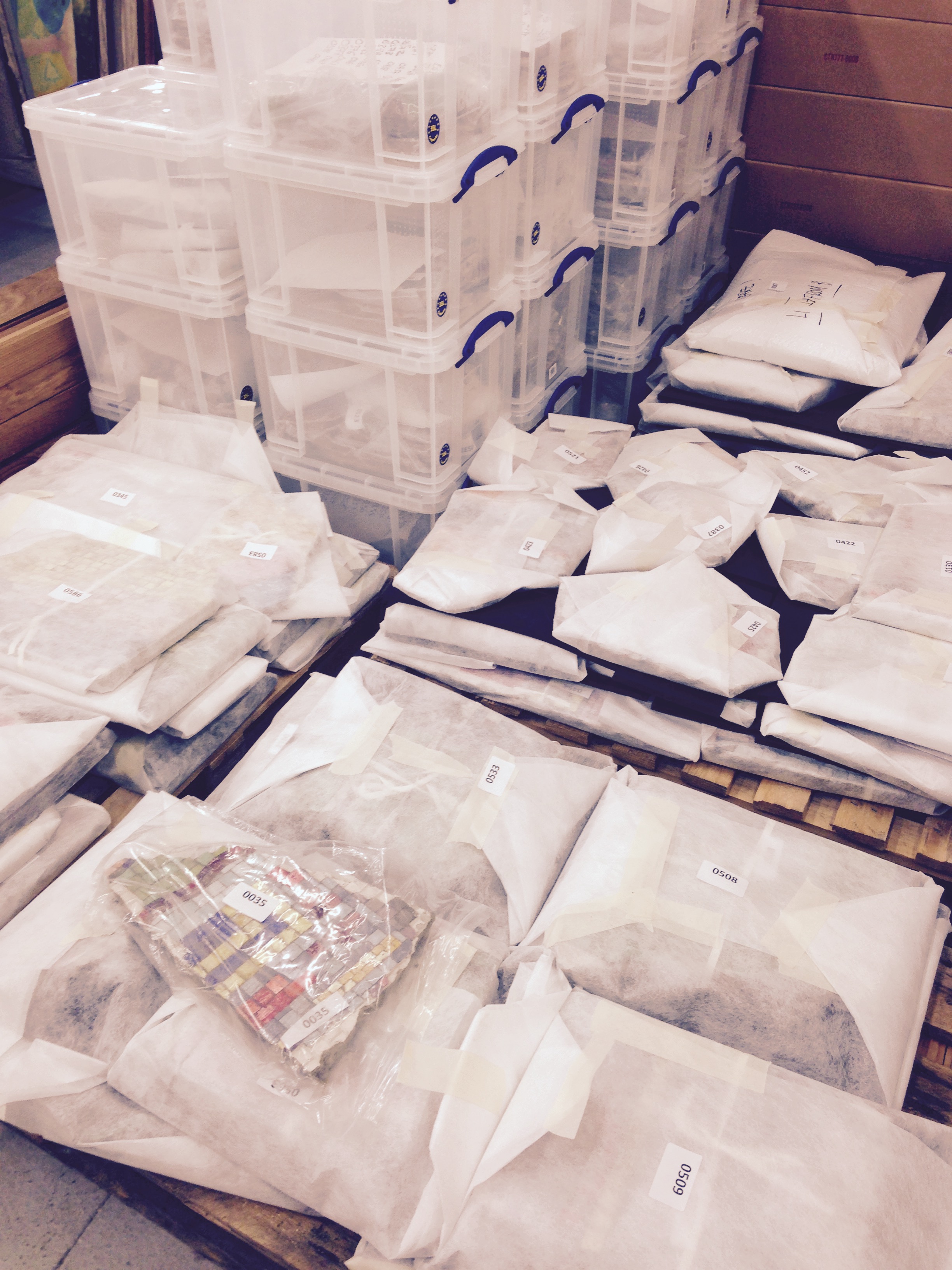
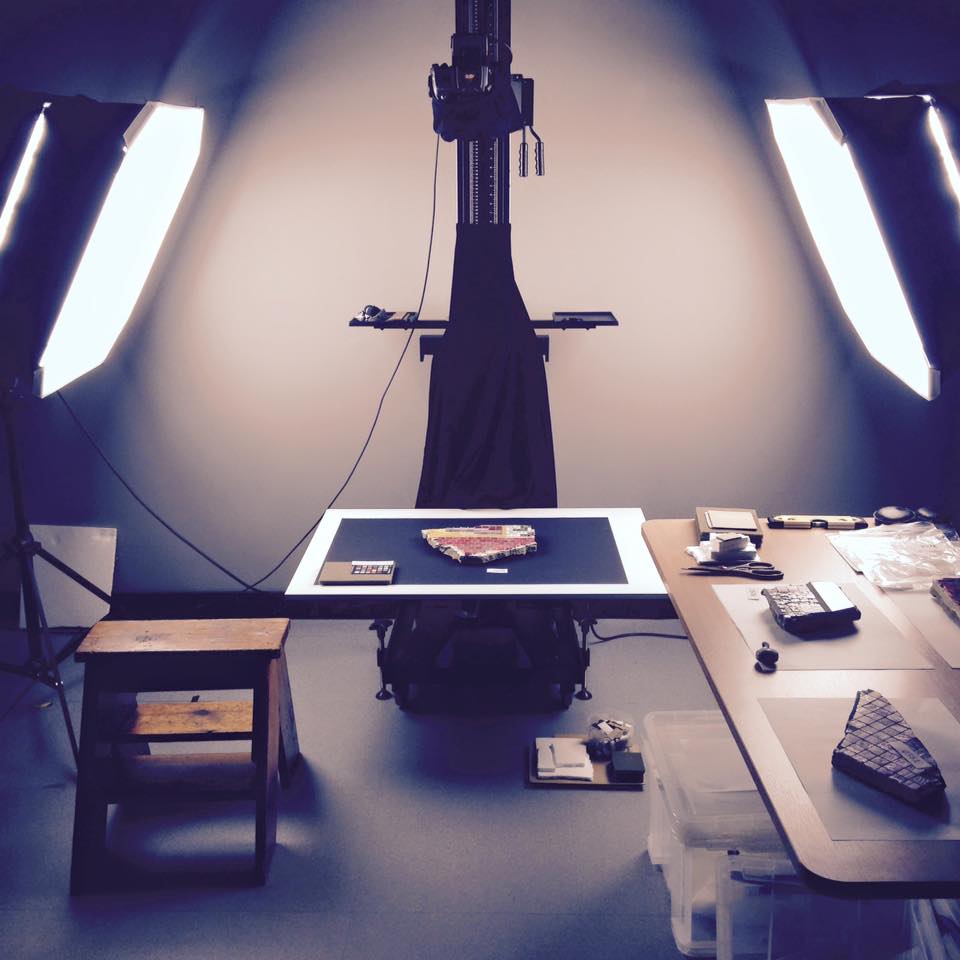
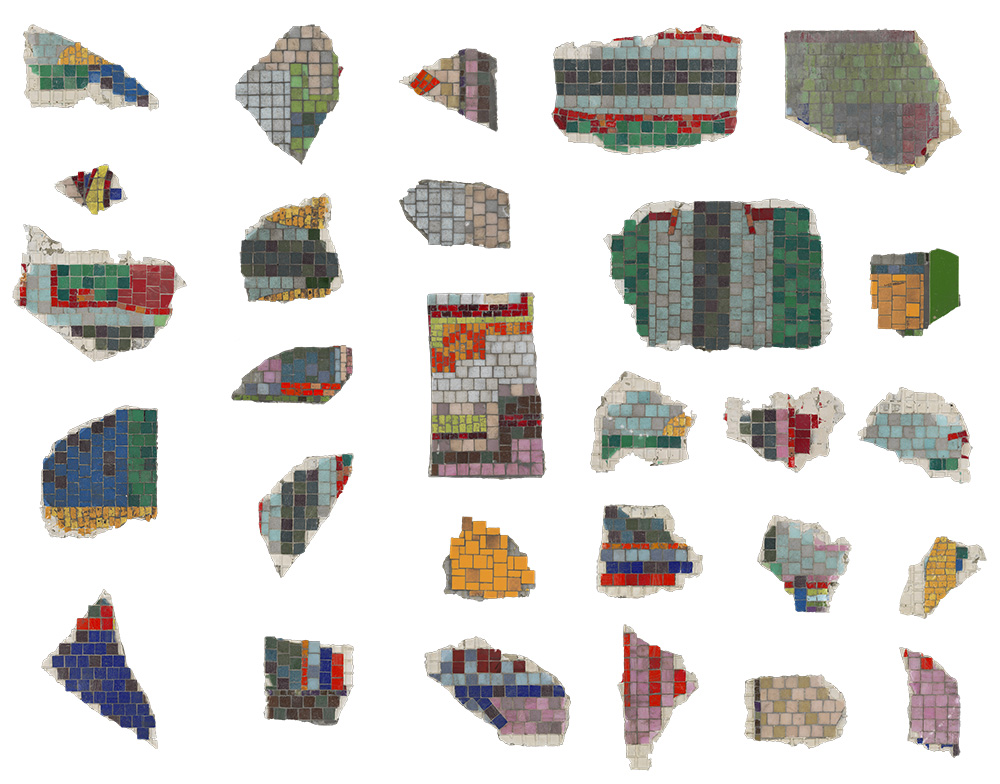
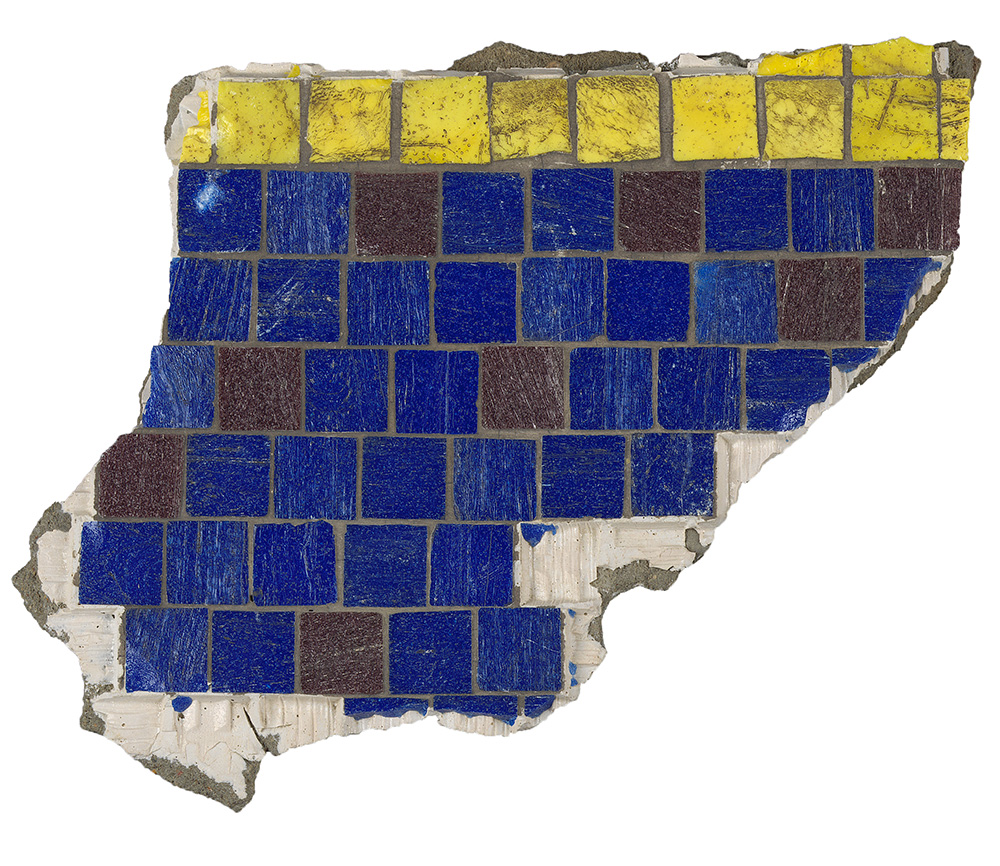
I have spent the past 6 weeks digitising mosaic fragments here in the DIU. Recently removed from Tottenham Court Road Tube Station, London, these mosaics were once part of a mural by the Scottish artist Eduardo Paolozzi that was first installed in 1984. The mosaics, now part of the University of Edinburgh Art Collection, make up about 5% of all the Tottenham Court Road murals by the artist, with the mosaics I am working on coming from the station archways more specifically. In an article for the Guardian Newspaper, London Underground’s design and heritage manager, Mike Ashworth, called this “one of the UK’s largest art conservation projects of the last decade” so I am very pleased to be involved.
There are approximately 600 fragments of various shapes, sizes and colours spread over 42 boxes and 4 pallets. Unfortunately, the mural was not removed with conservation in mind so it is not exactly in great condition. It will be challenging to piece it all back together, first digitally and then physically. The long-term plan is to reconstruct the mural and install it within the university campus therefore giving it new life. So watch this space…!
I have been tasked with digitising each fragment. On completion, the aim is then to use the images in conjunction with image recognition software and an image of the original design, to digitally re-assemble the mural. This should provide a new digital image of the mural which will assist with the proposed physical reconstruction. The process will inform us whether areas of the mural are missing, and would need to be remade in some form.
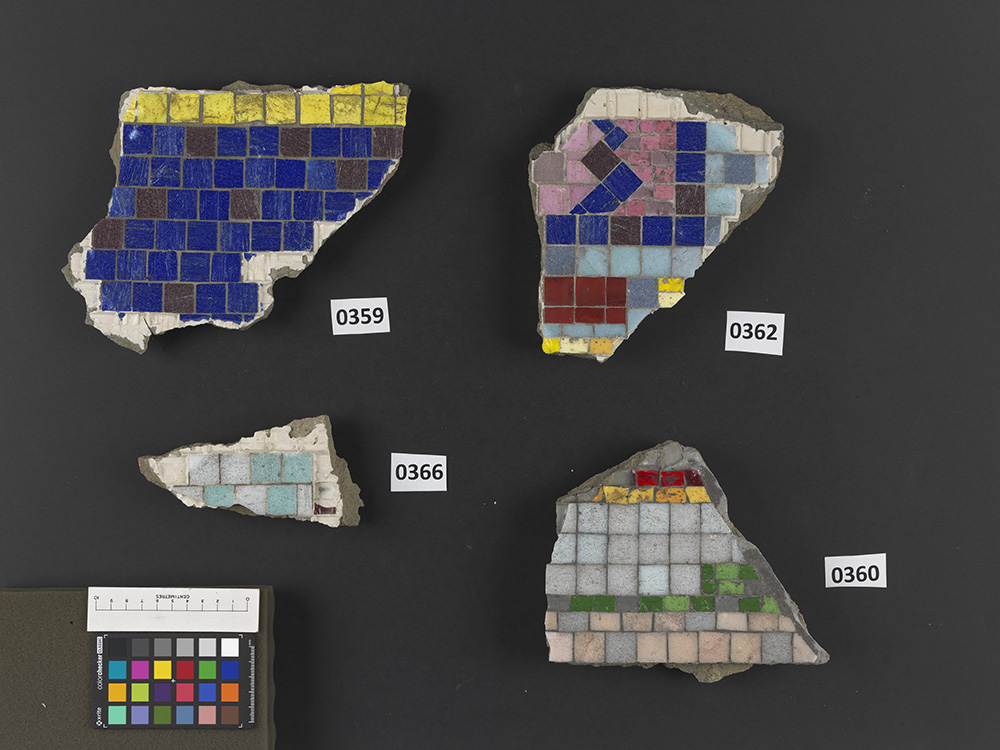
On a technical level, I have been using a high-spec digital Hasselblad-H4 camera and professional, Bowens studio lights in my digitisation process. To begin with, I capture several mosaic fragments in one shot and then go on to crop, and edit, each piece individually before saving as a separate, new file. The tricky part comes in ensuring that the scale of each fragment is represented correctly with every image produced. This is why placing a ruler within each raw image capture is crucial so to allow for the mosaics to be scaled to a 1:1 ratio by resizing them in Adobe Photoshop. If the size of the fragments were to be incorrect then this could cause problems later down the line when trying to complete this digital jigsaw (see image below!). Further, the faces/upside of the mosaics must be perpendicular to the focal plane of the camera and, collectively, the mosaics must be of equal distance to focal plane. The same principles apply for the positioning of the ruler itself. This confirms that perspectives are not distorted and that the relative size of the mosaics remains consistent throughout the project.
Currently, I am awaiting the arrival of the pallets as I have digitised all the fragments from the boxes. The majority of what is still to come are much larger mosaics fragments. I may be required to digitally stitch multiple images together in order to produce a single image. This is because some mosaics may be too large to photograph in their entirety on the copy stand. No doubt this will raise some new challenges to overcome!
For the last couple of months I have had the pleasure of both volunteering with the DIU and now working a bit more seriously through my work placement as part of the MSc in Book History and Material Culture. My undergraduate degree is in Creative Writing and I primarily focus on Children’s Literature in my current studies, so the Digital Imaging Unit might seem like a strange fit for me at first glance. The exact opposite is true though. In the world of Children’s Literature, illustrations and images in general are essential to the construction and survival of texts. During my time here I have been working on compiling the metadata for our ECA Rare Books Image Collection. This project is dear to my heart for two reasons. 1) I am exposed to images and illustrations of every variety, both artistically and mechanically. 2) I learn something new every day. There are many books in this collection that are far out of my expertise and for that reason I am forced to research all sorts of things I have never even heard of. Because of this I have become a huge fan of nature lithography, Italian architecture and handmade books. The latter is what I would like to discuss today.
As I was researching the ECA Rare Book Collection, I found that many of the materials I was working with had no author and no date. Because of the nature of these type of handmade scrapbook-like works, there is no imprint or page of information on the piece. In this way, dating a work becomes a bit of a guessing game. If there is an attributed author or illustrator one can narrow down the production date to the lifetime of this person. If it is known to be made in a certain region by this person, for example, that can also narrow down the search for the date. It becomes a Sherlock Holmes kind of exploration to put all the pieces together and decide on a more narrow range of dates that a book could have been produced.
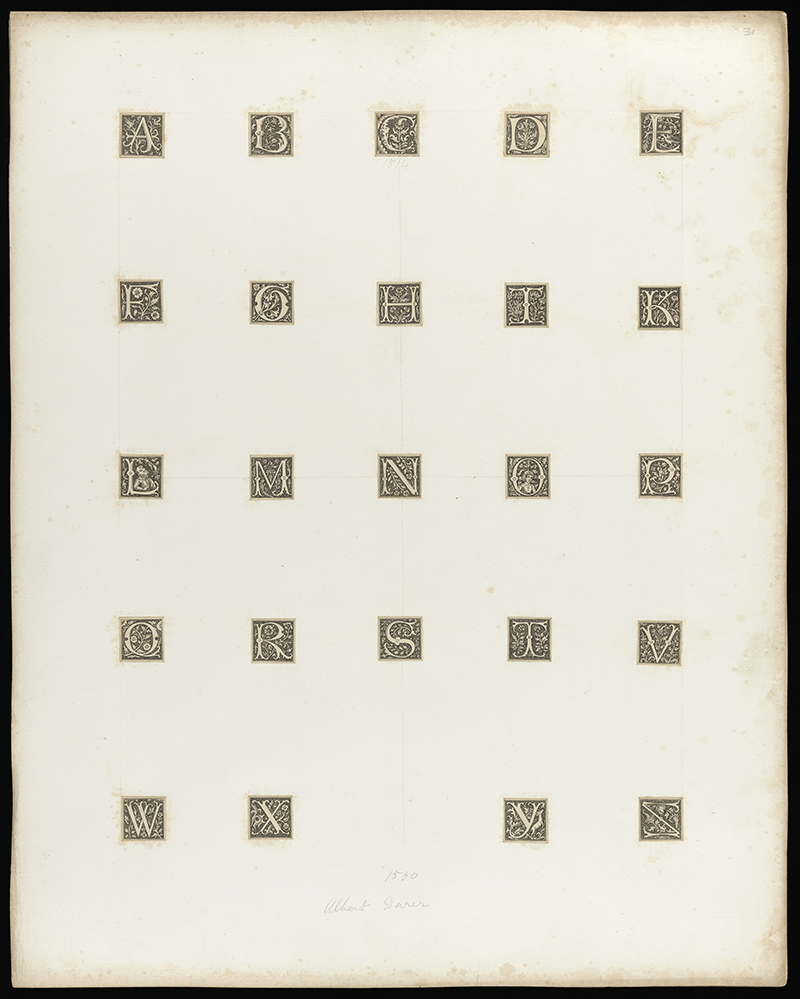
In this collection there are many examples of successful dating as well as some cases that have proved to be a bit trickier to pin down. I first noticed this when looking at a page from a hand created book titled by the cataloguer as ‘Album of printed initials, ornaments, illustrations and title pages, cut from books: collected as examples of typographical design, woodcut, engraving, illustration and ornament’. The particular page (see below) is of printed initials that have been cut from another book and then rearranged and adhered to the page as part of a collection of typographical designs, woodcuts, engravings, illustrations and ornaments. The book itself, or rather portfolio because the leaves are not bound together, has not been dated. The reason we know anything about the age of this book is from the age of the books in which were borrowed to create the new one. From some identified works, the collection of images comes from sometime around 1490 all the way to 1715. The pages themselves seem to have been compiled around 1880 to 1920.
A second example of dating from context is a curious photo album from Lord Elgin’s diplomatic missions to China. Unlike with the printed initials, these images have names attributed at points and even dates in the case below. Because of these acknowledgements, it becomes much easier to place this piece in history. Oddly enough though, some photographs are heavily annotated and others sit alone without any clues to what exactly they represent. We cannot be entirely sure when these were taken and if found out to be earlier or later than the other images, it could skew the data on the item as a whole.
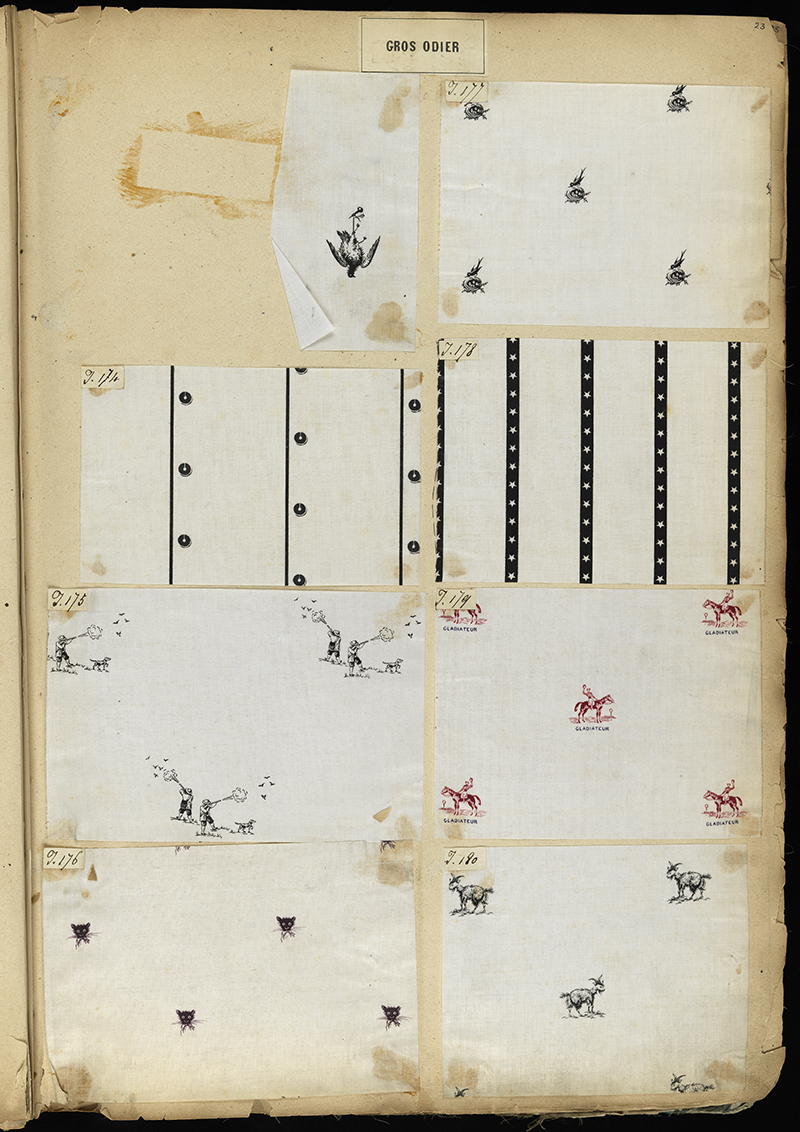
A third very interesting undated book is that of calico samples that have been neatly cut and arranged, much like the printed initials from our earlier example. The manufacturers of these fabrics have been identified by the creator, which narrows down the date to the time in which these were all in business. The most helpful bit for this work though is a racehorse. One of the fabrics shows an image of ‘Gladiateur’, a racehorse who was accomplished from 1865-1866. This unsuspecting clue is mighty helpful when trying to confirm the time in which these fabrics would have been made and collected. If this particular horse had gone unnoticed, situated next to many other animal designs, we would know much less about this funny little collection.
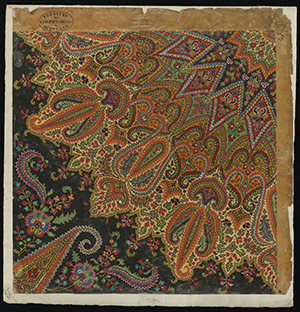
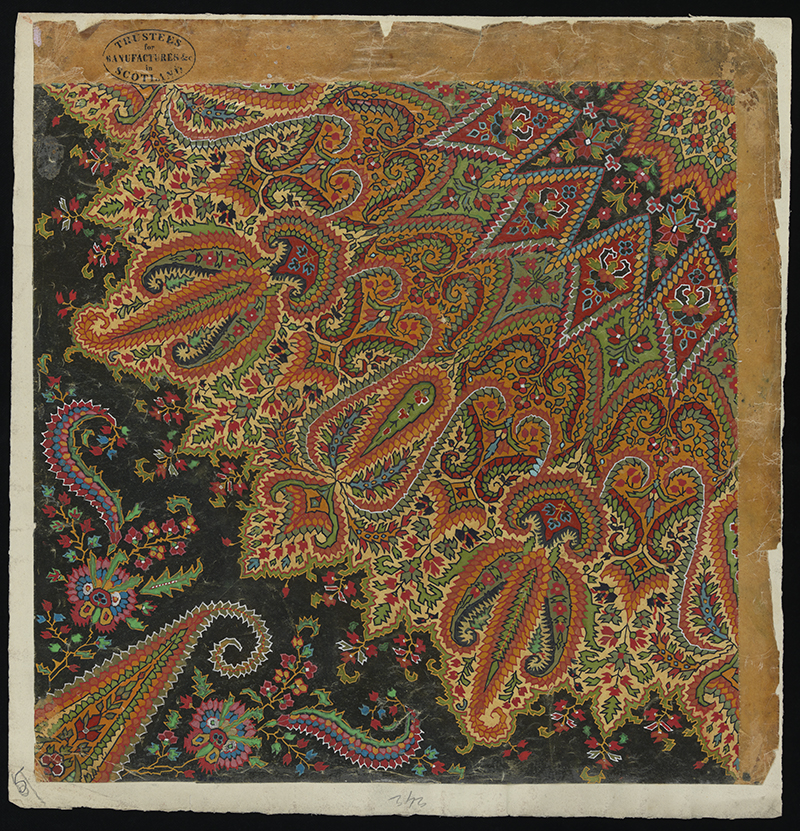
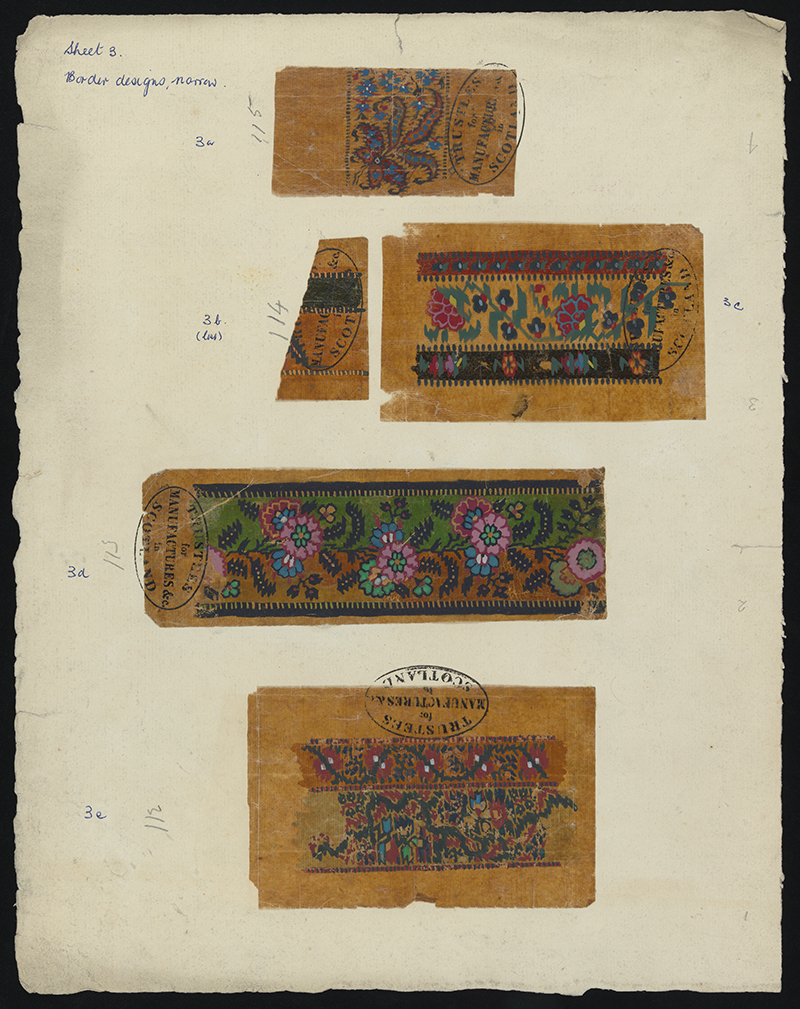
One thing I didn’t expect to gain out of my work placement at the DIU was detective skills but it seems that I now know a bit more about how to date a book than I did a month ago. Unfortunately, there is one book that has no date and also has no catalogue information. This unique piece is a book of shawl designs that have been labelled and neatly placed on paper. There are some clues on these pieces that help us date it to a certain point (most noticeably the stamp from the Trustees for Manufacturers) but even with this it seems to remain quite mysterious. If you feel like testing your skills, feel free to check out the images of ‘Shawl Design’ at http://images.is.ed.ac.uk/luna/servlet/UoEwmm~3~3 and let me know if you find anything.
-Caitlin Holton, MSc Book History and Material Culture
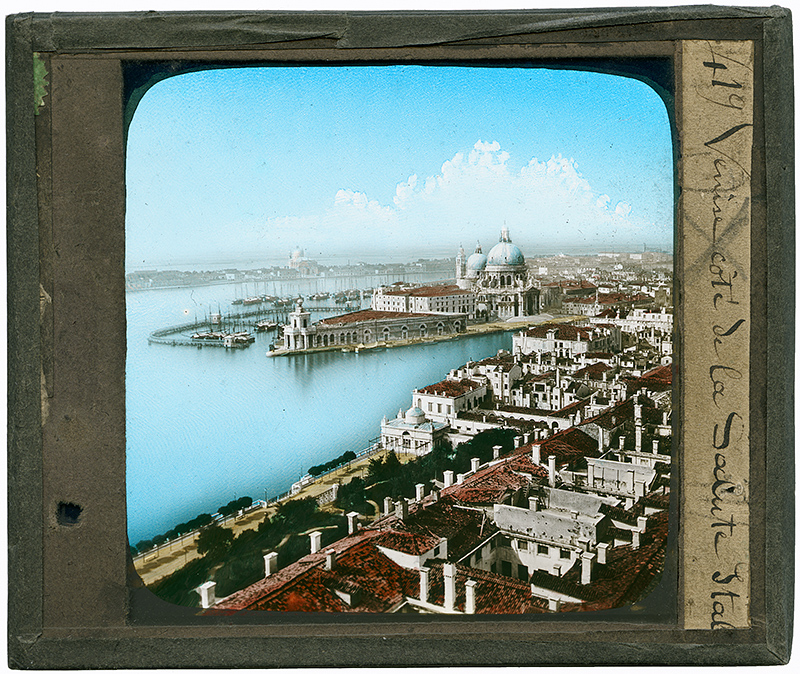
Some time ago we digitised the hand coloured glass slides in the Cavaye collection, but we didn’t have time to do the much larger black and white part of the collection. So when our project photographer John Bryden, found a bit of spare time, we were delighted to have the remaining slides completed.
The whole collection is wonderful, apparently from a Grand Tour of Europe around the turn of the 20th century. I suspect that many of the slides were bought on the trip, much like we buy postcards today. Some of them were probably only lovingly hand tinted on return to Britain- in one of Palermo the tinting appears to be half finished. Continue reading “Grand Tour Slide Show”
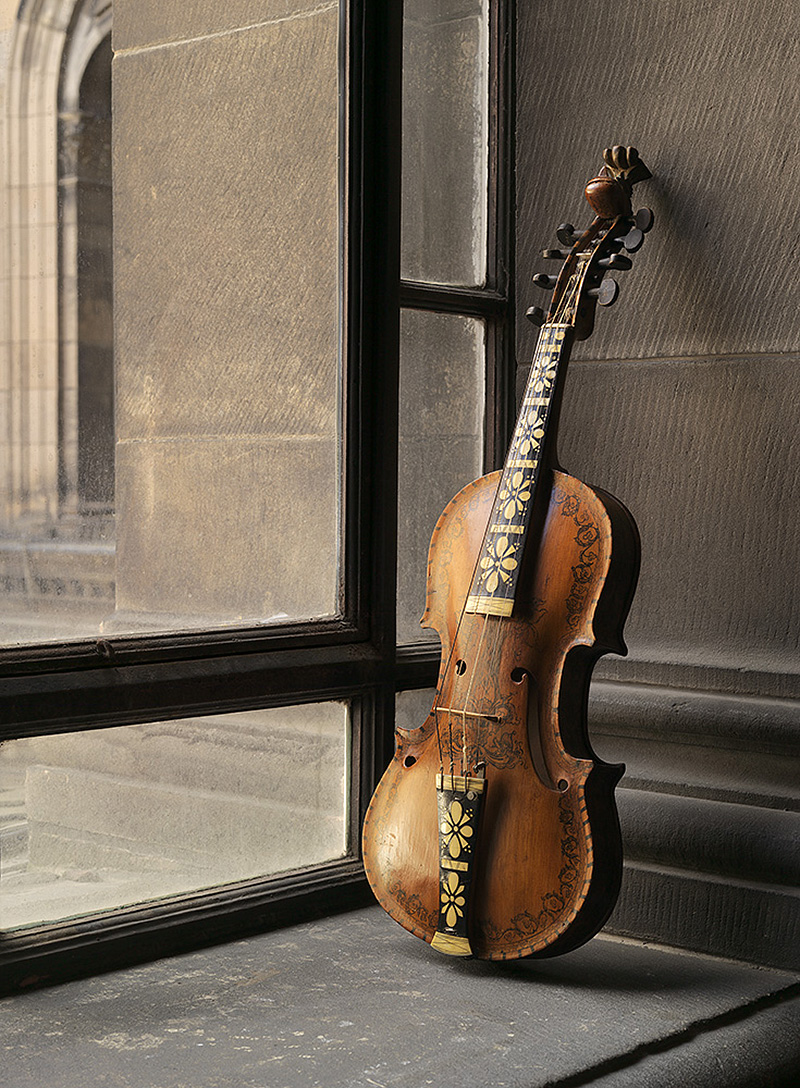
In the studio, with a very limited access to backdrops and props, it can be difficult to enliven the more creative shots of objects. We are well set up now for standard record images against a neutral grey background and it is easy when you need to close in on the details of objects, however, these can start to look a bit ‘samey’ when you have lots of images to do for a project. This is the position I found myself in recently when working on the MIMED collection of musical instruments (see http://images.is.ed.ac.uk/luna/servlet/s/s4mynr). Thankfully, at the University we are blessed with some stunning locations to use instead, but with both of the obvious choices – St Cecilia’s Music Hall and the Reid Concert Hall – off limits for redevelopment, an alternative location required a bit of forethought and planning. Our colleagues at the Anatomy School very kindly agreed to let us use their beautiful Rowand Anderson designed building which provided sympathetic architectural details to arrange the instruments against and Malcolm and I decamped from the studio for 2 days to continue with the project.
The work that DIU are developing around moving image has grown considerably in the last two years and the demand for moving image has increased exponentially with each new film produced. We now have around twenty two separate projects archived on the servers, some of these include up to six films in one project. A good example of that is the Curators short films that appear on the Universities Collections web page. Recently we produced an exhibition introduction film for Towards Dolly : A Century of Animal Genetics in Edinburgh. The Dolly intro film features on the University Collections page, social media and also on the Towards Dolly exhibition App. This is the second exhibition App we have contributed to which is proving a popular way to deliver content. The izi App is a free download from the Apple App store and contains information on the Dolly and “Out Of The Blue” exhibitions. We have also made our first contact with digitising 8mm film in the form of Eric Lucy’s “Drosophila Egg” for the Towards Dolly exhibition which is currently open.
Projects under way at writing include time-lapse films “Documenting the Redevelopment of St Cecilia’s Hall” the first section of which you can see below. This section is the very early stages and we are now starting to film the deconstruction of the 1960’s caretakers flat. This is an ongoing project which shall also include film of musical instrument conservation work to be shown on screen within the new development and musical performance using the collection itself.
The performances captured already include the exhibition opening concert for “The Stuart Sound” exhibition currently open in the Centre for Research Collections which featured a beautiful performance of the anonymous, ” but probably” Padua Lute circa 1620. Also captured are the recording sessions from the Edinburgh College Music Box Studio. These are active projects still to be completed.
In addition we have created seven two minute films as content for the upcoming Main Library guide App soon to be released on the Apple and Android App stores. We also have a ton of footage still to be bashed and coerced into a watch-able form. Watch this space for new material soon.
Last week saw the start of a new project- photographing many of the University’s Musical Instruments while they are in storage at the Library during the re-development of St. Cecilia’s Music Hall. These images are planned for use in the new museum space, in printed materials, for social media and interactive Apps. The only guidance we have been given is ‘coffee-table book’ which gives the DIU team huge scope for interpretation and creativity. As the project progresses we hope to bring 3D photography into the mix, but for starters, this week the musical instruments team brought me 3 items for some studio shots.
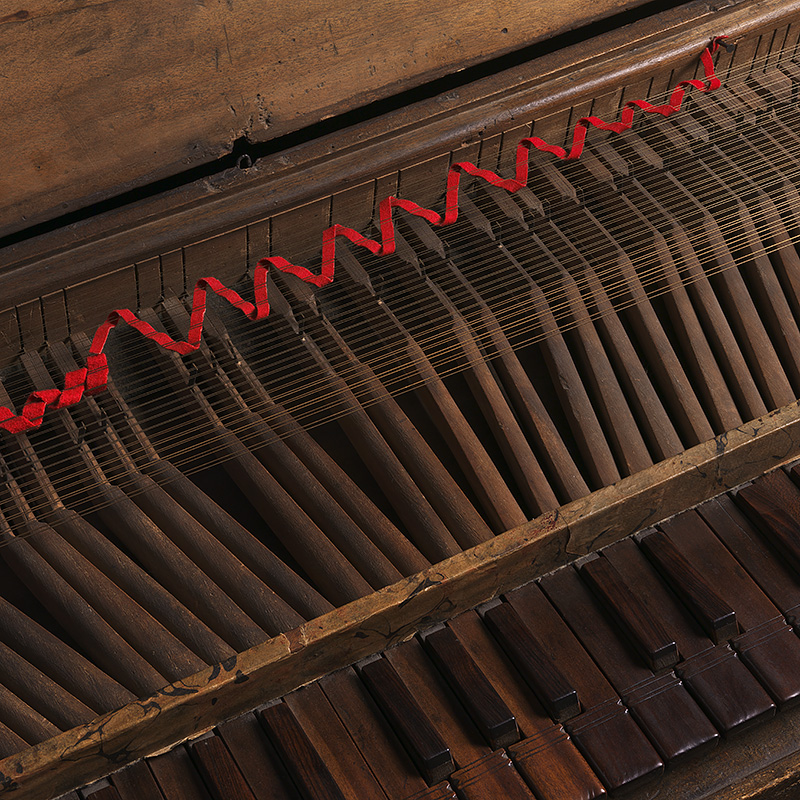
The first was a Triple-fretted clavichord, possibly Flemish and c1620 (ref. 4486). Although this piece was quite simple and unadorned, it did have a bright red ribbon woven through the strings and the keys made a beautiful pattern, so I decide on a detail shot to highlight the mechanism.
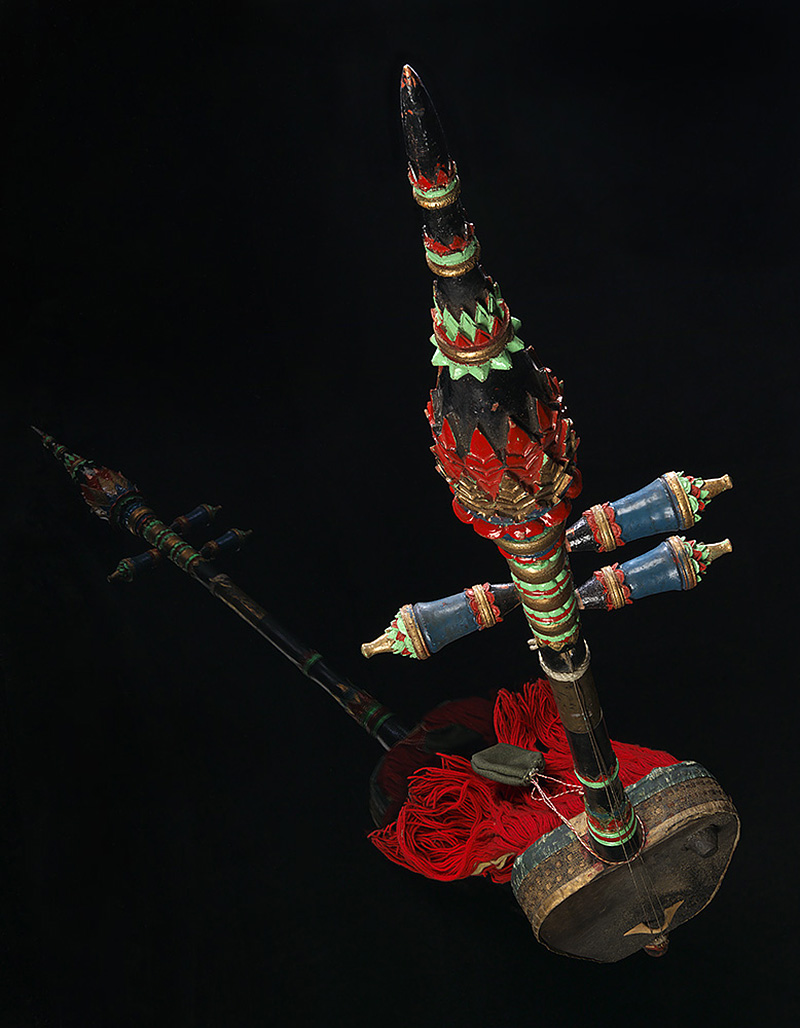
The second item was a Rahab from Western Malaysia, c1977 (ref. 2101). This was a far more ornate and colourful piece. In fact, I was torn- both the front and back of the instrument presented interesting features to photograph, but how to get both sides at once? While at the Rijksmuseum conference Malcolm and I were impressed by their use of a black reflective surface in the photography of fashion accessories (see https://www.rijksmuseum.nl/formats/accessoires/index.jsp?lang=en). Malcolm suggested that we might be able to get a similar effect using a piece of black velvet and some glass, so I set up the studio to try it out. In the end I chose an angle looking down on the instrument that allowed details of both the strings and the red woollen back to be seen, however, the reflection adds further interest to the shot.
The final piece presented quite a different challenge. It is very rare that an object comes to us that leaves me scratching my head, but the ‘Jingling Johnny’ or Chapeau (ref. 6110) certainly did. A large, top heavy shiny brass instrument covered with dangling bells and fragile metalwork set atop a stick- how to keep it upright and perfectly still? The many shiny surfaces indicate that we will need to build a light tent to minimise reflections. This was clearly going to require some thought and planning, so we reluctantly decided to return this one to the store to reconvene another day!
In the coming months we will keep you posted on the projects progress.

 With the 400th anniversary this year of the death of one of our greatest and most influential playwrights, William Shakespeare, I found myself cropping images of some of his first printed quartos for the creation of an e-reader as part of the Shakespeare image collection. Now existing as high quality e-readers are the plays Love’s Labours Lost (1st Quarto Edition) and Romeo and Juliet (2nd Quarto Edition), both of which are used as part of the collaborative project concerning Shakespeare’s printed quartos, The Shakespeare Quarto Archive (http://www.quartos.org/index.html). These works themselves have very unique histories and are important in Shakespearean studies for many reasons. Their place in the Special Collections in the University of Edinburgh Library is invaluable.