Any views expressed within media held on this service are those of the contributors, should not be taken as approved or endorsed by the University, and do not necessarily reflect the views of the University in respect of any particular issue.
Grey literature can be a rich resource when researching for a literature review or dissertation topic. It can help you find current and emerging research, viewpoints of individuals such as patients and consumers, and more in depth or practical coverage of topics.
It can also help you to mitigate against 'publication bias’, where studies showing positive research results are much more likely to be published in journals. A search for grey literature will help to ensure that all relevant results, even if negative, are located.
'Grey literature' refers to a wide range of information which is not formally or commercially published, and which is often not well represented in library research databases. Here we’ll give several top tips for finding and using grey literature. ...continue reading "What is grey literature and where to find it"
Are you developing a search strategy for a systematic review or other evidence synthesis? Here we have collated a list of useful training and guidance resources to help you.
The Learn course LibSmart II: Advance Your Library Research has a whole module on Literature Searching for Systematic Reviews. LibSmart II can be found in Essentials in Learn. If you don’t see it there, contact your Academic Support Librarian and we’ll get you enrolled. You can work through LibSmart at your own pace, and return whenever you need.
For self-paced training on the whole process of conducting a systematic review, Cochrane Interactive Learning has modules created by methods experts so you build your knowledge one step at a time.
If you are a student conducting a systematic review, we can highly recommend the book Doing a Systematic Review (2023). With a friendly, accessible style, the book covers every step of the systematic review process, from planning to dissemination.
According to the Cochrane Collaboration, a leading group in the production of evidence synthesis and systematic reviews;
systematic reviews are large syntheses of evidence, which use rigorous and reproducible methods, with a view to minimise bias, to identify all known data on a specific research question.1
This is done by a large, complex literature search in databases and other sources, using multiple search terms and search techniques. This might include Boolean operators, truncation, phrase searches, and database subject headings. Find out more about these search techniques on the Library subject guide to Literature Searching.
Traditional literature reviews, such as the literature review chapter in a dissertation, don’t usually apply the same rigour in their methods because, unlike systematic reviews, they don't aim to synthesise all known data on a topic. Literature reviews can provide context or background information for a new piece of research, or can stand alone as a general guide to what is already known about a particular topic2.
-----
You can contact your Academic Support Librarian for advice on literature searching, using databases, and managing the literature you find.
-----
References
Higgins, J., et al., Cochrane Handbook for Systematic Reviews of Interventions version 6.4 (updated August 2023). 2023, Cochrane.
We are happy to let you know that the Library has a subscription to Osmosis, a health education platform of 1,800 animated videos and 22,000 integrated practice questions, covering subjects including basic science, physiology, medicine and more.
You can access Osmosis from our list of Databases, where you will find information about registering and the access links.
Osmosis is also included in the list of Databases for Medicine, along with other useful tools and databases for your learning and research.
The subscription is a result of the extensive feedback we received to our trial of Osmosis - thank you for letting us know what you think of this resource! The Library regularly arranges trials to new resources. Publishers are usually willing to provide trial access to allow us to use and evaluate a resource before making a decision about purchase. You can see current e-resource trials on the Library website.
Looking for ways to look after yourself during your studies and exams? The Library’s new Wellbeing Collection provides resources on all aspects of wellbeing, including but not limited to anxiety, exercise, general wellbeing, happiness, relationships, sleeping well and University life.
The collection of books and e-books is available to borrow for all students and staff. In this blog post we highlight just a few of the e-books available in the collection.
To launch our new collection we have a display of Wellbeing Collection books in the Main Library (30 George Square) which is in place until the end of May 2024. In the two weeks since the display was put in place 66 items have already been borrowed!
Wellbeing Collection books on display in the Main Library
What does the Wellbeing Collection cover?
Here we highlight some example e-books from the collection on a few different themes that you might wish to explore:
University life
It’s normal to feel nervous before an exam or overwhelmed with your workload sometimes, but it's important not to let anxiety or stress have a negative impact on your performance.
Exposure to nature has been shown to have a positive impact on physical health and cognitive function. Spring has sprung in Edinburgh, so now’s the perfect time to get out into nature.
You can read more about using the Library for wellbeing and leisure on our subject guide.
The Wellbeing Collection is managed by a team including Library staff, University Student Wellbeing Advisers and the EUSA Student Opportunities Representative (Wellbeing).
When the Academic Support Librarians provide help for students and researchers who are conducting large-scale reviews, such as systematic and scoping reviews, we find that often the same questions will come up. This blog post aims to answer five of your frequently asked questions about systematic reviews and provide some useful resources for you to explore further.
According to the Cochrane Collaboration, a leading group in the production of evidence synthesis and systematic reviews;
systematic reviews are large syntheses of evidence, which use rigorous and reproducible methods, with a view to minimise bias, to identify all known data on a specific research question.1
This is done by a large, complex literature search in databases and other sources, using multiple search terms and search techniques.
Traditional literature reviews, such as the literature review chapter in a dissertation, don’t usually apply the same rigour in their methods because, unlike systematic reviews, synthesise all known data on a topic. Literature reviews can provide context or background information for a new piece of research, or can stand alone as a general guide to what is already known about a particular topic2.
What about scoping reviews?
There are other review types in the systematic review “family”3. You may have also heard of scoping reviews. These are similar to systematic reviews, in that they employ transparent reporting of reproducible methods and synthesise evidence, but they do so in order to identify knowledge gaps, scope a body of literature, clarify concepts or to investigate research conduct4. Literature searching for scoping reviews will be similarly comprehensive, but may be more iterative than in systematic reviews.
Choosing appropriate databases in which to search is important, as it determines the comprehensiveness of your review. Using multiple databases means you are searching across a wider breadth of literature, as different databases will index different journals.
To get an idea which databases are best suited to yield the data you need, you can also look at published systematic reviews on similar topics to yours, to see which databases those authors used.
The number of databases you use to search will vary depending on the research query, but it is important to use multiple databases to mitigate database bias and publication bias. More important than the number of databases is using the appropriate databases for the subject to find all the relevant data.
You may have read that you should include grey literature in your sources of data for your review.
The term 'grey literature' refers to a wide range of information which is not formally or commercially published, and which is often not well represented in library research databases.
Using grey literature will help you to find current and emerging research, to broaden your research, and to mitigate against publication bias.
Sources and types of grey literature will vary between research topics. Some examples include:
Another useful approach is using a domain search in Google to search within the websites of key organisations or professional bodies in your subject. For example, searching site: followed by a domain in Google:
site:who.int will search within the WHO website.
site:gov.uk will search only websites with a url that ends .gov.uk
You may have heard that you need to ‘translate’ your search. This simply means taking the search you have developed in the database and optimising it to work best in a different database.
The way you tell a database to search for a term in the title of the record, or the command for searching for terms in close proximity to each other, will be different between databases and platforms.
For example, in the medical literature database Ovid Medline, the search for a subject heading on gestational diabetes is Diabetes, Gestational/ whereas the nursing database EbscoHost CINAHL uses MH "Diabetes Mellitus, Gestational". Both the syntax that refers to a subject heading needs to be translated (/ to MH) and the subject heading itself is different (Diabetes, Gestational to Diabetes Mellitus, Gestational).
You can practice translating a search in the Learn course LibSmart II in the module on Literature Searching for Systematic Reviews. We also have a Library Bitesize session on translating literature search strategies across databases coming up in April.
Useful resources:
Polyglot search tool: A tool for translating search strings across multiple databases.
We do! The Learn course LibSmart II: Advance Your Library Research has a whole module on Literature Searching for Systematic Reviews. LibSmart II can be found in Essentials in Learn. If you don’t see it there, contact your Academic Support Librarian and we’ll get you enrolled.
For self-paced training on the whole process of conducting a systematic review, Cochrane Interactive Learning has modules created by methods experts so you build your knowledge one step at a time. Perfect for what can be an overwhelming research method.
If you are a student conducting a systematic review, we can highly recommend the book Doing a Systematic Review (2023). With a friendly, accessible style, the book covers every step of the systematic review process, from planning to dissemination.
-----
The FAQs in this post are taken from the library subject guide on Systematic Review Guidance where you can find even more information and advice about conducting large-scale literature reviews.
You can contact your Academic Support Librarian for advice on literature searching, using databases, and managing the literature you find.
-----
References
Higgins, J., et al., Cochrane Handbook for Systematic Reviews of Interventions version 6.4 (updated August 2023). 2023, Cochrane.
Sutton, A., et al., Meeting the review family: exploring review types and associated information retrieval requirements. Health Information & Libraries Journal, 2019. 36(3): p. 202-222.
Munn, Z., et al., Systematic review or scoping review? Guidance for authors when choosing between a systematic or scoping review approach. BMC Med Res Methodol, 2018. 18(1): p. 143.
February isLGBT+ History Monthand this year’s theme is #UnderTheScope. This celebrates LGBT+ peoples’ contribution to the field of Medicine and Healthcare both historically and today.
To help you learn more we’ve pulled together just a small selection of Library resources that will allow you to start to look ‘Under the Scope’.
Books
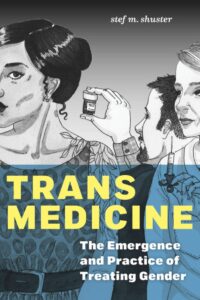
For a rich examination of the history of trans medicine and current day practice, Trans Medicine: The Emergence and Practice of Treating Gender draws on interviews with medical providers as well as ethnographic and archival research to examine how health professionals approach patients who seek gender-affirming care. The essays in Queer Interventions in Biomedicine and Public Health historicise and theorise diagnosis, particularly diagnosis that impacts trans health and sexuality, queer health and identity, and sexually transmitted diseases such as HIV/AIDS.
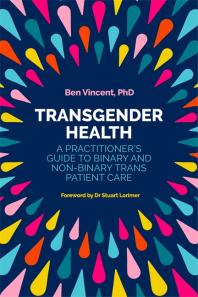
#UnderTheScope also aims to shine a light on the health inequalities facing LGBT people even today. Transgender health: a practitioner's guide to binary and non-binary trans patient careshows healthcare and medical practitioners how to deliver excellent care to gender diverse patients. Based on cutting edge research and the lived experience of the author as a non-binary person, this is essential reading for all those working to meet the needs of transgender people in healthcare settings. The remedy: queer and trans voices on health and health care invites readers to imagine what we need to create healthy, and thriving LGBT+ communities in this anthology of real-life stories from queer and trans people on their own health-care experiences and challenges.
LGBT collections at Lothian Health Services Archive
Some of the LGBT-related resources held by Lothian Health Services Archive (LHSA) include the archive of Lothian Gay and Lesbian Switchboard, the UK’s first gay helpline and Scotland’s first gay charity, and unrivaled collections that document Edinburgh’s response to HIV from 1983 to the 21st century, spanning voluntary groups, charities, local authorities, the NHS, and health promotion campaigns.
LHSA is part of the University’s Heritage Collections and holds the historically important local records of NHS hospitals and other health-related material. For information about visiting please read the information on Services and Access.
More resources to look Under the Scope
If you want to further explore LGBT+ peoples’ contribution to medicine and healthcare then you can use some of the Library’s research databases to search for journal articles, book chapters, reviews, theses, conference papers, etc., on this topic and beyond.
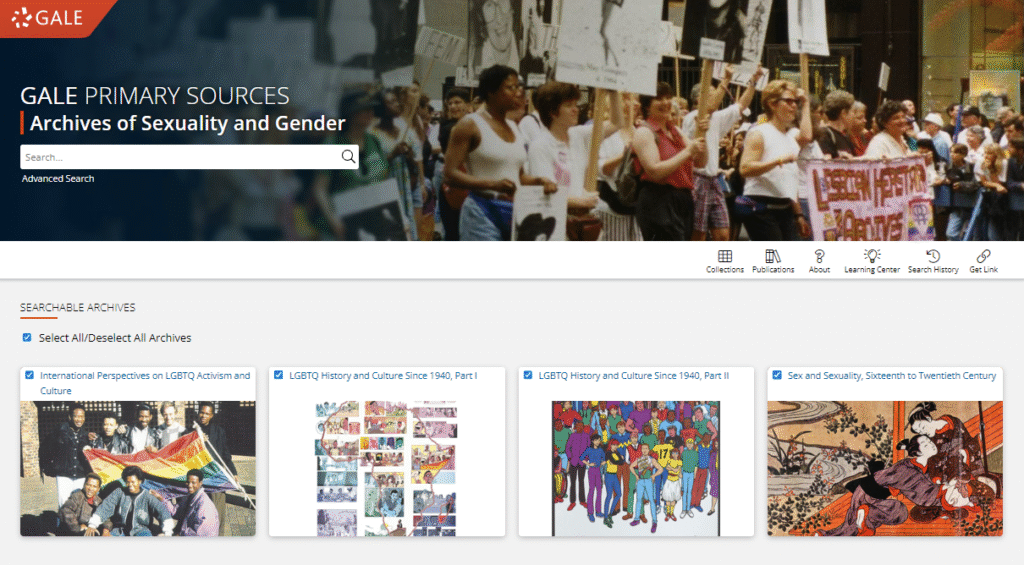
Archives of Sexuality & Gender provides a significant collection of primary sources for the historical study of sex, sexuality, and gender. With material dating back to the sixteenth century, you can examine how sexual norms have changed over time, health and hygiene, the development of sex education, social movements and activism, and many other interesting topical areas.
Use the online resourceLGBT Thought and Culture to find books, periodicals, and archival materials documenting LGBT political, social and cultural movements throughout the twentieth century and into the present day. The collection illuminates the lives of lesbians, gays, transgender, and bisexual individuals and the community.
Researching hidden and forbidden people from the past can be difficult. Terminology used to write about LGBT+ people has shifted over time or is obscured. A practical guide to searching LGBTQIA historical recordsis an accessible guide to doing historical research on LGBT+ subjects in libraries, archives and museums.
This is just a small selection of the resources on LGBT+ history in the Library. However, if there are areas in the collections that could be improved or you know of a book the Library doesn’t already have, you can use the Request a Book formto tell us.
Note that some online resources mentioned in this blog post are only available to current students and staff at the University of Edinburgh.




 We are happy to let you know that the Library has a subscription to
 Looking for ways to look after yourself during your studies and exams? The Library’s new Wellbeing Collection provides resources on all aspects of wellbeing, including but not limited to anxiety, exercise, general wellbeing, happiness, relationships, sleeping well and University life.







 February is