Academic Freedom and Freedom of Expression Working Group

Academics have recently received an email from the Provost with regards to the setting up of a new Academic Freedom and Freedom of Expression Working Group. Our colleague, Lauren Hall-Lew, sent the letter below in response to the announcement. It is an excellent, and necessary, response – and reflects what, we think, should be the Staff Pride Network’s position and role with regards to this matter. I am therefore forwarding it along, especially if it is useful in any conversations you may have within and beyond the institution.

Thanks to Edinburgh Race Equality Network (EREN) for sharing Lauren’s letter.


Dear Professor Graham,


Thank you in advance for taking the time to read this email. Do feel free to forward it to any party who might find it useful or, at least, relevant.


As the Professor of Sociolinguistics at this university, I want to take a moment to alert you and your team to some distress that your announcement has caused amongst the university’s staff, and to explain some of the reasons for this distress, from my professional point of view.


The short of it is that “Academic Freedom” and “Freedom of Expression” have taken on multiple and often conflicting meanings in recent years, particularly in the academic context, such that they now connote particular political stances that are further associated with the mental and physical harm of certain minority groups. As much as I personally wish that “Academic Freedom” and “Freedom of Expression” truly only entailed the sentiments expressed in your announcement, the linguistic facts point to the impossibility of this wish. Lexicographers who enter new words into the dictionary don’t make up definitions; they describe the definitions that best encompass how a word is actually used. It is in that spirit that I write you this email.


Academic research on the use of the term “free speech” in academic and legal contexts goes back at to at least 2018. In 2017, the following web publication made the observation that is the foundation of this research:

In this post, Zine observes that the phrase “free speech” was at the forefront of debates in Canada and the United States about “University classes regarding the use of gender-neutral pronouns and in the framing of the House of Commons Motion 103 combating Islamophobia. These may seem like disparate concerns, but they are in fact related in the way the so-called ‘alt-right’ uses free speech as a rhetorical prop in their campaigns of ideological intimidation.”


In 2018 we see the following academic article that articulates the issue in a more in-depth way:

While this paper is also set in the North American context, Sultana’s abstract succinctly summarizes the phenomenon that many of us here at the University of Edinburgh are also concerned about:

At a time when there are concerted efforts to decolonize academia, there is a concurrent rise of colonial nostalgia and white supremacy among some academics, who are supported by and end up lending support to the escalating far-right movements globally, which misuse notions of free speech and academic freedom to further their agendas and attack higher education.


Without acknowledgement of this phenomenon in the announcement you sent, there will inevitably be readers of the announcement who have reason to worry about what the working group means for their intellectual and personal safety. While this may seem at odds with the very meaning of “Academic Freedom” and “Freedom of Expression”, that is exactly the linguistic point: the way that terms are actually used says more about what they mean than what we imagine terms to mean.


This is especially the case when this particular (mis)use of terms spans years and continents. Sultana writes,


In recent years, free speech has been co-opted by far-right groups in liberal democracies such as the US, Canada, UK and Europe to promote hate speech whereby hate speech and calls to violence are being promoted, whether directly or covertly, under the guise of free speech. This is generally known as the ‘weaponization of free speech’ whereby the far-right uses the rhetoric of free speech to attack people and promote hate speech (Scott 2018; Picazo 2017).

 And, further,

 However, inciting violence, calling for harm/harassment, or active discrimination of people or groups violates the rights of others to enact their lives and is actually not protected under free speech.


It is in the spirit of this last quote that my colleagues and I are concerned about the formation and framing of this working group. Will hate speech be tolerated? The point is sometimes subtle, as fellow academics do not typically directly or actively “incite violence”. However, it is the alignment of free speech discourses with other actors (on Twitter, for example, through “likes”) that makes many of us feel unsafe and threatened. It needn’t be “hate speech” to have this effect, because what language connotes (or “indexes”, in my field of study) is just as meaningful and powerful as what it denotes directly.


For what it’s worth, there are at least two recent books from a legal perspective based in the US context that are relevant to this conversation:


And I highly recommend this paper (if you are going to read any paper) that is specifically about the contemporary academic context:


However, I will conclude this email with an academic reference based in the UK context, with a specific discussion about how “free speech” is being used across universities in the UK:

Leigh writes:

A small number of university professors have become central to free-speech struggles on university campuses. Unlike some overt fascists, these professors claim mainstream legitimacy in that they hold positions in prestigious institutions, publish peer-reviewed scholarship with established publishers, and denounce the far right. Yet, they are regularly opposed by student, left-wing, and antifascist protestors, who see them as producing scholarship that affirms core facts of far right ideology and/or is regularly used by the far right. In response, these public intellectuals pronounce free speech as under threat from ‘coddled,’ ‘oversensitive,’ ‘snowflake,’ and censorious students and universities (Leaker 2018). They then double-down on their calls for greater freedom of speech, often drawing directly on Locke and Mill and, I argue here, ultimately reproducing Locke’s and Mill’s commitments to colonialism.


I do not quote this paper to make any claims or accusations about other members of the University of Edinburgh staff. Indeed, the point is one about the term “free speech,” not about any individual actor. I have no doubt that many or most of the people involved in the creation of this working group have only the best of intentions. However, whether we like it or not, in the contemporary academic context, the terms used to describe the working group you propose are not neutral. Not in the least. And the University cannot proceed as if they are.


Thank you again for your time and consideration. I appreciate that you are busy, and I do not require a response, but I am also happy to discuss this issue further, if you so wish.


All best wishes,


Professor Lauren Hall-Lew (she/her)
Personal Chair of Sociolinguistics

The University of Edinburgh



Celebrating Diversity: Showcasing the LGBTQ+ Photo Bank at the University of Edinburgh

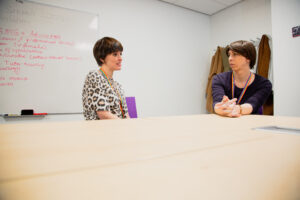
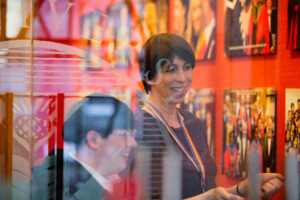
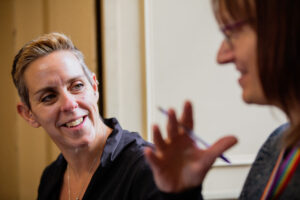
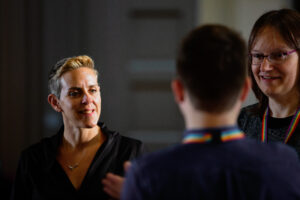
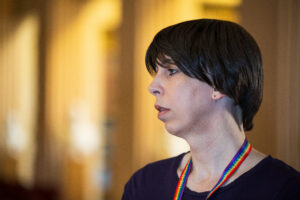
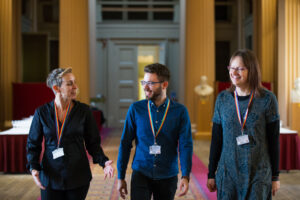
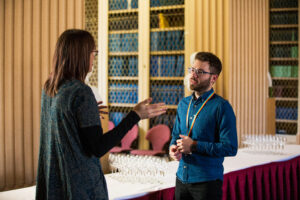
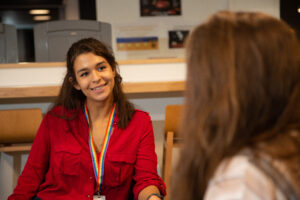
The University of Edinburgh has always been committed to promoting diversity and inclusion. Back in 2018, a special photo shoot led by Gina Gwenffrewi was organised to create a collection of images representing the LGBTQ+ community within our university, including trans and non-binary individuals. These images deserve greater publicity and can be viewed at the LGBTQ+ Students and Staff Image Gallery (Password: edinburghgallery).
 

This photo bank captures various aspects of staff and student life, highlighting how LGBTQ+ individuals contribute significantly to the university community. As Kat Deuchars, a fellow staff member, remarked, “they demonstrate how LGBTQ+ people look just like straight cis people.”

We are currently working on an exciting new project to update these images and feature the inclusive Progress Pride Rainbow Lanyards. If you’re interested in helping with this project, please contact us at staffpridenetwork@ed.ac.uk.

We value your feedback on the existing images and how they can be improved. Please share your thoughts with us to help us create better representations of our diverse community and secure funding for more photos. [Provide a link for feedback here]

Thank you for supporting our efforts to foster a more inclusive environment at the University of Edinburgh.


Note: The images included in the blog post are just a few examples and can be downloaded full size from the gallery mentioned above, featuring a mix of close-ups, group photos, and various activities that demonstrate the diversity and contributions of the LGBTQ+ community within the university, including trans and non-binary individuals.


International Asexuality Day 2023

Today is International Asexuality Day. To our asexual members we wish you a Happy International Asexuality Day and to the rest of our members today is a day to learn, to share knowledge, and to be the best allies you can be to our asexual friends. Feel free to raise awareness with our asexual flag Staff Pride Network logo design (credit to Gill Kidd, SPN graphic design volunteer).


https://internationalasexualityday.org/en/


https://www.stonewall.org.uk/about-us/news/six-ways-be-ally-asexual-people


Allyship in Informatics

 by Jonathan MacBride (he/him)  IGS Administrative Assistant 


Today (Monday the 27th March 2023) the School of Informatics emphasised their allyship of trans and non-binary people at the University of Edinburgh. It’s not often as a cis gay man that I see inclusion at a high level. Today I felt that little bit more valued, motivated, inspired, more proud to work in Informatics. Allyship is usually seen where individuals want to make a difference in ways they can achieve. Today the School of Informatics quarterly School General Meeting featured the Director of People & Culture Chris Heunen presenting the School Values, announcing a new family fund grant and then giving time for a former Staff Pride Network Trans & Non-Binary Rep to share insights about being a good ally to LGBT+ people. Dr Gina Gwenffrewi shared some of her personal story, comparing her life as an undergrad at Cardiff University 20 years ago, unable to be her true self, unable to achieve her full potential, to now at the University of Edinburgh where she has achieved her PhD, currently teaching Introduction to Trans Studies to UoE undergrads. It’s quite a turnaround which she puts down to being able to live and study as Gina, focussing only on what she’s here for. Gina highlighted that if we can all show respect and care to trans and non-binary colleagues and students that they will be more successful in their research and work, happier, healthier, more creative, instinctive.  
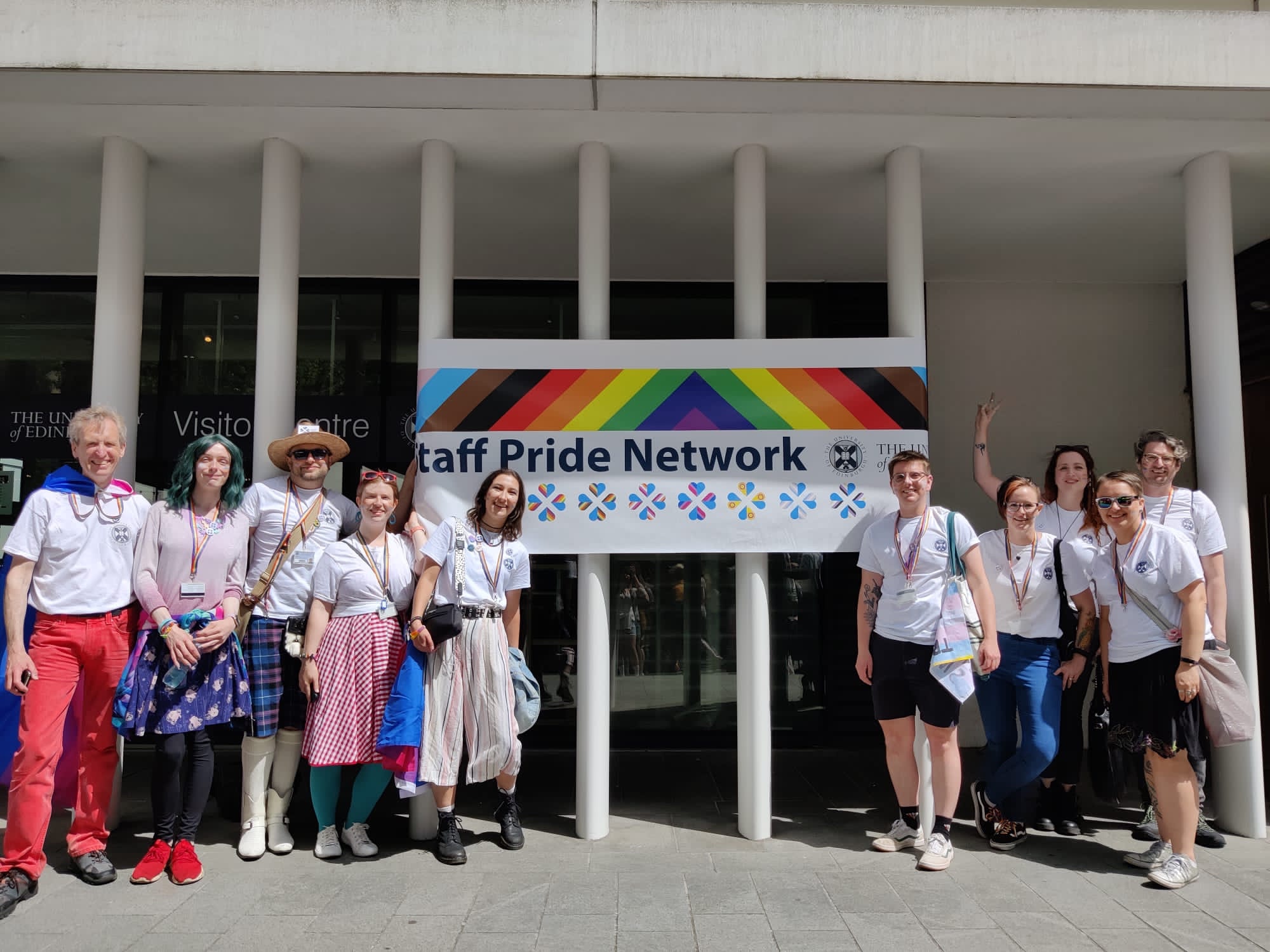
How do we do that? Baby steps are a start. A Rainbow Lanyard shows others that you are a safe person to approach. Hang one from your pocket or on your office wall if you don’t tend to wear it round your neck. Ask someone which pronouns they use and respect their answer. Add your own pronouns to your e-signature. Many people aren’t familiar with gendered names of cultures around the world so not only does it highlight your understanding of inclusion, it helps others know who they’re replying to. After all, here in Edinburgh a ‘Chris’ could use he/him, she/her or they/them.  

A non-binary Informatics PhD student explains how the world around them impacts their day-to-day life:  

“In most scenarios, I am the first non-binary person my colleagues will have encountered. Maybe English is not their first language, and they have never learned that it is grammatically acceptable and correct to use “They/Them” for a single person. Maybe English is their first language and they have just never had to think in this way before. There is nothing wrong with learning, and making mistakes. However, there is a huge mental load on being everyone’s first learning experience, that could be reduced by faculty members and staff simply by showing support in their actions and using the right etiquette. 

It takes a significant amount of energy (and quite honestly courage) to persevere through conversations where someone is knowingly and consistently using the wrong pronouns for me. All anyone needs to do is ask if they forget, and correct themselves and others when they make a mistake.” 

  • Persie Rolley-Parnell, RAS PhD 

What do I hope was achieved today? Perhaps a few people hearing a trans woman speak in person for the first time, personalising a message which they have only heard in the media. Maybe a message they haven’t heard before, particular to their role in the School, relating it to how they teach, how they interact. A fellow trans and/or non-binary staff member or student could have been sitting there feeling hope, that things in life will get better. Or simply that one person tells another that a trans woman spoke at their School General Meeting. Visibility makes a difference. Personalisation of an issue. 

The Informatics Forum reception has a small stock of the latest design of UoE Rainbow Lanyards, featuring a more inclusive Progress Pride flag. Anyone with a staff card can also get them free from Card Services at the Main Library. They are available to everyone from the Visitor Shop who sell them with a card holder for £2. 


Staff Pride Network Members’ Newsletter February 2023

Go to this Sway


Celebrate Drag Queen Story Time with Edinburgh International Book Festival

A staff member was asking Jonathan yesterday about the controversy with ‘Drag Queen Story Time’ and telling him about their family’s positive experience, taking his daughter to Celebrate Pride With Mama G! at the Edinburgh International Book Festival. Jonathan asked him if he would put it in an email for us to share with members and he has, below!

I just wanted to let you know that I thoroughly enjoyed a recent trip to the Edinburgh Book Festival with my daughter Tilly and some of her wee friends. On Saturday 27th Aug we went to ‘Celebrate Pride with Mama G!’ which was a 2 hour event on the main stage at the book festival with music and stories all centred around LGBTQ+. Tilly really enjoyed the hour or so we were there. Mama G was great with the kids (Tilly was very enamoured with her outfit) and gave a nice, interactive, history of Stonewall that Tilly enjoyed singing along with , “Love is love is love is love”! . The two stories we were able to listen to were great and it was nice to hear stories (read by Juno Dawson and Jodie Lancet-Grant) that were more inclusive than Tilly is usually exposed to, mainly as that is what is generally available in mainstream kids’ books.


Gender Neutral Toilets

Gender neutral toilets are bathrooms which can be used by anyone, regardless of gender.

While anyone can use a gender neutral toilet, they are particularly important for trans and non-binary students and staff who may feel uncomfortable in or unable to use gendered bathrooms.

The map below shows the locations of gender neutral toilets across the University’s campuses.


https://www.ed.ac.uk/estates/buildings-information/gender-neutral-toilets


Join us at Edinburgh Pride 2022

SPN at Pride Edinburgh

We invite members, allies and students to join us for the Pride Edinburgh March on Saturday 25 June!
The SPN marching troupe will be meeting at 11:30 on the day at Levels Café on Holyrood Road. Speeches start at 12:30 and the march moves off at 13:00.

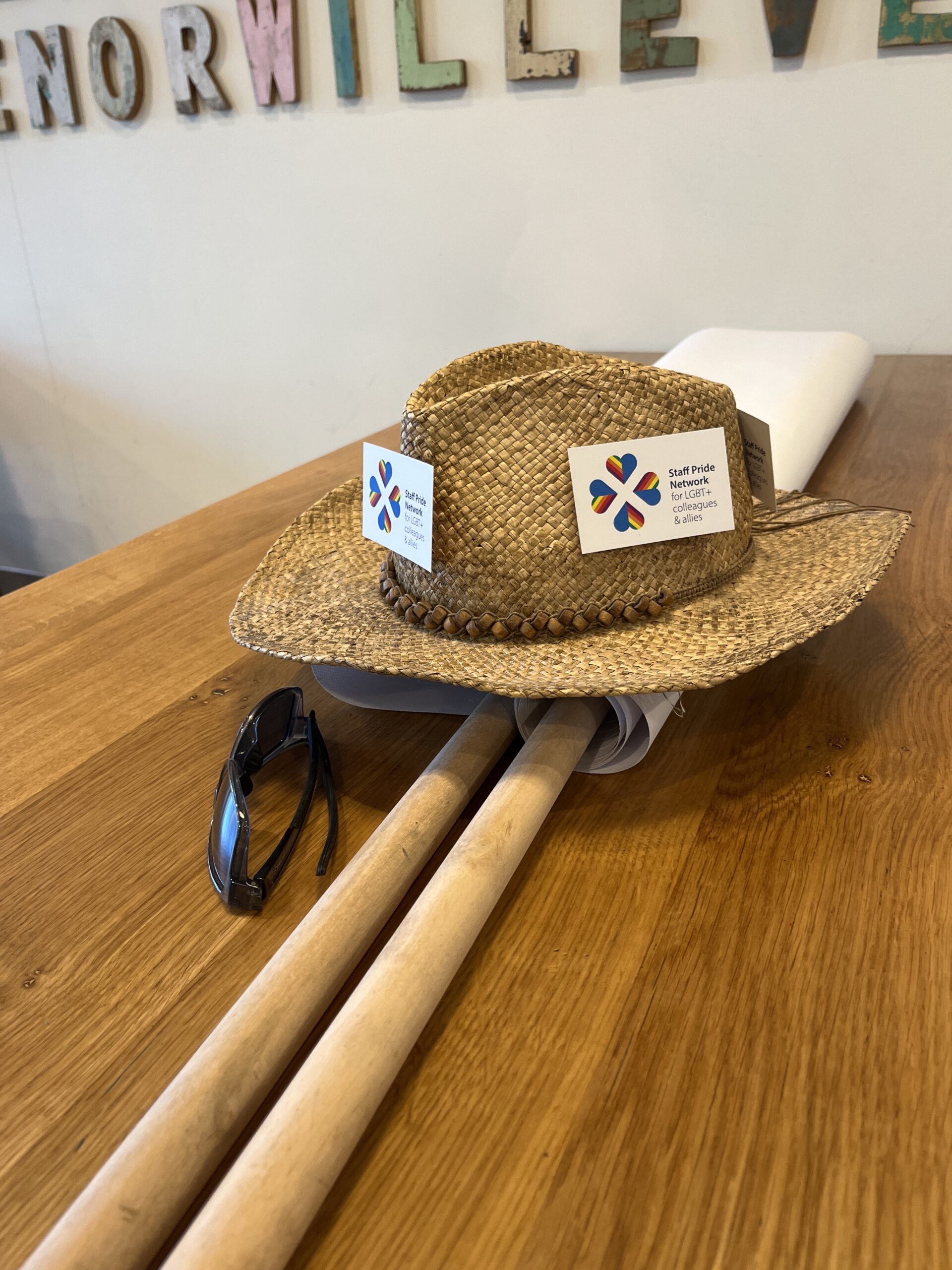
If you can’t make it to Levels beforehand but still want to join in, just look for our marching banner – it will be 3 metres wide and looks like the image above!

For a quiet space after marching:

Members are invited to meet at the Informatics Forum from 14:00 – 17:00. Join us for refreshments and a marching troupe debrief! Please note that this private space is being facilitated for University of Edinburgh staff and students only. Entry will be via Robbie on the march, through the side entrance and building sign-in. Call/TXT/iMessage/WhatsApp (07905517428) or even teams message Robert (Robbie) Court to access later in the afternoon.
Note: We will keep this post up to date throughout the day and I’ll try and share our location during the march. 

Live updates:

Live location: https://maps.app.goo.gl/d8d45uCRVSKGdAi67

14:00 we’re meeting by the rino head / gift shop by informatics

12:40 were by the traffic lights

10:20 myself and the banner are now in levels cafe having breakfast so feel free if you want to be fashionably early.

8:44 Prepping for meeting at levels cafe. The refreshments are all ready at the informatics forum at the end of the Parade route. The banner has poles this year so wind permitting should be above the crowd. [fingers crossed].


A sincere thank you from Proud Scotland Awards 2022

Dear University of Edinburgh Staff Pride Network,

I am contacting you to say thank you for everything you have done over the past year to celebrate, support and promote the LGBTQ+ community.

As was stated during the awards ceremony, 2022 was probably the toughest year to select finalists and winners with over 1000 nominations being received and over 36000 votes being cast, all from the public. Although it was commiserations on the night his hopefully shows the amazing impact which you and your organisation is having within the community and how your actions have caused an individual to nominate you this year.

We strongly hope that you continue your amazing work and impact so that we will see you again at the Proud Scotland Awards 2023.

During the evening, you will be aware that we raised money to help support the delivery of Pride Edinburgh, https://prideedinburgh.co.uk/, and Glasgow’s Pride Mardi Gla, https://glapride.com/, and hope that we will see you showing your Pride, at either or both of the marches and events.

Again, from myself as the Chair of the Judging panel, congratulations on being a finalist in 2022 and thank you for being amazing!

Stuart McPhail

Chair | Proud Scotland Awards

https://proudscotlandawards.com/ 


Iona Community: Student Week this September with Mx Ashwin Africanus Thyssen

10 – 16 September: Students’ Week (title tbc) A week for students to experience life in the community, to share laughter and stories, to explore the island and to reflect on current concerns.

This week is jointly led by Iona Community staff with staff and students from Glasgow and Edinburgh Universities and the Student Christian Movement. We are delighted that we’ll be joined by Mx Ashwin Africanus Thyssen from Stellenbosch University for this week.

https://iona.org.uk/visit-and-stay/iona-abbey-centre/iona-abbey-programme-bookings/?fbclid=IwAR2DhbgZdvhzn5GnSr1G8EA3XQfYKLbhqAXd5v12EIwO7sCGzQWozghMZDU