In one-on-one Maths classes, students in Grades 7-12 with ADHD (Attention Deficit Hyperactivity Disorder) are often struggling with abstract concepts. This intervention draws on literature, including not only Laura Aldridge’s Make Space (sensory art for marginalized learners), but also Andrea English’s educative listening (attending to students’ cognitive cues or interruptions). It is also inspired by Farinati & Firth’s rhythmic listening (collective relational building through sound) and the concept of transforming aporia (the disorientation of doubt) into a learning passage, consistent with Dewey’s emphasis on embracing confusion as an integral part of reflective inquiry. It focuses on a creative case study adapted from Aldridge’s sensory workshops, providing art interventions to Middle School (7-9th) and High School (10-12th) respectively.
Context:
One-on-one Maths classes for students with ADHD in Grades 7-12.
Impacted Groups:
- ADHD students with strengths in sensory engagement and dynamic thinking
- Maths tutors who are seeking strategies to reduce distraction and deepen conceptual understanding.
Informed by the emphasis of sensory inclusion (Aldridge, 2000), students use clay to model linear slopes, sandpaper to represent inequality shading, and foam spheres to build geometric proofs. This aligns with the work of Burbules, where sensory materials are used to transform the student’s aporia (the feeling of confusion or being lost in abstraction) into a tactile passage for exploration
Pre-Algebra Terrain: Manipulate clay landscapes to solve equations
e.g., by changing and touching the slope of clay, students can feel the difference between gradients. Moreover, students can be instructed to adjust the slope to make the clay pass through one specific point.
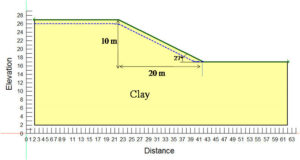
Geometry Sculpture: Construct 3D models of theorems
e.g., when learning Pythagorean Theorem, tutors can use three pipe cleaners with different lengths a, b, c to form a right triangle. Foams are used to construct three rectangles with side lengths a, b and c. By comparing the areas of rectangles, students can investigate the relationship between a², b² and c².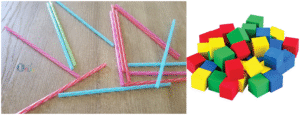
-
Effect Measurement
- Observation: Track student-initiated problem-
solving and engagement duration (aim: ≥15 minutes/activity).
- Tutor Reflection: How did sensory materials change the student’s approach to pre-algebra or geometry?
Inspired by Farinati & Firth’s emphasis on collective listening, these activities integrate the learner’s behavior (rhythm/movement) into the construction of mathematical systems, ensuring ADHD learners’ sensory strengths become integral to meaning-making.
e.g., Factoring = 2-beat staccato and explain logic .
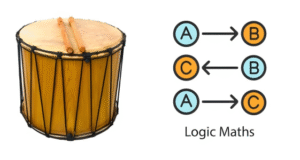
Kinetic Calculus: Map concepts to physical movement
e.g., Upward curve = arm rising and reflect on connections.
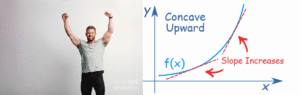
-
- Media Analysis: Count unique rhythms/movements and their alignment with mathematical logic.
- Student Survey: Did rhythm/movement deepen your understanding of algebra/calculus? (Likert scale, 1–5).
- Middle School: Sensory landscapes foster tutor-student relationality – tutors ‘listen’ to material choices.
- High School: Rhythmic/kinetic activities build student-math relationality – ADHD learners’ sensory strengths become integral to mathematical meaning-making (Aldridge’s argument for PMLD learners).
In conclusion, instead of treating ADHD students’ sensory-cognitive traits, like liking hands-on work or being sensitive to rhythms, as learning barriers, these interventions can help students grasp Maths and make student-tutor interactions smoother. Furthmore, these designs aren’t random but rooted in interdisciplinary research and creative practices.
Reference
- Farinati, L., and Firth, C. (2017). The Force of Listening. Berlin: Errant Bodies Press.
- Aldridge, Laura. “Make Space for Everybody, Make Time for Difference”. Artlink, 2022.
- English, A. (2009). Listening as a teacher: Educative listening, interruptions and reflective practice. Philosophical Inquiry in Education.
- Dewey, J. (1933/1989). How We Think. The Later Works. Vol. 8 (pp. 105-352). Carbondale: SUP.
- Nicholas C. Burbules (2015). Aporias, Webs, and Passages: Doubt as an Opportunity to Learn