Week 10 :Visiting Ilana Halperin’s Exhibition and Reflections on the Visit
Exhibition Viewing—-Ilana Halperin:What is Us and What is Earth

Gallery: Fruitmarket

This exhibition displays sculptures, paintings, and photographs by Glasgow-based artist Ilana Halperin. On her 30th birthday, Halperin realized she was born in the same year as a volcano near Iceland. She began to align the timeline of her life with that of the volcano’s eruptions, creating a significant body of work at key moments of volcanic activity. Through collaborations with scientific researchers, she has incorporated geological samples—such as volcanic rock, mineral deposits, and calcified structures—into her artistic practice.

LinkIlana Halperin: What is Us and What is Earth


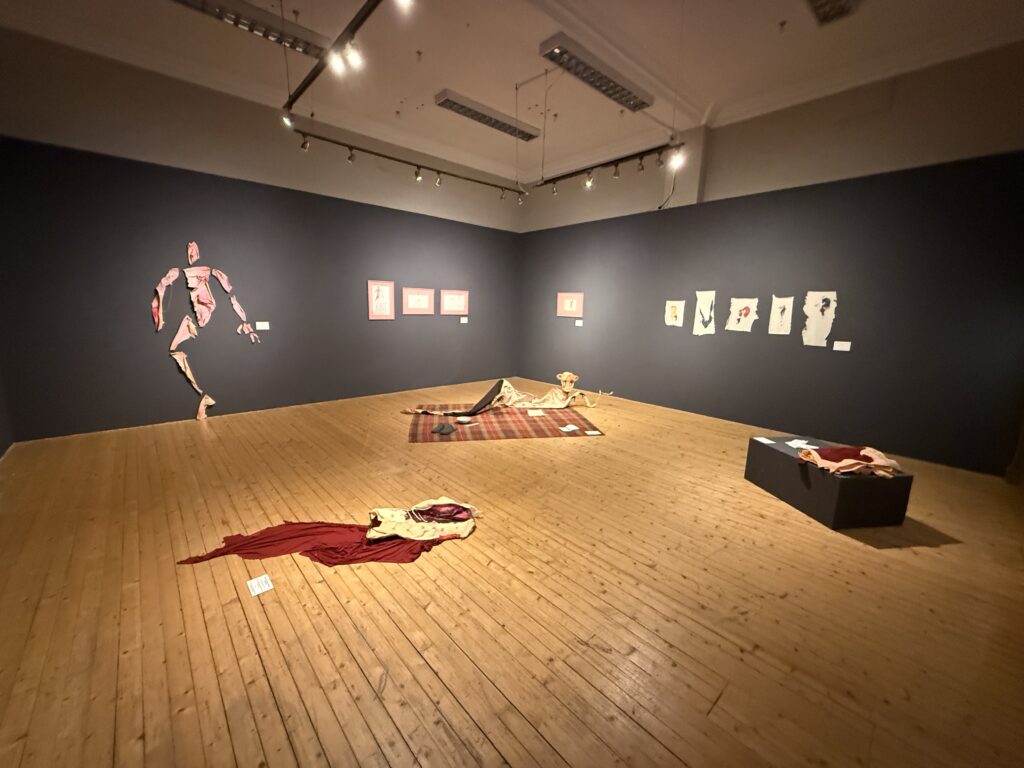
About Exhibition Space and Work Arrangement:

The exhibition does not rely on a visually-driven approach; there is no single focal point or collection of major works. Instead, the pieces are arranged in a decentralized manner, The works are distributed across different walls and display platforms, with each piece maintaining relative spatial independence. Through this non-linear structure, visitors are not required to follow a fixed viewing route; instead, they move freely, stopping to appreciate and understand the works, establishing their own connections with them. This shifts the experience from passive viewing to active engagement, emphasizing the process of the exhibition itself.
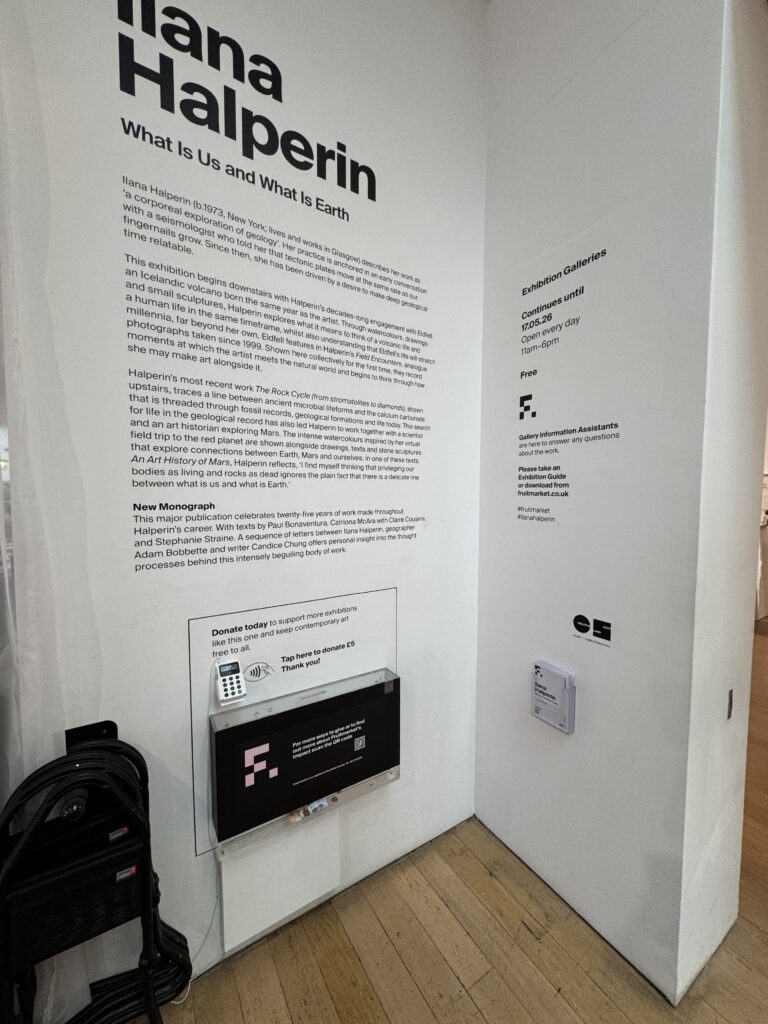
Fig 1:At the exhibition entrance
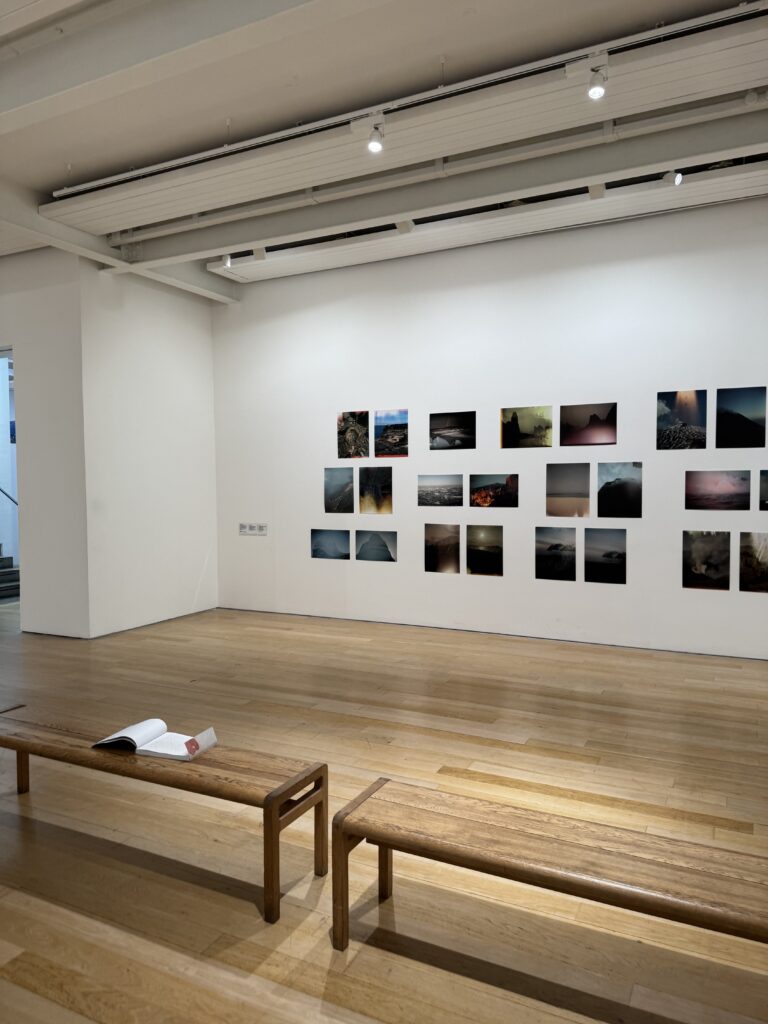
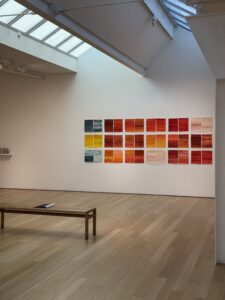
Fig 2 :Photographs on the first floor

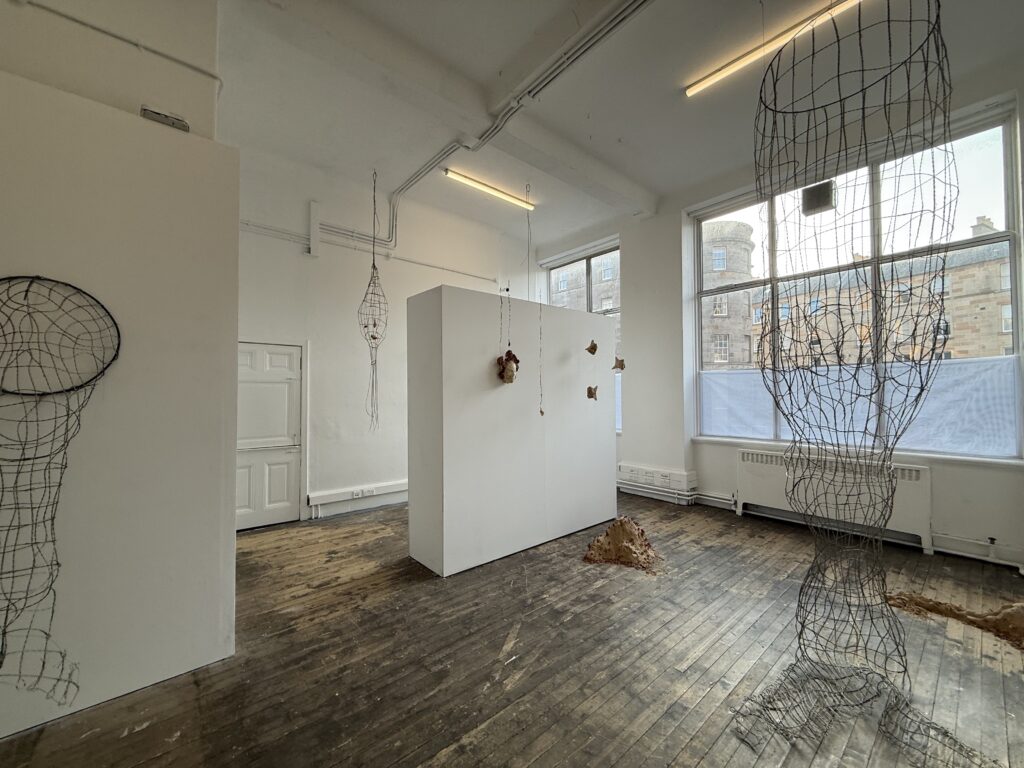
The exhibition features a large number of geological specimens—such as minerals, rocks, and sediments—displayed at low levels on tabletops to facilitate close-up observation by visitors, accompanied by informational text labels. Here, the artworks are no longer merely visual presentations but serve as a form of popular science education on geology. By closely observing the patterns on these geological specimens, visitors can understand their changing states, These materials possess both temporal and natural attributes; understanding the significance of the works integrates the artistic space with the scientific exhibition space.
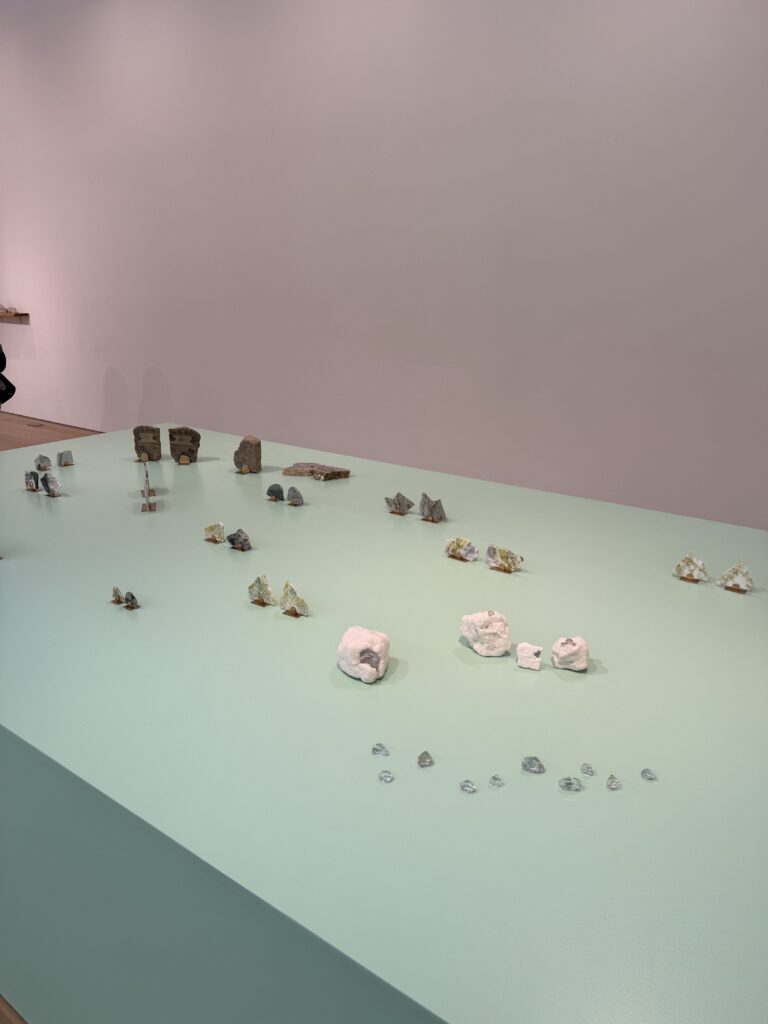
Fig 3 :Display of Related Geological Samples
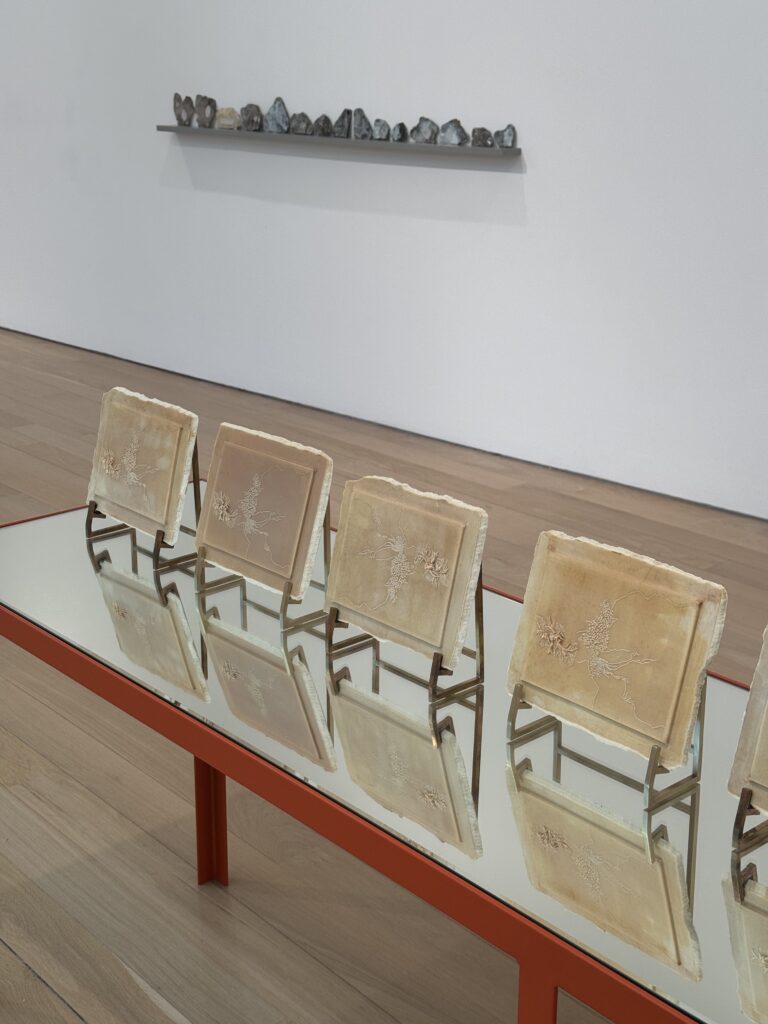
Fig 4 :The Work “Rock Cycle” (2026)
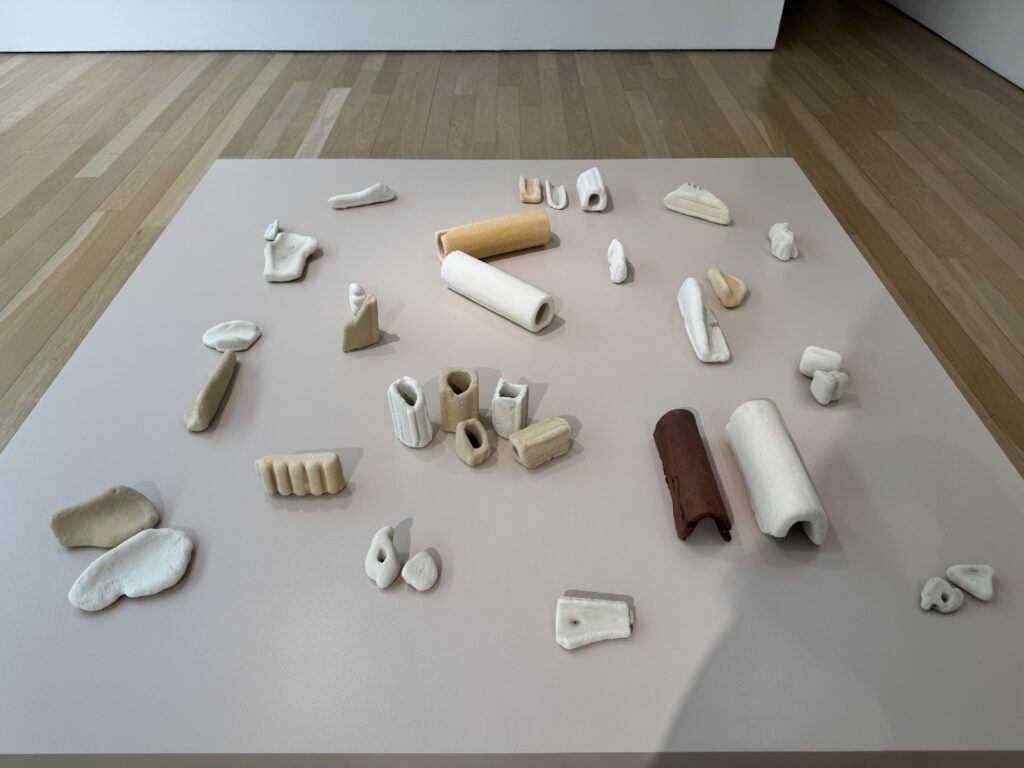
Fig 5 :Display of Related Geological Samples

Reflections on the Exhibition:

Through this visit, I realized that some of the artworks in the exhibition are not finished works, but rather records of time and the creative process. The core of these pieces lies not in their final artistic form, but in the process of their transformation.No matter the form of artistic expression, the goal is to create a process through which anyone can use art to express themselves and articulate their emotions. The inexpensive, ephemeral, and unintimidating nature of the conceptual mediums themselves—video, performance, photography, narrative, text, and actions—encouraged women to participate and to navigate this opening in the art world’s walls (Lippard, 1997).This has led me to rethink the essence of art: it is not merely about showcasing the final result, but also about presenting and documenting the process. Through the artist’s interpretation of her work and the creation of pieces spanning different time periods, the dimension of time becomes prominent. This connects the temporal scales of nature with human life, offering a new perspective on the human body—not as a stable, unchanging individual, but as an entity that exists through constant interaction with the external world.
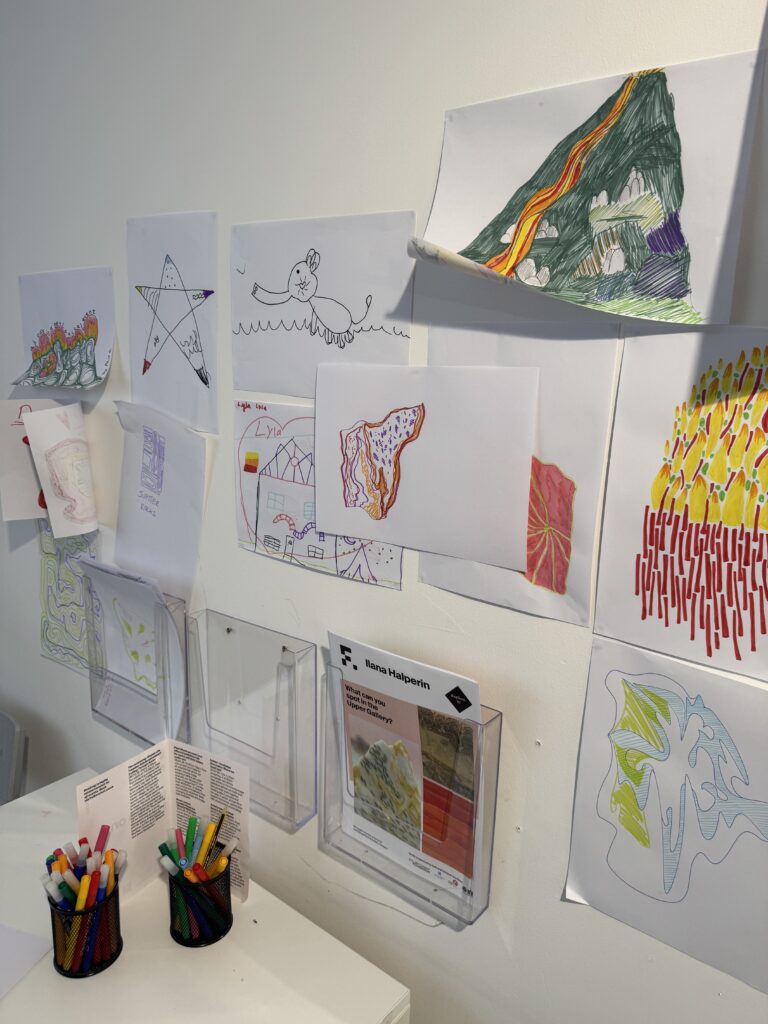
Fig 6 :Audience Interaction Area

In my personal curatorial project, the female body is a central theme, involving female anxiety, social conditioning, and the experience of being looked at.As Simone de Beauvoir pointed out: “One is not born, but rather becomes, a woman” (de Beauvoir, 2023).Halperin’s exhibition emphasizes its temporality and ongoing nature rather than visual impact. I can reinforce the temporal dimension through art installations in the exhibition that feature looping videos, slow-moving elements, and repetitive motions. In selecting artworks, rather than directly expressing emotions, I can use the slow accumulation of everyday elements to metaphorically represent pressure, and through material transformations and repetitive installations, give tangible form to this invisible state. In the gallery’s spatial design, I can incorporate accumulative materials, such as wrapped textiles, so that the space itself embodies a state of accumulated pressure; this approach transforms abstract emotions into perceptible physical entities. The Notes Zone at the end of the exhibition features stickers and visitor messages posted on a semi-transparent wall. The layering of paper reflects the accumulation of time, corresponding to Halperin’s concept of “accumulation” and transforming emotions into a tangible visual structure.

References

Lippard, Lucy R., ed. Six years: the dematerialization of the art object from 1966 to 1972. Vol. 364. Univ of California Press, 1997.

De Beauvoir, Simone. “The second sex.” In Social theory re-wired, pp. 346-354. Routledge, 2023.



Week 9 :Reflexions and Insights from the Course——Turning accessibility into the curatorial structure itself

Reflexions and Insights from the Course

By studying the concept of “Access-centered Practice” (Fazeli and MacBride, 2025) through course content and reading materials, as Fazeli and MacBride suggest, it is not merely about considering the so-called normal audience. Access is not an additional service but the starting point of curation. We need to actively break the preconception of the “normal” audience and proactively pay attention to how audiences with different physical, cognitive, and emotional conditions participate in curation, providing multi-sensory and multi-rhythmic experiences. From the perspective of Anti-ableism, it is not only an ethical stance but also a specific spatial design strategy. It opposes exhibition designs based on the “normal body/cognition” standard, such as assuming that all visitors can stand to view the exhibition or understand complex texts, and incorporates diverse audiences into our considerations. In our own exhibitions, we can implement access designs, such as setting up reading areas, adding carpets to enhance touch and sound, providing mirrors to increase interactivity, and enabling multi-sensory participation through touch and physical engagement beyond visual perception. Access is also part of the spatial structure design, and we can provide sufficient seating, clear viewing paths, accessible entrance, and low-stimulation areas in the exhibition to ensure that visitors receive respect and a comfortable viewing experience.

The “Means Without Ends” concept describes an exhibition not as a pursuit of a final outcome but as an ongoing process, where the process itself is more significant than the result. An exhibition is not a static, one-off product but a dynamic process involving the curator, the audience, and others that continuously evolves. Therefore, in my personal exhibitions, the feedback and emotional expressions of the audience have also become part of the exhibition content. At the end of the exhibition, a message board for the audience was set up. As the audience flows in and participates, the content on the message board is constantly added to and changes, demonstrating the exhibition’s continuity through audience interaction. “Disability time is not about making the bodies and minds of people with disabilities adapt to time, but about making time adapt to the bodies and minds of people with disabilities (Samuels, 2017).” The exhibition aligns with the concept of “crip time,” allowing slow, non-linear engagement with invisible emotional experiences. The exhibition refuses to transform women’s experiences into consumable stories, but instead invites the audience to think together and establish a deeper connection.

Through studying the course material and reflecting on it, it became clear that exhibitions are not merely about displaying content; they should also consider how different people engage with and experience them. An exhibition is not a fixed outcome, but rather an ongoing process of development shaped together by curators and audiences.

Through the study of Disability Arts Online’s online gallery in class, it is not just an ordinary online exhibition hall; it is an exhibition hall designed for people with “different bodies and cognitive methods” to experience. “Access is embedded, not added.” The exhibition also includes visual paths, auditory paths, and simplified reading paths. Its related curatorial methods can be integrated into my personal curatorial content: adding audio guides, sign language videos, spatial browsing, introduction of the works (descriptions of the works/feelings of the atmosphere/emotions of the artist background information…), combined with visual descriptions, for multi-sensory narration; through easy-read text to provide a simple introduction of the works, providing one sentence of information, along with suggested illustrations, to make it easy for the audience to understand the content of the works at a glance. Through the exhibition, accessibility is transformed from an additional service to the curatorial structure itself.

Link:  Audio guide text

References

Taraneh Fazeli, and Cannach MacBride. “MEANS WITHOUT ENDS: LEARNING HOW TO LIVE OTHERWISE THROUGH ACCESS-CENTERED PRACTICE.” In As for Protocols, edited by Re’al Christian, Carin Kuoni, and Eriola Pira, 120. Amherst College Press, 2025.

Samuels, E., 2017. Six ways of looking at crip time. Disability studies quarterly, 37(3).

I need to be more than a lesson you learned


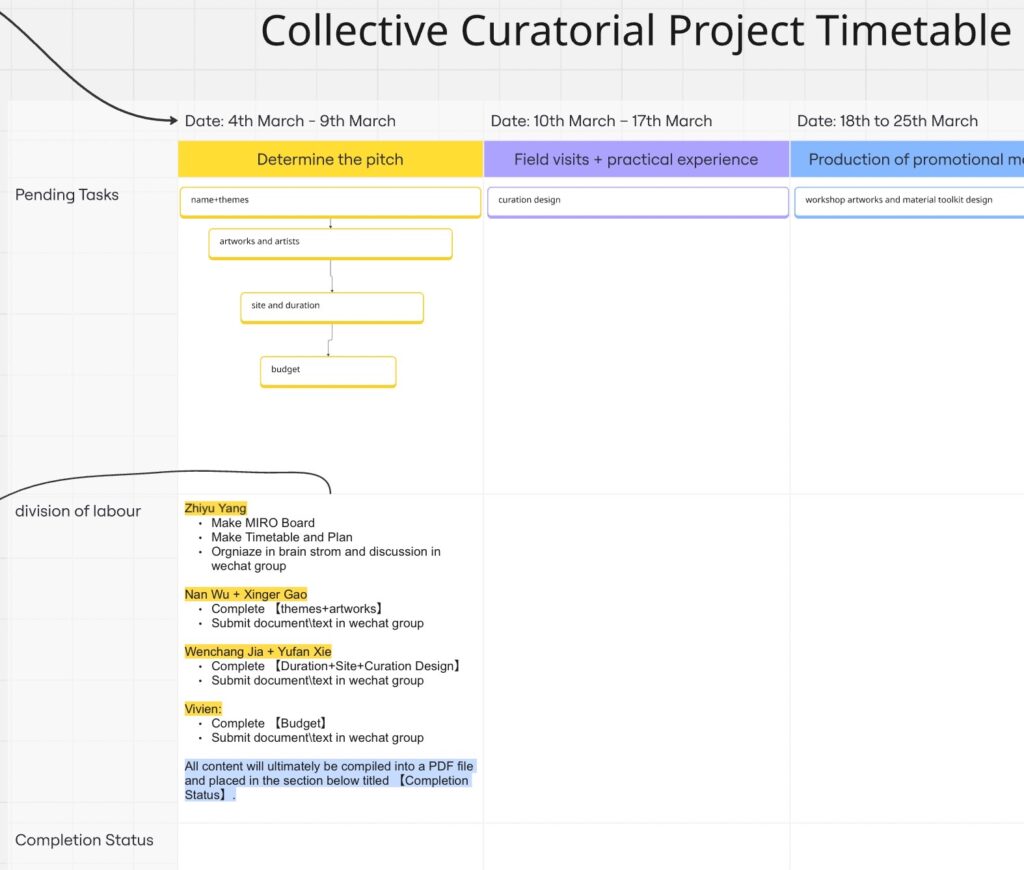
Week 8 :Staged Summary of Curatorial Work and Reflections on Course Content

Stage Summary and Reflections on This Week’s Curatorial Work

The key focus of this week’s collective exhibition planning was centered around deepening the content of the group exhibition, determining the artworks to be exhibited, conducting on-site inspections of the exhibition space and planning the layout of the works. At the same time, the preliminary calculation of the exhibition budget and the systematic organization of the artists’ information for the exhibition were completed. This stage of work marks the gradual transition of the project from the initial concept planning to the implementation stage, creating a real connection between the curatorial concept and the actual space, and laying the foundation for the subsequent work process.This is a dynamic process that continuously evolves from concept to practice (O’Neill,2016).

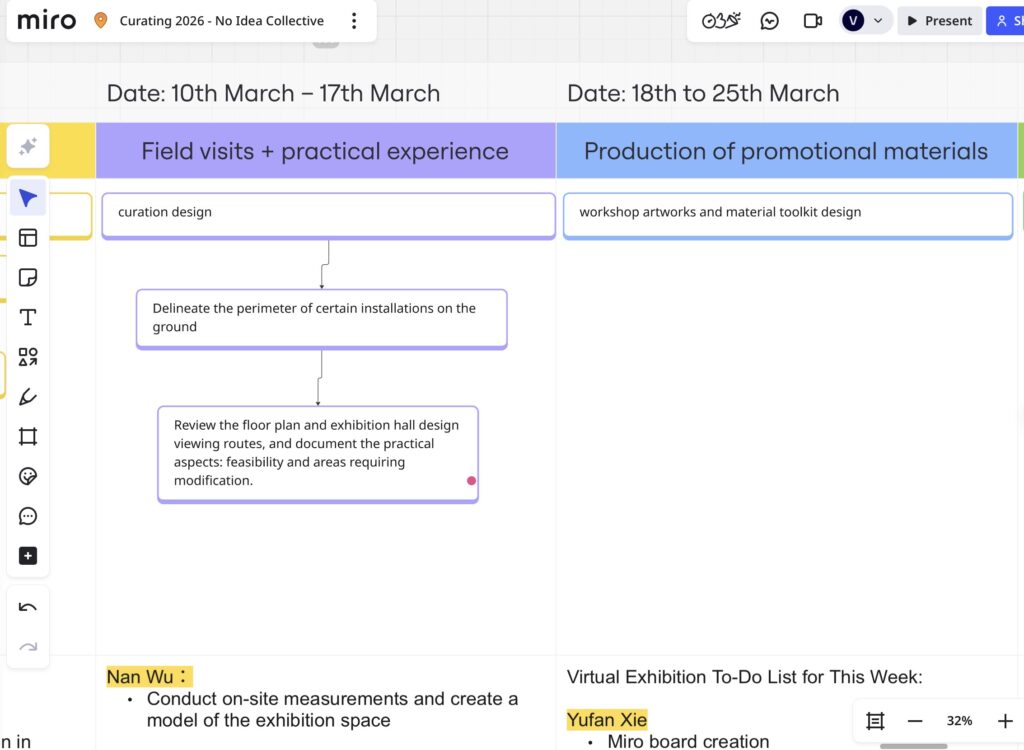
Fig 1:Schedule of Events Related to the Collective Curatorial Project

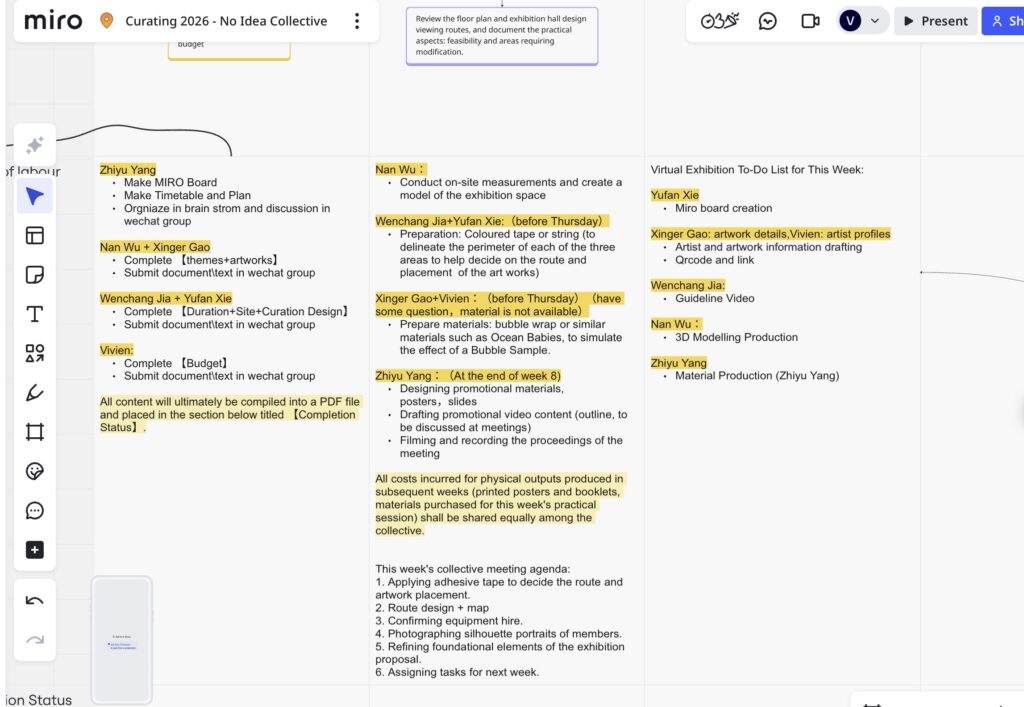
Fig 2 :Division of Tasks for the Collective Curatorial Project

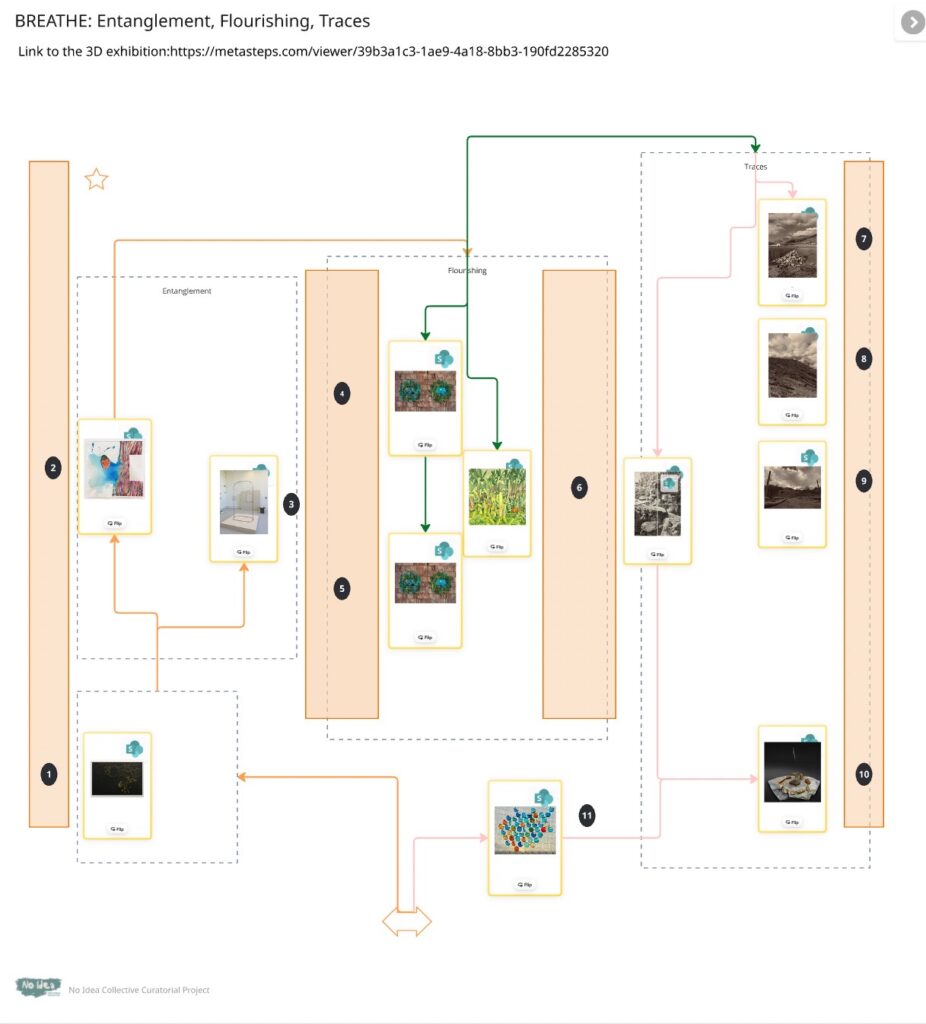
At the level of exhibition content, this week we further refined and improved the overall narrative structure of the exhibition. The exhibition focuses on the core topic of “Life Force and Natural Systems”, and constructs three progressive exhibition chapters through spatial narration: Rhythm – Entanglement – Renewal. The video and art installations in the entrance area mainly guide the audience to pay attention to the most basic rhythms and changes of life, such as microscopic life activities and changes in the natural environment, thereby establishing a state of perception of the natural system; in the middle section of the exhibition, by emphasizing the symbiotic relationship and ecological interaction among different life forms, the audience is guided to shift from observing nature to understanding the complex ecological network; in the final space of the exhibition, the works mainly focus on time, environmental changes, and the impact of human activities on the natural system, guiding the audience to think about the impact of human activities on nature and the possibility of the future relationship between humans and nature.

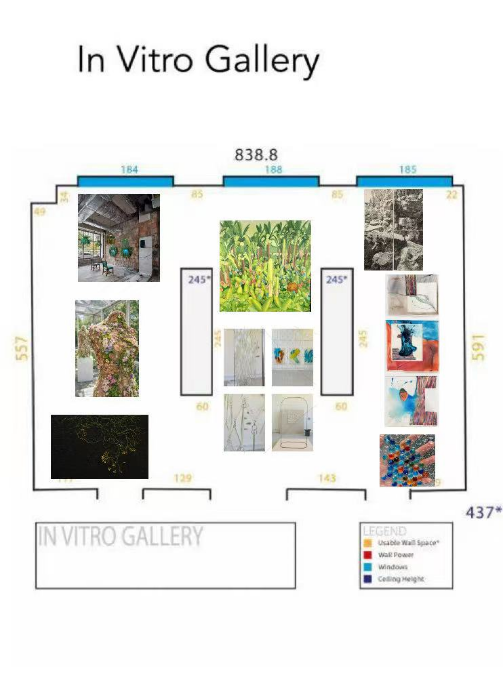
Fig 3 :Layout of Artworks at the Exhibition Entrance

Fig 4 :Measurements and placement of related artworks

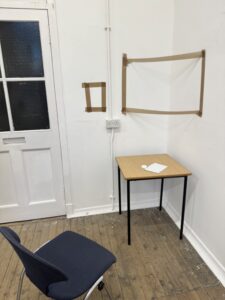
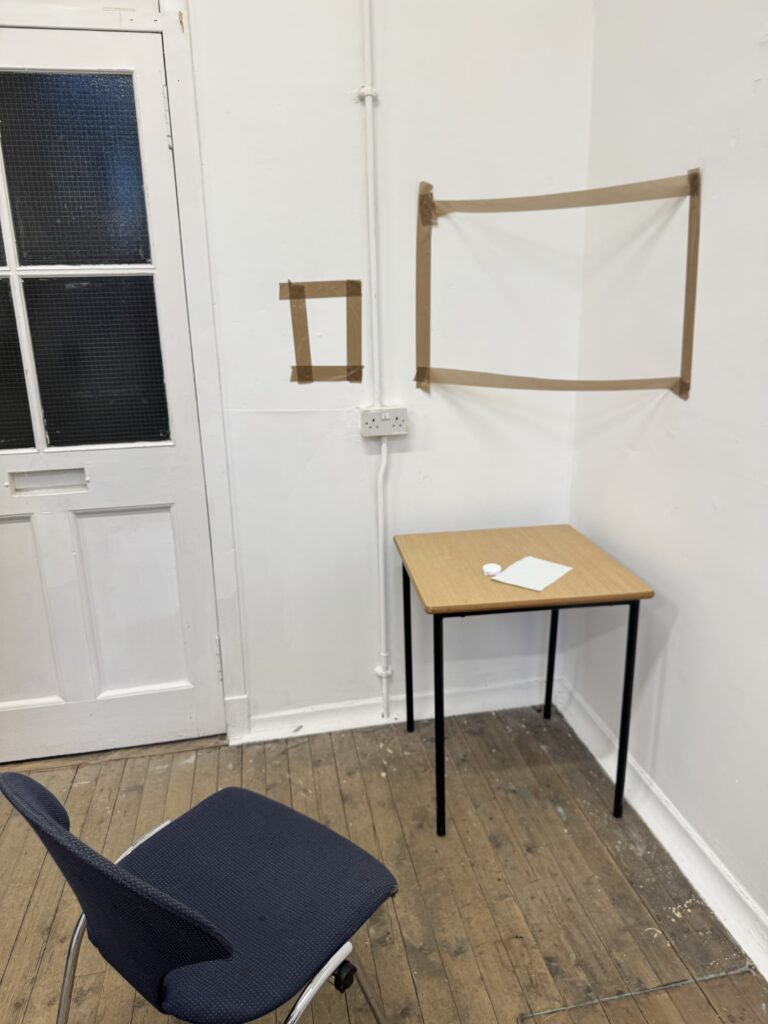
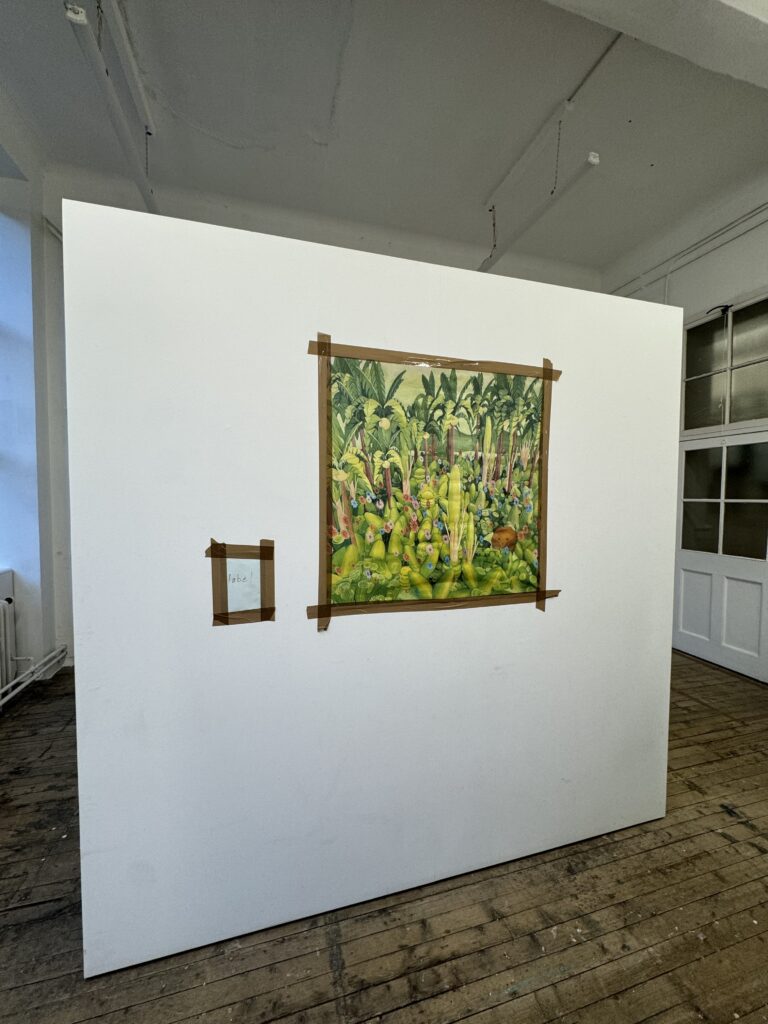
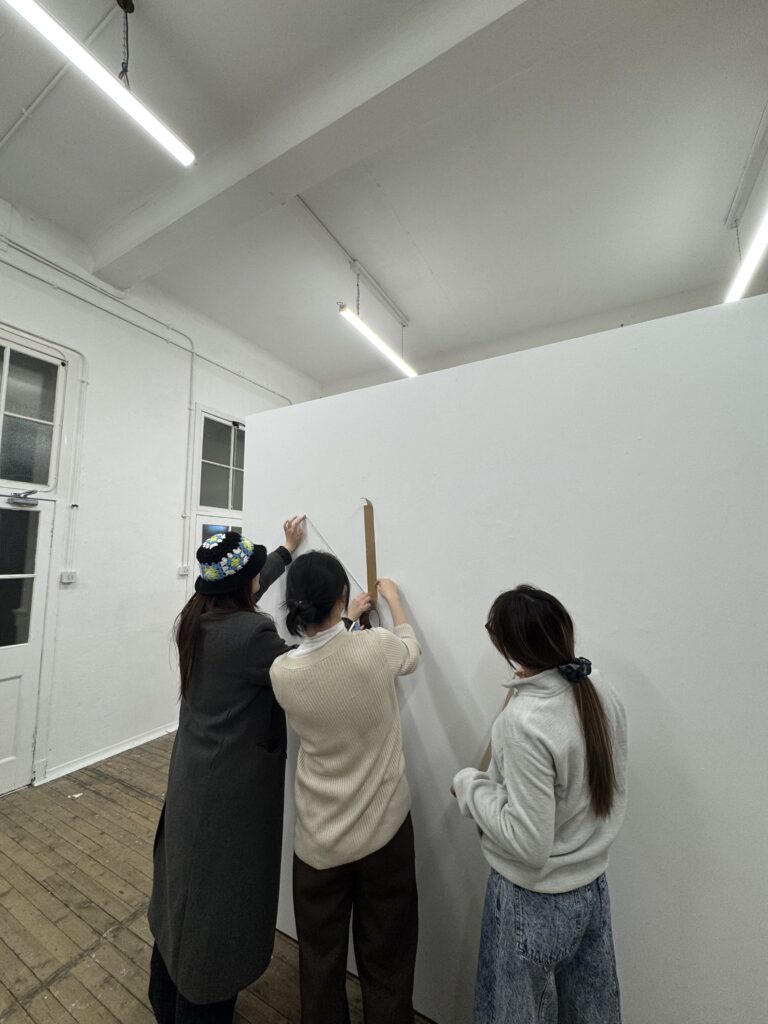
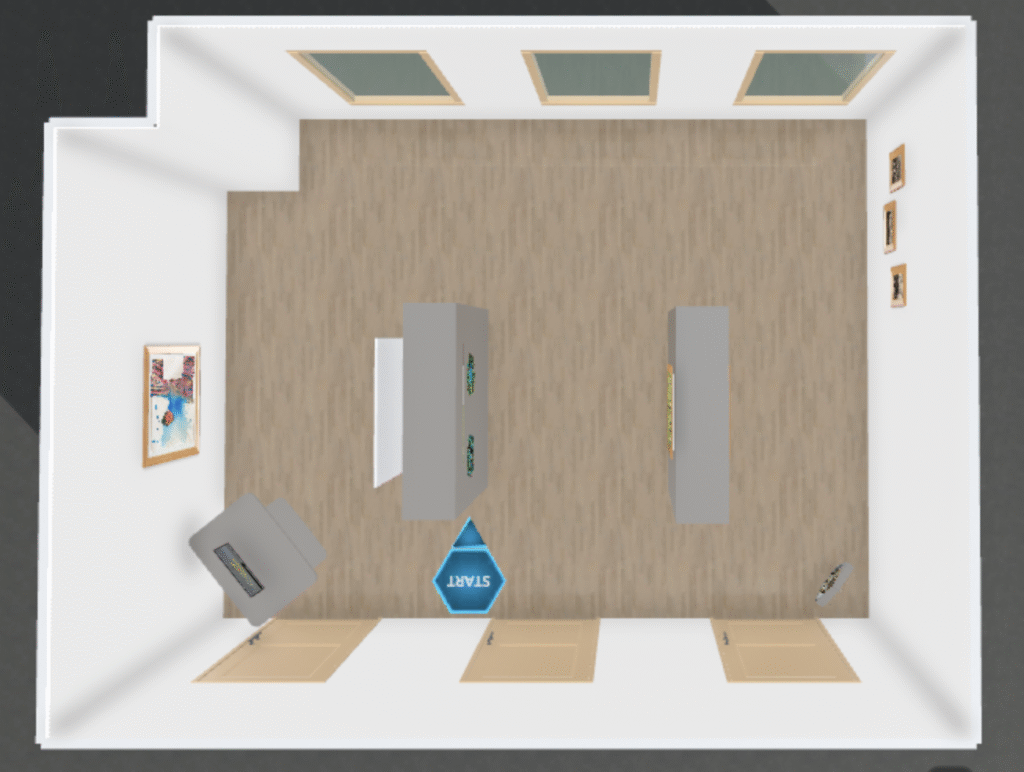
After the content framework became clearer, the group members went to Summer Hall for a field study on Thursday and made preliminary plans and size measurements for the placement of all the works. By actually entering the exhibition hall environment, they recorded and analyzed the wall dimensions, spatial flow, distances between the works, and the possible viewing paths of the audience. This practical process made me realize that curating is not merely the design of theoretical narrative structures, but rather a highly space-dependent practical work. Many painting works and art installations seem to be arranged reasonably on the floor plan, but in the actual exhibition space, they need to be re-adjusted. For example, larger art installations require a larger viewing distance visually, and their placement will affect the organization of the overall flow. These details can only be truly understood after the field study.

Fig 5 :Measuring and positioning artworks on-site

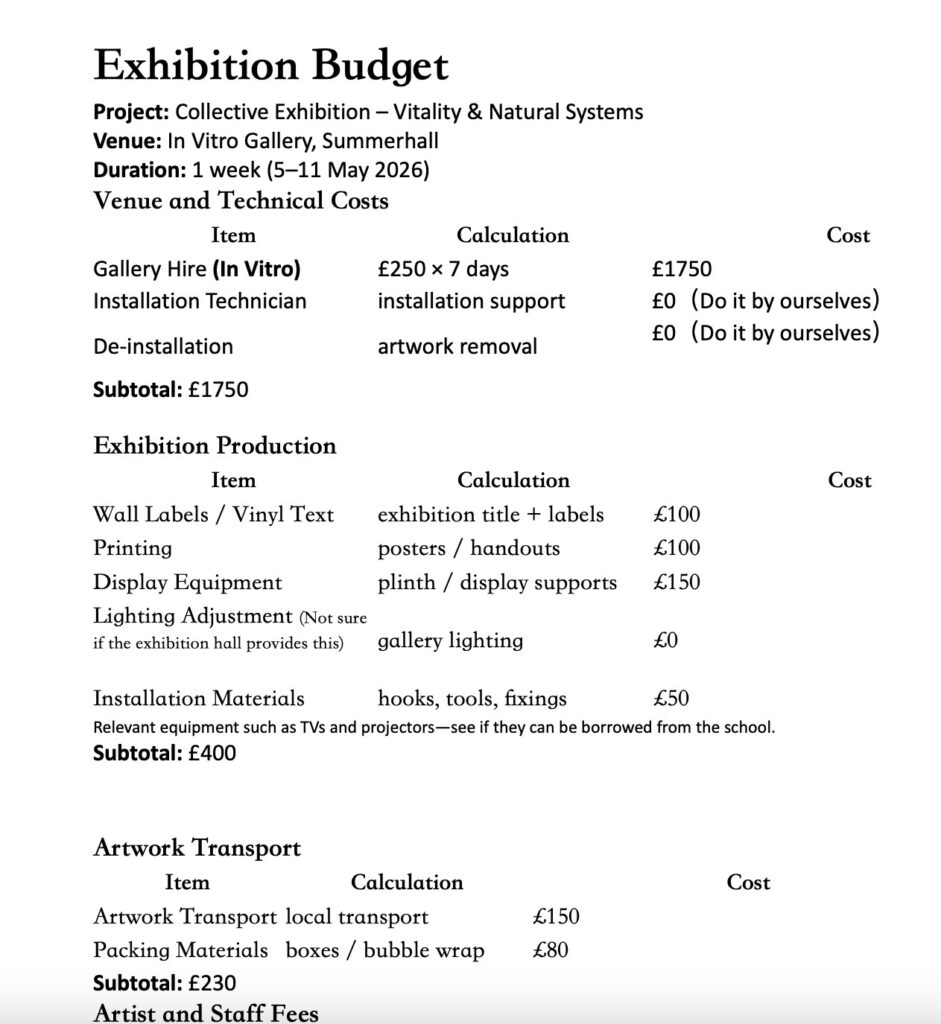
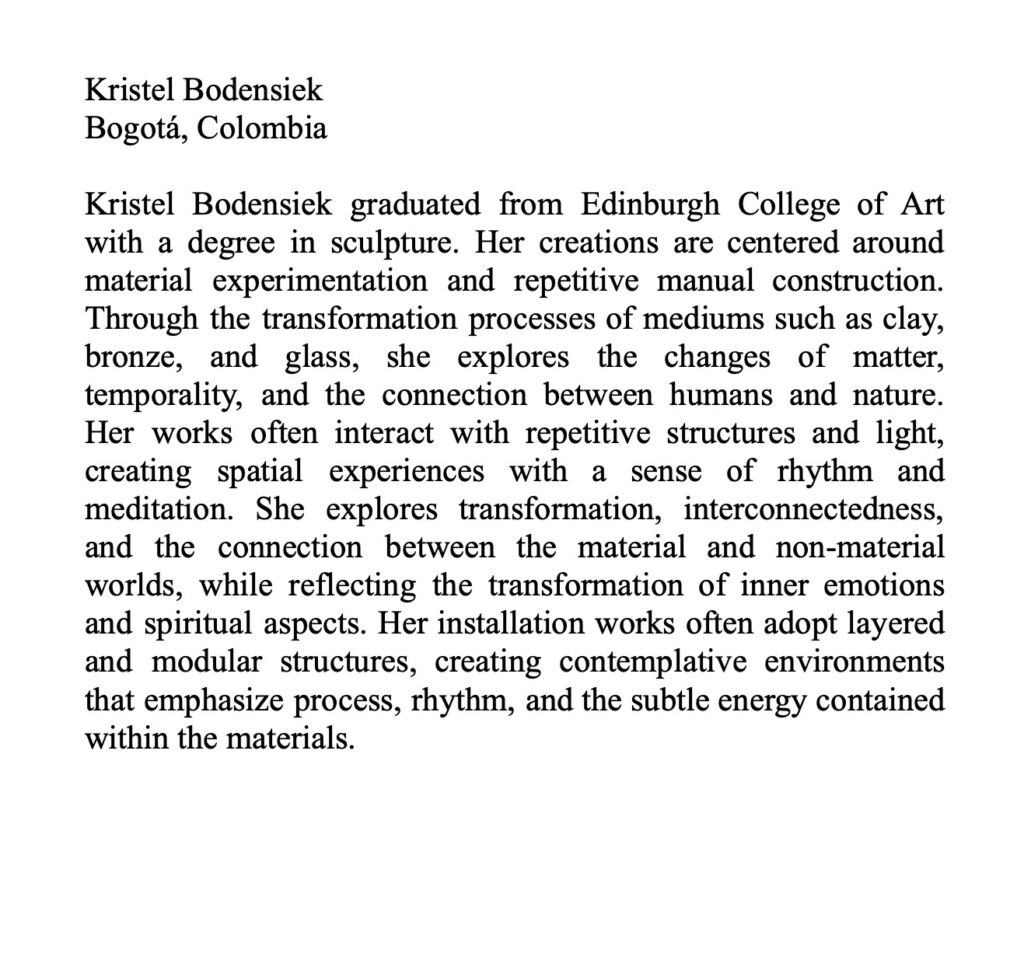
This week, my main tasks also included the preliminary calculation of the exhibition budget and the compilation of the background information of the artists, which was used for describing the content of the exhibition signs.

Fig 6 :A partial screenshot of the budget spreadsheet for the collective curatorial project

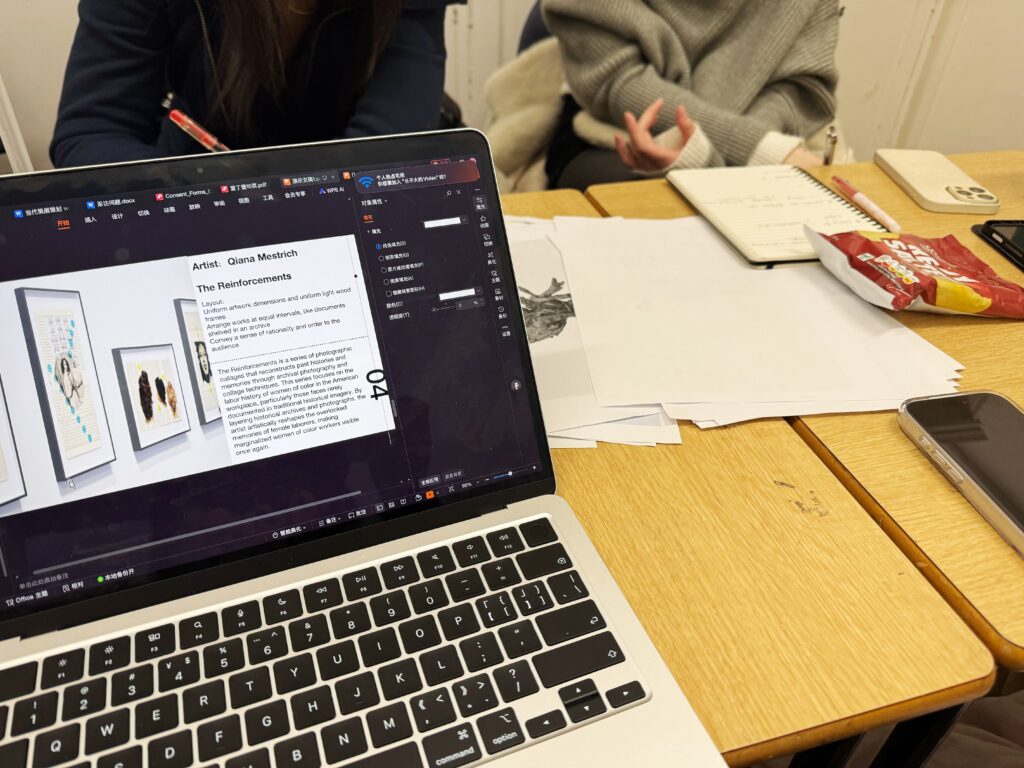
Fig 7 : Screenshot of the artist profiles section from the collective curatorial project

Fig 8 : MIRO BOARD – BREATHE ROUTE

Fig 9 : 3D Exhibition Model of a Group Project, Viewed from Above

Link:


Reflections on Course Content

Through the classroom content, the concept of “archival impulse” (Foster,2004) was learned. Foster proposed that many contemporary artists exhibit a “archival impulse”, artists will investigate and collect past events and cultural materials, and through a subjective approach, recombine fragmented information and present these historical facts in an artistic form. Foster emphasized that archives are not neutral; any archival system involves selection and exclusion. Therefore, when artists use archival materials, they are actually challenging the existing historical narratives and attempting to redefine which stories are worthy of being remembered. They restructure the archives.

For my own curatorial project, an exhibition about contemporary female anxiety, the exhibition mainly takes a feminist perspective and presents the continuous pressure that women face under the social structure and cultural expectations through photographic, installation art, video and other artistic works. From the perspective of “archival impulse”, the artist’s works are not recording grand historical events, but capturing the subtle moments in daily life. When these works are placed in the same exhibition space, they give these works new meanings. They form a “visual archive” about female emotions and social structures.


References

O’Neill, Paul. The Culture of Curating and the Curating of Culture (s). Mit Press, 2016.

Foster, Hal. “An archival impulse.” October 110 (2004): 3-22.


Week 7: Group Curatorial Proposal Development and Appreciation of Nature-Related Artworks

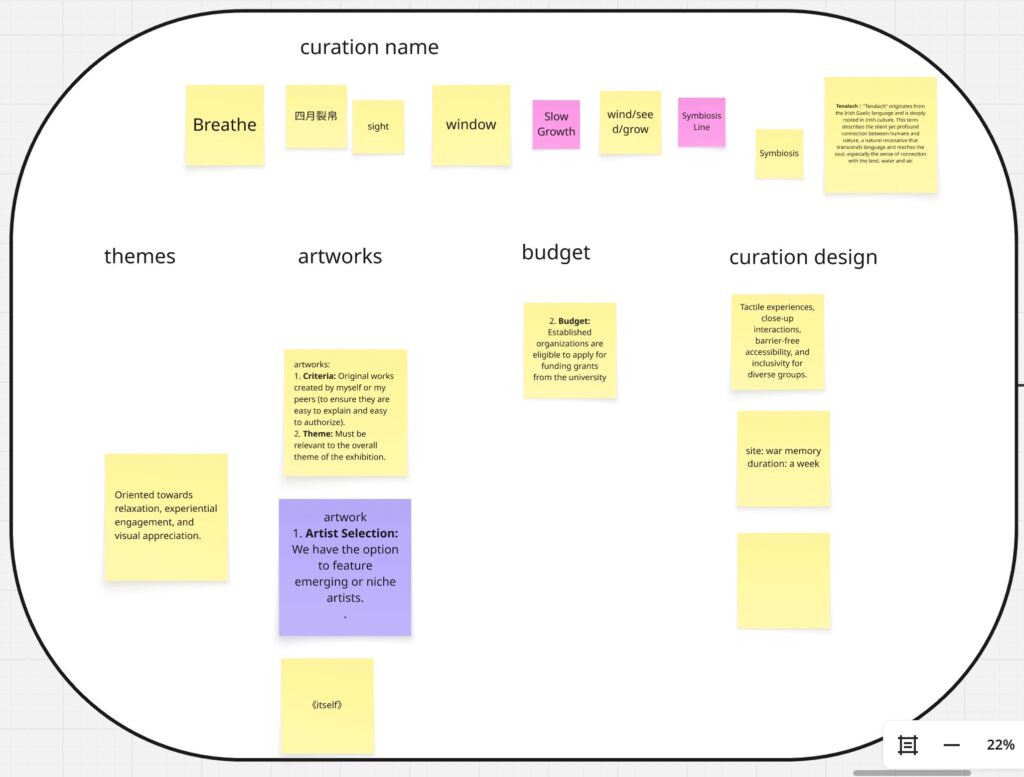
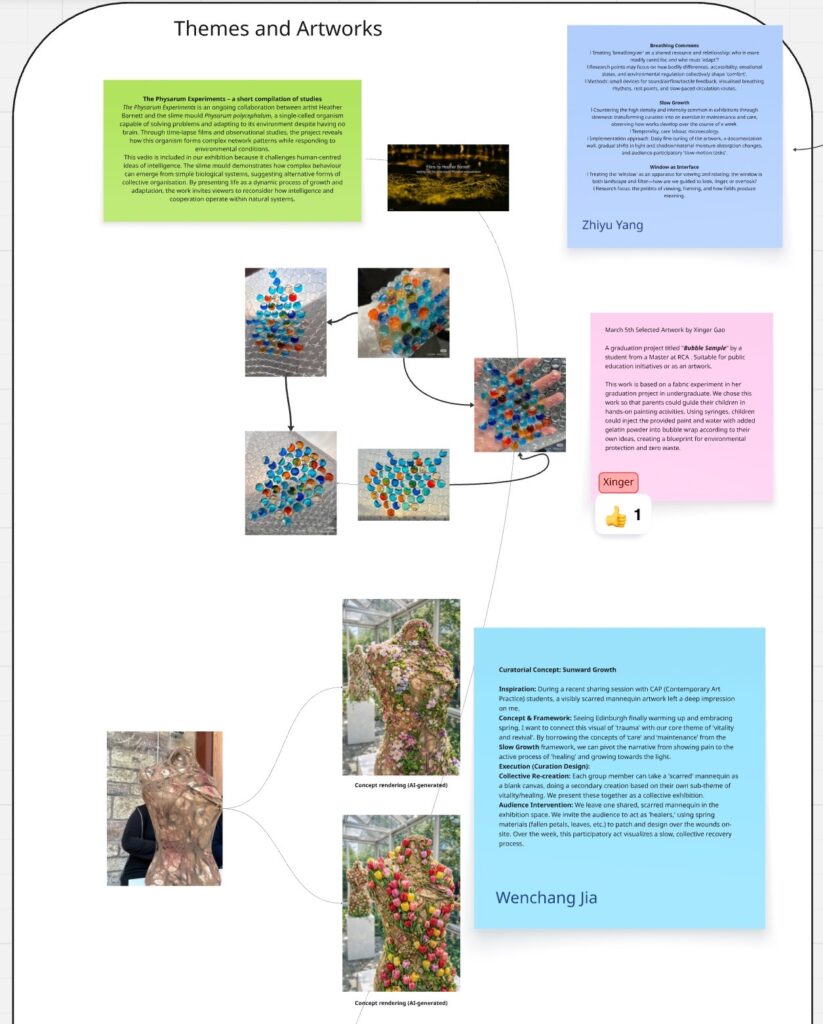
Group Curatorial Brainstorming Session

Exhibition Duration: One Week

Curatorial Focus: Vitality / Lightness / Nature / Renewal / Slowness / Symbiosis

Treating breath and air as shared resources and relationships, air flows through the space, connecting states between humans and nature, environment and emotion.This idea resonates with Timothy Morton’s concept of ecological interconnectedness (Morton,2010).

The exhibition aims to pose the question: Who feels more comfortable in a space, and who must constantly adapt to it? By focusing on bodily differences, accessibility, emotional regulation, and environment, the exhibition space is transformed into a perceptible, adjustable respiratory system, inviting visitors to interact with the works in a more relaxed and immersive way.

Artistic Forms: Breathing rhythm visualization installations / Video / Visual perception installations / Painting, etc.

Features: Low-density display / Tactile experiences / Close-range interaction / Accessibility facilities / Inclusive design for diverse groups (e.g., multi-level displays, wheelchair-accessible pathways, accessible restrooms)

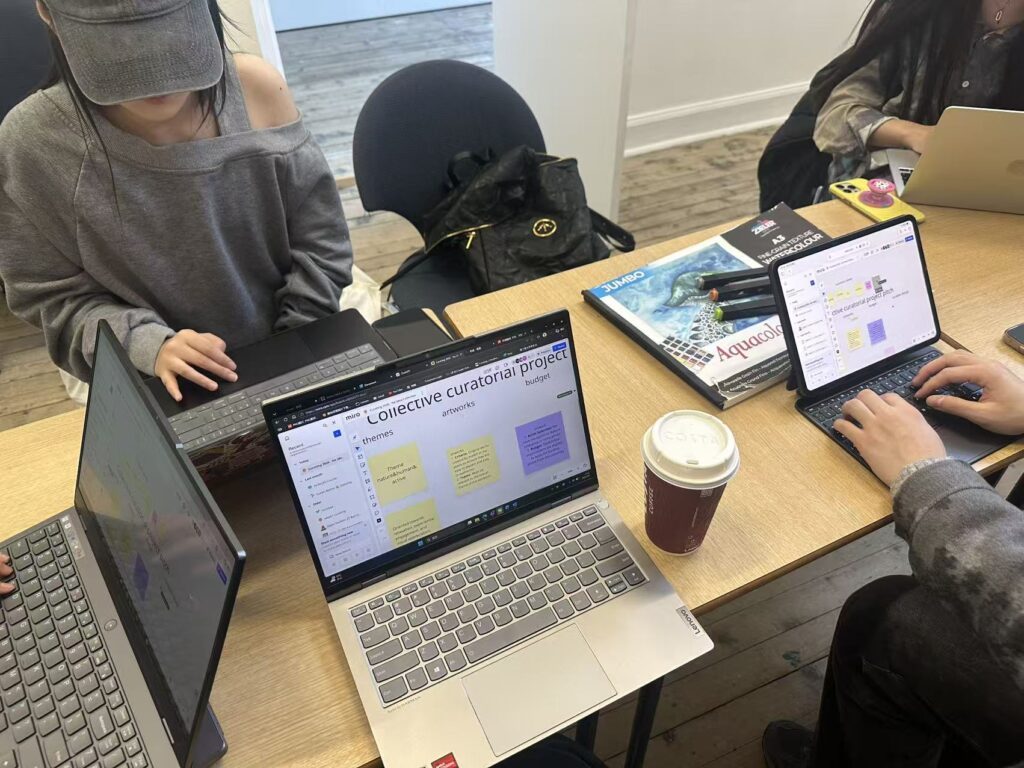
Fig 1 :Group members determine the curatorial theme

Fig 2 :Role Assignment Among Team Members

Slow Growth adopt slowness as a curatorial strategy, focusing on its temporality, care labor, and micro-ecosystems.“As  a  means  of  conceptual  output,  art  curation  can  play  a  significant  role  in  promoting  coexistence  among  multiple  species  within  ecosystems  and  reconstructing  the  relationship  between  humans  and  non-humans(Zou,2025). ”This approach manifests through adjustments to artworks or installations, documentation walls (recording exhibition changes and audience feedback), and materials that change over time (such as installations exhibiting changes in light, shadow, humidity, etc.).

The exhibition space is organized linearly, connecting distinct works and spatial points. This linearity also symbolizes relationships between different forms of life—such as human movement, plant growth, tidal fluctuations, and more. Visitors can progressively explore the exhibition along this path.

In selecting works, due to budget constraints, we may prioritize pieces created by group members, classmates, or emerging artists. This approach ensures we can secure permissions for the works within a reasonable budget, making exhibition setup and communication more convenient. As the exhibition emphasizes interactivity and sensory experiences, we aim to incorporate works that engage tactile, auditory, visual, or spatial participation.Organized by a student team, this exhibition may seek funding support from the university. Resources will primarily cover basic decorative materials, lighting and sound equipment, projection systems, exhibition design materials, and related expenses.

Fig 3 :Selection of Artworks by Group Members

Group Work Records and Exhibition Space Design:

Fig 4 :Site Visit for the Exhibition

Fig 5 :Site Visit for the Exhibition

Fig 6 :Concepts for Curating and Arranging Artworks

Fig 7 :In-person group meeting


Appreciation of Nature-Related Artworks

Artist: Kristel Bodensiek (University of Edinburgh student)

Title: Tide and Temper

Material: Glass and Steel

Size: 130 × 230 × 70 cm

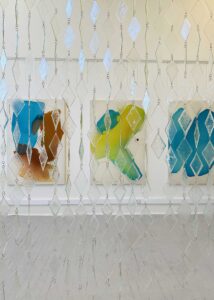
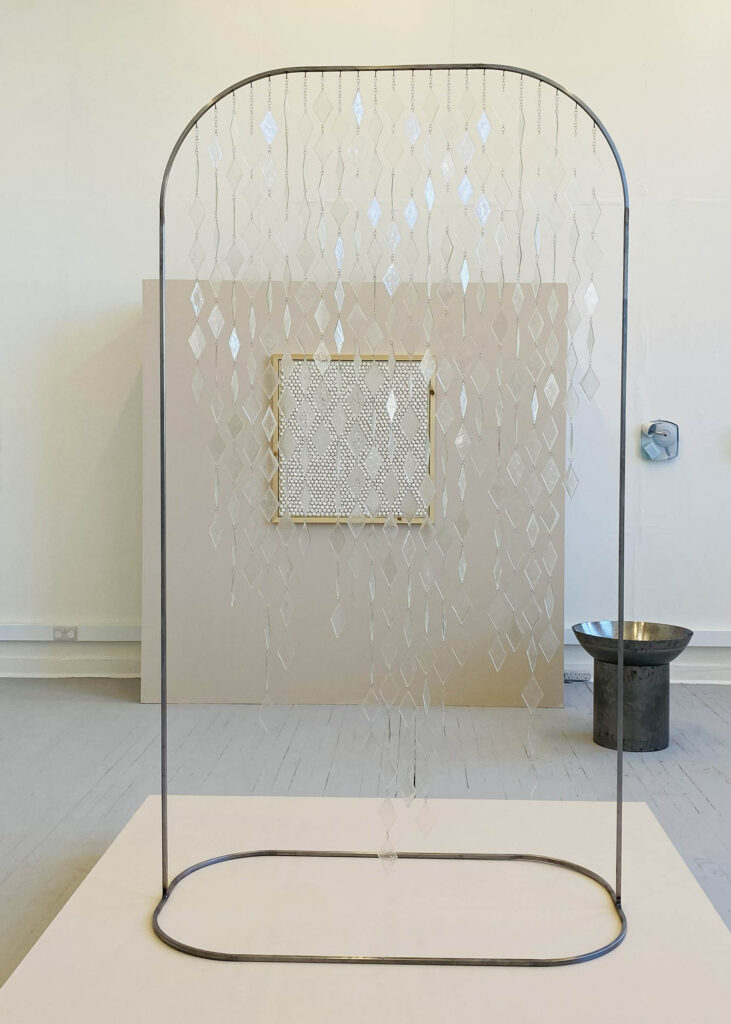
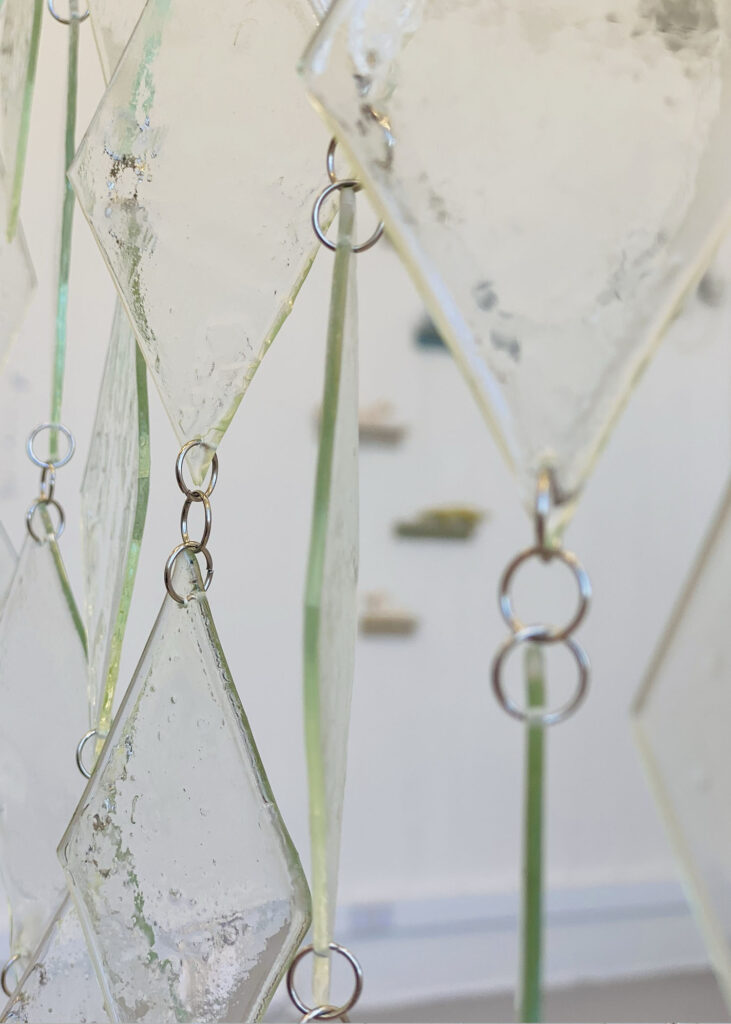
Composed of over 300 glass fragments, the work is hand-assembled into a suspended structure using steel rings. The glass was fired at temperatures exceeding 1000°C, creating softened edges and a crystalline surface texture. Tide and Temper explores the subtle relationship between humanity and nature: nature is not merely an external landscape but an experience that can be reimagined through materials, light, and space.

Inspired by the calming effect of rain and waterfalls on the human mind, the artist selected glass as a material symbolizing nature’s transformative processes. Repeating glass elements form a rain-curtain-like structure. As viewers move through the installation, light reflects and refracts off the glass surfaces, creating ever-shifting visual effects.Rather than directly recreating natural landscapes, the work simulates nature’s rhythms and states through material and spatial experience, this allows visitors to rediscover the rhythms and tranquility of natural phenomena within the exhibition space.

Fig 8 :Artwork—Tide and Temper

Fig 9 :Close-up of the artwork


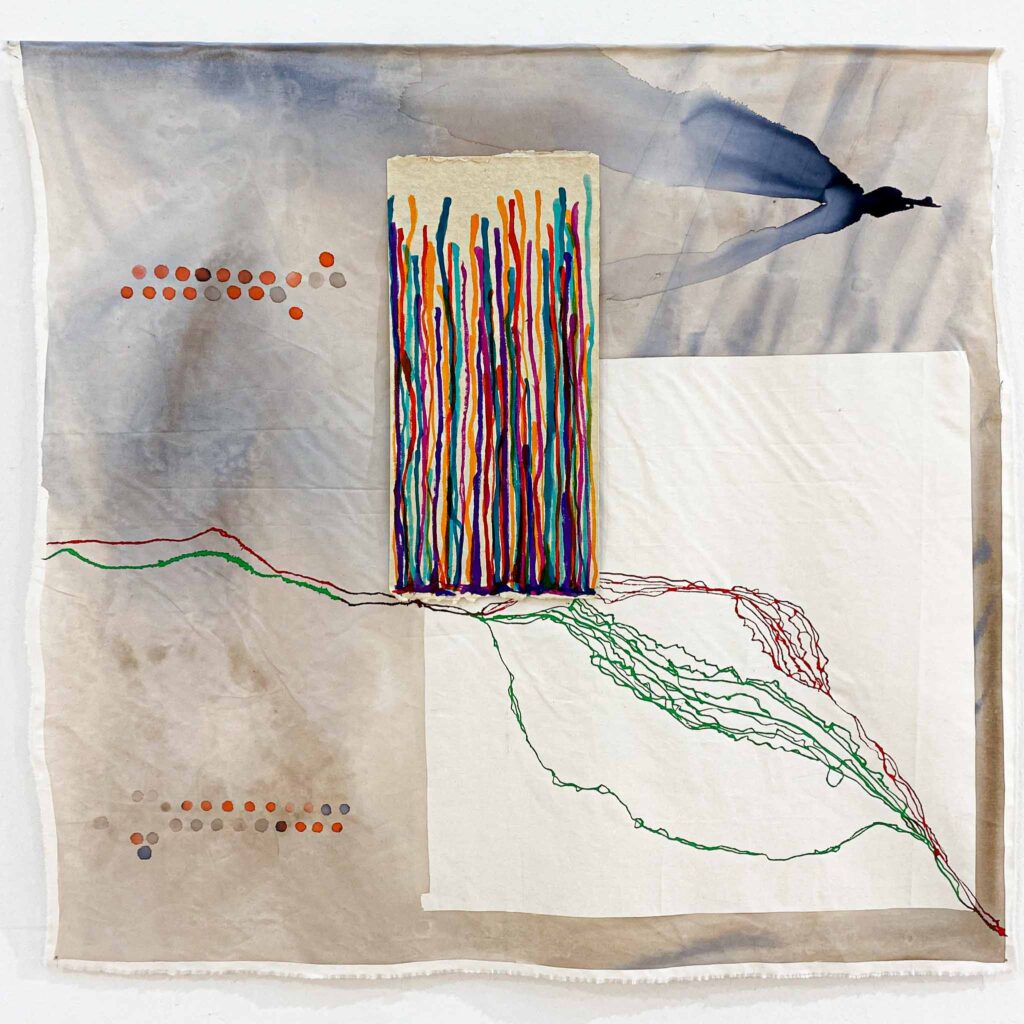
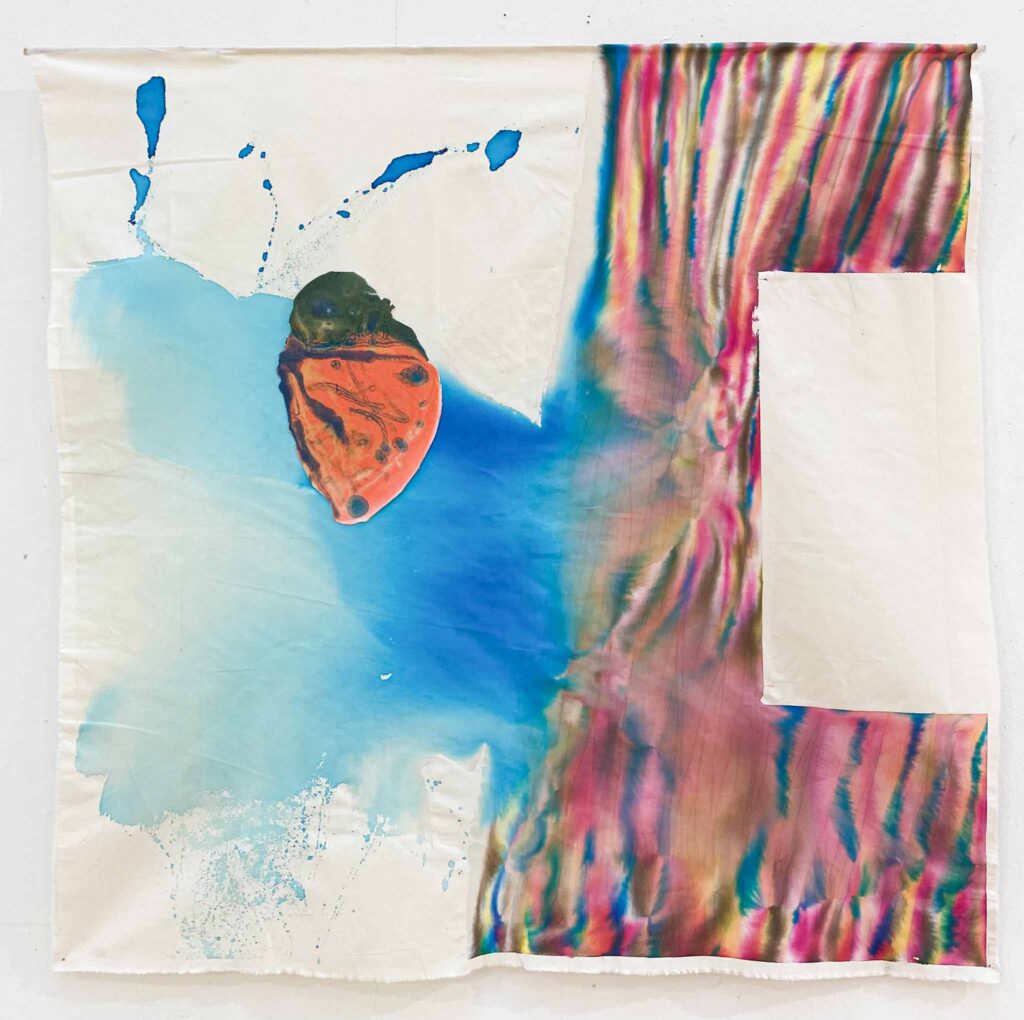
Annabelle Pelaez (University of Edinburgh student) focuses her work on landscapes and natural details. She pays special attention to often-overlooked tiny elements in nature, such as ripples on water surfaces, insect traces on leaves, and the fleeting moment when raindrops pause on plants. Through painting and mixed media, she seeks to transform these microscopic natural phenomena into visual imagery, thereby reawakening viewers’ awareness of the natural environment.

Through microscopic observation, the artist gains a new perspective on natural landscapes while revealing the impact of human activity on the environment. Her series—including Sandy Wastes, Pools, Melting—typically use ink, acrylic, and mixed media on fabric or paper. Fluid lines and abstract structures depict natural forms like water currents, sedimentary layers, and surface textures. By emphasizing nature’s microscopic life force, she invites viewers to reconnect with the natural world, using abstract imagery to draw attention to overlooked details.

Fig 10 :Annabelle Pelaez, Sandy Wastes, (2025).​ Ink and brush pens on paper and calico.​ 120x120cm.

Fig 11 :Annabelle Pelaez, Melting, (2025).​ Ink, pebeo prisme on paper, on calico.​ 120x120cm.


References

Morton, Timothy. The ecological thought. Harvard University Press, 2010.

Zou, Yuke. “Conversation with Nature: Ecological Consciousness and Expression in Contemporary Art Curating.” Arts, Culture and Language 1, no. 3 (2025).


Week 6: Appreciation of Ema Shin’s Artworks and Group Curatorial Practice

Appreciation of Ema Shin’s Artworks

Ema Shin grew up in a traditional Korean family. Her creation is inspired by gender bias in family culture and the “absence” of records of female family members. Ema Shin’s grandfather has always kept a family tree spanning 32 generations. However, in this genealogy, only the names of male descendants are recorded, and female relatives are completely ignored. Although her mother and grandmother poured countless efforts into the family, their place could not be found in the family tree, and their contribution and existence to the family were erased.“Sexism is perpetuated by institu-tional and social structures; by the individuals who dominate, ex- ploit, or oppress; and by the victims themselves who are socialized to behave in ways that make them act in complicity with the status quo. Male supremacist ideology encourages women to believe we are valueless and obtain value only by relating to or bonding with men(Hooks,2000).”Ema Shin realized the unfairness of it, so she decided to create her own “family tree books” for those unknown women who were not recognized by their families. She also used this artistic work to commemorate those women who were hidden by history.

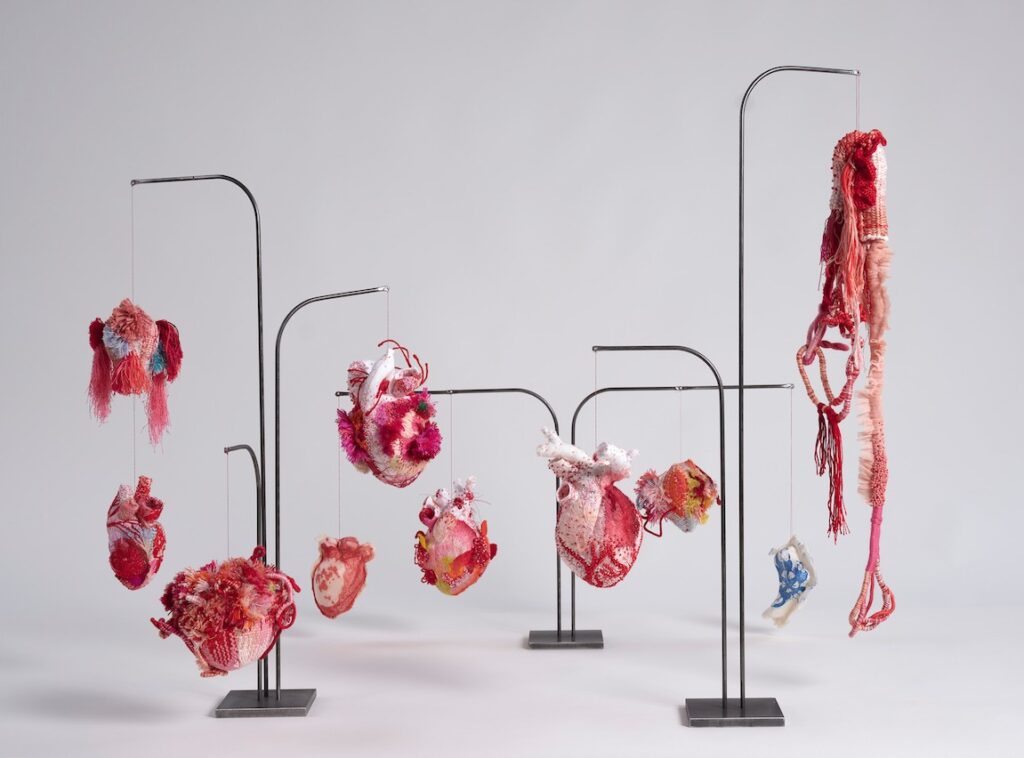
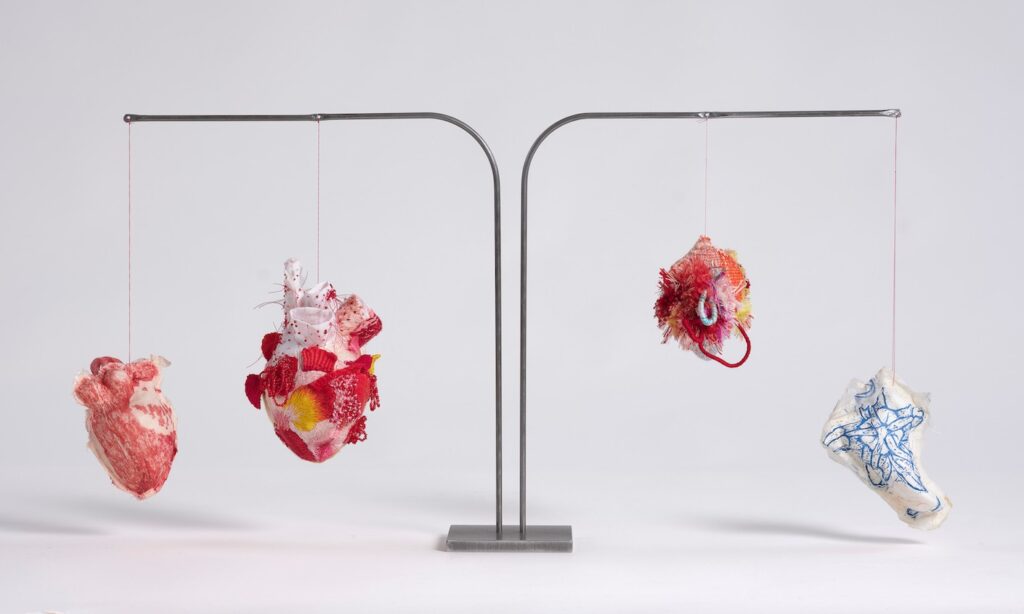
Ema Shin usually takes the female body as the subject of her creations.“Feminist artists reclaimed sewing, weaving, and other so-called trivial women’s crafts as powerful forms of political and aesthetic resistance (Raven,2018) .”Hearts of Absent Women” is a work of art created by her with sewing skills. She weaved many colorful heart-shaped models. She is based on thick felt, with bright red, pink, orange and purple embroidery threads and shiny beads as the main elements. She simulated veins like blood vessels and nerves with loose feathers, curly needles and small beads. Through embroidery and sewing, she built a lifelike heart-shaped model.During the exhibition, some models are directly displayed on the booth, and some are hung up, creating a visual effect of “collective” heartbeat. These “heartbeats”become the family tree of women, a history woven through sewing, and through these models, we commemorate those unknown and unrecognized women, as well as the rebellion against patriarchal families.

Fig 1: Hearts of Absent Women | embroidery, glass, polyester, linen, cotton, wool, hanji paper, lokta paper 70 x 78 x 60 cm (installation) | Image courtesy of the artist | 2021

Shin did not portray a victimized image through her works to criticize this society and express her dissatisfaction with the unequal treatment of the society. Instead, she presented the vitality of women in an active way, transforming absence into existence, and speaking out for the suppressed female voices.

Through the study of Ema Shin’s artworks, I recognized how the artist incorporates traditional women’s crafts—such as sewing and weaving—into her practice, thereby infusing these crafts with new energy. This led me to reflect on my own curatorial work, prompting me to focus on artworks across various media—including traditional crafts, installation art, and video art—to showcase the diversity of women’s creative expression.

Fig 2 : Hearts of Absent Women | embroidery, glass, polyester, linen, cotton, wool, hanji paper, lokta paper 35.5 x 69 x 14cm | Image courtesy of the artist |2021

 Group Curatorial Practice and Discussion

This group conducted a site survey at Edinburgh’s Summer Hall and explored the feasibility of the curatorial content proposed by group members.

Fig 3: Collective Curation Site Selection

Based on Summer Hall’s venue rental rates, the projected budget allows for a five-day exhibition period. If group members select the same exhibition hall, they should ensure their schedules do not overlap.

Considering installation art transportation costs, members whose selected works require special materials (including packing, protective materials, and related expenses) must include round-trip shipping costs in their budgets…

Regarding lighting expenses: If the selected gallery provides basic lighting, only professional lighting supplements are required. (Prioritize borrowing lighting equipment from the university; consider external rentals if insufficient.)

Forms of Artist Participation in Related Works:Artists may pre-record videos introducing their works and creative concepts for exhibition hall playback. This allows artists to avoid in-person attendance, reducing transportation and accommodation costs.

Allow one day for installation (venue cleanup and basic setup/lighting calibration/installation of artworks/testing of video playback equipment, etc.).

Allow one day for dismantling (deinstallation of artworks/venue restoration/return of equipment/summary of installation costs, etc.).

Our team also discussed risks and challenges: Related technical issues/Scheduling conflicts among members/Venue usage time constraints/Potential damage during artwork transportation

Countermeasures: Budget for testing relevant equipment/Develop timelines and backup plans/Reserve emergency funds

Fig 4: Group discussion


References

Hooks, Bell. Feminist theory: From margin to center. Pluto press, 2000.

Raven, Arlene, Cassandra Langer, and Joanna Frueh. Feminist art criticism: An anthology. Routledge, 2018.