Speculative Individual Curatorial Project

1. Peripheral Future: Design Answers Rural

Title: Peripheral Future[1]: Design Answers Rural

Date: 15th August 2026 – 25th August 2026
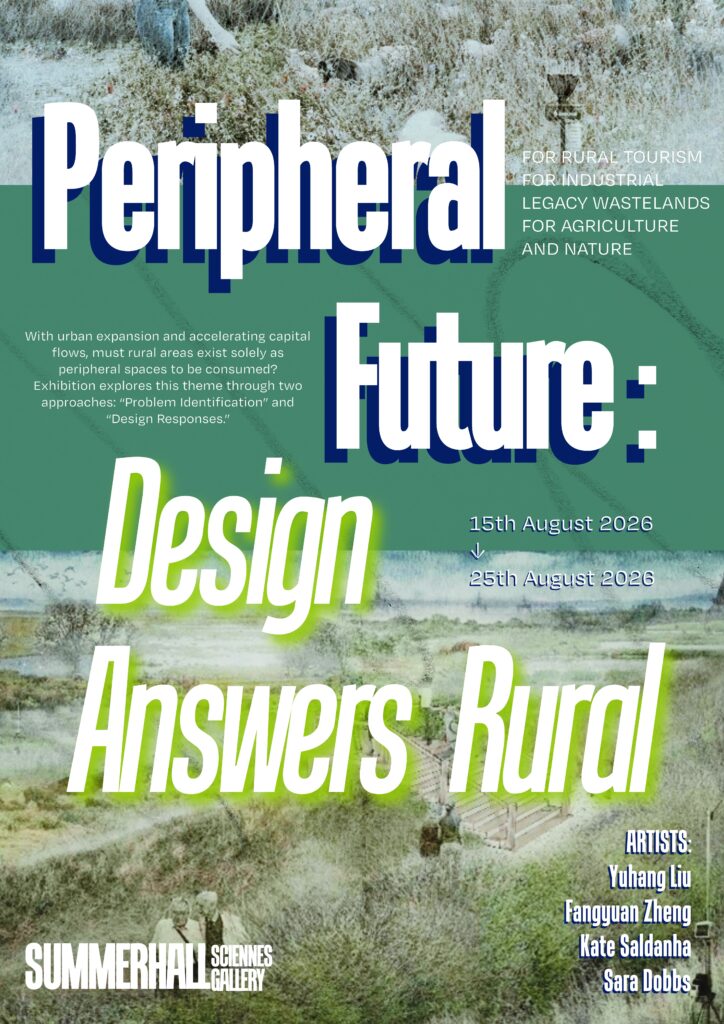
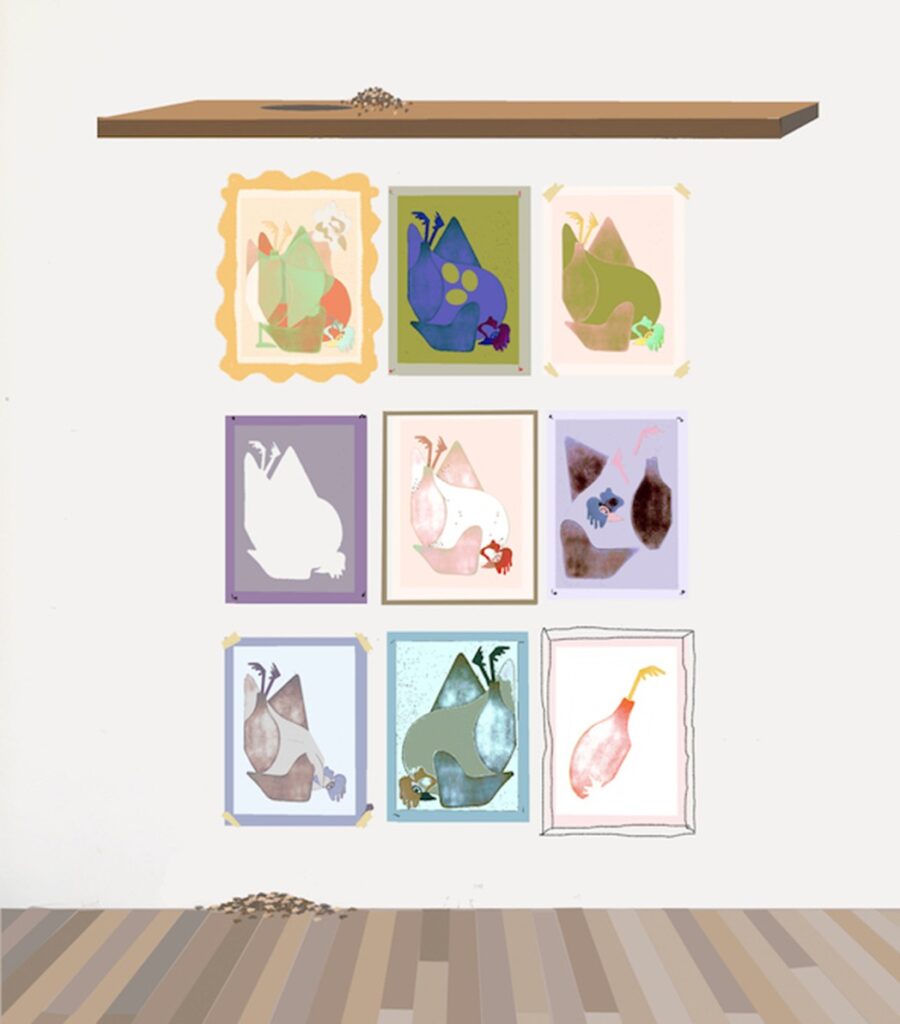
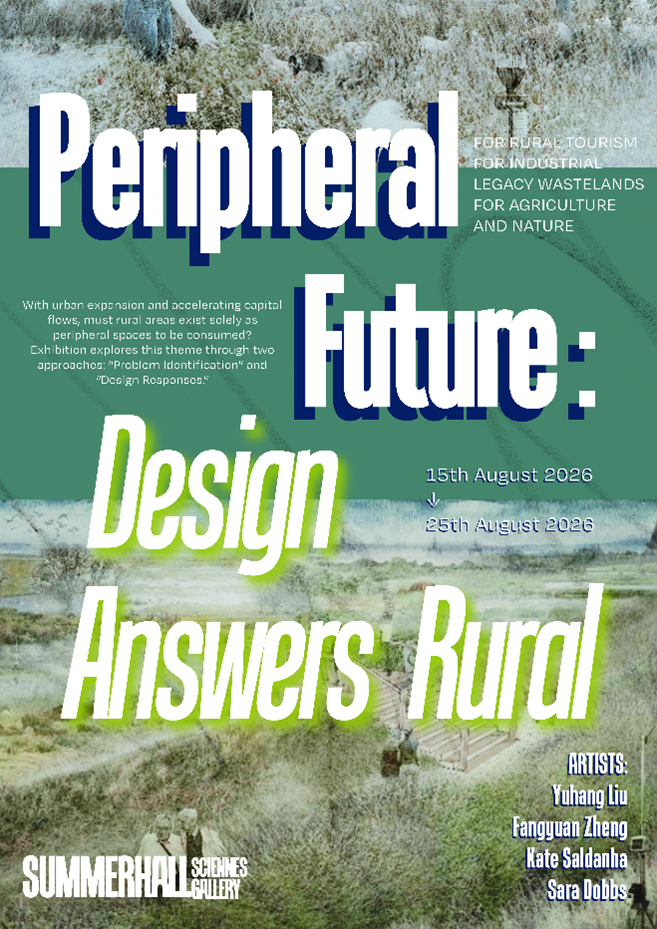
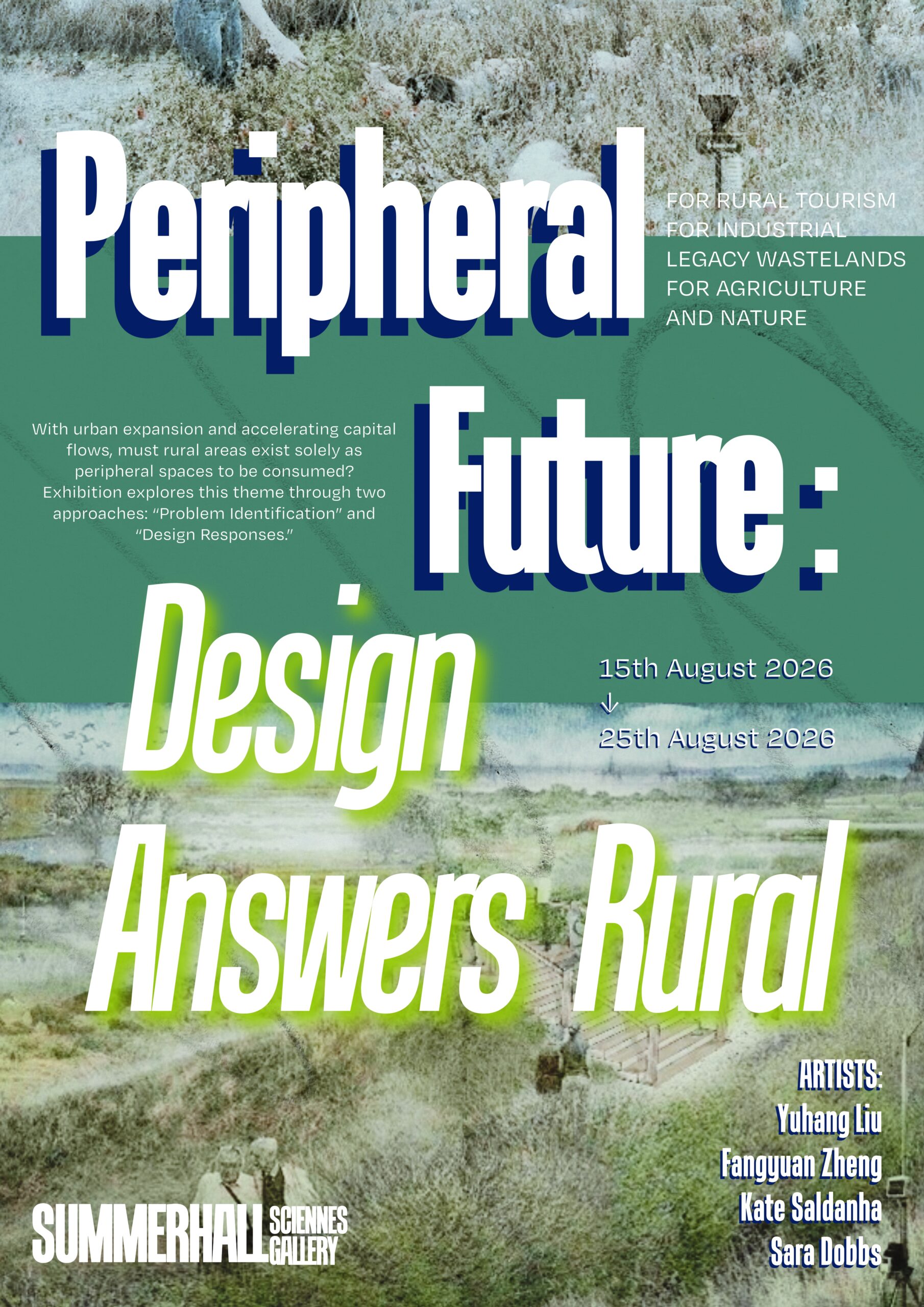
I designed the exhibition poster using Adobe Express.


2. Curatorial Narrative Text (For Publics)

Where are you all coming from to see this exhibition? Most of you are probably residents of Edinburgh. I’m sure many of you have visited the villages surrounding the city more or less. Or perhaps your hometowns are in these peripheral areas, relative to the central areas. Some of you view these rural areas as leisure destinations to escape the monotony city life, as places to witness natural wonders, or as agricultural regions that provide you with daily necessities[2]. As for the rest of you who have come to Edinburgh from the villages, have you compared the development of the city’s and the countryside’s pillar industries? Have you reflected on issues related to immigration and education for newcomers?


Now, I’d like to ask all of you to think about a few questions: Do industries in village truly serve the local residents, or are they primarily serving the cities near them? Has the migration of young people to work in cities led to a decline in village’s youth population, hindering labor supply and economic growth? In the era of modernization, are rural areas being drained by surrounding metropolises[3]?


If you have a vague answer to these questions, then please view Peripheral Future: Design Answers Rural. This exhibition explores the central question: With urban expansion and accelerating capital flows, must rural areas exist solely as peripheral spaces to be consumed? It explores this theme through two approaches: “Problem Identification” and “Design Responses.”


Periphery Future does not regard the countryside as a place of decline, but rather as a pioneering frontier for experimenting with future social structures. Here, art and design become tools for reimagining the possibilities of rural life. The artworks in this exhibition address and explore rural issues from multiple perspectives, such as rural tourism, industrial legacy wastelands, and agriculture and nature. Rather than viewing the countryside merely as a place for sketching landscapes, these artists design projects that benefit local development and the lives of residents, drawing on the perspectives of the local community.


3. Artists and Artworks
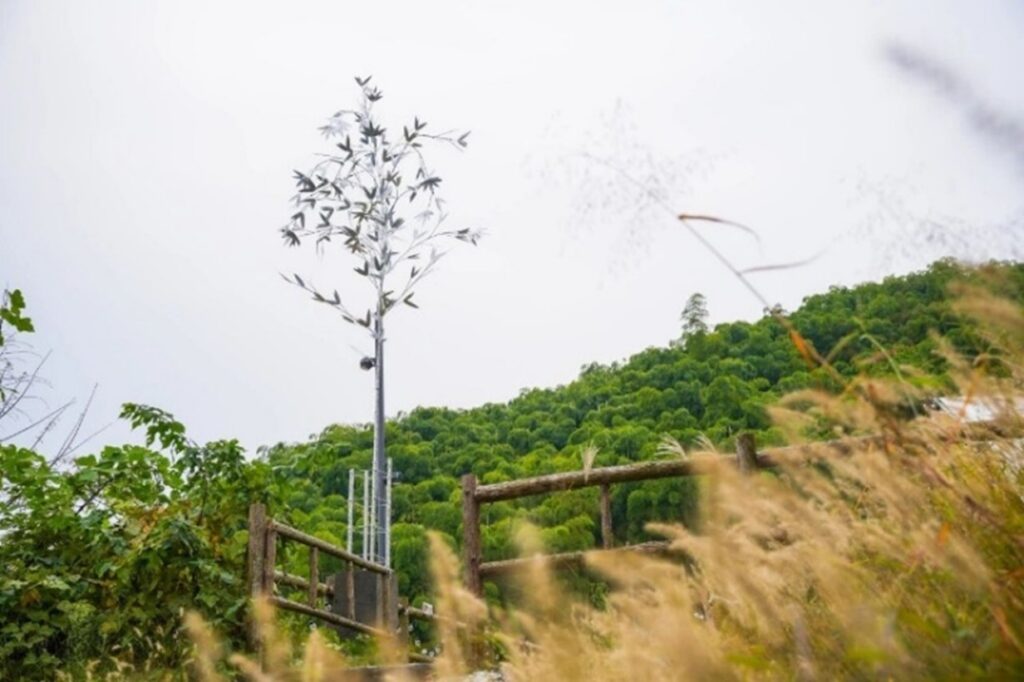
Concrete Bamboo

Yuhang Liu

2023

180 × 100 × 70cm

Weathering steel, mirror-polished stainless steel


Yuhang Liu

Associate Professor and Master’s Advisor at Guangxi Arts College; Ph.D. candidate in Fine Arts at Tsinghua University; Visiting Scholar at the Central Academy of Fine Arts


Artwork Introduction

Yuhang Liu’s Concrete Bamboo reveals the reality of contemporary rural areas being replaced by industry amid urbanization. Bamboo—a material symbolizing nature and locality—is substituted by concrete, serving as a metaphor for the power relations between urban and rural areas. The work no longer presents romantic nostalgia but exposes how industrial materials invade and reshape the rural landscape[4].
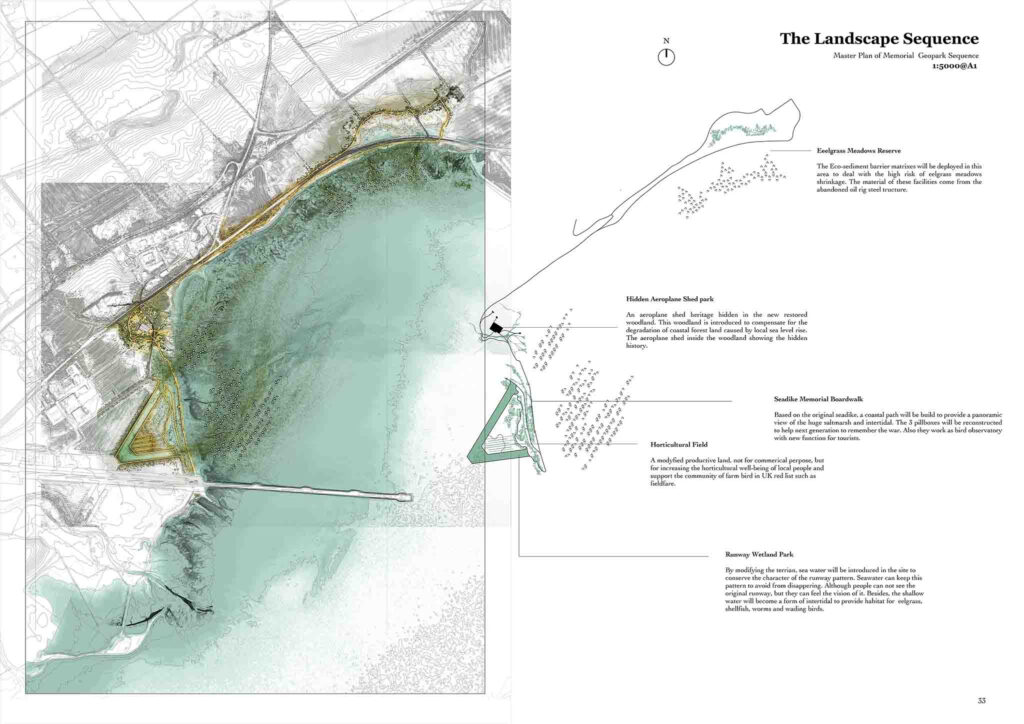
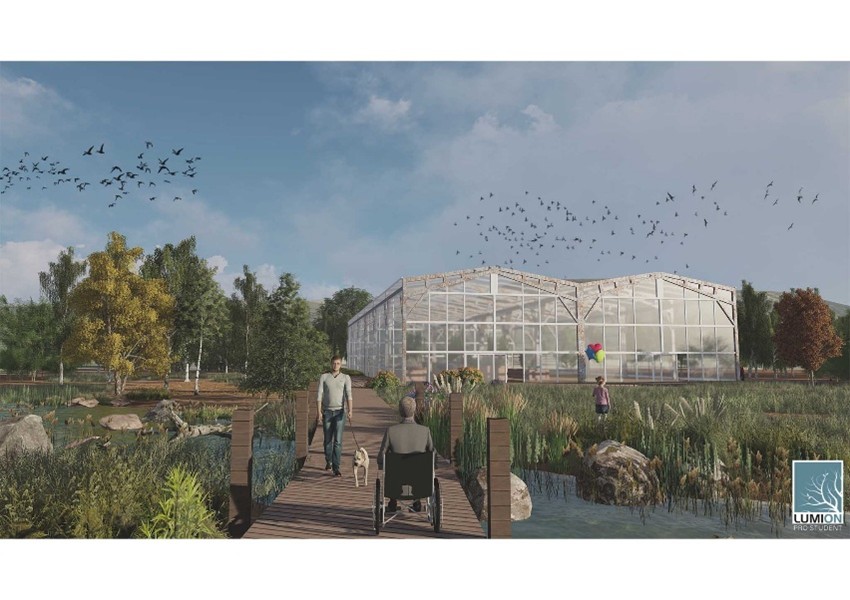
 

Alness Memorial Geopark Sequence

Fangyuan Zheng

2021

Digital Painting and Modeling

Variable dimensions


Fangyuan Zheng

Fangyuan Zheng is a landscape architect who graduated with an Master of Landscape Architecture (MLA) from the ECA. Her design practice focuses on the relationship between coastal ecosystems and the heritage preservation in rural areas.


Artwork Introduction

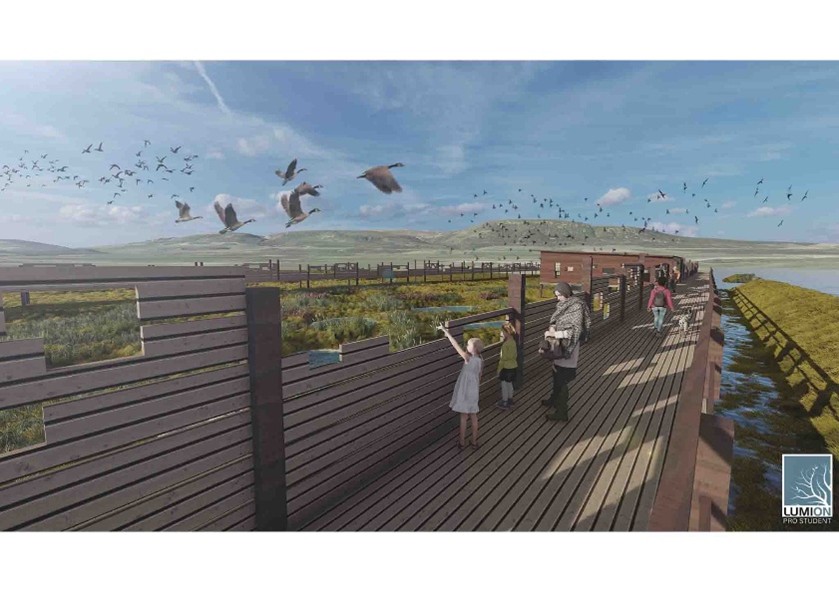
Fangyuan Zheng’s Alness Memorial Geopark Sequence proposes a spatial design solution that balances the needs of local residents with tourism appeal. The artist seeks to address the issue of rural tourism focusing on “serving outsiders” while neglecting local livelihoods[5].
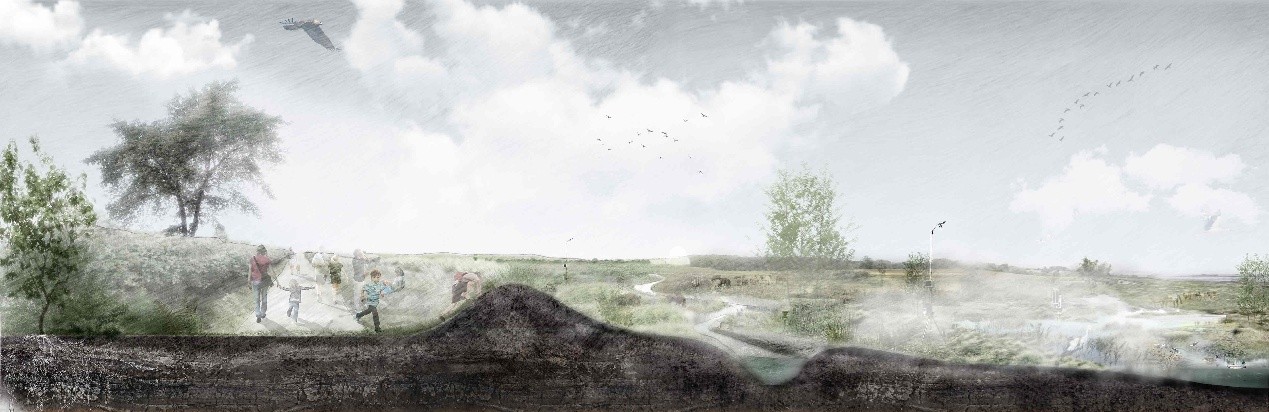
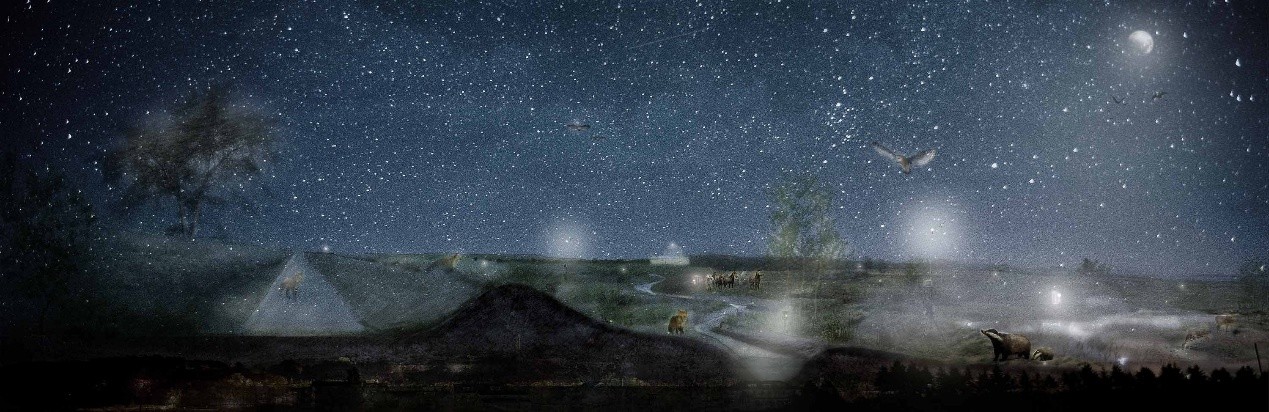
 

Intelligent Wilderness

Kate Saldanha

2021

Digital Painting

Variable dimensions


Kate Saldanha

Kate Saldanha have been selected for the ECLAS 2021 Award for masters students of Landscape Architecture for her graduation work; the ‘Intelligent Wilderness’ which offers an individual take on tackling climate crisis issues through landscape design and intervention[6].


Artwork Introduction

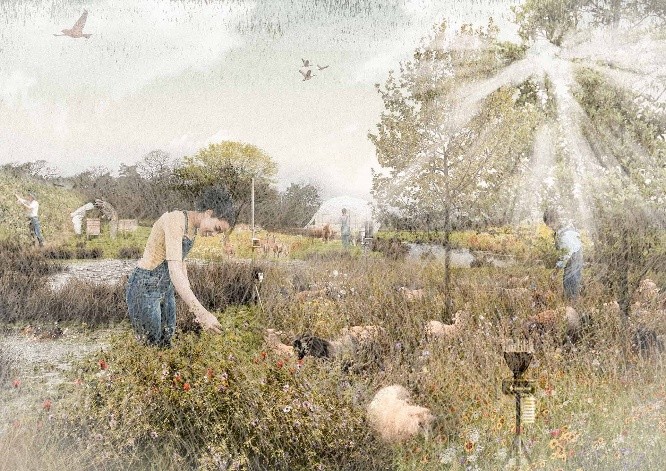
Kate Saldanha’s Intelligent Wilderness addresses the damage caused by industrial sites to agricultural and natural environments. Through landscape design, the artist reestablishes a balanced relationship between agricultural production and wild ecosystems.
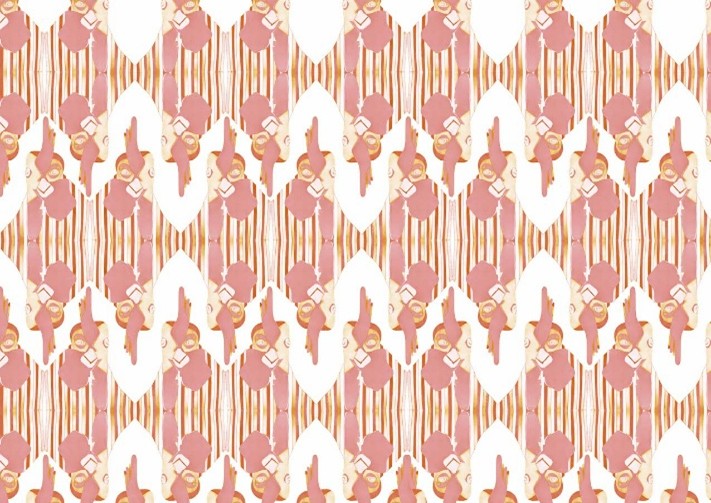
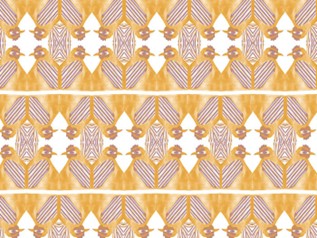
 

Cooped . Farmed . Displayed

Sara Dobbs

2021

digital drawing made from paper collages

Variable dimensions


Sara Dobbs

My creative practice has two main facets. The first is as a visual artist, working primarily in paint, textiles, and installation. The second is as a farmer. During 2020, I co-founded Wilbie Farm with my sister. It is a project based on our interest in regenerative agriculture practices that work in conjunction with the environment, instead of against. The farm has taken years to plan and is deeply embedded into my artistic research, subject, and approach. Farming, like art, is a practice of balance and problem solving. Both are human constructions that are influenced by and responsive to the surrounding environment, situation, and people. Farming is a grounding force, while art allows me to re-envision the patterns around me[7].


Artwork Introduction

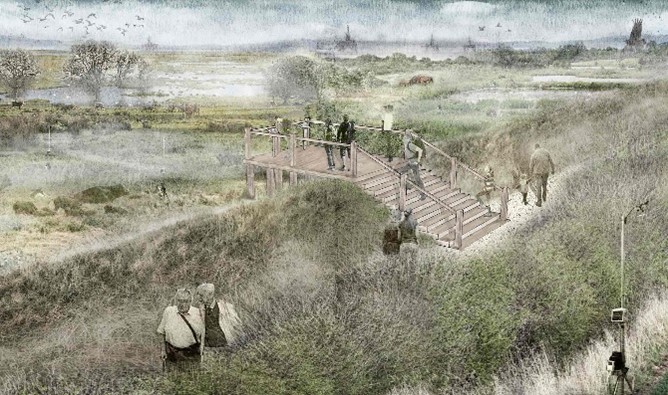
Sara Dobbs’s Cooped. Farmed. Displayed examines how rural areas are “displayed” within consumer culture, exploring the dynamics between agricultural production and exhibition mechanisms.


4. Location and Outline

Sciennes Gallery, Summerhall, Edinburgh EH9 1PL, UK
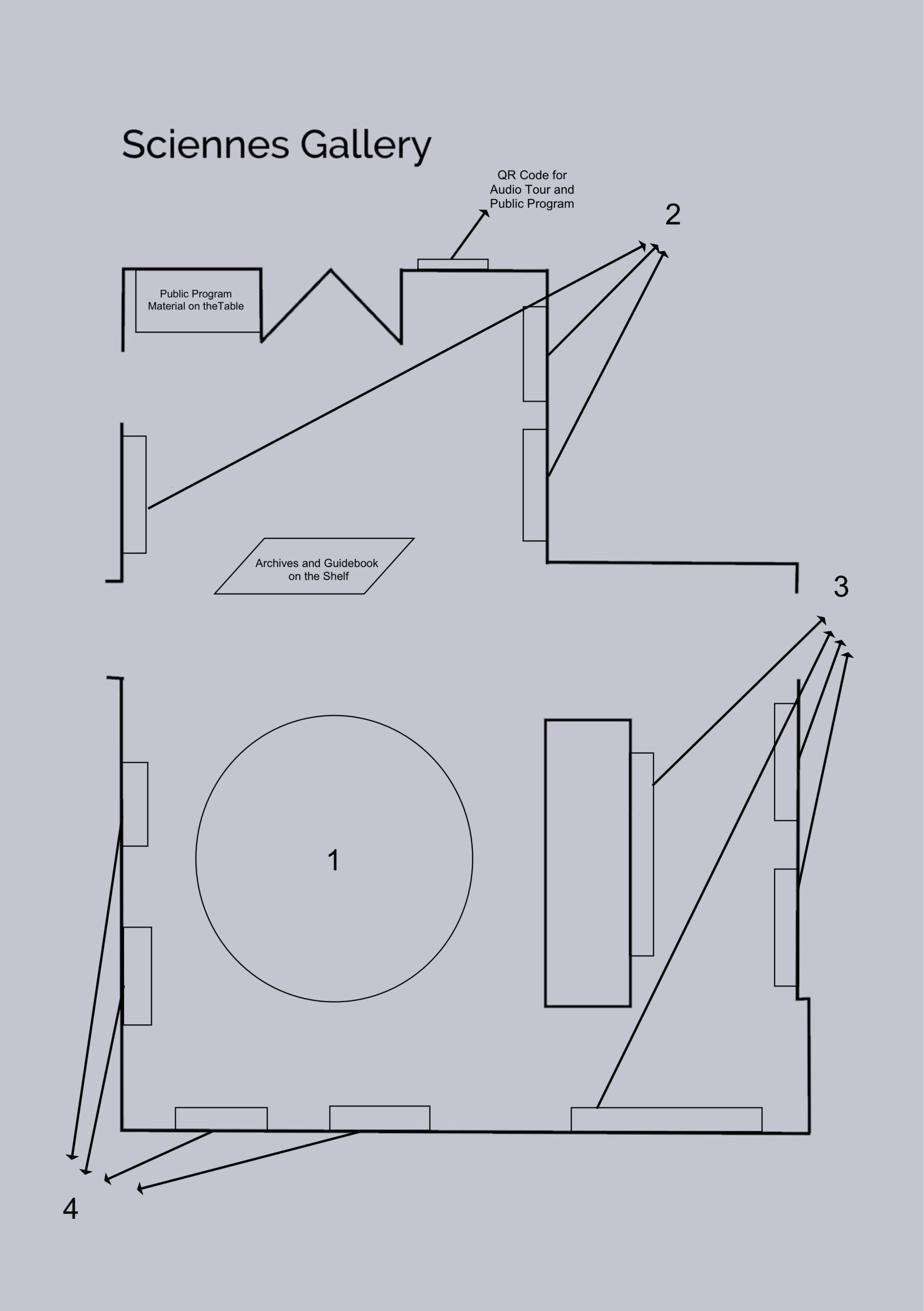
1. Concrete Bamboo
2. Alness Memorial Geopark Sequence
3. Intelligent Wilderness
4. Cooped . Farmed . Displayed

I chose this venue for my exhibition for several reasons. First, Summer Hall’s audience is primarily young people living in Edinburgh, and this is an excellent opportunity for them to gain a proper perspective on the rural areas and begin thinking about how to address the problems rural communities face. My exhibition encourages city residents to reflect on the urban exploitation of the countryside, preventing them from viewing rural areas solely as vacation destinations attached to cities. Second, Summer Hall is a vibrant, multidisciplinary arts platform capable of hosting my exhibition, which focuses primarily on digital painting and design.


Second, Summer Hall is a vibrant, multidisciplinary arts platform[8]. It is not a museum-like space where traditional paintings are displayed in a formal setting. Therefore, my exhibition—which primarily features digital paintings and design work—can be shown here without seeming out of place. This also presents an excellent opportunity to engage artists from other disciplines in contributing ideas for the development of peripheral areas and the lives of their residents. Furthermore, Summer Hall is a venue where new artists can host exhibitions by paying a fee. Consequently, it does not discriminate against new curators or emerging artists.


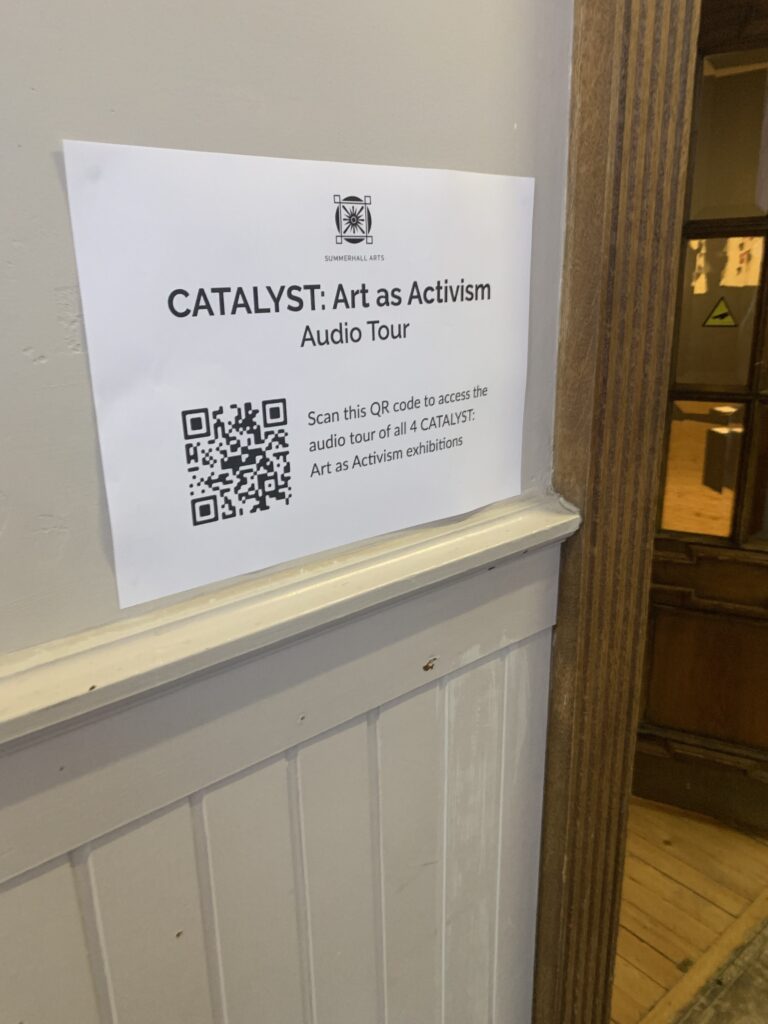
Third, the size and location of the Sciennes Gallery are ideal for my exhibition. The smaller gallery space is well-suited for a new curator like me with a limited number of works. The ceiling height allows for the installation art I have selected. The gallery I chose is located on the ground floor, and Summerhall has a tradition of accessibility—for example, QR codes for audio tours are posted at the entrance. Therefore, this location is ideal for me to conduct my accessibility public project.


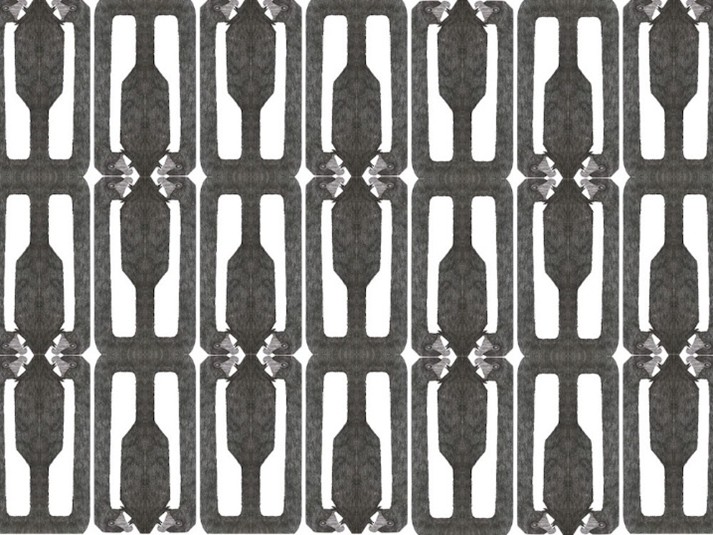
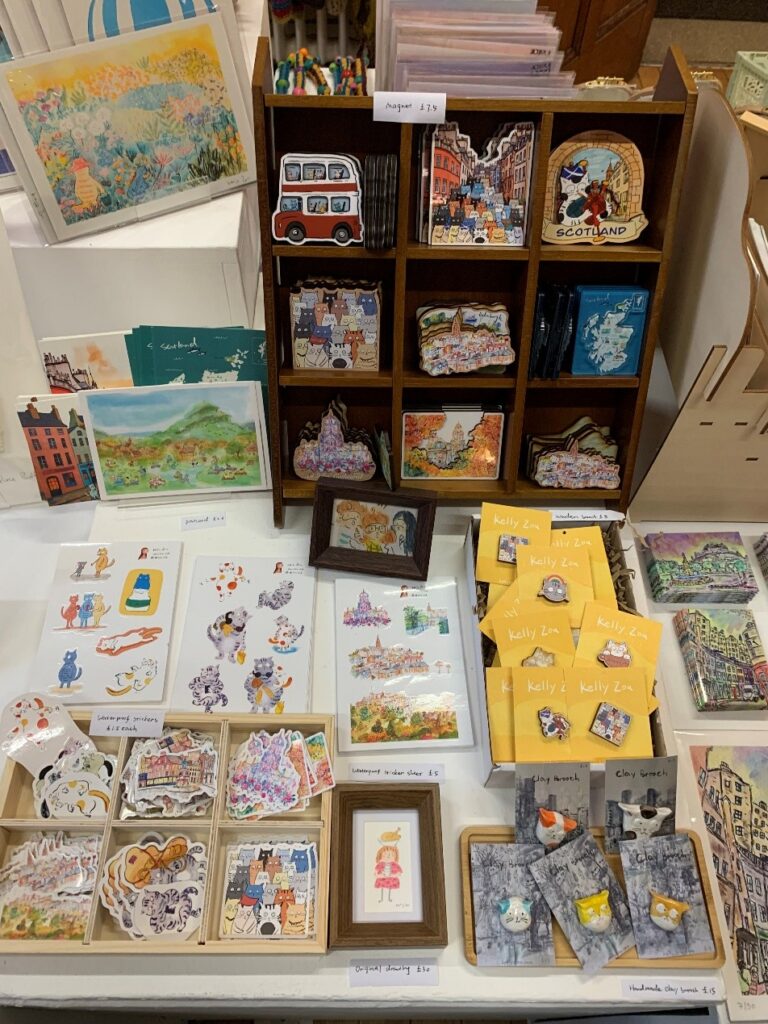
Fourth, the gallery’s exit connects directly to the souvenir shop area in Summer Hall. I plan to design hats, scarves, and canvas bags featuring artwork patterns as exhibition souvenirs. This way, visitors can see the souvenirs I’ve designed immediately after viewing the exhibition, which will encourage purchases and boost income for my exhibition.


Here are my gallery layout and the placement of items excluding artworks. QR codes for the audio guide and public projects will be posted at the entrance to my gallery. I will install freestanding plastic display cases on the wall near the entrance so that visitors can view the archives I wish to showcase.


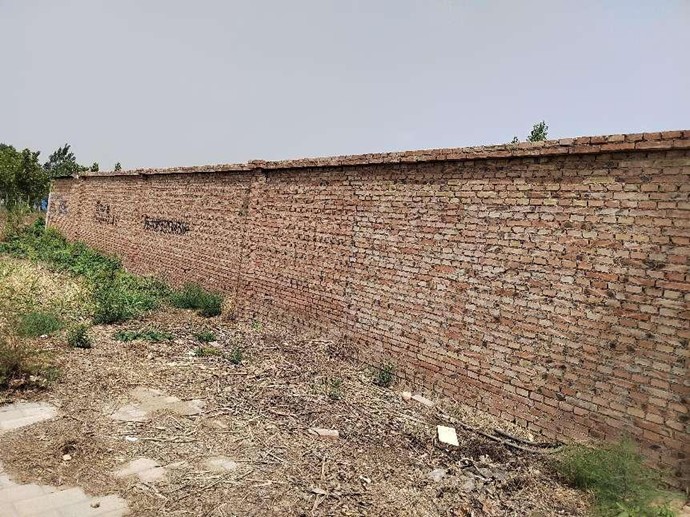
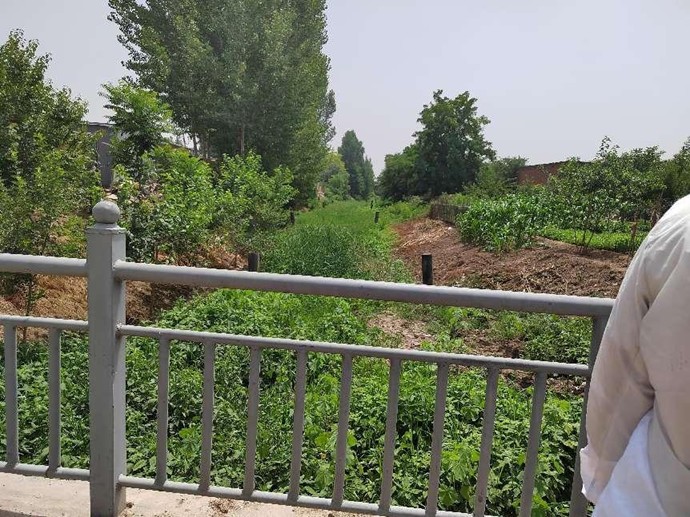
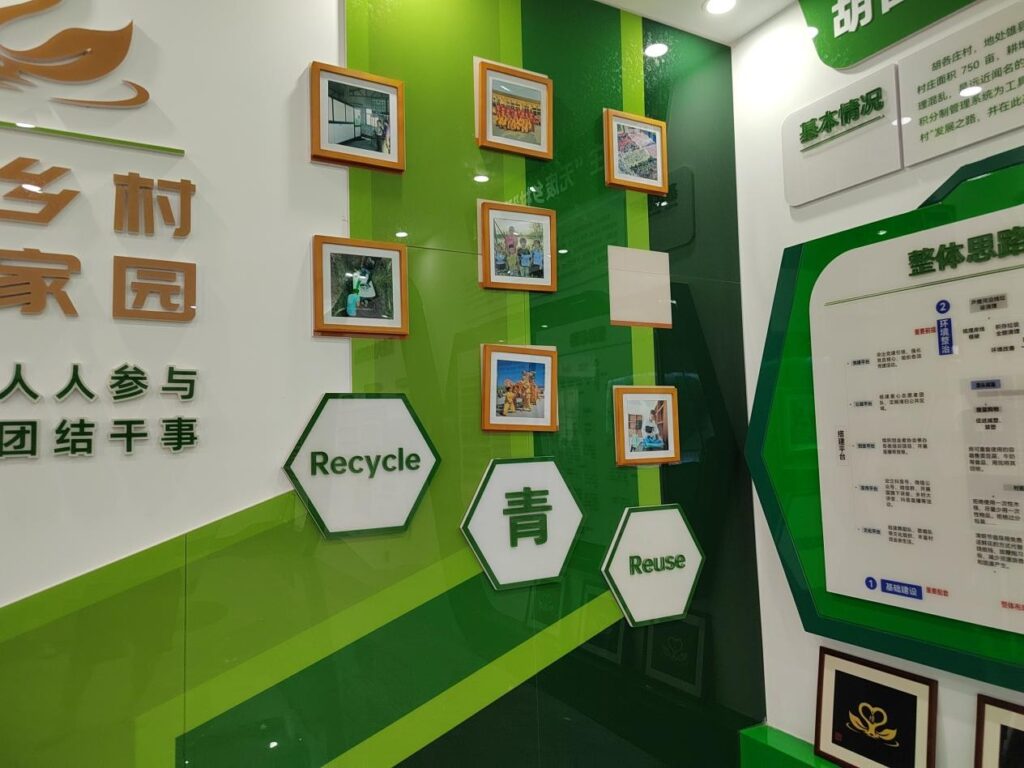
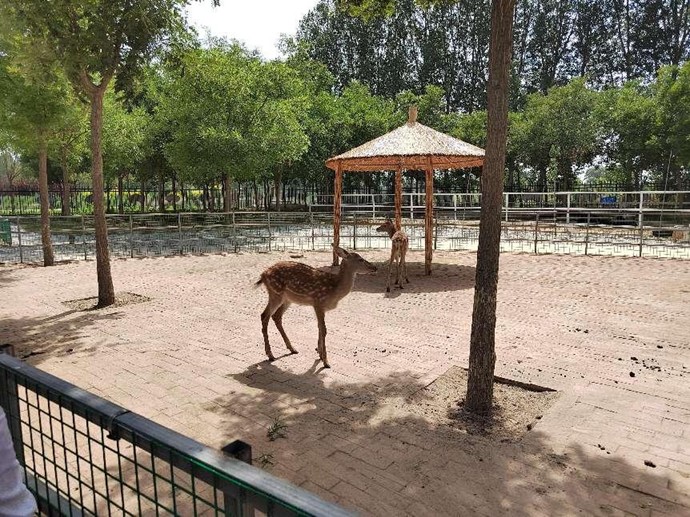
The archive primarily consists of photographs and interview materials I collected in the rural village of Huge Zhuang in Hebei, China. It is a small village located on the periphery of the capital, Beijing, and is also situated near the Xiong an New Area, a new political hub currently in development. “So close, so beautiful, weekend trip to Hebei!” is a local slogan known to almost everyone in northern China. This slogan essentially welcomes Beijing residents to Hebei for tourism and vacation. I believe this is a form of objectification of the region for tourism promotion and commercialization. This slogan turns Hebei Province into Beijing’s backyard and resort, losing sight of Hebei’s unique characteristics. So I interviewed local residents to gather their views on industrial facilities and their suggestions regarding the current living environment and educational opportunities.


I will also place text descriptions related to the exhibition in another display case. As for the space for my workshop, “Create Your Tiny Village,” it will require only a single table, which will be placed on the right-hand side as you enter.

5. Public Program
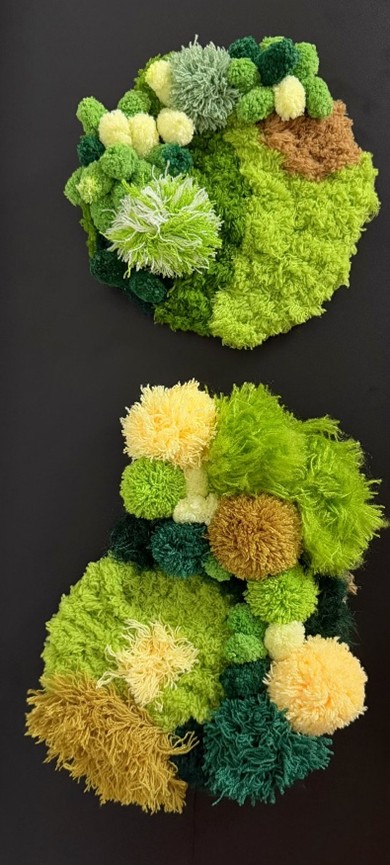
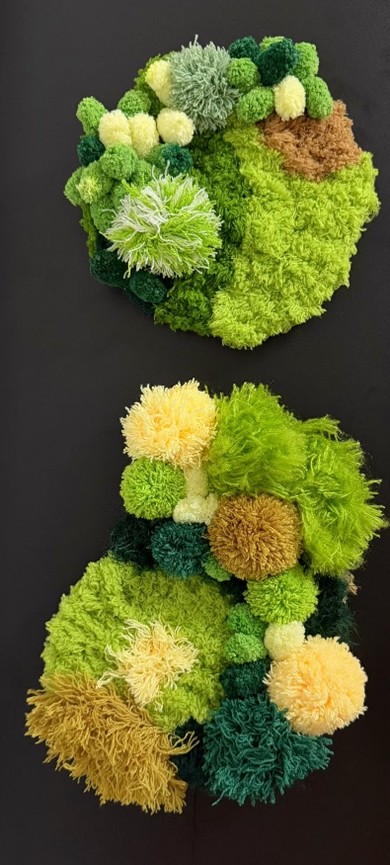
Untitled Kefan Zhang 2026 Yarn, cotton thread, pom-poms, etc. Variable size


My first public project is a workshop called “Create Your Tiny Village”. I will invite Kefan Zhang, a student in the ECA CAP program, to lead a handmade workshop at the Summer Hall Sciennes Gallery on the first day of the exhibition—August 15—from 2:00 to 5:00 p.m. We will invite visitors to design a model of the countryside that leaves the strongest impression. This model can be a sketch or a handmade object. For visitors who wish to draw, we will provide colored pencils and paper. For participants interested in handmade crafts, we will provide a limited supply of coral fleece, mohair, organza, yarn, cotton thread, and glue.


Since this workshop was inspired by a project Zhang is currently working on, I have invited Zhang to lead the workshop and guide participants to complete their artworks. I chose August 15th as the date for the workshop because it is the Chinese Mid-Autumn Festival, a holiday associated with missing one’s hometown and reuniting with family. Consequently, some international students from rural areas may find this event particularly moving.

The Padlet QR code I created includes an online audio tour, an EasyRead text, and a communication platform where users can upload audio. [1] Fazeli, Taraneh, and Cannach MacBride. “Means Without Ends: Learning

My second public project is the intersectional disability justice movement[9]. The peripheral residents, disabled people, sexual minorities, and ethnic minorities all belong to communities facing oppression. They need a platform to voice their needs and make suggestions. Therefore, after creating an audio tour, I developed a rural suggestion platform that allows users to submit audio recordings. Here, residents of Edinburgh and villagers worldwide can establish direct or indirect connections[10]. By building emotional bonds and fostering communication through “access intimacy[11],” we can provide real support and solutions for communities in need of assistance and improvement.


My exhibition is intended to serve oppressed groups—residents of peripheral communities, sexual minorities, people with disabilities, and ethnic minorities—rather than the art market controlled by a select few[12]. I will reallocate power and direct funds toward artists and communities in peripheral regions[13]. The products I design and sell are not intended to serve the cultural capital of the art market; instead, I will discuss with the artists who provide the patterns how to donate the funds earned from these products to peripheral regions. Since sources of income have a variety of impacts, including strengthening public programs, I have chosen to sell these products so that the profits can be used to expand future public programs.


6. Curatorial Rationale

Peripheral Future: Design Answers Rural offers a space where audiences, artists, and residents of peripheral regions in need of support can all become participants, positioning themselves as interlocutors of the contemporary[14].


The archives, artworks, and public projects in the exhibition form a chain that begins with questioning and ends with solutions. The archival material in my exhibition documents the local industrial landscape, living conditions, and educational environment from the perspective of radical empathy, raising the specific issue of rural areas losing their identity as they are viewed by urban residents as mere vacation destinations[15]. This leads to a major section of the works I selected for the exhibition: how to develop tourism while making these landscapes and initiatives beneficial to local residents[16].All the works and artists I have selected accept the similar complexities between rural and urban contexts and propose solutions[17]. In the public projects, my accessible online communication platform will showcase a relationship between city and countryside that is no longer defined by a binary opposition of center and periphery, but rather by a mutually dependent relationship with access intimacy[18].


7. Basic budget

Income Description Amount
ECA Career Development Bursary ECA Career Development Bursary (for final year UG & PGT) The ECA Equality, Diversity, and Inclusion (EDI) Directorate is happy to announce the ECA Career Development Bursary for the academic year 2025-2026. This bursary will provide up to £500 for the final year Undergraduate and Postgraduate Taught students towards ONE relevant activity or event that can help explore career options or develop a current career path. 500
The Student Experience Grants Guidelines | Student Experience Grants | Student Experience Grants We award grants of up to and including £5,000 to support activities, which enhance students’ social, academic, entrepreneurial, sporting or cultural development. 5000
Souvenir Sales Summerhall Arts Boutique – Summerhall Arts


I’m selling my exhibition’s merchandise at Summerhall Arts Boutique—canvas bags, hats, and scarves that I designed with the artist Sara Dobbs’s permission. I’ll be using patterns from her artwork to create these items. 1000
Open Fund for Individuals Open Fund for Individuals | Creative Scotland The Open Fund for Individuals is one of Creative Scotland’s key funding programmes, supporting the wide range of activity initiated by artists, writers, producers and other creative practitioners in Scotland. Fund open. 820
Total: 7320


Expenditure Description Amount
Artist Fees Recommended Rates of Pay (RRoP) | Scottish Artist Union Fees calculated according to Scottish Artists Union (SAU) Recommended Rates of Pay, based on artists’ experience levels and duration of work. £1,796.00 (Five Days, Five Years Artist) + £179.60 (Half-Day Five-Year Artist) + £117.20 (Half-day newly graduated artist) + £117.20 (Half-day newly graduated artist) = £2,210.00. 2210
Venue Hire I need to rent the Sciennes Gallery at Summerhall for 14 days, including four days for setup and takedown and ten days for the exhibition. I asked Summerhall staff and received a daily venue fee of £250. 3500
Shipping and Insurance All works except for Yuhang Liu’s installation are prints. Therefore, I would like to invite Liu to bring his work to Edinburgh, so the shipping costs would actually consist of Liu’s travel and accommodation expenses. It also includes insurance for the installation. 1000
Installation costs Including the framing of printed works and the arrangement of installation artwork. 50
Cost of space renovation I will borrow a table from Summerhall to use as a venue for the public project “Create Your Tiny Village.” 0
Printing costs Print Credit Explained – ECA IT Help – Wiki Service I’ll use my student account to print at the ECA Library, so there’s no extra charge. 0
Lighting costs ECA Bookit Renting school lights for lighting design 0
Exhibition Text Display Materials Includes a freestanding display case fixed to the wall to hold the guidebook (with the QR code for the audio guide displayed directly on the wall at the entrance), and a shelf for storing archives. 10
Public Project I invited Fefan Zhang to host the public program “Create Your Tiny Village” on the opening day of the exhibition. Since we are friends, I didn’t have to pay her a salary for that day; I only had to cover the cost of the materials. 50
Souvenir Production Production of hats, scarves, and canvas bags 200
Emergency Fund 300
  Total: 7320

Footnotes

[1] Ronald Kolb, Camille Regli, and Dorothee Richter, “Centres ⁄ Peripheries– Complex Constellations,” Notes on Curating 41 (June 2019): 3.

Referring to the Centre–Periphery (or the Core–Periphery) model, one must be aware of its origins in economics: Centre–Periphery basically describes an (unequal) relationship between places. It is used as a spatial description of a relation between a so-called “advanced“ (or dominating) place and its allegedly “lesser developed“ (or serving) periphery. In this model, the centre is the place of power (of law, of trade, of military force) and is a door to the rest of the world. The periphery is a remote, rural place, and it delivers raw materials, food, and other resources to the centre under the condition of exploitation.

[2] Kathrin Bohm and Wapke Feenstra, “Introduction,” in MyVillages, ed., The Rural (London: Whitechapel Gallery, 2019), 16.

An endless stream of images of the rural enters our imaginations through multiple screens and printed matter. This intense objectification of the rural is alarming and splits our roles into spectators and dwellers. The transition from an agricultural and mining economy to a service, and above all non-land-based, economy has fixed our view of the landscape. We see the rural environment as an image that serves us. We build the picture that we long for.

[3] Bohm and Feenstra, “Introduction,” 15.

The rural is equally shaped by industrial production both within the rural and the cities. Industrial and technological revolutions/infrastructures in urban areas offered overcrowded and economically weak rural communities a new home, causing depopulation and a new urban working class, while industries that rely on ground and soil resources dig up rural landscapes and spit them out as hubris and holes.

[4] Academy of Arts & Design, Tsinghua University, “Opening of ‘Art Towards Mountains and Rivers: 2023 Anji Youth Art Creation Camp Achievement Exhibition’,” Tsinghua University Academy of Arts & Design, October 27, 2023, accessed March 25, 2026, https://www.ad.tsinghua.edu.cn/info/1389/30427.htm.

[5] Fangyuan Zheng, “Alness Memorial Geopark Sequence,” 2021 Graduate Show, Edinburgh College of Art, accessed March 25, 2026, https://www.2021.graduateshow.eca.ed.ac.uk/portfolio/fangyuan-zheng.

[6] Kate Saldanha, “Kate Saldanha | LinkedIn,” LinkedIn, accessed March 25, 2026, https://www.linkedin.com/in/kate-saldanha-052b0a166/. [7] Sara Dobbs, “Cooped . Farmed . Displayed,” 2021 Graduate Show, Edinburgh College of Art, accessed March 25, 2026, https://www.2021.graduateshow.eca.ed.ac.uk/index.php/portfolio/sara-dobbs.

[8] Summerhall Arts, “Our Vision,” Summerhall Arts, accessed March 25, 2026, https://summerhall.co.uk/vision.

[9] Taraneh Fazeli and Cannach MacBride, “Means Without Ends: Learning How to Live Otherwise Through Access-centered Practice,” in As for Protocols, ed. Re’al Christian, Carin Kuoni, and Eriola Pira (Amherst, MA: Amherst College Press, 2025), 140.

The intersectional disability justice movement, with origins in San Francisco Bay Area organizing broadly and the collective Sins Invalid specifically, takes up the limits of disability rights. This framework addresses the intersection of oppressions according to identities and experiences of race, ethnicity, gender, class, sexuality, citizenship, housing status, and more.40 It is led by those most impacted (disabled LGBTQIA+ and BIPOC people), centers non-hypothetical body minds, focuses on immediate access formations and relationship building, and seeks to dismantle institutions while investing in community-focused solutions.

[10]Bohm and Feenstra, “Introduction,” 12.

The rural and the urban are interdependent, and the current dichotomy has always been false but was maintained because power could be gained from playing down and denying the actual relationship between city and countryside.

[11] Fazeli and MacBride, “Means Without Ends,” 144.

Mingus emphasizes the possibility for access intimacy to occur instantaneously between people without shared experience or political identity. This intimacy need not be communicated linguistically, offering an intuitive, non-identity based, affective lens onto modes of relation beyond policy.

[12] Alistair Hudson, Building a User-Generated Museum: A Conversation with Alistair Hudson, openDemocracy, 5 May 2017, https://www.opendemocracy.net/en/building-user-generated-museum-conversation-with-alistair-hudson/ (accessed 30 March 2026).

So I’ve been interested in that trajectory within the history of art, which is not the one we’re told – which has been defined by the market and by capital – and we should instead reclaim art as a much more all-encompassing, ordinary activity for everybody, rather than something for the elites or the 1% or for those that have, as opposed to those that don’t.

[13] Alistair Hudson, Building a User-Generated Museum.

So the ambition – and this is why I talk about ‘usership’ and the useful museum – is that you create an institution that is created by and through its usership, so that the content and the function is increasingly less determined by those in power, but rather you redistribute authorship, you redistribute power, to make the institution the true manifestation of its community.

[14] Papastergiadis, “What Is the South?” 141.

The little public spheres play a crucial role in the delivery of this option. They require participants to position themselves as interlocutors of the contemporary. What counts is not whether you are based in New York or Melbourne, but how you follow the flows.

[15] The Alasdair Gray Archive, The Alasdair Gray Archive Curatorial Commission Brief 2025 (Glasgow: The Alasdair Gray Archive, 2024), 1.

She chose the title of Custodian because she believes caring, and relationship building is central to creating an equitable resource and a horizontal community. This is a feminist approach to archiving called radical empathy, which is the “ability to understand and actively consider another person’s point of view in order to connect more deeply with them.” Such empathy is radical if it is directed precisely at those, we feel are least worthy and least deserving of it.

[16] Bohm and Feenstra, “Introduction,” 17.

Villages were never hermetic communities, they are, just like cities, made by migration and changing production. It is not a set situation or frozen image that you enter, even when the village is a landmark, conserved and seemingly static with some preserved traces of farming and residues of authentic industrial production, since that is obviously seen as attractive for tourists, and brings new income.

[17] Bohm and Feenstra, “Introduction,” 12.

This requires a newly de-urbanised and un-nostalgic attention to the rural, a commitment to accepting similar complexities to those which are acknowledged for the urban and taking an emancipatory step to undermine the preconceptions of the rural as backwater.

[18] Bohm and Feenstra, “Introduction,” 16.

The rural and the urban are interdependent, and the current dichotomy has always been false but was maintained because power could be gained from playing down and denying the actual relationship between city and countryside.


References

Kolb, Ronald, Camille Regli, and Dorothee Richter. “Centres ⁄ Peripheries– Complex Constellations.” Notes on Curating 41 (June 2019): 3.

Bohm, Kathrin, and Wapke Feenstra. “Introduction.” In The Rural, edited by MyVillages. London: Whitechapel Gallery, 2019, 12-17.

Academy of Arts & Design, Tsinghua University. “Opening of ‘Art Towards Mountains and Rivers: 2023 Anji Youth Art Creation Camp Achievement Exhibition’.” Tsinghua University Academy of Arts & Design, October 27, 2023. Accessed March 25, 2026. https://www.ad.tsinghua.edu.cn/info/1389/30427.htm.

Zheng, Fangyuan. “Alness Memorial Geopark Sequence.” 2021 Graduate Show. Edinburgh College of Art, 2021. Accessed March 25, 2026. https://www.2021.graduateshow.eca.ed.ac.uk/portfolio/fangyuan-zheng.

Dobbs, Sara. “Cooped . Farmed . Displayed.” 2021 Graduate Show. Edinburgh College of Art, 2021. Accessed March 25, 2026. https://www.2021.graduateshow.eca.ed.ac.uk/index.php/portfolio/sara-dobbs.

Saldanha, Kate. “Kate Saldanha | LinkedIn.” LinkedIn. Accessed March 25, 2026. https://www.linkedin.com/in/kate-saldanha-052b0a166/.

Summerhall Arts. “Our Vision.” Summerhall Arts. Accessed March 25, 2026. https://summerhall.co.uk/vision.

Fazeli, Taraneh, and Cannach MacBride. “Means Without Ends: Learning How to Live Otherwise Through Access-centered Practice.” In As for Protocols, edited by Re’al Christian, Carin Kuoni, and Eriola Pira, 140-144. Amherst, MA: Amherst College Press, 2025.

Papastergiadis, Nikos. “What Is the South?” Thesis Eleven 100, no. 1 (2010): 141–56. https://doi.org/10.1177/0725513609353708.

The Alasdair Gray Archive. The Alasdair Gray Archive Curatorial Commission Brief 2025. Glasgow: The Alasdair Gray Archive, 2024.
Critical Reflection

Introduction

The title of my SICP is Peripheral Future: Design Answers Rural, which means responding through design to the problems faced by rural areas—such as being treated as mere appendages by cities, being overtaken by tourism, and having agricultural development hindered by industrial waste. “Peripheral” does not aim to create a binary opposition between center and periphery, but rather seeks solutions for rural areas from the perspective of victims exploited by cities[1].


This article first discusses how I acquired knowledge through reading and courses, and applied it to my SICP as theoretical support. Second, I focus on how I visited exhibitions outside of class to absorb curatorial practices. Third, I will emphasize the contributions I made in collective and challenges and achievements I faced during collective exhibition. Finally, I will conclude by discussing the knowledge and skills I gained from studies and skills I still need to acquire in the future.


1. Theoretical Support from Lecture and Reading

A strength of my SICP project is that the selection of artworks aligns perfectly with each branch of the exhibition’s concept, addressing topics such as the industrial legacy of rural wastelands, rural tourism, and agriculture and nature.


Most importantly, I established my exhibition theme and concept in Weeks 1–2 by reading Centres ⁄ Peripheries– Complex Constellations. As an undergraduate, I visited Huge Village in Hebei Province, near Beijing. I observed that the local government had set up and maintained its publicity boards and political propaganda centers in a very well-organized way. However, the nearby rivers had dried up, and villagers continued to leave their hometowns as migrant workers. The children, lacking parental guidance, were reluctant to engage with the art education. At the time, I felt only helplessness and sorrow. Through my readings this semester, I have come to understand that this represents a form of oppression by the center upon the periphery[2]. I now realize that I can make a contribution to help rural residents achieve a better life. Several authors in the article point out that art serves a counter-hegemonic function and helps reveal the truth[3]. And raise the question: Could these peripheries use the power of art to sustain their local communities and economies as well as shed light on diversity and inclusion[4]? This question sparked my reflection, so I hope to address the issue of rural areas being viewed as peripheral regions exploited by cities through this exhibition.


Through a detailed reading of Introduction in MyVillages during week 3, I selected the artworks based on the issues raised in the text. Because the article mentions the rebelliousness of land art[5], I therefore wish to bring a small-scale land art installation Concrete Bamboo originally created in the countryside into my white cube gallery. This satirical metaphor portrays imprisoned earth and nature, perfectly matching the artwork’s theme: industrial materials invading and reshaping rural landscapes. According to the article, rural agriculture’s survival space is being squeezed out by industry[6] as well as food production, manual labor, and land use issues[7], I chose Sara Dobbs’s work, Cooped . Farmed . Displayed. The article also discusses rural tourism, including the positive aspect of increased tourism revenue leading to greater focus on rural preservation[8]. However, I have been thinking more about whether the new entertainment facilities built by the tourism industry and the artificial decoration of nature truly benefit rural residents and the natural landscape. Therefore, for this exhibition, I have selected two architectural landscape design works—Alness Memorial Geopark Sequence and Intelligent Wilderness—to offer examples of the kind of landscapes that rural tourism should strive to build.


2. Practical Methods for Viewing Exhibitions

Through my extracurricular studies this semester, I have established my exhibition venue and Text Display Formats.


One of the strengths of my SICP project is that the venue selection aligns perfectly with the exhibition’s content. When selecting venue, I analyzed outstanding examples through online learning and conducted field visits to galleries in Edinburgh. During the second and third weeks, I researched online for art festivals that showcase locally created land art with a strong local identity. For example, Japan’s famous Echigo-Tsumari Art Triennale[9], as well as the Anji Youth Art Creation Camp organized by the Academy of Arts & Design at Tsinghua University in Anji County in 2023[10]. This type of art festival is beneficial for the development of the local tourism industry and provides aesthetic enrichment for the local residents. However, due to financial constraints, I am unable to bring artists to the area and provide them with the funding needed to support their living and creating in the local countryside for several months. Furthermore, since I am unsure of the current standard of art education in the area, I cannot be certain whether these works will be accepted by the locals—whether they will be viewed as mere decorations that disrupt daily life, or as critical rural art that sparks reflection.


I later visited Summerhall, Fruit Market Gallery and Talbot Rice Gallery. The latter two were excessive floor space. Within Summerhall, the Corner Gallery lacked walls for printed artworks, while the Lab Gallery only had display cases and could not hold my large-scale installations. While I was deciding between War Memorial Gallery and Sciennes Gallery, I had read ahead the article Building a User-Generated Museum: A Conversation with Alistair Hudson from Week 10 about how can my public projects continue to have impact[11]. In other words, I need a budget and income to sustain my exhibitions and public projects, so I selected Sciennes Gallery for its convenience to display my souvenirs.

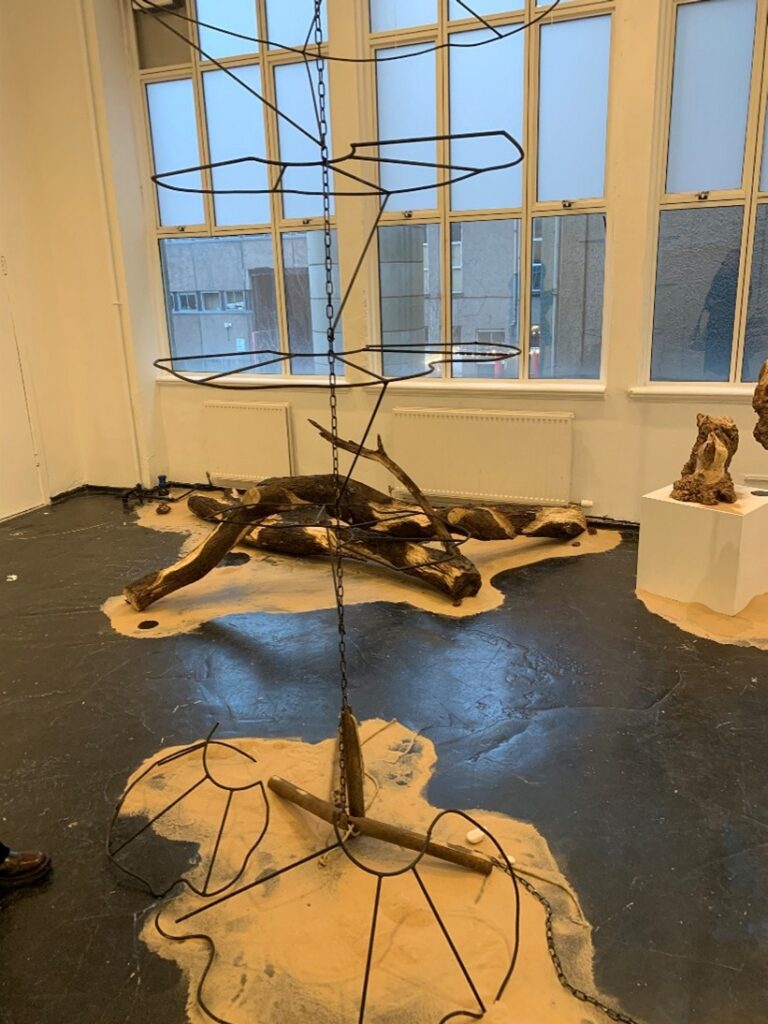
Figure 1, Molly Wickett’s exhibition “All Day, Waiting For Another Sun to Rise” at Summerhall Corner Gallery, illustrates that the space lacks walls suitable for displaying printed works.

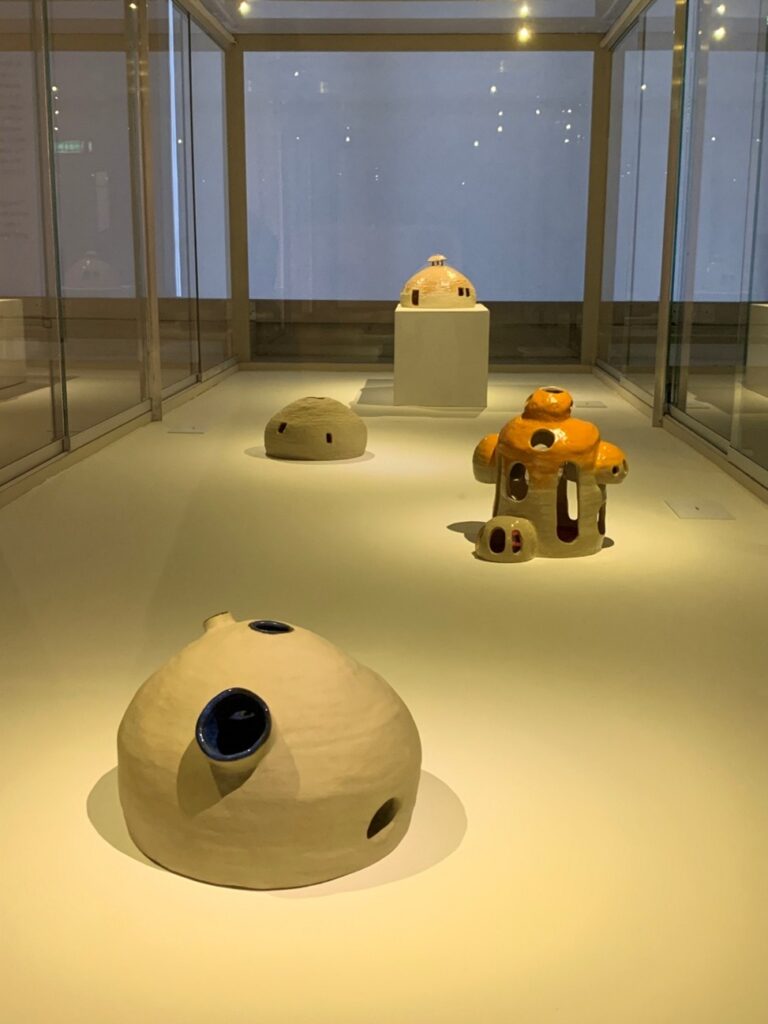
Figure 2, Taraneh Dana’s exhibition “A Heart in Exile” at Summerhall Lab Gallery, illustrates that the space lacks a location suitable for displaying large-scale installations.

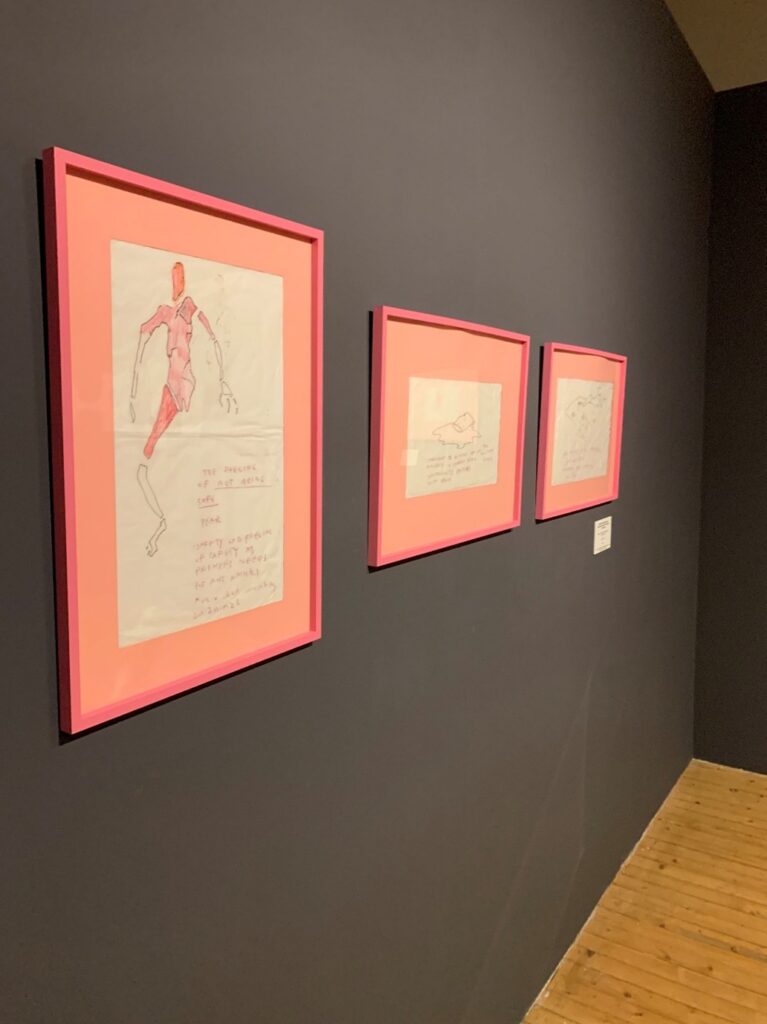
Figure 3, Kasia Oleskiewicz’s exhibition “Any Body Home” at the Summerhall War Memorial Gallery, shows that the space has walls for displaying printed works.

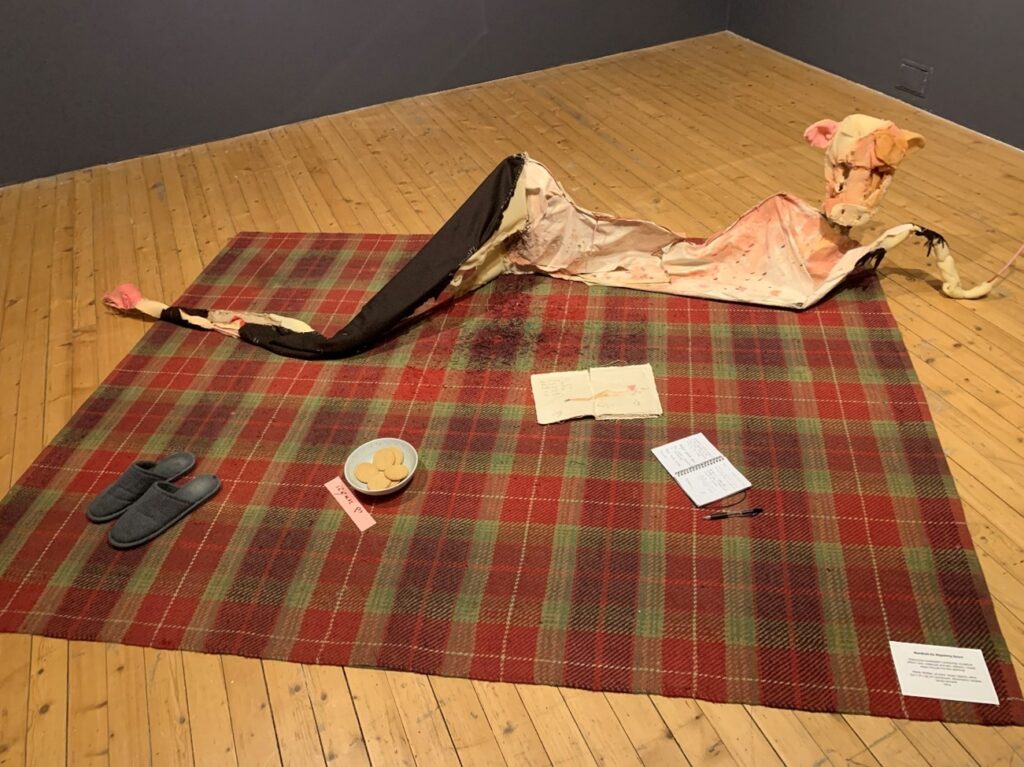
Figure 4, Kasia Oleskiewicz’s exhibition “Any Body Home” at the Summerhall War Memorial Gallery, demonstrates that the space can display large-scale installations.

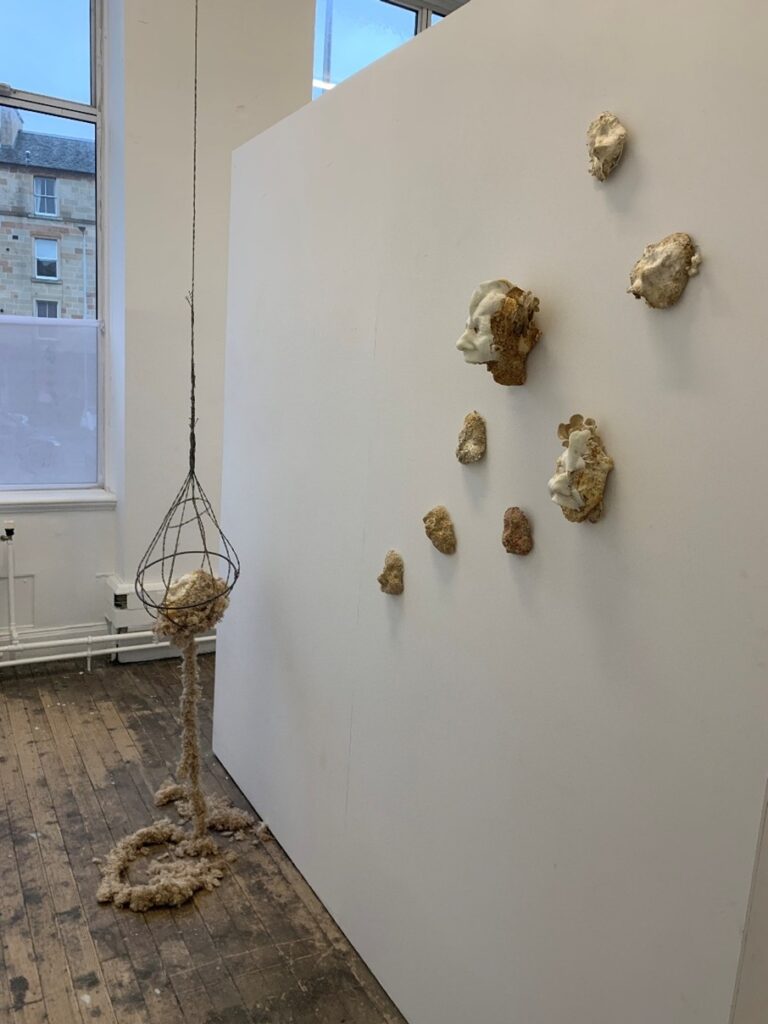
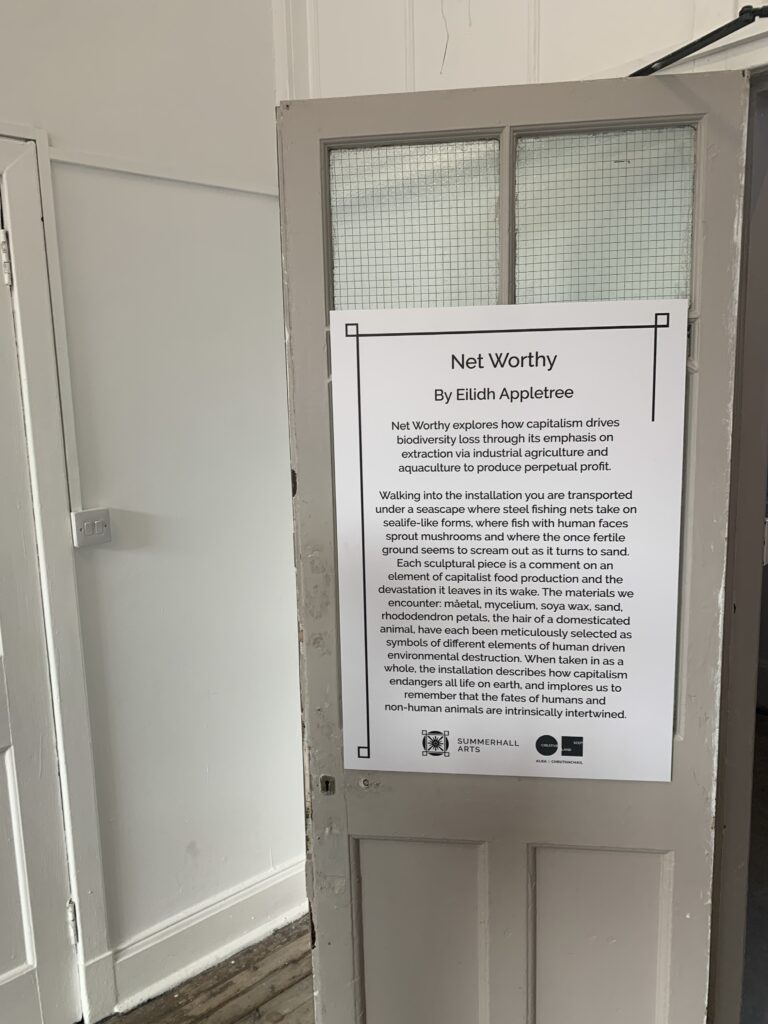
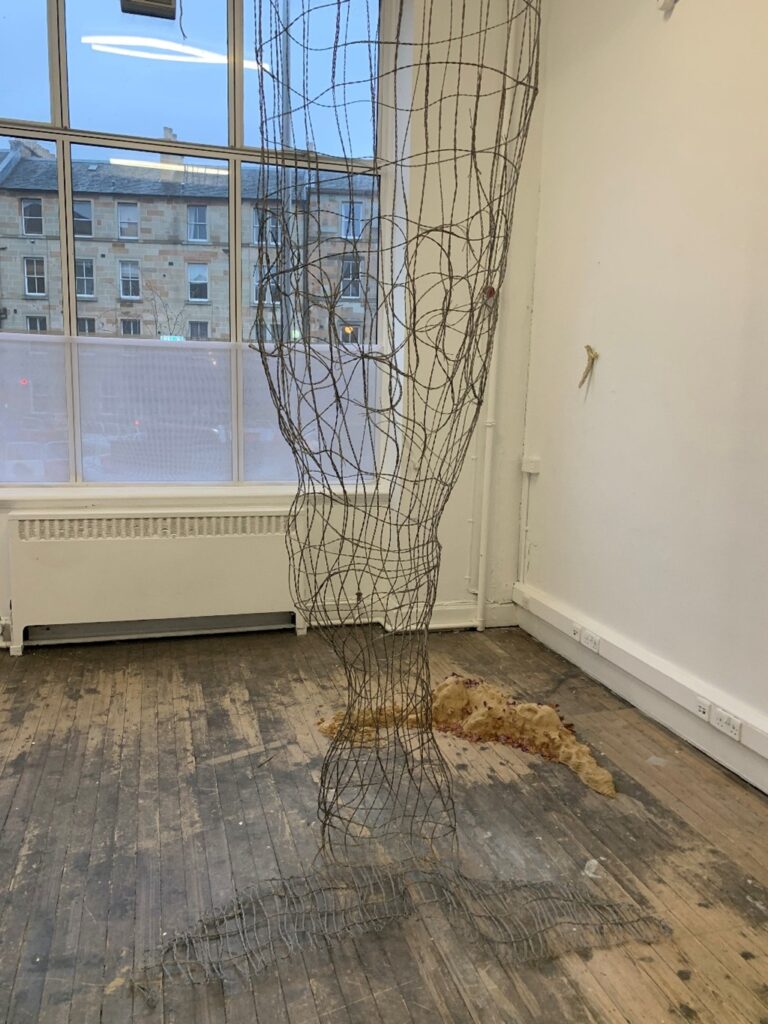
Figure 5, Eilidh Appletree’s exhibition “Net Worthy” at the Summerhall Sciennes Gallery, demonstrates the space can showcase large-scale installations.

Figure 6, Eilidh Appletree’s exhibition “Net Worthy” at the Summerhall Sciennes Gallery, shows that the space includes walls for displaying print works.

Figure 7, Summerhall Arts Boutique, which is connected to the exit of Sciennes Gallery  and can sell exhibition souvenirs.


In week 6, I chose Summerhall’s Sciennes Gallery for my exhibition: it has ample wall space for paper artworks, a central area for large installations, and access to its arts boutique for souvenir sales. I emailed Summerhall staff to enquire about rental fees and floor plans, and shared the email with collective members using this space. In week 10, rereading Building a User-Generated Museum[12] further confirmed that rural contemporary art exhibitions need careful assessment of local villagers’ acceptance, otherwise they risk failure.


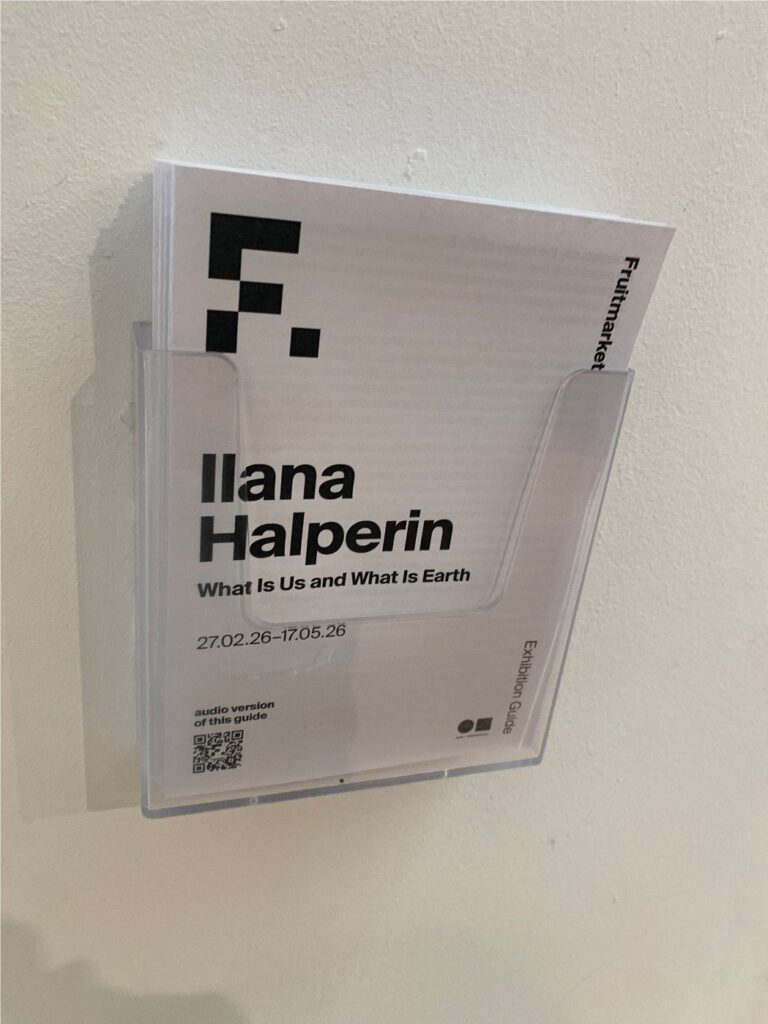
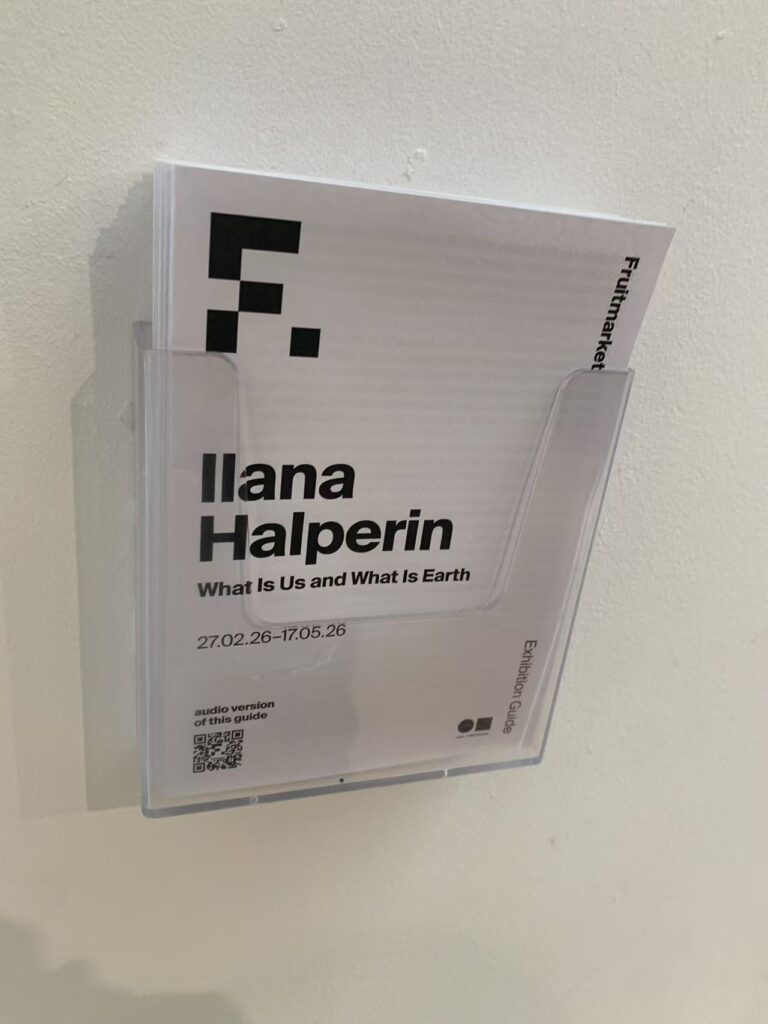
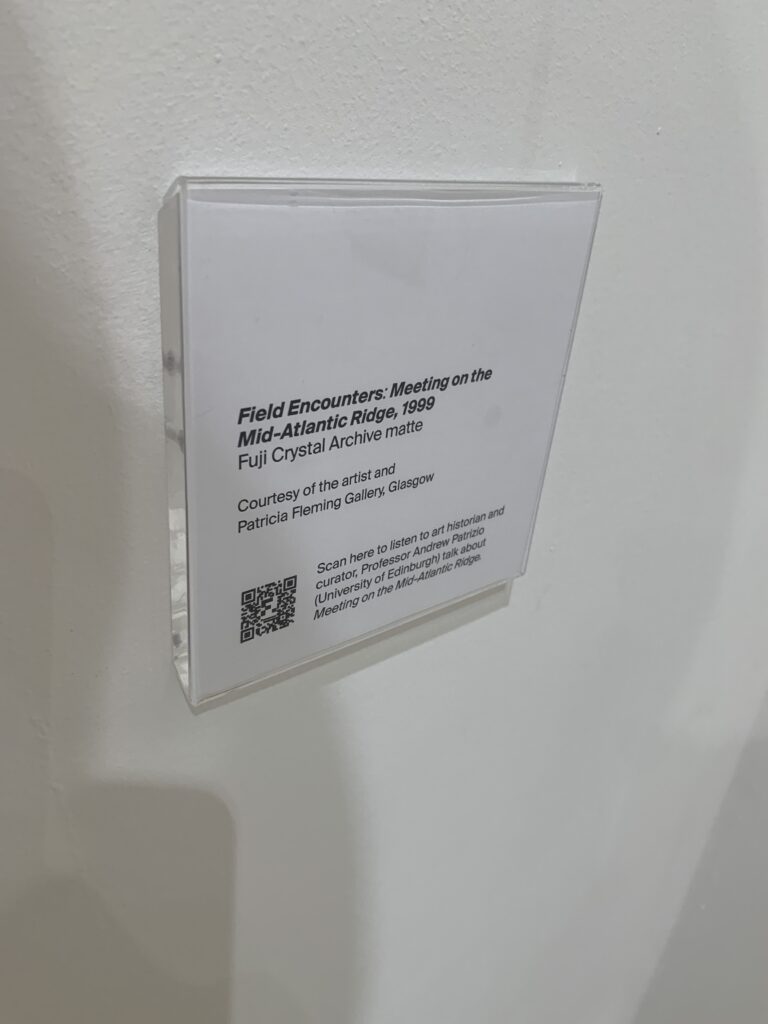
I had some questions about how to present the text, so I visited Ilana Halperin’s exhibition What is Us and What is Earth at Fruitmarket Gallery and studied their approach to text presentation—specifically, the use of freestanding display cases to present the artist’s creative concepts and work descriptions. I incorporated this approach into my own exhibition, using it to present the archival materials, curatorial concepts, and artwork descriptions.

Figure 8, Ilana Halperin’s exhibition “What is Us and What is Earth” at Fruitmarket Gallery, illustrates their approach to presenting texts.


3. Challenges and Achievements in Collective

I believe one of my strengths this semester was that I integrated the readingswith SICP, the Collective Manifesto, and the Collective Exhibition, thereby clearly mapping out my learning journey for the semester.


From the fourth week, each of us came up with two statements based on our SICP content. Through continuous refinement, we ultimately established our group, “No Idea.” This does not mean we are a passive, inactive group; rather, it reflects the reality that there are many issues in the world that we have identified but which are nearly impossible for just a few of us to change on our own. Therefore, even if we have “No Idea,” we still choose to face the problems head-on and do our best to solve them. As most of our group members’ SICP projects are nature-related, our manifesto is deeply influenced by our reading and exhibition concepts. For example, after reading Centres ⁄ Peripheries– Complex Constellations[13], I proposed: “We cannot bridge the Center–Periphery divide, but curating can prompt more people to reflect.” This reflects my hope, in my SICP, to guide urban audiences to reflect on the exploitation and oppression of peripheral areas by the city. Having read Building a User-Generated Museum [14], I proposed the statement, “We regard curating as an ongoing practice rather than a one-off exhibition,” which reflects my belief that exhibitions can continue to influence people’s thinking. “We refuse to wait for others to document our era. We take on the responsibility of archiving the Anthropocene now.” This reflects my ideal of presenting archives based on the principle of radical empathy, as learned in the Week 8 class[15].


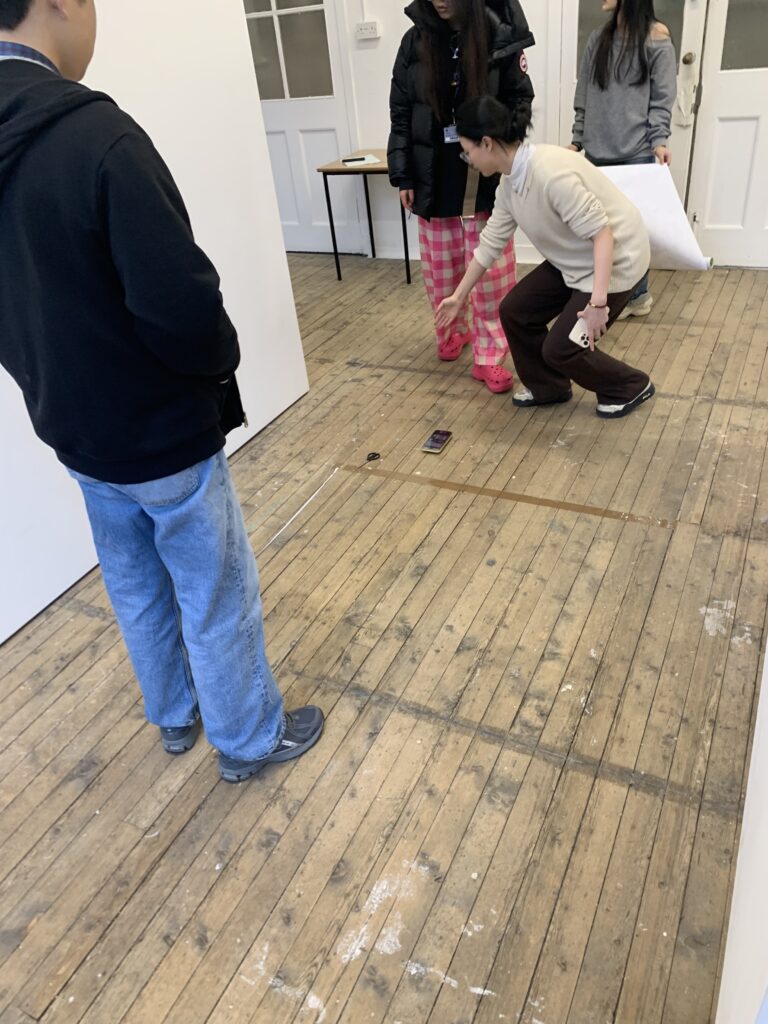
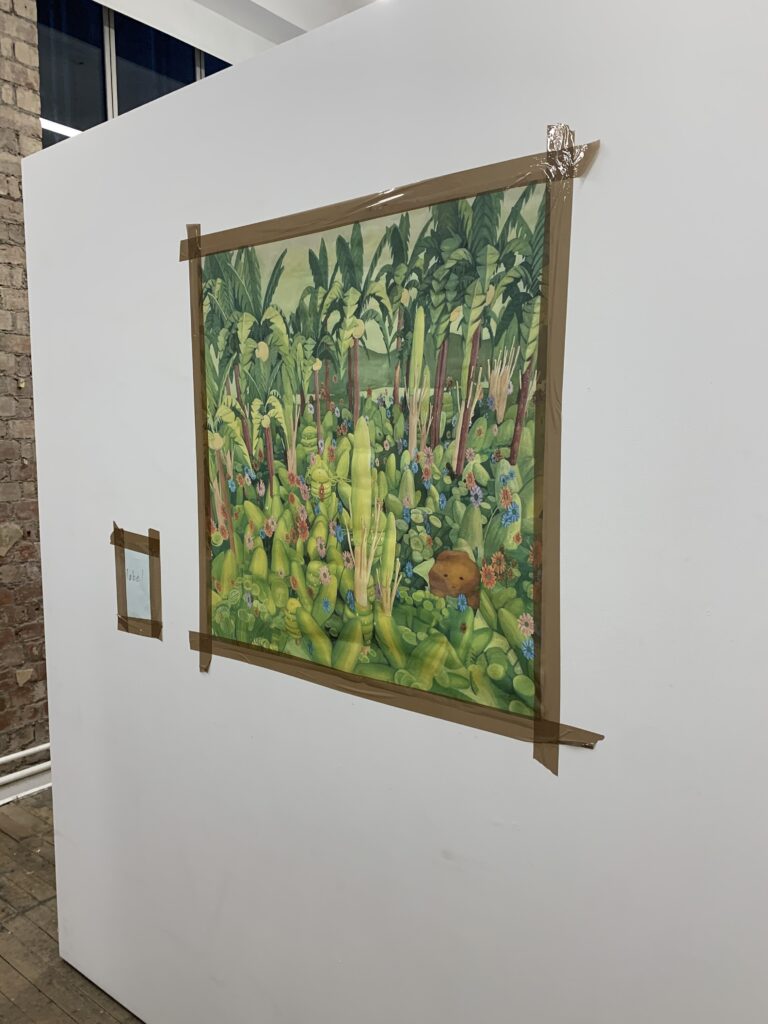
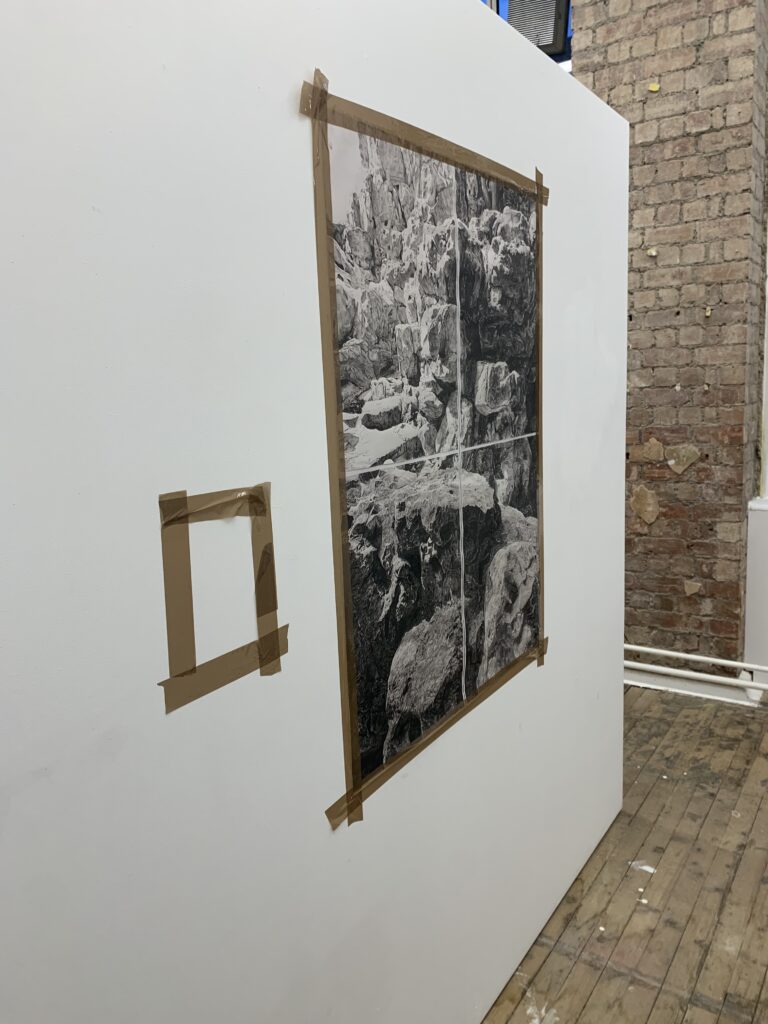
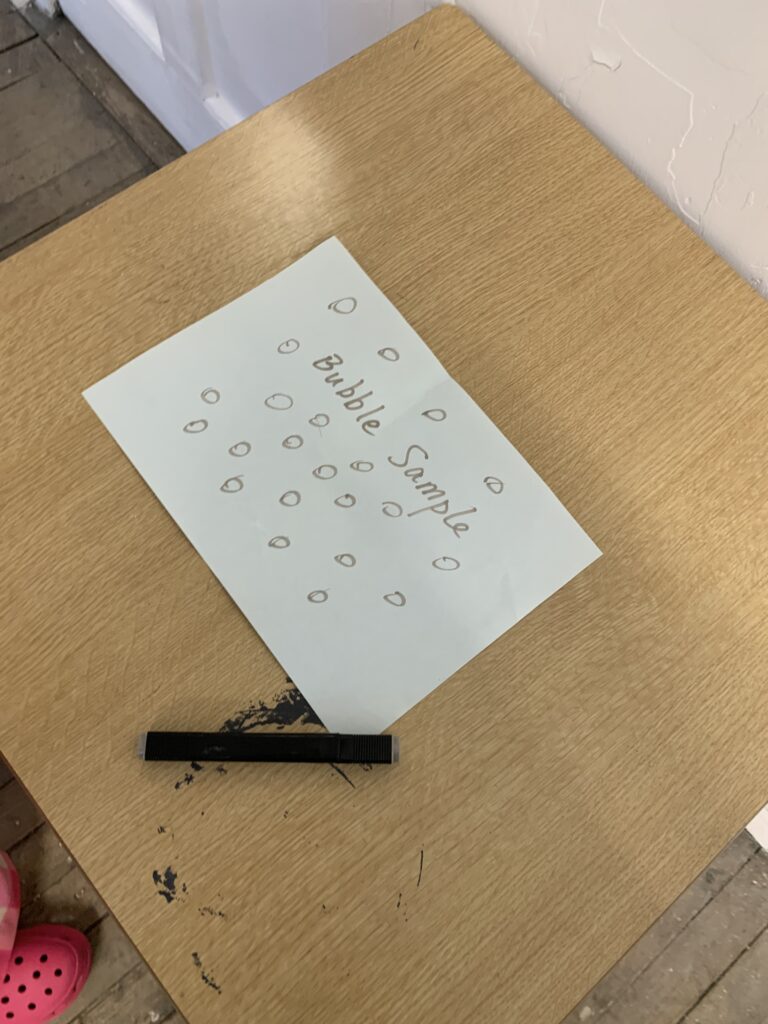
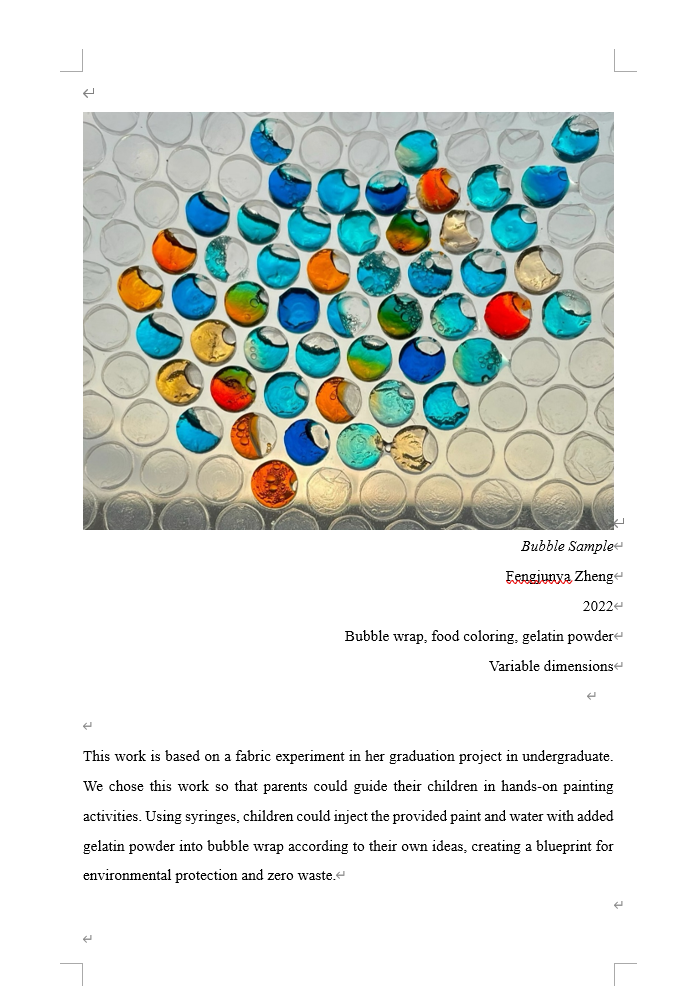
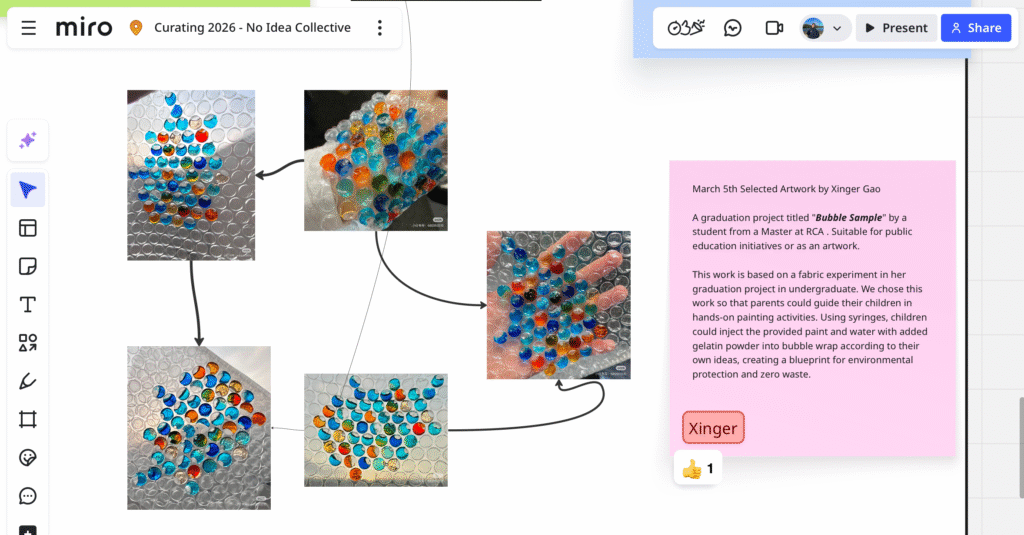
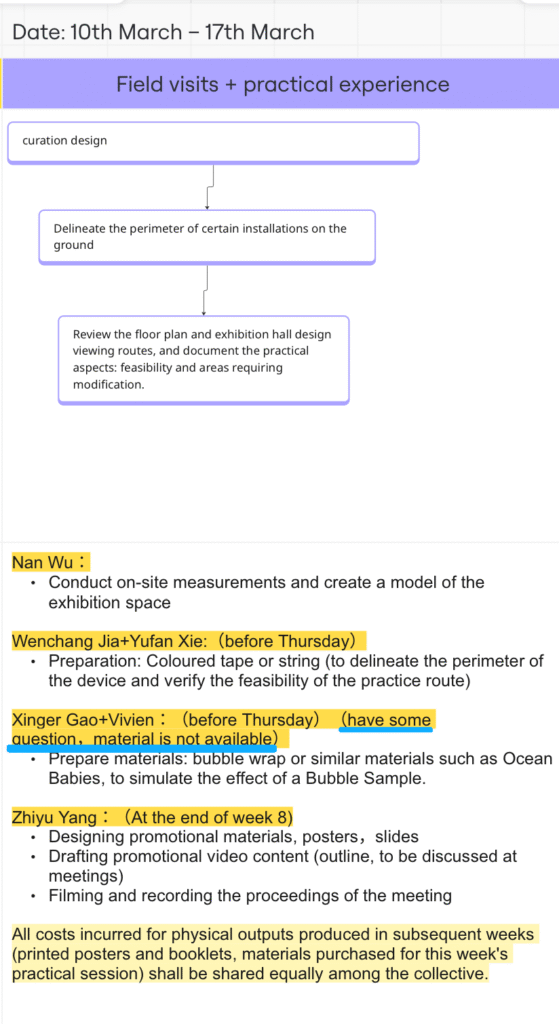
During group exhibition preparations, we debated whether field measurements required resource consuming. I raised this as Zhiyu Yang asked me to bring bubble wrap—the material I selected. Recalling our collective’s manifesto: “We will not create physical waste to show art,” I questioned if new bubble wrap would violate the manifesto, the artist’s intent, and the exhibition theme “Breathe” centered on environmental protection. We ultimately used tape to mark dimensions instead.

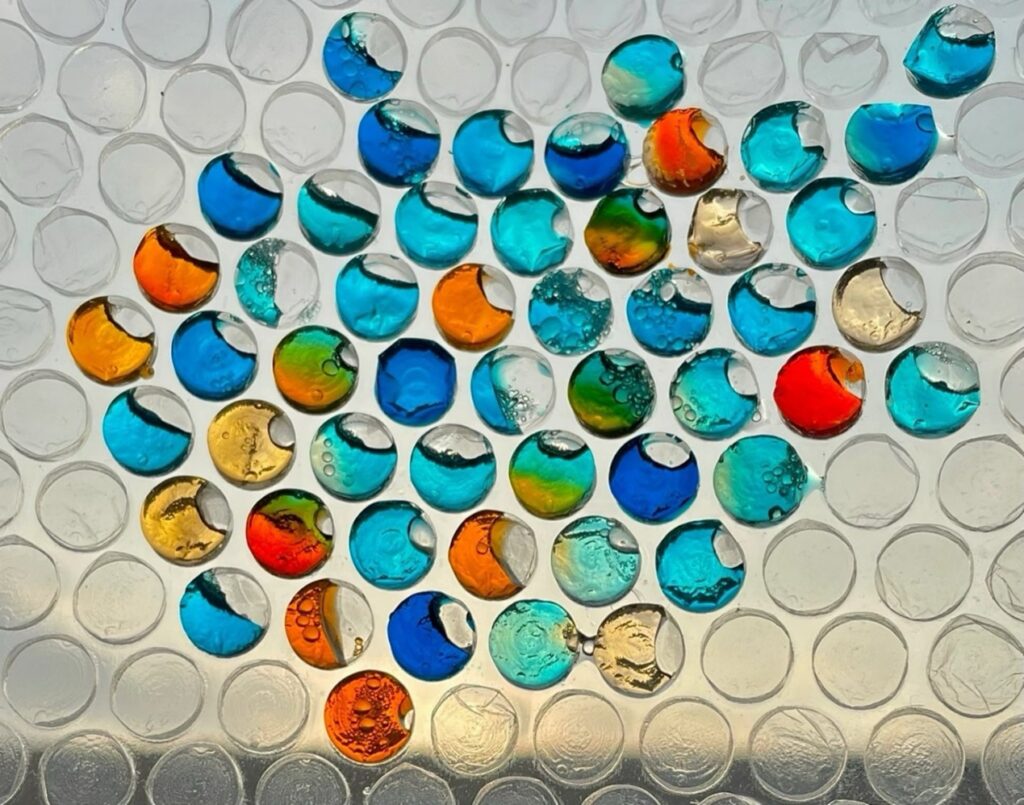
Figure 9: The collective exhibition artwork I selected. Bubble Sample, Fengjunya Zheng, 2022, Bubble wrap, food coloring, gelatin powder, Variable dimensions.

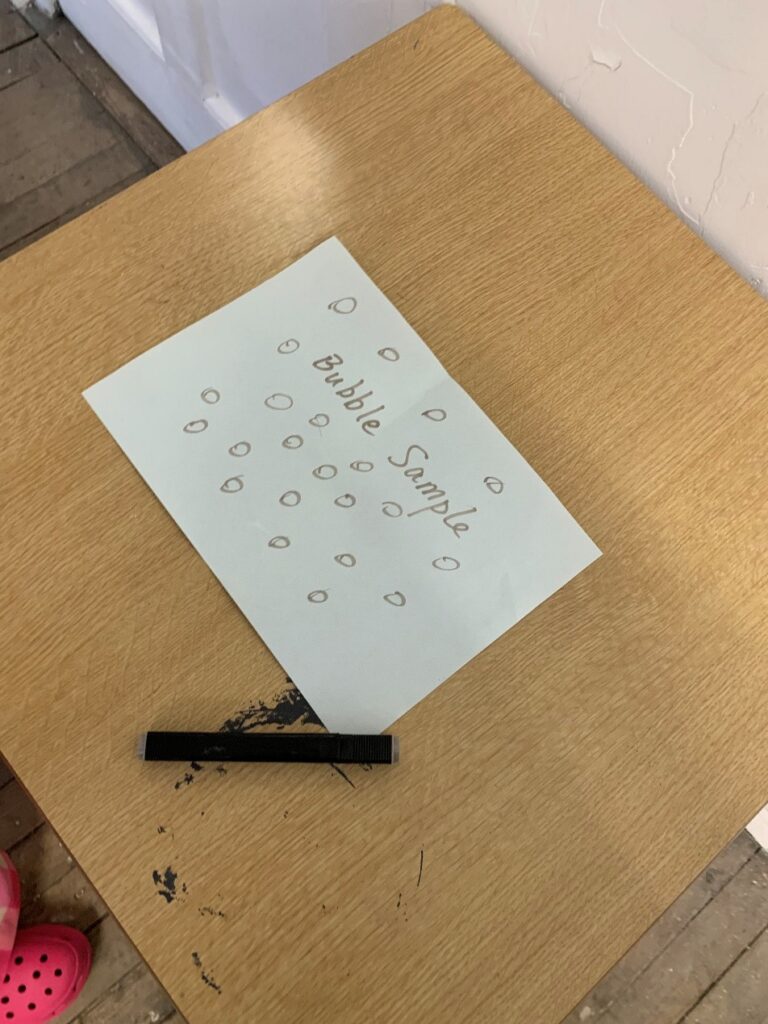
Figure 10: Our collective simulating the installation of the artwork using scrap paper.

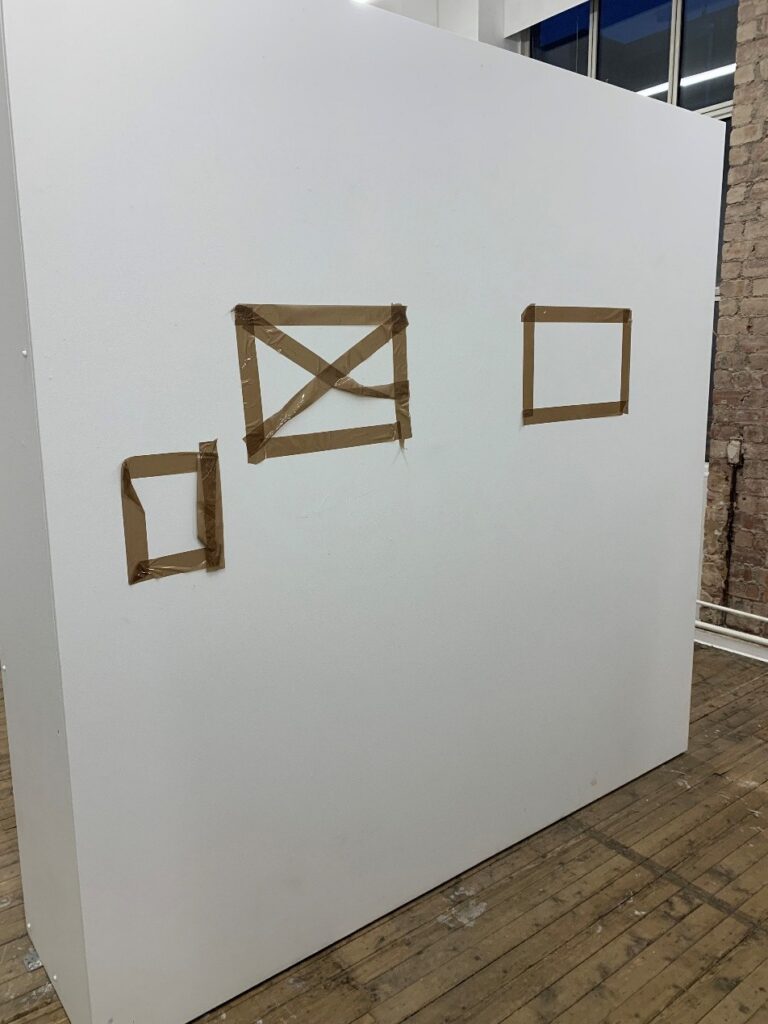
Figure 11: Our collective simulating the installation of the artwork using tape measure and tape.


In the collective, I noticed that I am still a novice when it comes to poster graphic design and creating 3D models of exhibition spaces. One area where my SICP project lacks is the absence of clearer, more visually appealing floor plans. Through the skills I acquired this semester, I have learned to use software to create exhibition posters. However, I still need to learn how to design more visually appealing floor plans as I continue my studies in curation.


Figure 12: This is the SICP poster I designed. The dominant green color represents the natural countryside, while the overlay of gray symbolizes human intervention in nature and conveys the idea that nature awaits the changes people will bring.


Conclusion

Through this semester’s reading and learning, extracurricular exhibition visits, and collective activities, I have learned how to identify exhibition themes of interest from theoretical readings, and how to select artworks based on specific questions within those themes. This process will help me plan the style of different galleries and organize works in large art museums in the future. I visited nearly one exhibition per week this semester, accumulating curatorial practices suitable for various types of venues. Collective activities, in particular, taught me that curators do not work in isolation; exhibitions are the result of collaboration. In my future curatorial studies, I hope to enhance my design and modeling skills so that I can not only engage in written exhibition planning but also take on the visual design work for exhibitions.


Footnotes

[1] Ronald Kolb, Camille Regli, and Dorothee Richter, “Centres ⁄ Peripheries– Complex Constellations,” Notes on Curating 41 (June 2019): 3.

The periphery is a remote, rural place, and it delivers raw materials, food, and other resources to the centre under the condition of exploitation.

[2] Kolb et al., “Centres ⁄ Peripheries– Complex Constellations”, 7.

…… while trying to build relationships with the centre, the peripheries still find themselves heavily excluded, both on the structural and intellectual level.

[3] Kolb et al., “Centres ⁄ Peripheries– Complex Constellations”, 6.

Nevertheless, art and culture have the possibility to produce “truth,” to reveal and to comment, and they are able to act to a certain extent as a counter-hegemony

[4] Kolb et al., “Centres ⁄ Peripheries– Complex Constellations”, 7.

[5] Kathrin Bohm and Wapke Feenstra, “Introduction,” in MyVillages, ed., The Rural (London: Whitechapel Gallery, 2019), 13.

Land Art can be seen as an early venturing away from the city, an institutional critique towards the urban and white cube-bound art apparatus.

[6] Bohm and Feenstra, “Introduction,” 15.

Industrial and technological revolutions/infrastructures in urban areas offered overcrowded and economically weak rural communities a new home, causing depopulation and a new urban working class, while industries that rely on ground and soil resources dig up rural landscapes and spit them out as hubris and holes.

[7] Bohm and Feenstra, “Introduction,” 16.

…… we need to rethink our position to manual labour, land use and food production.

[8] Bohm and Feenstra, “Introduction,” 17.

In the Lake District of England (a famous area of natural beauty) a farmer was recently prosecuted for keeping a messy farm ……the concern was that people would get a bad impression of the area …… the farmer was fined, and obliged to clean up his farm and introduce new tidier farming methods.

[9] Echigo-Tsumari Satoyama Collaboration Organization, Echigo-Tsumari Art Triennale Official Website, accessed April 4, 2026, https://www.echigo-tsumari.jp/.

[10] Tsinghua University Academy of Arts & Design, “Art Toward Mountains and Rivers: The Opening of the Achievement Exhibition of the 2023 Anji Youth Art Creation Camp of Tsinghua University Academy of Arts & Design”, Official Website of Tsinghua University Academy of Arts & Design, October 27, 2023, https://www.ad.tsinghua.edu.cn/info/1389/30427.htm.

[11] Alistair Hudson, Building a User-Generated Museum: A Conversation with Alistair Hudson, openDemocracy, 5 May 2017, https://www.opendemocracy.net/en/building-user-generated-museum-conversation-with-alistair-hudson/.

Always the ambition was that this would not be a singular exhibition but a tool in developing this as a continual strategy as we went along.

[12] Alistair Hudson, Building a User-Generated Museum.

But it naturally makes it a place where there are a lot of intense versions of all the problems we see in British post-industrial, post-colonial society. So it’s not one that’s necessarily receptive to the idea of an art gallery.

[13] Kolb et al., “Centres ⁄ Peripheries– Complex Constellations”, 6.

Nevertheless, art and culture have the possibility to produce “truth,” to reveal and to comment, and they are able to act to a certain extent as a counter-hegemony

[14] Alistair Hudson, Building a User-Generated Museum.

Always the ambition was that this would not be a singular exhibition but a tool in developing this as a continual strategy as we went along.

[15] Alasdair Gray Archive – a generative ‘living’ archive – curated through ‘radical care’ by Custodian Sorcha Dallas.

This is a feminist approach to archiving called radical empathy, which is the “ability to understand and actively consider another person’s point of view in order to connect more deeply with them.”


References

Kolb, Ronald, Camille Regli, and Dorothee Richter. “Centres ⁄ Peripheries– Complex Constellations.” Notes on Curating 41 (June 2019): 3.

Bohm, Kathrin, and Wapke Feenstra. “Introduction.” In The Rural, edited by MyVillages, 13. London: Whitechapel Gallery, 2019.

Echigo-Tsumari Satoyama Collaboration Organization. Echigo-Tsumari Art Triennale Official Website. Accessed April 4, 2026. https://www.echigo-tsumari.jp/.

Tsinghua University Academy of Arts & Design. “Art Toward Mountains and Rivers: The Opening of the Achievement Exhibition of the 2023 Anji Youth Art Creation Camp of Tsinghua University Academy of Arts & Design”. Official Website of Tsinghua University Academy of Arts & Design, October 27, 2023. https://www.ad.tsinghua.edu.cn/info/1389/30427.htm.

Hudson, Alistair. “Building a User-Generated Museum: A Conversation with Alistair Hudson.” openDemocracy, May 5, 2017. https://www.opendemocracy.net/en/building-user-generated-museum-conversation-with-alistair-hudson/.


Summative Peer Review of Wenchang Jia on 10th April

I review Wenchang Jia’s blog. When I first visited his blog, I was immediately drawn to his visually appealing cover. The overall layout uses a single main image as the cover, accompanied by text with captions. He combined lecture materials, reading resources and exhibition visits to develop his SICP. His personal reflections and vivid descriptions of how a particular artwork sparked a shift in thinking are the distinctive strengths. However, some content is overly brief and unclear, so I suggest adding concise explanations. The Week 13 post is also oversimplified and needs expansion, rather than writing hastily simply because the semester is coming to an end.


I really appreciate the personal style he demonstrated in the first week when he reflected on his background in broadcasting and named the blog “A New Beginning.” He combined his experience visiting the Picasso Museum with Ana Bilbao’s theory that “large-scale exhibitions sacrifice the quality of interaction[1].” However, I believe his connection between the Matthew Arthur Williams exhibition and SVAO’s “engage with specific communities” is not particularly strong.


From week 2, he began selecting artworks and connecting them to both coursework and the insights gained from visiting exhibitions. For example, he reflected on artwork Linwood Battery Plant Fire in relation to his SICP Scars of Progress and the concept of “curating as midwifery” from Curating as Ethics[2]. However, his statement regarding the 60-minute rapid exhibition challenge in Week 3—“turning rapid practice into a method for my project”—was unclear, leaving me unable to grasp how this practice was applied to his SICP project.


I highly appreciate his decision in Week 5 to incorporate real materials as “evidence” into his exhibition selection based on a CAP student’s work. I believe this was an attempt to lend greater depth and persuasiveness to the exhibition’s theme. He also designed the walls and lighting for his exhibition based on the content of the article[3]. Week 6 marks progress in his SICP text design, artwork dimensions, exhibition safety, and the design of exhibition walls and lighting. In my view, this represents very practical preparation for the exhibition.


From Week 7 to Week 9, he focused on collective’s practice at Summerhall and the exhibition labels. Through reading and gallery visits[4], he began designing accessibility facilities, including text and background colors, sunglasses and chairs.


In Week 10, through visiting exhibitions of installation, he further solidified the idea that had emerged in Week 5: “to place real physical objects beneath the photographic content” I also saw his detailed description of this aspect in his SICP: “a sample of wastewater, beneath the images bridges the gap between two-dimensional artworks and tangible reality.” However, during Week 13, when he mentioned “practical curatorial skills for my future artistic career”, I suggested he elaborate on the specific skills he had learned, as the blog was shorter and of lower quality than before.


[1] Bilbao, A. (2018) ‘Micro-Curating: The Role of SVAOS (Small Visual Arts Organisations) in the History of Exhibition-Making’, Notebook for Art, Theory and Related Zones, 25, pp. 118-138.

[2] Martinon, J.-P. (2020) Curating as Ethics. Minneapolis: University of Minnesota Press.

[3] Wang, X., Wang, Z., Qian, X. and Qiao, H. (2026) ‘Impact of Luminous Environment on Visual Attention and Emotional Response in Screen-Based Immersive Narrative Spaces: An Experimental Study’, Buildings, 16(4), p. 696. Available at: https://doi.org/10.3390/buildings16040696 (Accessed: 12 February 2026).

[4] Hutson, P. and Hutson, J. (2024) ‘Expanding Sensory Kit Utilization Across Age and Contexts: Bridging Gaps for Inclusive Accessibility’, Novel Trends in Mental Health. Available at: https://digitalcommons.lindenwood.edu/faculty-research-papers/699/ (Accessed: 8 March 2026).


Week 13: Learn the Knowledge and Skills for Future Large-scale Exhibitions

This week, I visited the National Museum of Scotland to view the exhibition and learn[1]. Through this visit, I gained practical skills that will be useful for future curatorial work at large art galleries and museums.


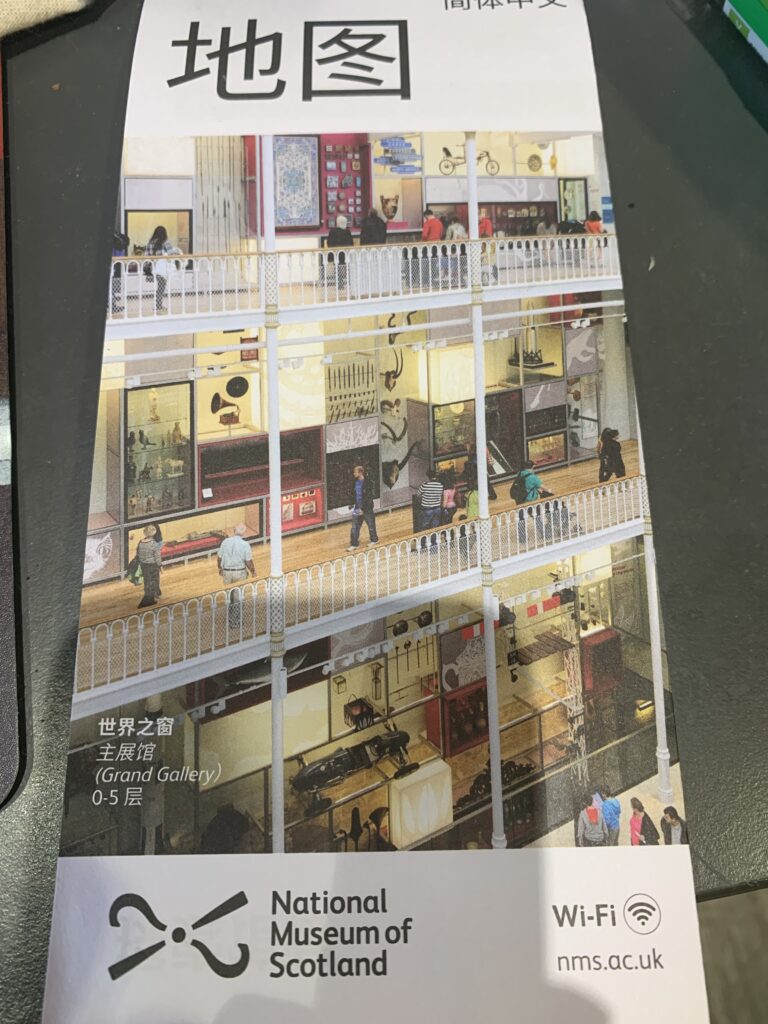
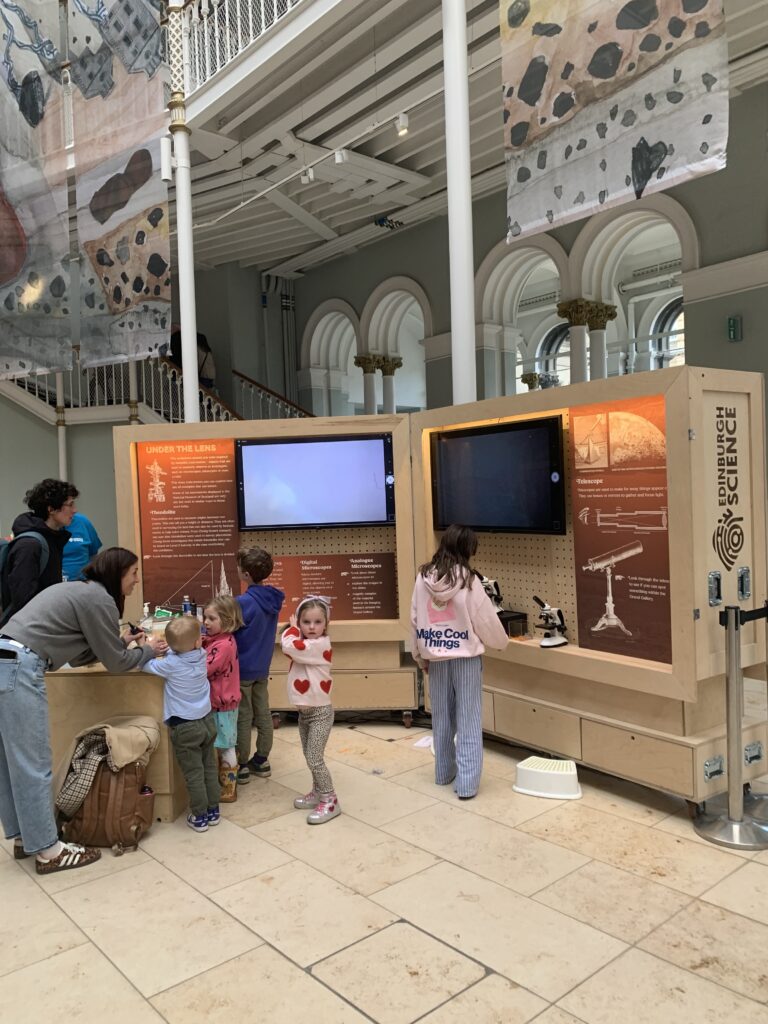
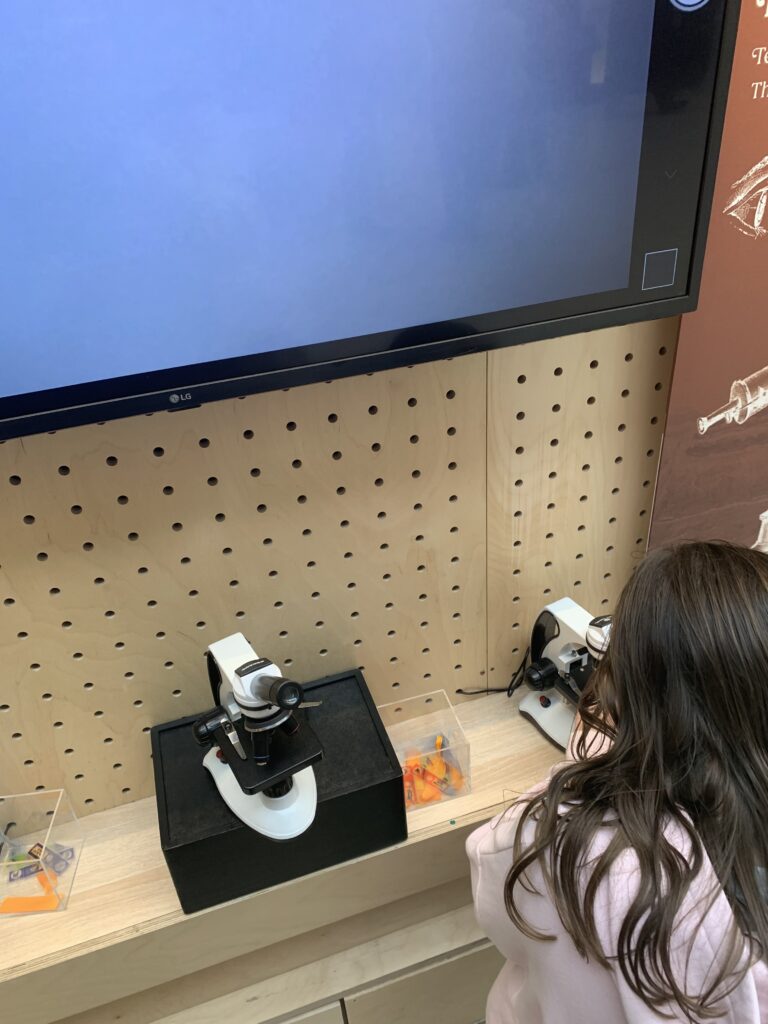
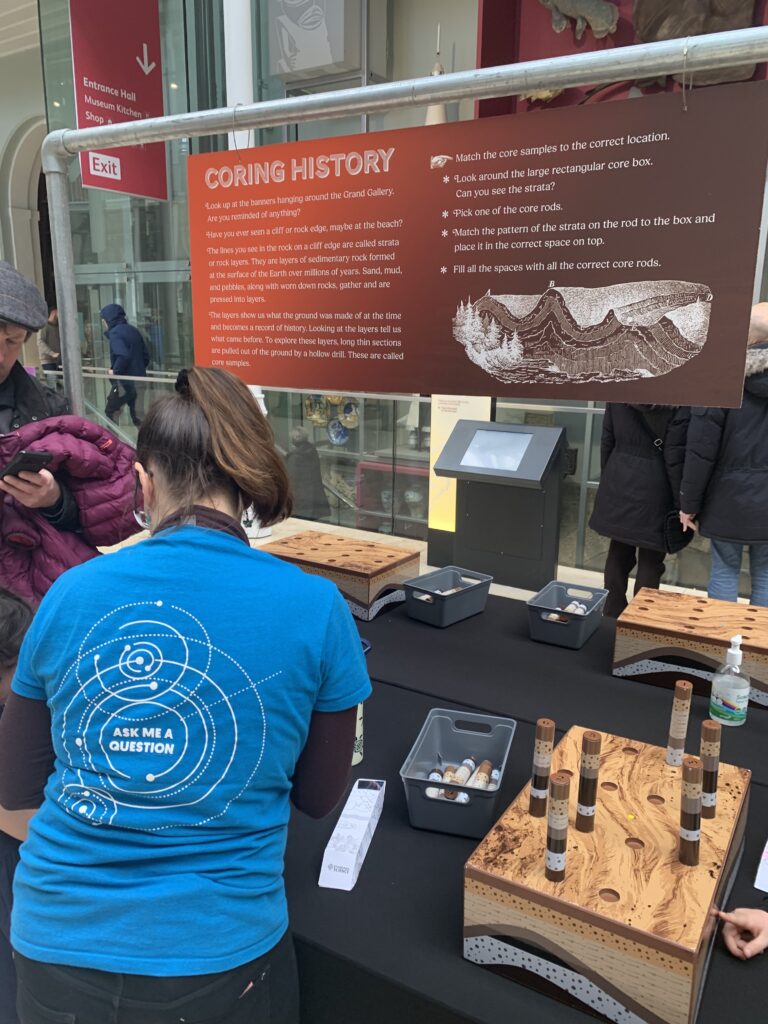
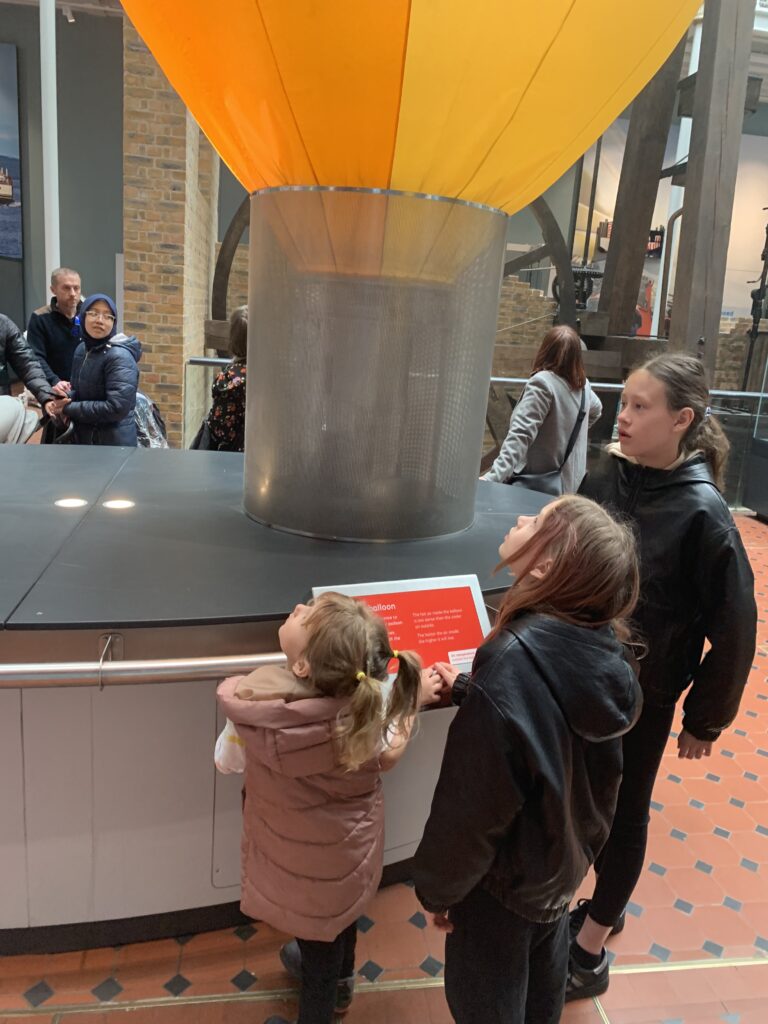
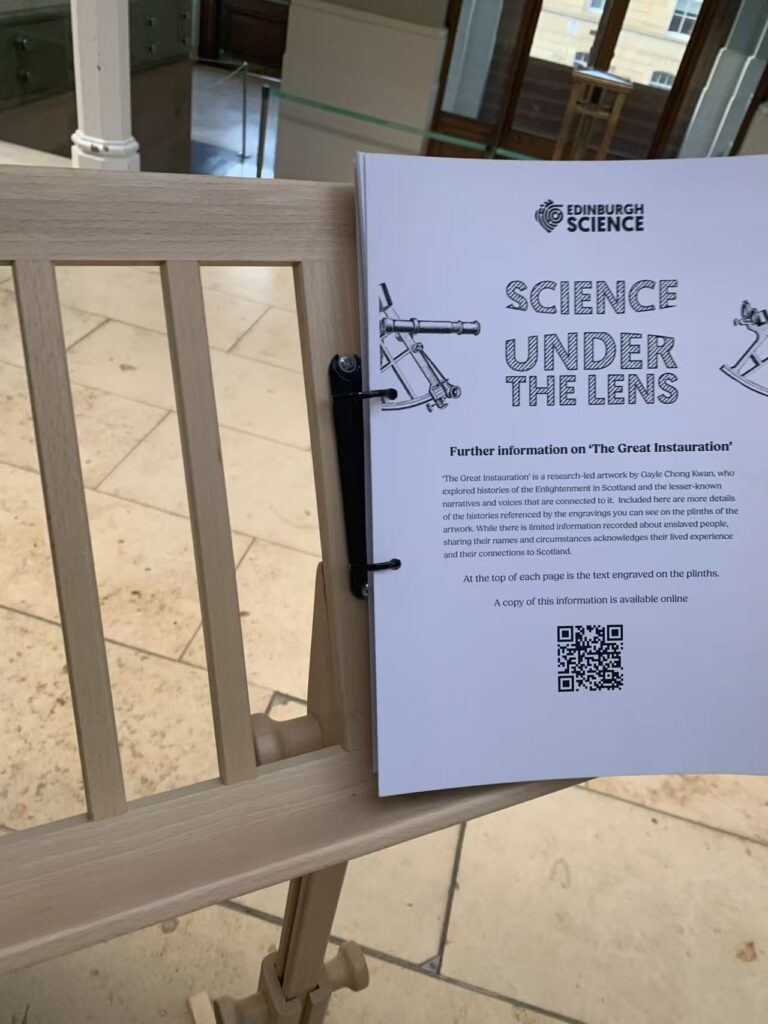
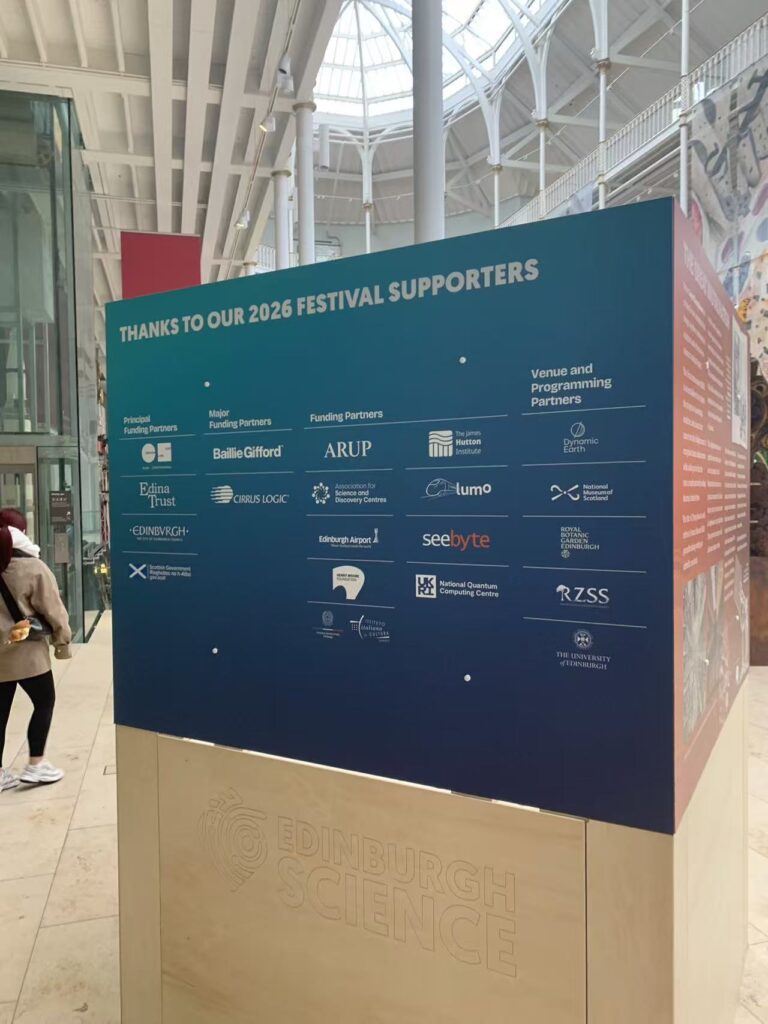
First, the map at the entrance is available in multiple languages, which is an example of accessible design worth studying. The map shows the specific locations of each exhibition hall, as well as the most famous or recommended exhibits in each hall. However, because it requires translation into multiple languages, I am unable to incorporate this into my SICP project due to my current limited budget; nevertheless, it will be beneficial for my future curatorial practice in permanent exhibitions at large art galleries and museums. I noticed that the Science and Technology Gallery and the Art, Design, and Fashion Gallery at the National Museum of Scotland are highly interactive. This interactivity allows visitors to build a relationship with the exhibits within the galleries. A temporary exhibition titled Edinburgh Science Festival[2] is currently on at the Art, Design, and Fashion Gallery. I found this exhibition particularly appealing to families with children, as it offers numerous interactive installations designed for children to learn and explore. Staff members provide explanations and assistance at each installation.


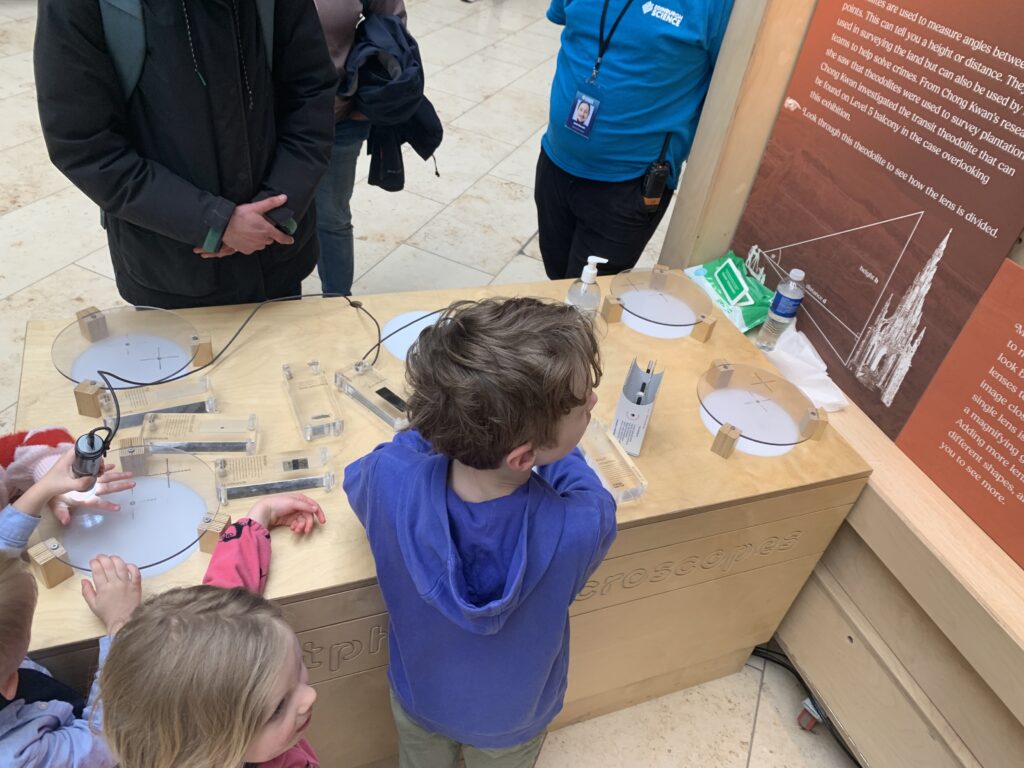
My SICP public project, “Create Your Tiny Village,” takes the form shown in Figure 4: a table set up with Kefan Zhang—the artist whose artwork inspired my public project—standing by to assist participants. However, this large-scale art festival format—featuring multiple interactive installations or public projects within a single exhibition hall—is difficult to implement in my SICP due to staff limitations, the small size of my venue, the need to rent additional space for a public program, and insufficient funding. Therefore, I will document these interactive and experiential installations for use in my future curatorial studies and practice. In contrast, the Ancient History exhibition in the Scotland Gallery lacks interactivity, consisting mostly of text and a single display of artifacts. While this serious style fits the atmosphere of a history exhibition, it is not very appealing to children.


Figure 1: A map in Chinese provided at the museum’s main entrance

Figure 2: An interactive installation in Edinburgh Science Festival at Art, Design, and Fashion Gallery, which is very popular with families with children.

Figure 3: An interactive installation in Edinburgh Science Festival at Art, Design, and Fashion Gallery, which is very popular with families with children.

Figure 4: An interactive installation in Edinburgh Science Festival at Art, Design, and Fashion Gallery, which is very popular with families with children.

Figure 5: An interactive installation in Edinburgh Science Festival at Art, Design, and Fashion Gallery, which is very popular with families with children.

Figure 6: An interactive installation in Edinburgh Science Festival at Art, Design, and Fashion Gallery, which is very popular with families with children.


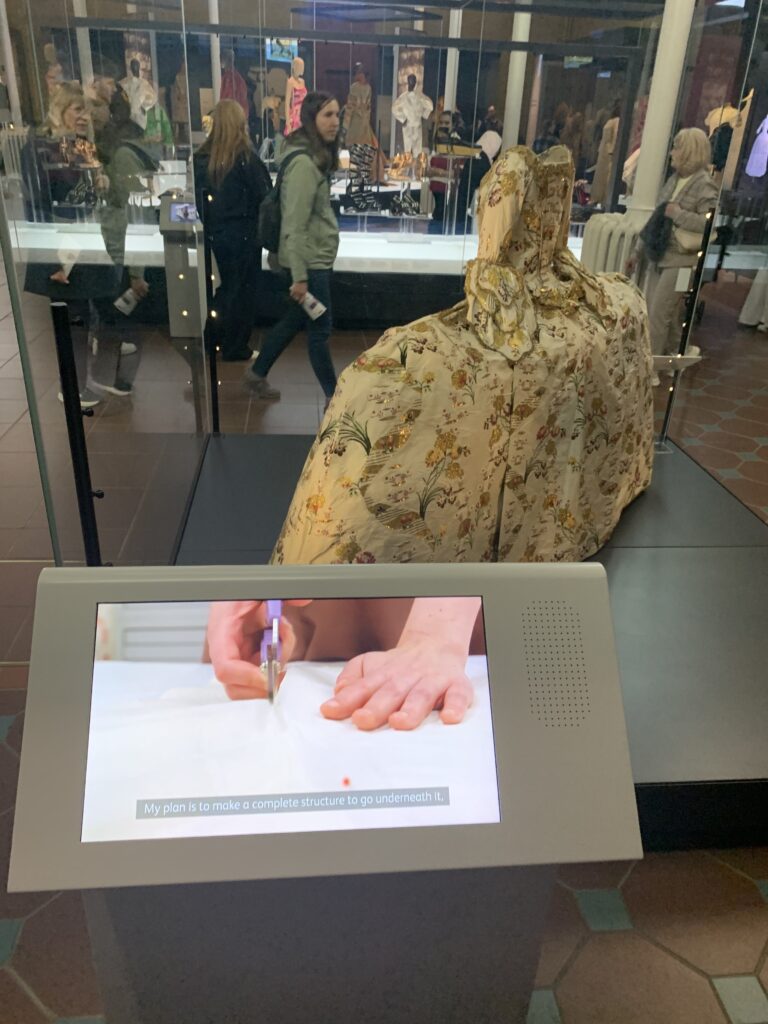
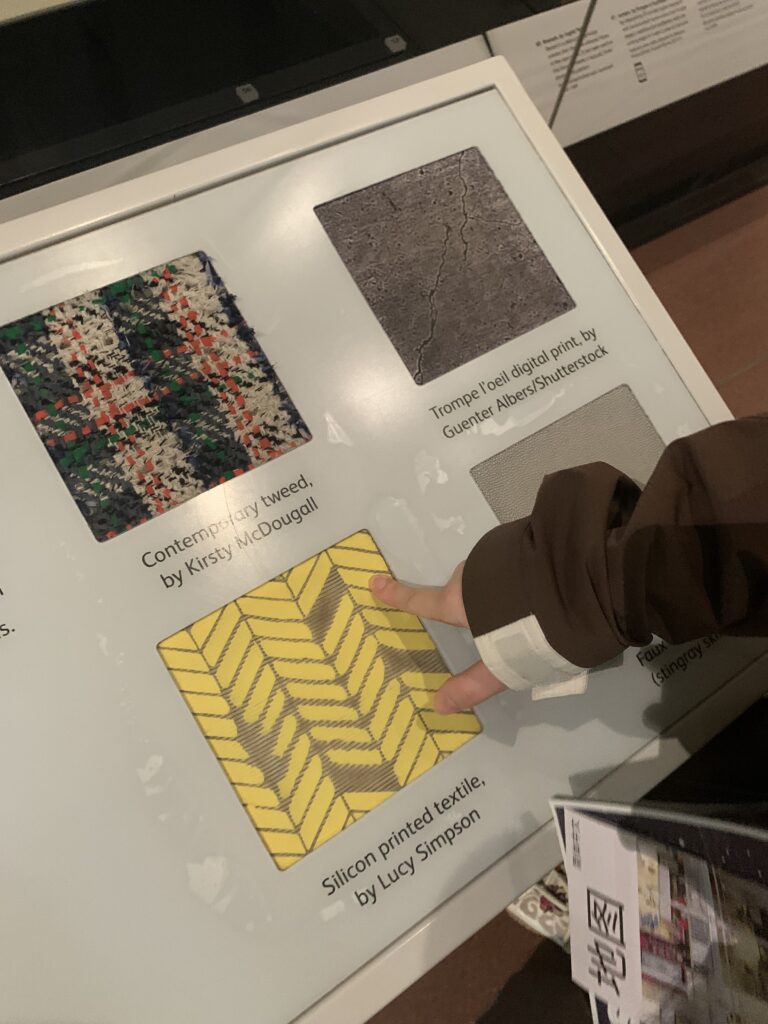
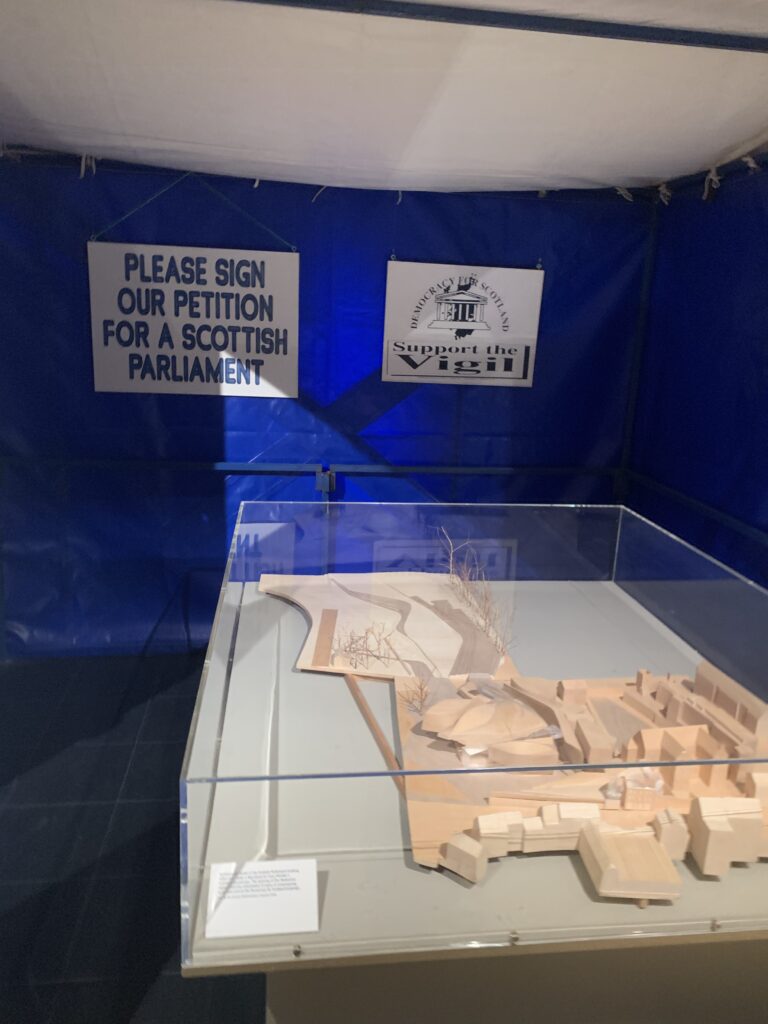
Secondly, in the Art, Design, and Fashion gallery, I noticed that the curators used video introductions to explain the artworks. In front of each display case, there was a screen where visitors could watch the artists themselves or researchers discuss the exhibits. Some clothing exhibits had touchable fabric samples, which helped increase visitor engagement and experience. I also observed other forms of textual presentation throughout the museum. For example, shelves were set up to hold guidebooks and multi-angle display boards. In the Scotland exhibition hall, I observed how certain physical exhibits were displayed. For landscape design works, physical models can be displayed; this approach could be useful for my SICP project in larger exhibition spaces in the future.


Figure 7: Video explanations alongside the artworks in the Art, Design, and Fashion Gallery

Figure 8: Touchable fabric samples displayed next to the artwork in the Art, Design, and Fashion Gallery

Figure 9: Text descriptions displayed on shelves at the Edinburgh Science Festival

Figure 10: Text displayed on multi-angle boards at the Edinburgh Science Festival

Figure 11: A model of a landscape design work in the Scotland exhibition hall


[1] Home | National Museums Scotland

[2] Edinburgh Science Festival 2026 | National Museums Scotland


Week 12: Visiting Exhibitions Provides Foundation for Future Curating

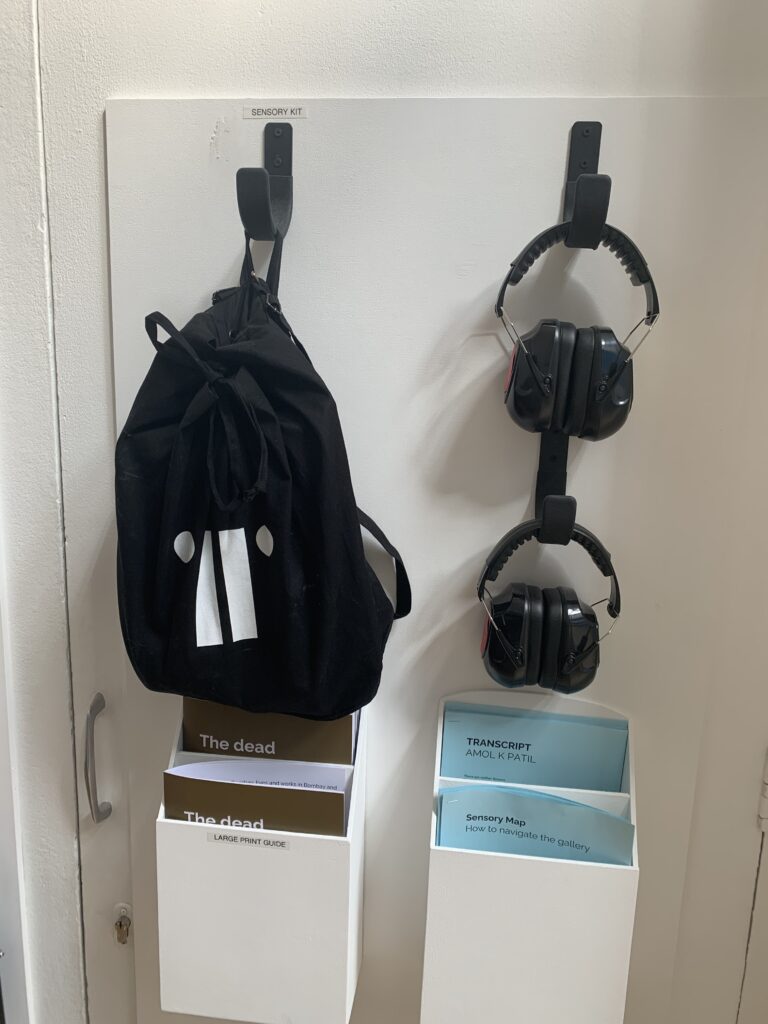
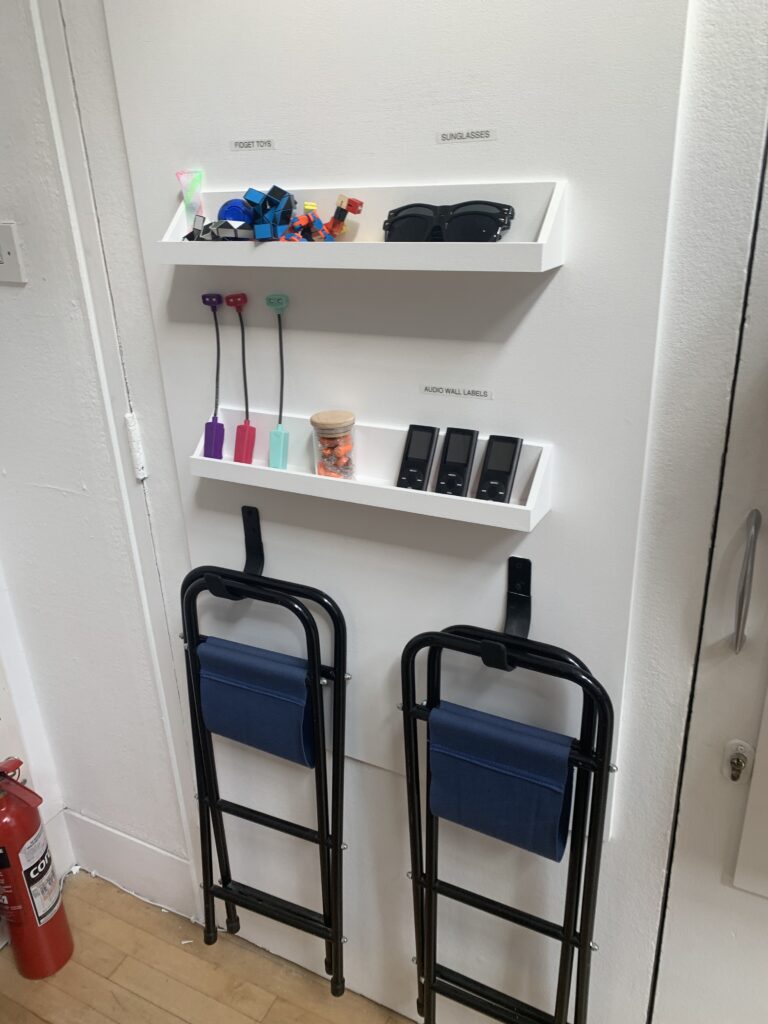
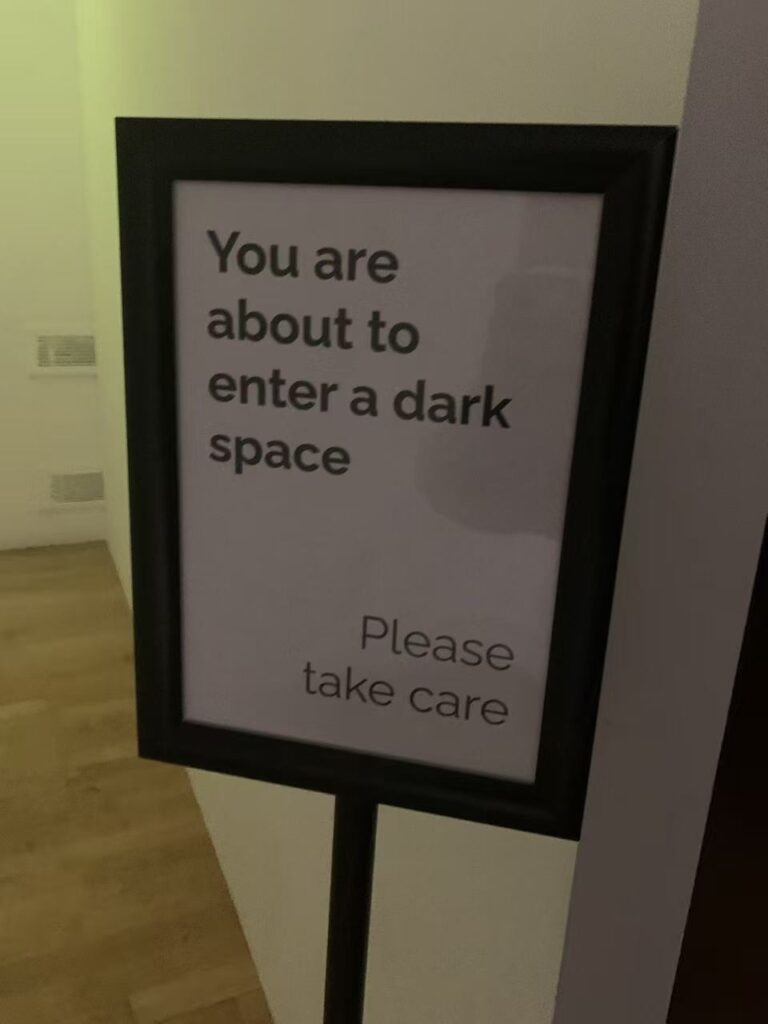
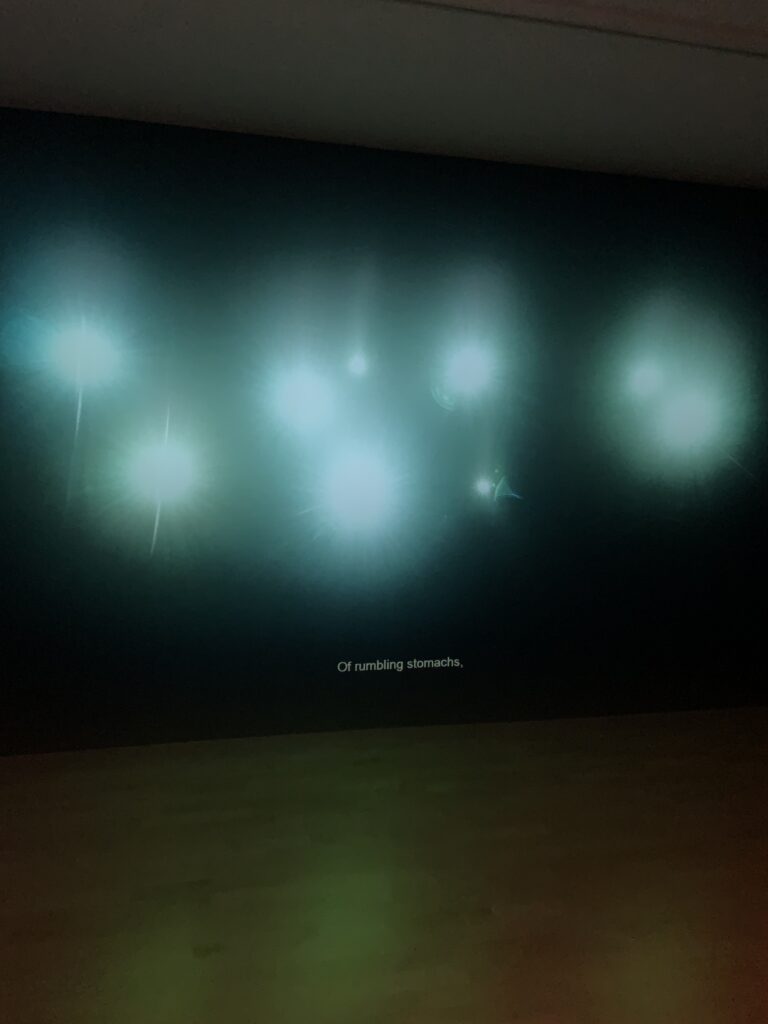
This week, I visited the group exhibitionThe Dead Don’t Go Until We Do at the Talbot Rice Gallery for a case study[1]. I noticed that the accessibility facilities at the entrance were very comprehensive, including audio guides and audio labels, sunglasses, folding chairs, and even fidget toys for children and people with ADHD. I also noticed warning signs at the entrance to the dark exhibition space alerting visitors that they were about to enter a dark area, which is something I should learn from. However, I believe there should be a warning about flashing lights in front of the video installation, otherwise people with epilepsy might feel uncomfortable.


Figure 1: Accessibility facilities at the entrance

Figure 2: Accessibility facilities at the entrance

Figure 3: A sign warning of entering a dark area.

Figure 4: The video contains frequent flashing lights, which may cause discomfort to viewers with epilepsy or light sensitivity. Therefore, I propose adding a warning.


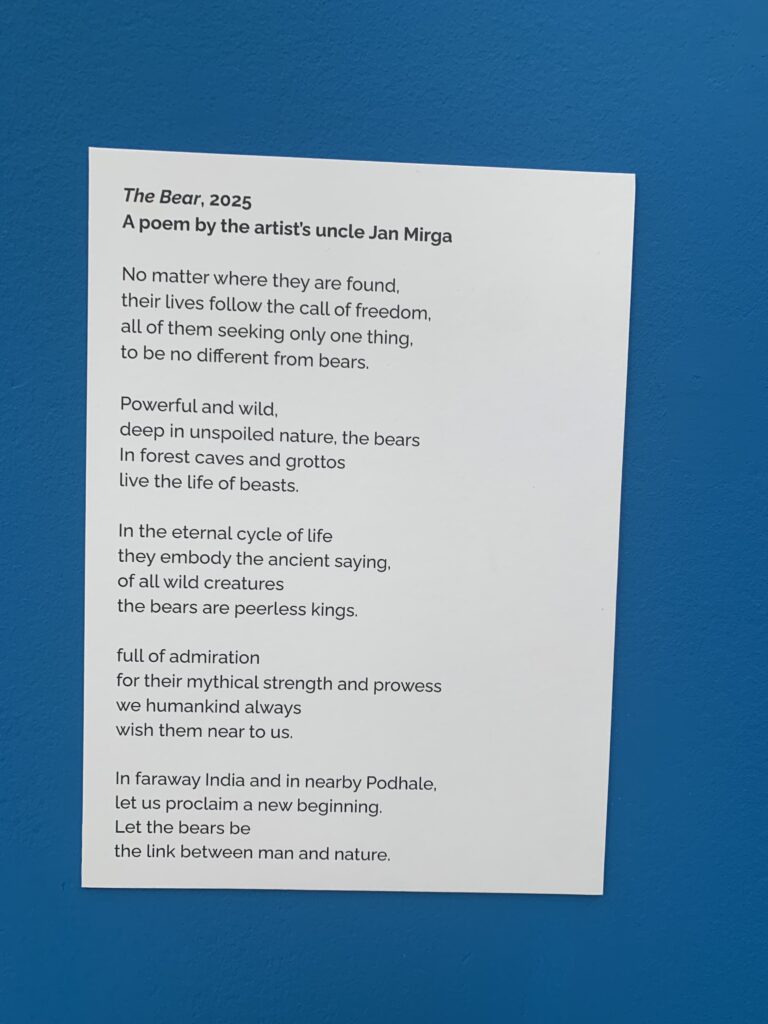
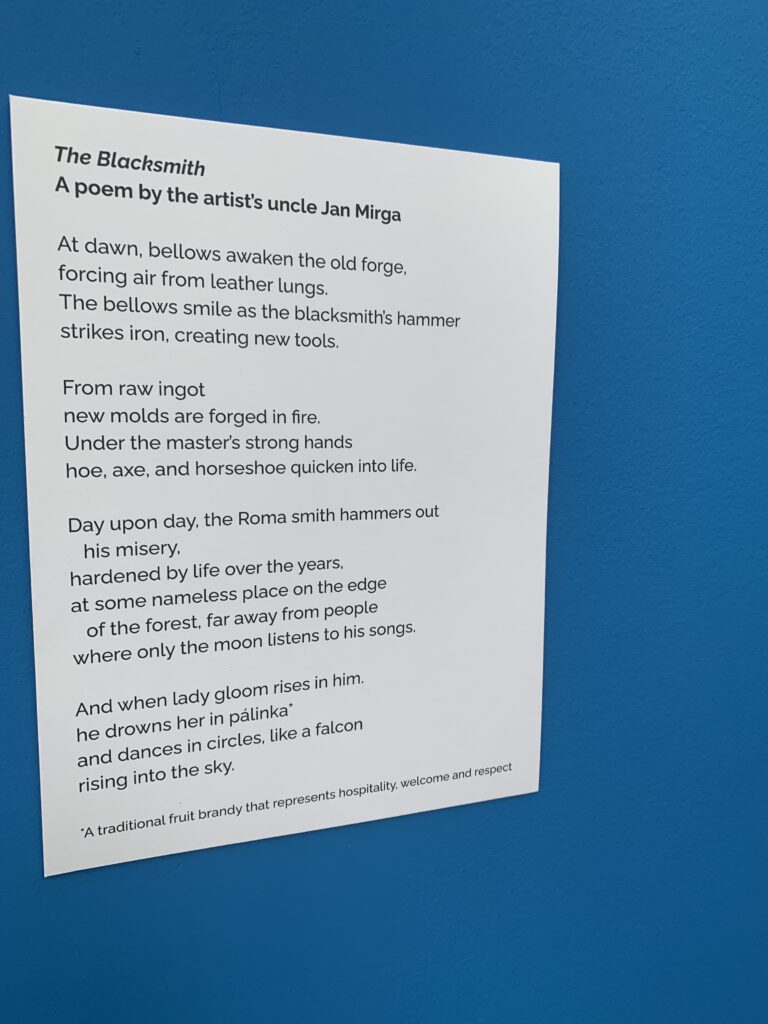
Upon entering the gallery, I noticed that the curator favored writing exhibition labels in the form of poetry; this more dynamic approach provided a deeper explanation of the works than standard labels.


Figure 5: An exhibition label that explains the artwork in poetic language

Figure 6: An exhibition label that explains the artwork in poetic language


This group exhibition is divided into four main sections, with the curator arranging works by different artists across floors and spaces. As visitors move into each new section, the atmosphere shifts sharply, and the combination of colored walls and lighting creates a visually stunning experience.


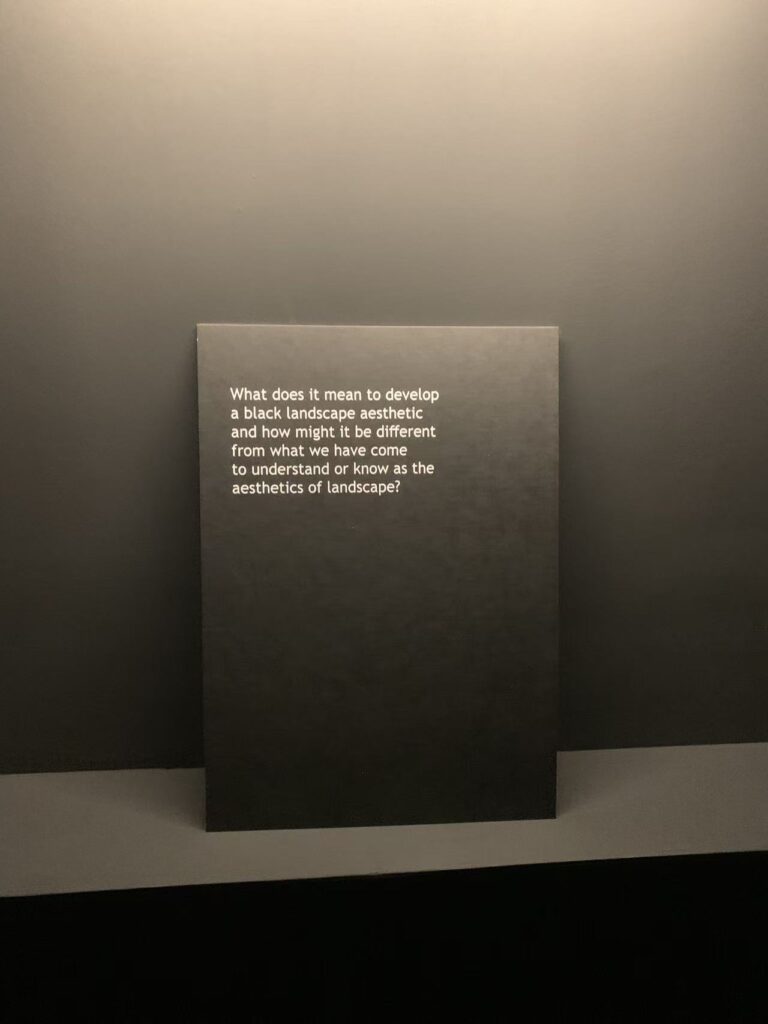
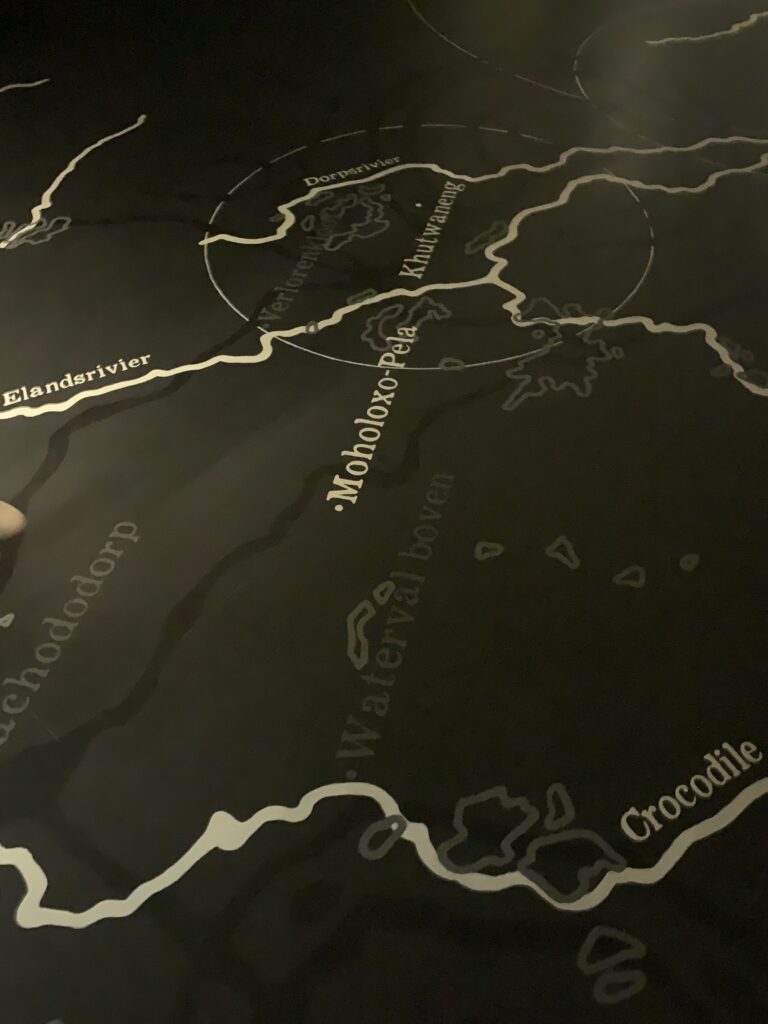
My favorite exhibition design is the final section of the group exhibition, where the curator’s design of this area represents an artistic expression that maximizes the use of space. Here, the spatial design is integrated with text provided by the artists. The curator uses the walls of the exhibition’s long, narrow corridor to display a series of question, with increasingly profound inquiries prompting the audience’s deeper reflection. As the tone of the questions gradually intensifies, accompanied by surround sound that enhances the immersion, visitors fully engage with both the artwork and the space. Furthermore, the floor design beneath their feet aligns perfectly with the artwork: a map outlined in white lines on a black floor allows European visitors to experience the feeling of occupying another’s land.


Figure 7: A series of questions is displayed along the gallery corridor walls; this image is one of them.

Figure 8: The floor of the exhibition hall is designed as a map, prompting visitors to reflect on the colonizers’ occupation of the land. MADEYOULOOK is a collaboration between Molemo Moiloa and Nare Mokgotho. They explore the landscapes shaped by the frequently displaced Koni people in South Africa. Working from the ancient earthworks left by the Bakoni, they think about alternative relationships to the land.


[1] The dead don’t go until we do | Talbot Rice Gallery


Week 11: Visit the Fruit market and Improve the SICP Facilities

This week, I continued to explore the theoretical connections between the articles I read last week and my SICP regarding location selection and the construction of public projects.


As for why I chose to hold my exhibition in Edinburgh rather than in the rural area where the development is needed, I referenced the Middlesbrough case study mentioned in Building a User-Generated Museum: A Conversation with Alistair Hudson[1]. For this reason, I did not choose to hold the exhibition in peripheral areas with difficult socioeconomic conditions, or in places where contemporary art is not understood or accepted[2].


As mentioned in the lecture slides, the article by Mick Wilson and Paul O’Neill states: “Curating also serves as a site of resistance, contesting dominant neoliberal narratives of individualism and market-driven culture in favor of public engagement.” Therefore, I will incorporate public programs into my exhibition, which focuses on the urbanization of rural areas and explores solutions to rural issues. My workshop focuses on the concept of “home” within the hearts of international students and immigrants, while my online accessible platform public project supports participation for all.


The second public program called “Create Your Tiny Village”. I will invite Kefan Zhang, a student in the ECA CAP program, to lead a handmade workshop at the Summer Hall Sciennes Gallery on the first day of the exhibition—August 15—from 2:00 to 5:00 p.m. We will invite visitors to design a model of the countryside that leaves the strongest impression. This model can be a sketch or a handmade object.


Untitled Kefan Zhang 2026 Yarn, cotton thread, pom-poms, etc. Variable size


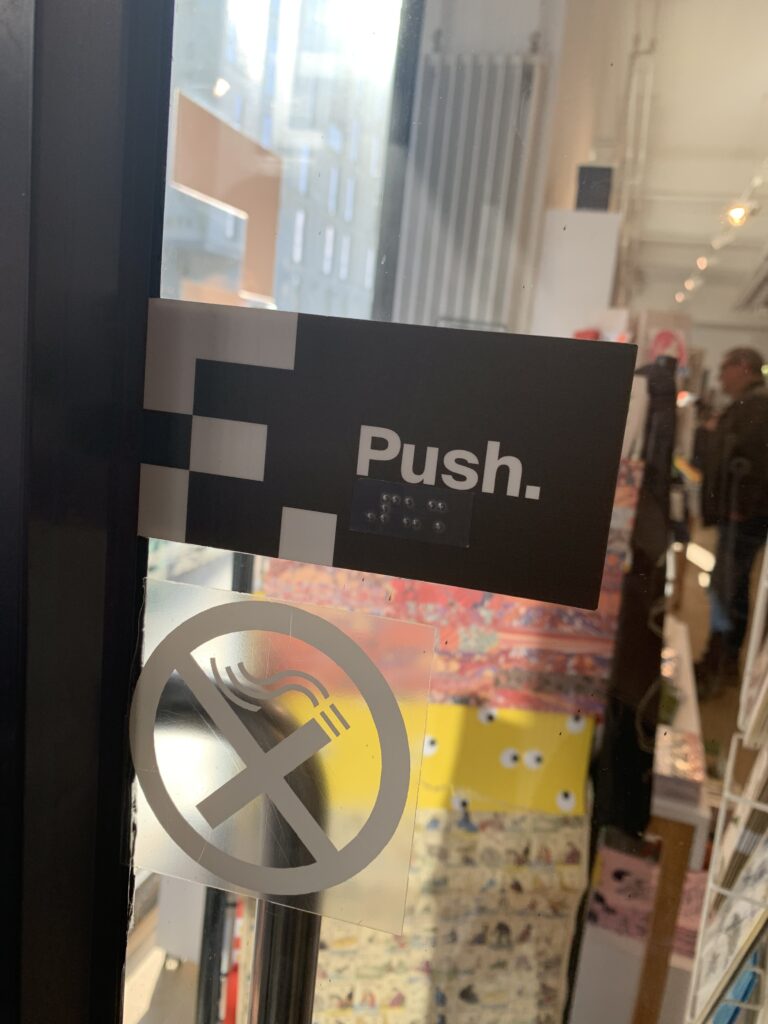
In addition, this week I visited the exhibition Ilana Halperin: What is Us and What is Earth at the Fruit Market[3]. By closely observing the exhibition’s facilities and layout, I learned how to display archival materials, how to implement accessibility features for the blind, and the standard conventions for exhibition labels. I noticed that the gallery’s entrance door had Braille for the blind to touch—an accessibility feature I had not previously considered. The exhibition’s textual materials consisted of three parts: first, the guidebook distributed to each visitor by gallery staff; second, a freestanding display case at the entrance showcasing key textual materials; and third, a book placed on a chair. I chose to present my SICP rural photo archive using the display case format, and this visit further validated the feasibility of my idea.


A display method I’ve learned: upright display case

I learned how to write exhibition labels.

I noticed the Braille text at the entrance for blind people to read.


[1] Alistair Hudson, Building a User-Generated Museum: A Conversation with Alistair Hudson, openDemocracy, 5 May 2017, https://www.opendemocracy.net/en/building-user-generated-museum-conversation-with-alistair-hudson/ (accessed 30 March 2026).

Middlesbrough is in the north-east of England. It’s what you might call a post-industrial town. It was a small farm, and then they discovered iron ore and coal in around 1830 and then it just exploded like an American frontier town. So it’s a town of migrants by origin, and has been reliant essentially on the iron and steel industry, which has been in decline since post-war. And as a consequence of that, it’s always been a place which has had difficult socio-economic circumstances, and now it’s probably in a position where it comes top of the table in most surveys of places in Britain in terms of disenfranchised communities, and high indices of deprivation. And then the steel works closing the year before last, from a psychological point of view, is almost the end of the very reason the town exists. So historically it has been a troubled place, but it has huge potential and lots of positives. But it naturally makes it a place where there are a lot of intense versions of all the problems we see in British post-industrial, post-colonial society. So it’s not one that’s necessarily receptive to the idea of an art gallery.

[2] Alistair Hudson, Building a User-Generated Museum.

You had that ‘Bilbao effect’ and everything that’s required in order to drive yourself forward in a precarious economy, and I guess at the beginning it sort of worked, and had a splash. But it’s always had resistance from all the usual things like, you know, ‘we don’t need an art gallery, we need schools and hospitals’, ‘we don’t need contemporary art, we don’t understand it, it’s not for us, why would we be interested in it’ – all those kinds of dialogues.

[3] Ilana Halperin: What is Us and What is Earth – Fruitmarket


Week 10 Further Investigation of Public Programs

Through my pre-class reading, Building a User-Generated Museum: A Conversation with Alistair Hudson, I further refined the theoretical foundation of my exhibition. My exhibition is intended to serve oppressed groups—residents of peripheral communities, sexual minorities, people with disabilities, and ethnic minorities—rather than the art market controlled by a select few[1]. I will reallocate power and direct funds toward artists and communities in peripheral regions[2]. The products I design and sell are not intended to serve the cultural capital of the art market; instead, I will discuss with the artists who provide the patterns how to donate the funds earned from these products to peripheral regions. Since sources of income have a variety of impacts, including strengthening public programs, I have chosen to sell these products so that the profits can be used to expand future public programs. My exhibition is not merely a single event, but rather a tool for an ongoing strategy that incorporates various public programs[3]. Naturally, this expansion might involve broadening the scope of the online accessibility platform, such as creating a website for fundraising and promotion.


My exhibition should not be targeted at a single group of collectors[4]. Consequently, the artworks I have selected are printed copies of digital works, including design drafts and 3D model renderings provided by artists who have recently graduated from the ECA. These works explore narratives surrounding peripheral communities, with the aim of engaging with these areas and offering solutions—rather than entering the art market to become mere decorative items in collectors’ homes.


[1] Alistair Hudson, Building a User-Generated Museum: A Conversation with Alistair Hudson, openDemocracy, 5 May 2017, https://www.opendemocracy.net/en/building-user-generated-museum-conversation-with-alistair-hudson/ (accessed 30 March 2026).

So I’ve been interested in that trajectory within the history of art, which is not the one we’re told – which has been defined by the market and by capital – and we should instead reclaim art as a much more all-encompassing, ordinary activity for everybody, rather than something for the elites or the 1% or for those that have, as opposed to those that don’t.

[2] Alistair Hudson, Building a User-Generated Museum.

So the ambition – and this is why I talk about ‘usership’ and the useful museum – is that you create an institution that is created by and through its usership, so that the content and the function is increasingly less determined by those in power, but rather you redistribute authorship, you redistribute power, to make the institution the true manifestation of its community.

[3] Alistair Hudson, Building a User-Generated Museum.

throughout the show we developed a programme of what we call ‘community days’ where everybody came together to the museum, to reinforce their status and identity on equal terms. Always the ambition was that this would not be a singular exhibition but a tool in developing this as a continual strategy as we went along. So every Thursday we have a community day for these groups: a free lunch, a whole day of activities, these groups are developing our garden as a community garden, and we’re running English classes, craft and design and technology workshops.

[4] Alistair Hudson, Building a User-Generated Museum.

And with the idea that we should not tell the story as singular curators, but we should open up the narrative to the communities around us – so we basically did an open call and in effect crowd-sourced the exhibition. It was this mayhem of artworks suggested and contributed by people, artists, non-artists and archives from the environment around us.


Week 9 Public programs Focusing on Intersectional Disability justice Activism

I admit I used to have some misconceptions about accessibility. After reading this week’s pre-class reading, Means Without Ends: Learning How to Live Otherwise Through Access-centered Practice, I’ve gained a new understanding of accessibility.


Originally, I had planned to create a QR code using Padlet and add an audio tour, as other galleries at Summer Hall had done. As the gallery is on the ground floor, I didn’t need to provide wheelchair access or ramps, nor a virtual exhibition for visitors who might be unable to enter the gallery.


However, after reading the article, I learned that accessible facilities include the built environment, human access, and assistive technologies[1]. I also learned that accessibility shouldn’t be viewed merely as a simple convenience measure[2]. In other words, I need to establish a platform where people with disabilities can experience exhibitions, advocate for their rights, and offer suggestions. I have also come to realize that my focus on addressing the living problems of residents in peripheral areas and seeking appropriate methods for rural development is, in fact, a form of intersectional disability justice activism[3]. Thus, I decided to redesign my QR code into a discussion and advocacy platform where all audiences can participate, breaking down barriers to disability rights and advocating for improved living conditions for people with disabilities, women, the elderly, and diverse communities in rural areas.


I can imitate the art curation organisation mentioned in the book and set up a public programme to help city residents support rural residents[4]. This idea of establishing direct connections between Edinburgh residents and rural communities around the world is the first step toward enhancing local residents’ access to welfare, services, and accommodations [5]. These small but powerful steps can begin in Edinburgh and spread via the internet to relatively wealthy rural areas—that is, those with internet access—and spark change starting from these places[6]. The public program goes beyond the physical space of the exhibition itself, transforming into a cross-regional online activism experiment. It will be an action revealing urban hegemony and the exploitation of rural communities by power holders such as local governments. Moreover, it is an attempt to help local people recognize acts of oppression and courageously resist them by fostering cultural exchange among residents from different regions[7]. This allows audiences who have never met to form a collaborative and interdependent community through the internet. As a result, this program enables visitors who view my exhibition and scan the QR code to experience a sense of “access intimacy.”[8].


Below is the QR code for the Padlet I created. I got the idea for creating QR code from the accessibility infrastructure at Summerhall. It includes an audio tour guide, Easy Read documents featuring more accessible versions of the works created based on the course, and the statement of my public project[9].


This is a photo I took at Summerhall of the QR code for the audio tour displayed at the gallery entrance.

The Padlet QR code I created includes an online audio tour, an EasyRead text, and a communication platform where users can upload audio.


[1] Fazeli, Taraneh, and Cannach MacBride. “Means Without Ends: Learning How to Live Otherwise Through Access-centered Practice.” In As for Protocols, edited by Re’al Christian, Carin Kuoni, and Eriola Pira, 136. Amherst College Press, 2025. Access online through Discover.ed: https://discovered.ed.ac.uk/permalink/44UOE_INST/19p9fo8/cdi_jstor_books_10_3998_mpub_14526504_12.

……inclusion can be overcome via (ADA-mandated) accommodations—often 136 retrofit adjustments, adaptations, or supplements—provided by public and private institutions and employers.25 These include adaptations to the built environment such as elevators, curb cuts, and wayfinding; human access such as interpreters and access support workers; and assistive technologies like hearing loop systems.

[2] Fazeli, Taraneh, and Cannach MacBride. “Means Without Ends: Learning How to Live Otherwise Through Access-centered Practice.”, 136.

This access cannot witness or heal the harm and violence that disabled people have experienced historically through forms of segregation, and still experience. Access as accommodation cannot truly value disability culture, joy, and knowledge of ways to live otherwise, as it is fundamentally a project of normalization that neutralizes the political world-building potential of access as it is and has been practiced between humans unmediated by vast organizational bodies. The ableist world is just fine as it is and surely everybody wants in, right?

[3] Fazeli, Taraneh, and Cannach MacBride. “Means Without Ends: Learning How to Live Otherwise Through Access-centered Practice.”, 140.

The intersectional disability justice movement, with origins in San Francisco Bay Area organizing broadly and the collective Sins Invalid specifically, takes up the limits of disability rights.39 This framework addresses the intersection of oppressions according to identities and experiences of race, ethnicity, gender, class, sexuality, citizenship, housing status, and more.40 It is led by those most impacted (disabled LGBTQIA+ and BIPOC people), centers non-hypothetical body minds, focuses on immediate access formations and relationship building, and seeks to dismantle institutions while investing in community-focused solutions.

[4] Fazeli, Taraneh, and Cannach MacBride. “Means Without Ends: Learning How to Live Otherwise Through Access-centered Practice.”, 133.

They have been building relationships with communities with disability experience (even if not named as such) through cross-disability, unhoused veteran, and environmental justice organizations for the past two years.

In sharing plans to maintain ethical collaboration with the partners longer term, you understand how they approach their commitments to specific communities across differences and the land they work with and on through the lens of their family’s displacement as settler-refugees.

[5] Fazeli, Taraneh, and Cannach MacBride. “Means Without Ends: Learning How to Live Otherwise Through Access-centered Practice.”, 136.

Access to welfare, services, and accommodations still relies on being legally categorized as disabled (enough), regardless of how one experiences one’s disability.

[6] Kathrin Bohm & Wapke Feenstra, “Introduction” in MyVillages (eds.), The Rural (Whitechapel Gallery, 2019), pp. 12. MyVillages, “Introduction” in MyVillages (eds.), The Rural (Whitechapel Gallery, 2019), pp. 12-19.

The rural and the urban are interdependent, and the current dichotomy has always been false but was maintained because power could be gained from playing down and denying the actual relationship between city and countryside.

[7] Ronald Kolb, Camille Regli, and Dorothee Richter, “Centres ⁄ Peripheries– Complex Constellations,” Notes on Curating 41 (June 2019): 6.

Nevertheless, art and culture have the possibility to produce “truth,” to reveal and to comment, and they are able to act to a certain extent as a counter-hegemony or, as Adorno and Horkheimer have unmasked so-called cultural industry, art and culture are able to confuse and affectively involve people in false ideas about their conditions.

[8] Fazeli, Taraneh, and Cannach MacBride. “Means Without Ends: Learning How to Live Otherwise Through Access-centered Practice.”, 144.
Mingus emphasizes the possibility for access intimacy to occur instantaneously between people without shared experience or political identity. This intimacy need not be communicated linguistically, offering an intuitive, non-identity based, affective lens onto modes of relation beyond policy.
[9] I need to be more than a lesson you learned 2 – Disability Arts Online Virtual Gallery


Week 8 Add Archives and Field Measurements

Based on my tutor’s feedback, I developed a subtitle for my personal project—Design Answers Rural—to explain and expand my exhibition title, Peripherial Future. I also created a poster.

Figure 1: Peripheral Future: Design Answers Rural, a poster designed by Xinger Gao in 2026; variable dimensions


Based on the lectures and pre-class readings, I believe my project requires an archive. This is because I can use archive to present my personal observations of the current state of rural China—historical information that is often lost or displaced[1].


I plan to adopt a “radical care” archival approach[2]. I will incorporate my own photographic and interview materials, shot in Huge village, rural Hebei, China, into the exhibition. This will allow audiences to empathize with the residents and deeply understand my exhibition concept. I anticipate setting up the exhibition using table and chair(accessible facility); the estimated costs include table and chair rental at Summerhall (0), printing costs (0), and the purchase of photo albums (£5 in kind). I will place the photographs I took during my fieldwork and the texts obtained from interviews with locals in an album for visitors to browse. With tables and chairs provided, I believe interested visitors will be encouraged to explore my archives.


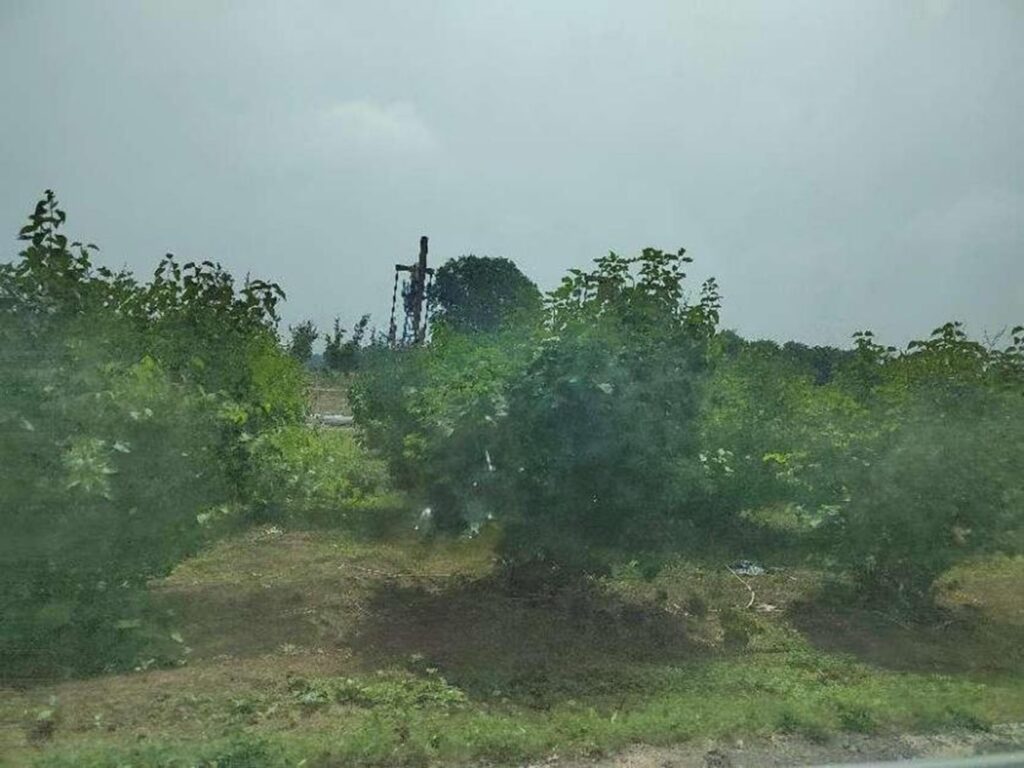
Figure 2: A photograph taken by Xinger Gao in 2025 in Huge Village, Hebei Province, China; dimensions variable; used for archival display. Oil extraction rigs are located on the western side of the village and are scattered throughout the outskirts.

Figure 3: A photograph taken by Xinger Gao in 2025 in Huge Village, Hebei Province, China; dimensions variable; used for archival display. The walls in Huge Village reflect the local standard of building construction.

Figure 4: A photograph taken by Xinger Gao in 2025 in Huge Village, Hebei Province, China; dimensions variable; used for archival display. The Dry Lusun River serves as an example of the local standards for water management and nature conservation.

Figure 5: A photograph taken by Xinger Gao in 2025 in Huge Village, Hebei Province, China; dimensions variable; used for archival display. The exhibition boards on “zero-waste village” projects displayed by the local government reveal that the local contemporary art foundation is virtually absent, with only exhibitions for political propaganda purposes.

Figure 6: A photograph taken by Xinger Gao in 2025 in Huge Village, Hebei Province, China; dimensions variable; used for archival display. A small local zoo where local children can play reflects the limited recreational facilities and activities available to residents.


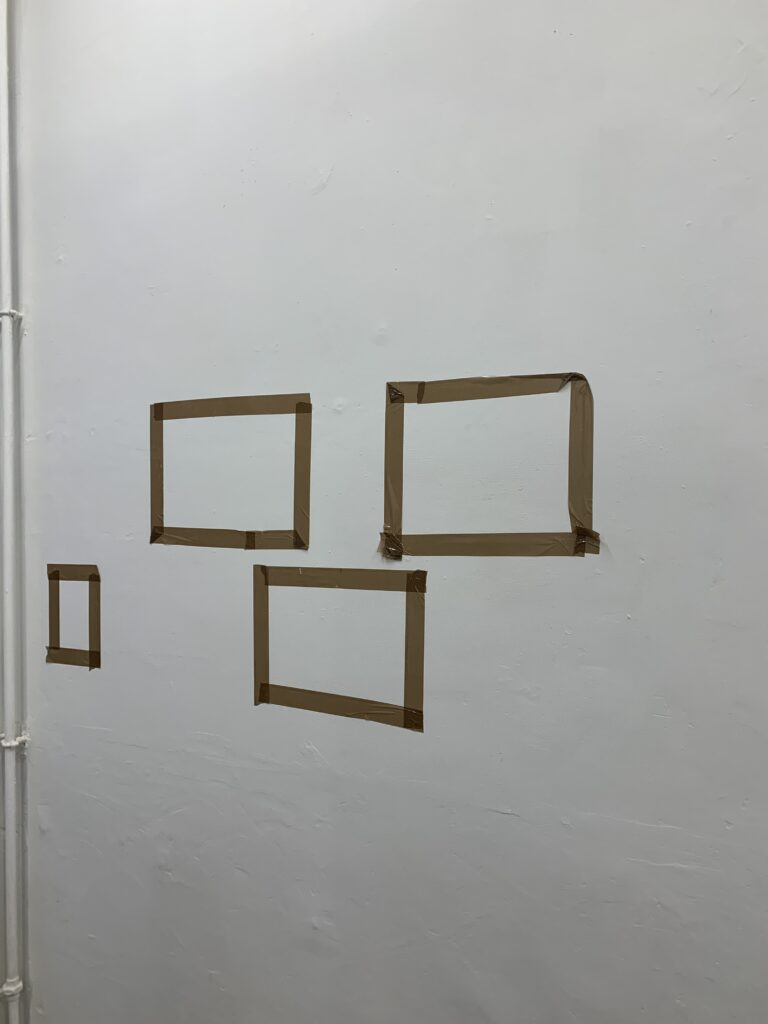
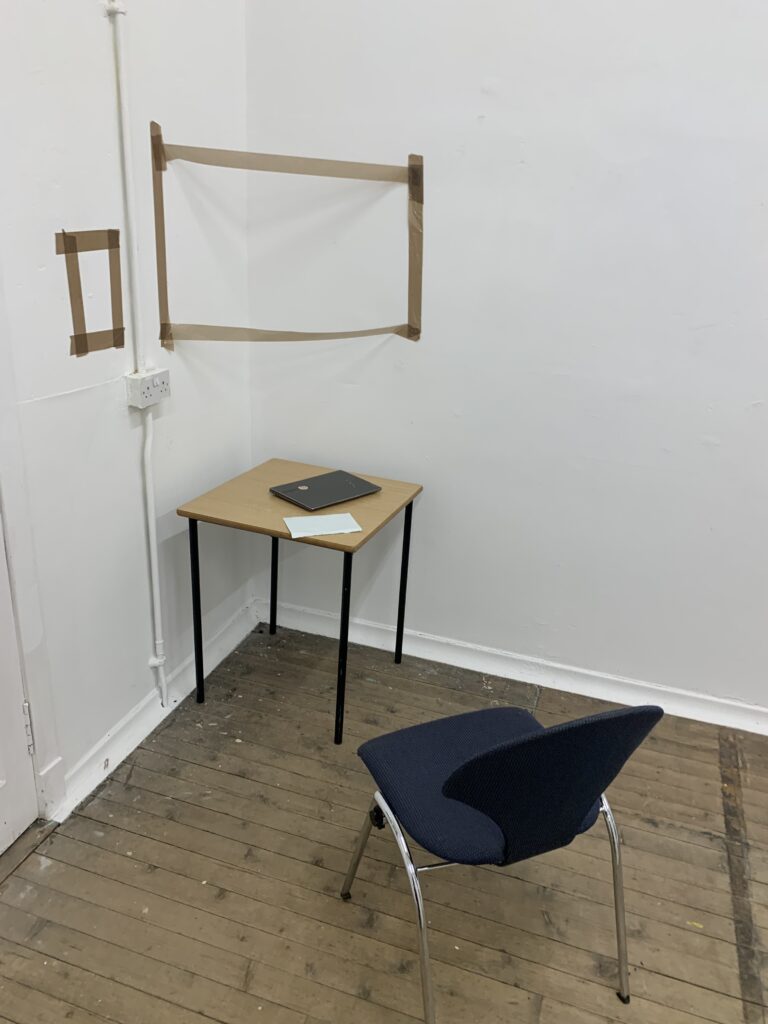
At Summerhall, I used tape and a tape measure to measure and arrange the artwork. I raised concerns about the installation’s placement; I noticed that positioning it in the center would block two walls, so I moved it to a corner where it would not obstruct the audience’s movement or block the walls.


Figure 7: A photograph I took in 2026 of our collective setting up an exhibition at Summerhall; untitled; dimensions variable.

Figure 8: A photo I took in 2026 of our collective setting up an exhibition at Summerhall. We printed some of the works and attached them to the exhibition walls with tape. Untitled, variable dimensions.

Figure 9: A photo I took in 2026 of our collective setting up an exhibition at Summerhall. We printed some of the works and attached them to the exhibition walls with tape. Untitled, variable dimensions.

Figure 10: A photo I took in 2026 of our collective setting up an exhibition at Summerhall. I arranged the space to mimic the form of a small installation piece titled Bubbble Sample. Untitled, dimensions variable.

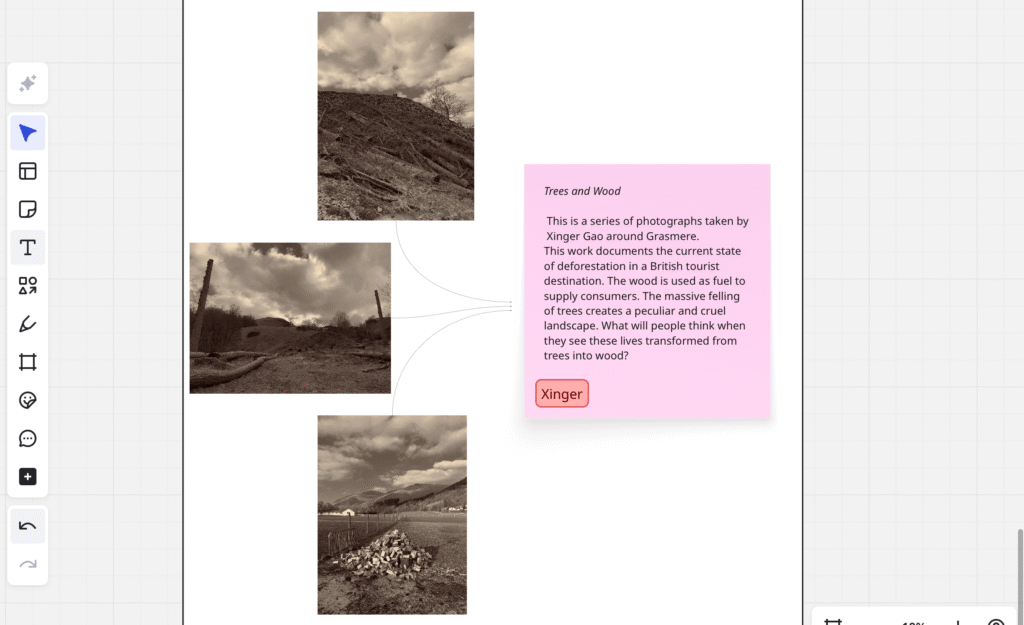
Figure 11: A photo I took in 2026 of our collective setting up an exhibition at Summerhall. I used tape to outline the approximate location of my work, because my piece is a variable-dimension photograph titled Wood and Tree.


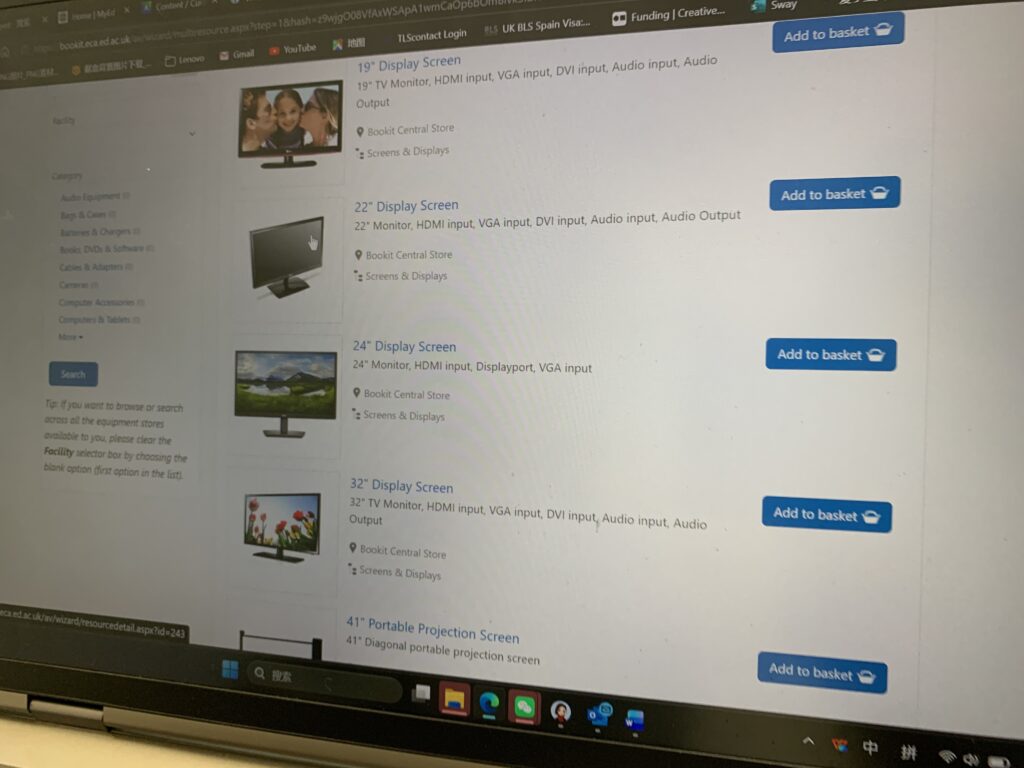
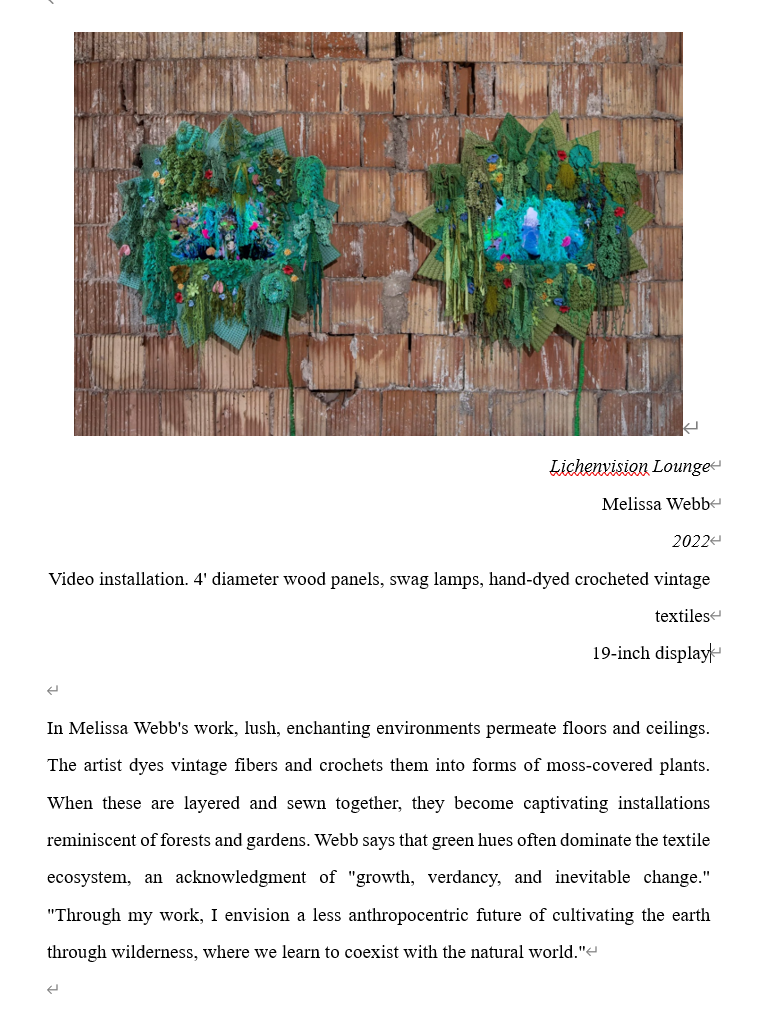
For long-form video art installations, I proposed adding a chair as an accessible facility for viewers who have difficulty staying standing continuously. After consulting with Yufan, I selected a 19-inch monitor available for rental from ECA for my video installation.


Figure 12: A photo I took in 2026 of our collective setting up an exhibition at Summerhall. I suggested setting up a video-viewing area and adding chairs for viewers who are tired or unable to stand for long periods of time.

Figure 13: A photo I took in 2026 of our collective setting up an exhibition at Summerhall. My classmate Yufan and I accessed the school’s website to look up the sizes of the display screens available for loan.


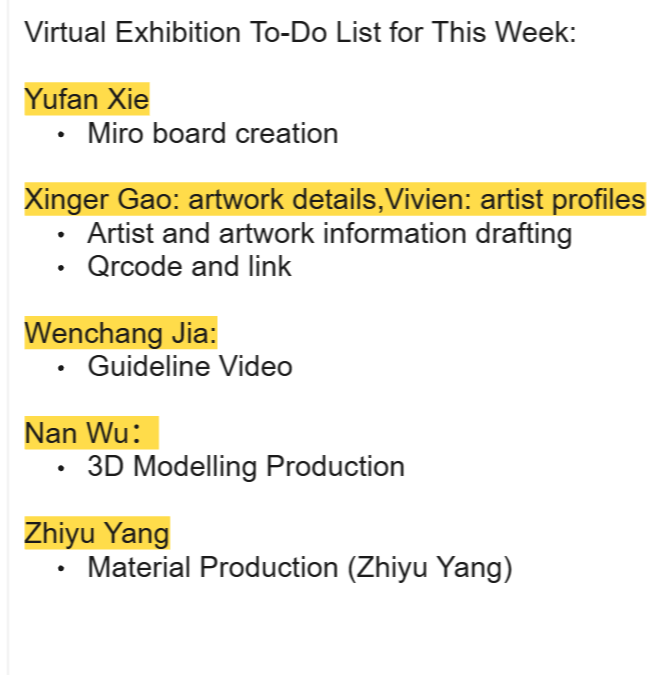
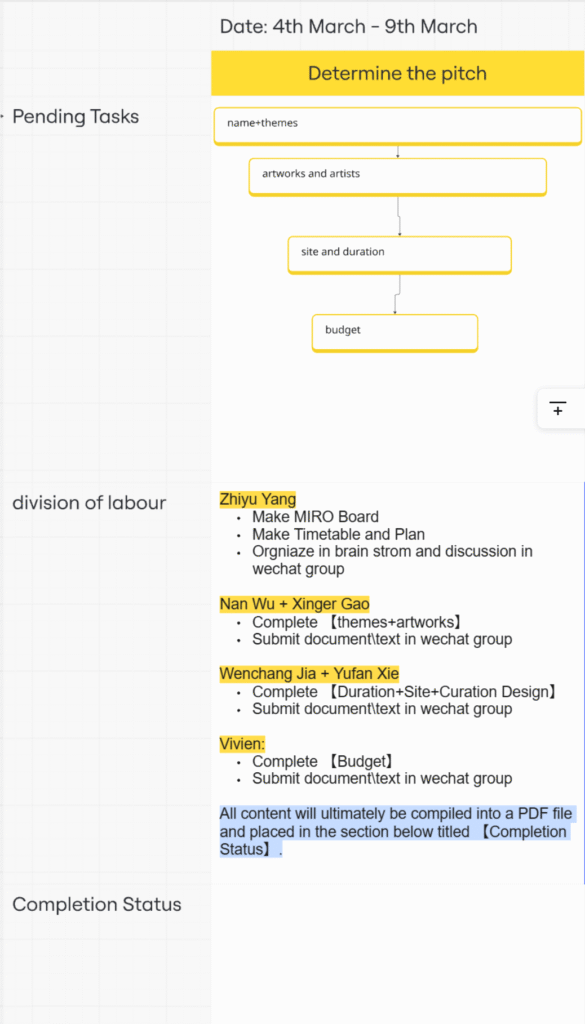
In this week’s collective task assignment, I volunteered to create the captions for artworks. I am responsible for editing and refining the text submitted by everyone, as well as finding high-resolution images of the corresponding artworks and researching their detailed dates, materials, and dimensions.


Figure 14: This is our collective division of tasks for this week.

Figure 15: The caption I created for the collective exhibition can be used to produce a guidebook and promotional materials.

Figure 16: The caption I created for the collective exhibition can be used to produce a guidebook and promotional materials.

Figure 17: The caption I created for the collective exhibition can be used to produce a guidebook and promotional materials.

Figure 18: The caption I created for the collective exhibition can be used to produce a guidebook and promotional materials.

Figure 19: The caption I created for the collective exhibition can be used to produce a guidebook and promotional materials.

Figure 20: The caption I created for the collective exhibition can be used to produce a guidebook and promotional materials.

Figure 21: The caption I created for the collective exhibition can be used to produce a guidebook and promotional materials.

Figure 22: The caption I created for the collective exhibition can be used to produce a guidebook and promotional materials.

Figure 23: The caption I created for the collective exhibition can be used to produce a guidebook and promotional materials.


[1] Hal Foster, ‘An Archival Impulse’ in October Vol. 110 (Autumn, 2004), pp. 4, The MIT Press

In the first instance archival artists seek to make historical information, often lost or displaced, physically present. To this end they elaborate on the found image, object, and text, and favor the installation format as they do

[2] Alasdair Gray Archive – a generative ‘living’ archive – curated through ‘radical care’ by Custodian Sorcha Dallas.

Sorcha Dallas chose the title of Custodian because she believes caring, and relationship building is central to creating an equitable resource and a horizontal community. This is a feminist approach to archiving called radical empathy, which is the “ability to understand and actively consider another person’s point of view in order to connect more deeply with them.”


Week 7: Progress of Collective Project——Exhibition Formats and Artworks

During the Summerhall collective meeting, we brainstorm and develop the collective project. Everyone gathered artworks that interested them and started discussing exhibition concepts and design proposals. During discussing exhibition design, I proposed that our collective curatorial project should avoid the archival exhibition format. We should also minimize the use of labels and textual explanations, avoiding excessive reliance on exhibition panels. This week, while visiting the Forty Farm outdoor exhibition trail in Grasmere, I observed that this format fails to engage audiences. Furthermore, artist biographies and exhibition texts should be separated onto distinct walls or labels, with artistic lettering or typographic design applied. During my visit to Summerhall, I observed that their curators chose to place lengthy exhibition introductions and artist biographies on the entrance doors. While this approach minimizes space wastage, it discourages visitors from reading due to the overwhelming text volume. In stark contrast, Summerhall’s posters effectively capture audience attention—a practice I intend to learn from and integrate into my personal projects.


Figure 1: A photo of our collective working at the Summerhall

Figure 2: The Forty Farms Outdoor Exhibition Trial I observed in North Berwick

Figure 3: The Forty Farms Outdoor Exhibition Trail uses only text and images on display boards, with no physical objects.

Figure 4: I noticed that Summerhall had display boards attached to the doors, which saved space but made the area feel a bit cramped.


This week we also held an online meeting and finalized the collective project theme, basic ideas for the artwork, and subsequent division of tasks on the Miro board.

Figure 5: Our collective assigned tasks on the Miro board during March 4th to 9th


I am responsible for finding artworks that fit the broad theme of vitality, breath, nature and humanity, and providing explanatory texts. I proposed selecting a bubble paper artwork named Bubble Sample by RCA student Fengjunya Zheng[1] for the exhibition’s interactive activity section. This piece can be expanded into a fee-based workshop suitable for both adults and children. I also selected a piece named Lichenvision Lounge by artist Melissa Webb[2]. This work features green textiles symbolizing ecosystems, embodying humanity’s aspiration for harmony with nature.


Figure 6: Artworks I selected for the collective exhibition

Figure 7: Artworks I selected for the collective exhibition


We held another collective meeting on Sunday. We discussed the feasibility of hanging and displaying works based on the layout map created by Zhiyu Yang. I questioned the feasibility of using bubble wrap as material for the bubble sample artwork. Since bubble wrap is rarely used in the UK, purchasing new plastic bubble wrap contradicts the artwork’s original intent of plastic reuse. I believe we must curate while respecting the artist’s zero-waste recycling philosophy. During the discussion, I also added new artworks. This series, titled Trees and Wood by Xinger Gao, is a collection of photographs I took near Grasmere, capturing the brutal landscape formed by cut trees.


Figure 8: Our collective assigned tasks on the Miro board during March 10th to 17th

Figure 9: Artworks I selected for the collective exhibition


[1] http://xhslink.com/o/6lPEKoIunTM

[2] Lichenvision Lounge | Melissa Webb Art