Week 10 – Urban Conditions, Mobility Strategies, and Practical Feasibility

This week’s focus is on re-evaluating the feasibility of the exhibition in a real urban environment, including the urban spatial structure, transportation system, and public space management mechanism.

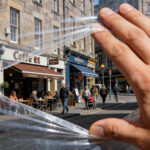
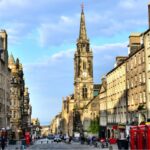
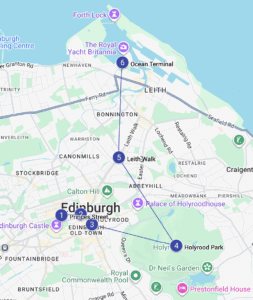
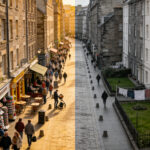
From the perspective of urban structure, Edinburgh exhibits a distinct spatial hierarchy. Tourist activities are highly concentrated in the central areas, such as Prince Street and the Old Town, which are characterized by high foot traffic, high consumption, and high visibility. While areas like Leith Walk, Ocean Terminal, and Holyrood mainly serve the daily lives of local residents. Tourism has brought significant economic benefits, but it has also led to problems such as spatial congestion, commercialization, and the marginalization of certain groups. Therefore, public spaces are not uniform but are composed of different usage logics and power relations.

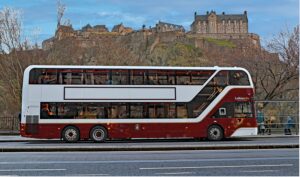
Based on this observation, I believe that adjustments to the exhibition mobility strategy are necessary. In the three exhibition sites in high-density areas (Prince Street, Royal Mile, and Waverly Bridge), a purely pedestrian viewing approach is adopted, without integrating into the public transportation system to avoid adding additional pressure in an already crowded environment. In the three exhibition sites in relatively low-density areas (Holyrood, Leith Walk, and Ocean Terminal), the previous strategy of using bus routes (Route 35) as the connection method is continued during off-peak hours. Regarding accessibility, the pedestrian routes in the high-density walking areas do not involve steps and are wheelchair-accessible. Similarly, choosing Route 35 for the connection will not impose a burden on the viewing experience.

The public transportation system in Edinburgh enjoys a high level of usage. Lothian Buses carry over 100 million passengers every year. Therefore, it is necessary to avoid interfering with the public transportation system during peak hours. However, since the exhibition also regards “mobility” as one of the exhibition conditions, the bus mobility mode will continue to be maintained during non-peak hours (10am – 4pm). The switching of transportation modes by the audience also becomes part of understanding the differences in urban spaces.

Meanwhile, there have been precedents for the integration of public transportation and cultural projects in Edinburgh. “Travelling Treasures” embeds cultural content into the transportation experience, making the travel route itself a narrative carrier. Additionally, “Fringe Days Out” provides bus support to enable more community groups to participate in cultural activities. These cases demonstrate the feasibility of the project and serve as reference materials for in-depth research.

In terms of permission, I carefully studied the public space management principles of the Edinburgh City Council and decided to adopt a “graded intervention intensity” strategy, matching the activities with the specific spaces. Low-intensity interventions (such as walking and non-congregated experiences) can be regarded as regular space usage; medium-intensity (such as small-scale guidance) requires further assessment; while high-intensity activities (such as performances or gatherings) require formal application for permission. This exhibition, except for the slow-moving performance at the Royal Mile, all have low-intensity interventions. The definition of slow-moving performances is also different from those reaching the scale of high-intensity activities. If a review is necessary, the application materials should be submitted to the City Council six months before the event.

Reference:

City of Edinburgh Council. “Public Space Guidance for Event Organisers.” 2023.

https://www.edinburgh.gov.uk/downloads/file/35762/public-space-guidance-for-event-organisers


Lothian Buses. “Public Transport Use in the Capital Continues to Grow.” 2026.

Public transport use in the capital continues to grow


Lothian Buses. “Route 35 Timetable.” 2026.

https://www.lothianbuses.com/wp-content/uploads/2026/01/35_26h02k22.pdf


Edinburgh Festival Fringe Society. “Fringe Days Out Programme.” 2024.

https://www.edfringe.com/experience/school-and-community-engagement/school-and-community-projects/fringe-days-out


Speed, Chris. “Travelling Treasures.”
Treasure Trapper / Travelling Treasures


Week 9 – Exhibition Viewing Strategies and Audience Definition

In the initial plan, I focused on the route design. However, after walking through the entire route myself this week, I discovered many areas that needed adjustment. The four-hour exhibition duration made me realize that what I truly needed to establish might not be a “complete route”, but rather a curatorial approach that responds to urban experiences. Therefore, I reflected on the construction of the non-linear exhibition strategy and the redefinition of “locals” and “tourists”.

Firstly, in terms of the exhibition viewing format, I transformed the original linear six-site path into a non-linear structure. Viewers no longer need to complete all the sites in the prescribed order but can choose their own viewing method based on their own time, interests, and physical condition. This structure is divided into three types: the complete path (which is used for exhibition promotion as a one-day tour, and is the most in-depth and complete viewing form), the selection path (selecting two to three exhibition points nearby based on interests, distance, and personal circumstances), and the fragmented participation (designing the viewing route by oneself according to the exhibition route map during the exhibition period). These three designs not only solve the problem of the long duration of the original path but also help expand the source of viewers. It is also closer to the real experience mode of urban space, fragmented and highly accidental, and constantly reconstructed by individual actions.

At the same time, I adopted a strategy that combines “partial guidance and partial non-guidance”. Only brief connectivity guidance was provided at key nodes to establish a critical framework and viewing perspective. At other nodes, the audience’s autonomous exploration was retained, allowing the audience to maintain a dynamic relationship between understanding and experience, and providing freedom for the audience to actively construct their own paths.

Secondly, in terms of audience definition, I re-examined the overly simplistic classification of “locals and tourists”. My initial division was merely at the level of stereotypes, but through research, it was discovered that this binary structure was overly simplistic. Edinburgh receives over 5 million tourists each year, far exceeding the permanent population. Most of the tourists are short-term visitors, and their activities mainly concentrate in iconic areas such as Princes Street and the old town. “Locals” are not a single group; they include long-term residents, students, commuters, and community members affected by tourism. The movement paths and space usage patterns of these groups in the city are also very different.

Inspired by “The Lure of the Local”, I attempted to interpret “local” as a dynamic position composed of memories, experiences, and social relationships, rather than a fixed identity. In this project, “locals and tourists” are no longer regarded as two fixed groups of people, but rather are continuously constructed roles through movement paths, stay methods, and the way they use the space.

Based on this, the questions raised by the exhibition also require more careful consideration: Who is seen in public spaces? Whose actions are ignored or marginalized? And how are these aspects of visibility and invisibility constantly generated and strengthened in daily movement and space usage? These questions no longer have fixed answers; instead, they will be constantly triggered and reconstructed as the audience participates and makes choices in the path.

Reference:
Lippard, Lucy R. The Lure of the Local : Senses of Place in a Multicentered Society. New York: New Press, 1997.

VisitScotland. “Edinburgh and Lothians Tourism Statistics.” 2024.

https://www.visitscotland.org/research-insights/regions/edinburgh-lothians


Hillhead Review. “Is It Time to Talk About Edinburgh’s Tourism Problem?” 2023.

Is it time to talk about Edinburgh’s tourism problem? 


Week 8-From Proposal to Production

Refining the Curatorial Project

This week, I continued to advance the curatorial project and began to organize the content according to the structural requirements of the newly added SICP proposal.

I will integrate the previously scattered ideas into a coherent system. Besides clear concepts, for the practical implementation of the project, I need a complete curatorial logic. Additionally, I will continue to supplement the exhibition narrative, exhibition space planning, and public project settings.

Inspiration for curatorial work brought by the archives and exhibition history

This week’s class discussed the role of archives in contemporary curating. Archives not only preserve history, but also serve as a means of organizing and rewriting history.

Reesa Greenberg’s “remembering exhibitions” theory divides the way of re-presenting historical exhibitions into three categories: replication, variation, and reprise. This theory inspired me to think that curatorial practice should not be limited to displaying artworks alone; it can also involve re-examining and understanding existing experiences and environments through different methods.

In my project, this is manifested as follows: The urban public spaces themselves constantly record people’s daily behaviors, movement patterns, and the ways different groups utilize the spaces. This constitutes a continuously updated social record. Outdoor wandering is employed as a curatorial method in the exhibition. By reorganizing the movement routes of the audience in the city, it enables the audience to re-examine the spatial structure of the city and the underlying inequalities within it in the actual spatial experience, thereby transforming the daily experiences in the city into a reflective exhibition experience.

Collective Discussion at Summerhall

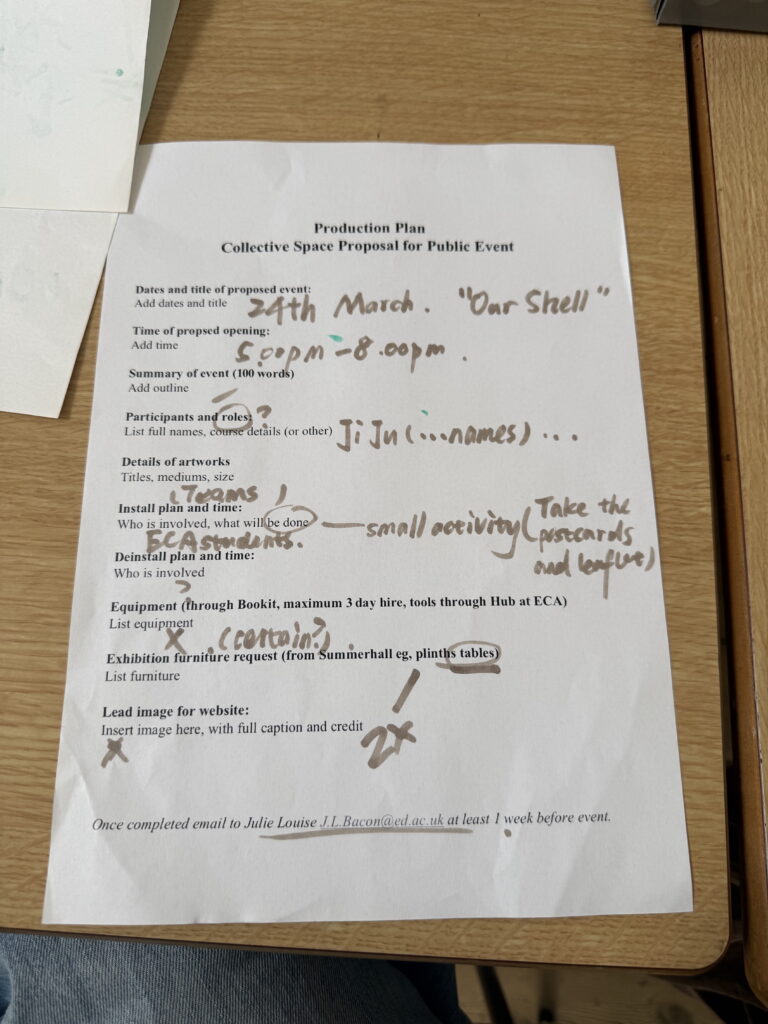
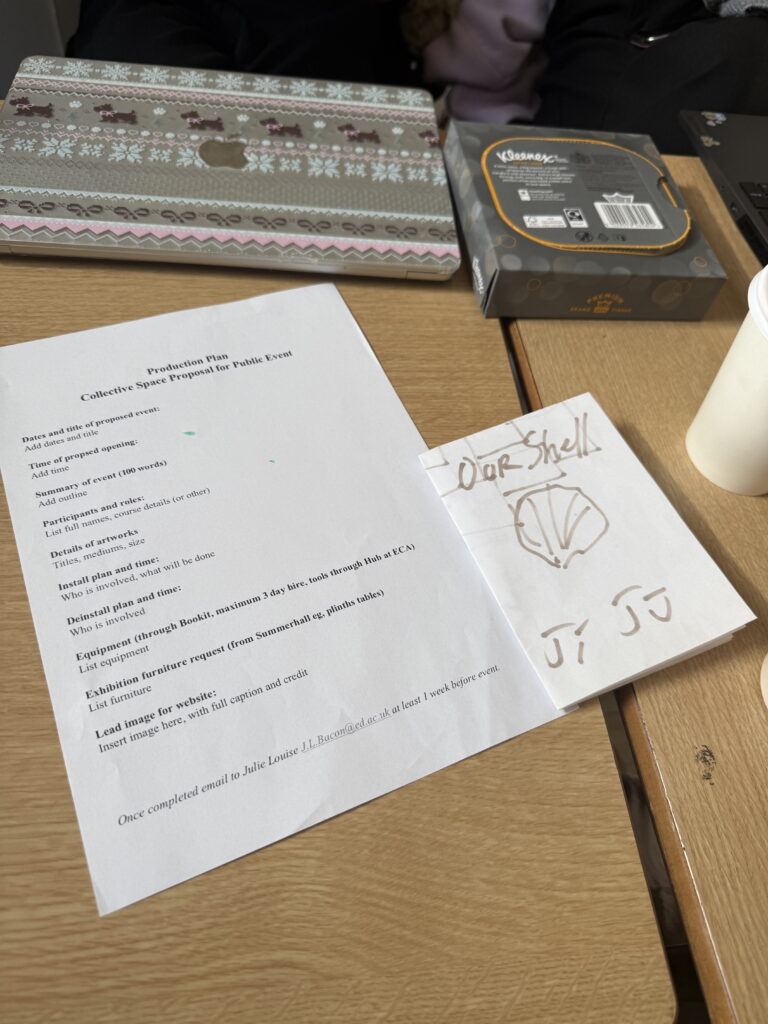
In addition to the progress of individual projects, this week also included group discussions to facilitate the planning of the public projects of Summerhall Collective Space.

We have clarified the organization method of the exhibition. We determined the basic proposal for the event. The team members discussed the specific locations of the works in the space and the overall layout method to ensure that there would be a reasonable spatial relationship among different works, and also clarified the specific tasks that each member needed to undertake.

By reflecting on the spatial relationships of the exhibits, although my curatorial project is spread across six different spaces, I also need to explore stronger connections between each exhibition site, the artworks, and the public projects.

We also discussed the promotion and presentation methods for the exhibition. We decided to create exhibition posters (posters) to promote the event and invite the audience. Additionally, we will prepare an exhibition booklet to introduce the background, team, and content of the exhibition to the audience.


Week 7- Finalising the Exhibition Title and Budget Planning

Wander Through Edinburgh’s Invisible Cloak

This week, I first determined the name for the exhibition:Routing Access

Meanwhile, I made a rough estimate of the £10,000 exhibition budget. The budget mainly covers seven sections: artist fees, material setup, promotion, AR technology, security, project documentation, and contingency funds.

  1.  Artist-related expenses (totaling £6,120, accounting for 61.2%)
    All three artists were arranged for a 3-day short-term residency. The cost for the residency was calculated based on “mid-range accommodation fee of £90 per day + £50 per day for living allowance” in the “Edinburgh Art District” (totaling £140 per day per person). The remuneration was divided into “display fee + customized creation fee”. International artists were referred to the Scottish cross-border cooperation standards, while local artists were calculated according to industry/newly emerging standards. The creation fees were all site-specific responses to the creation budget and met the actual creative needs:
  2. Materials and Outdoor Setup Costs (Total 1200 pounds, accounting for 12%)
    Inclusive of art installation materials, public interactive materials, and the construction of outdoor wind-resistant display stands at six sites. The setup cost is calculated based on the daily wage for small-scale projects in Edinburgh:
    Art installation materials: Toby Paterson’s outdoor waterproof geometric floor stickers 350 pounds, Clara Ursitti’s olfactory installation (fragrance / essential oil / display container) 250 pounds, totaling 600 pounds
    Public interactive materials: Auxiliary materials for Leith Walk & Ocean Terminal collage 150 pounds, sand art tools 50 pounds, Royal Mile slow performance props 200 pounds, totaling 400 pounds
    Outdoor display stand construction: Simple outdoor wind-resistant art display stands at six sites, 200 pounds each
  3. Pre-event Promotion Expenses (Total 1000 pounds, accounting for 10%)
    Inclusive of printing of promotional T-shirts, hiring personnel to walk along Princes Street for promotion, and calculating the part-time fees based on the legal minimum wage of 11.95 pounds per hour in Edinburgh:
    Printing of promotional T-shirts: 40 custom-made pure cotton ones, 400 pounds
    Part-time personnel: 3 part-time staff, promoting for 3 days, 4 hours each day, totaling 3×3×4×11.95 ≈ 430 pounds
    Supplementary promotional materials (simple flyers): 200 pounds
  4. AR Technology Development and Equipment Costs (Total £600, accounting for 6%)
    A local small-scale technical team in Edinburgh was selected to focus on the core experience and only develop the core AR landscapes for the six stations (the bus section was simplified to a basic interactive effect):
    Core AR landscape customization development: £60
  5. Security and On-site Execution Fee (Total 300 pounds, accounting for 5%)
    For the protection needs of the outdoor art exhibition works, the security fee is calculated based on the daily salary of 100 pounds per person for part-time security personnel in Edinburgh:
    Security Fee: 6 major sites will have 1 security personnel on patrol and on duty for 3 days. The total is 3 × 100 = 300 pounds.
  6. Project Records and Deposit Fees (Total 380 pounds, accounting for 3.8%)
    Art delivery and special insurance for the works (for Chris Johanson’s lightweight pieces only), comprehensive records of the exhibition process, laying the foundation materials for the long-term influence of the project:
    Chris Johanson’s art delivery + special insurance 300 pounds
    Exhibition photography / Compilation of audience feedback: 80 pounds
  7. Emergency Reserve Funds (Total £400, accounting for 4%)
    These funds are used for the protection of equipment in case of sudden weather conditions outdoors in Edinburgh, as well as for replenishing small supplies. They can also be adjusted slightly based on actual on-site conditions (such as changes in artist residency fees).


Week 6- Task Plan & walking map

After the project presentation last week, I systematically reviewed the tasks that I needed to complete based on the optimization suggestions provided by my teachers and peers.

Clearly divide the suggestions into five tasks:

1. Solution for site access rights

2. Design of pedestrian route

3. Risk plan for bus transportation capacity

4. Strengthening the critical expression of the project

5. Improving the overall risk management plan

This week, I completed the first three tasks. First, I determined the ownership of the six exhibition sites and formulated a targeted access control plan. For the low-risk sites, I adopted a guerrilla exhibition model, while for the high-risk and security areas, I used the formal application model.

Exhibition Venues & Their Managing Bodies

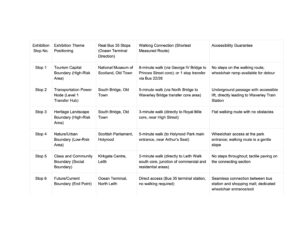
Secondly, I designed a complete walking tour route covering all six sites. Each section of the route takes no more than 15 minutes to complete, and it is marked with accessible passages and rest points to meet the needs of all types of tourists.

Edinburgh Public Space Equal Flow Exhibition – Walking Tour Table

Finally, through on-site observation and checking the bus schedule, it was confirmed that the peak commuting hours for Bus No. 35 are from 7:00 a.m. to 9:00 a.m. and from 5:00 p.m. to 7:00 p.m. To avoid increasing traffic pressure during peak hours and minimize the impact on daily commuting, the exhibition opening hours are set from 10:00 a.m. to 4:00 p.m.

An emergency plan has also been formulated. In case of unexpected situations such as bus delays or insufficient capacity, the opening hours of the exhibition check-in points can be temporarily adjusted. For example, they can be postponed by 1-2 hours. Relevant information will be pushed through the AR check-in system and posted at the bus stops for the audience to promptly understand the latest arrangements.

This week, the discussion with Ji Ju Collective at Summerhall has enabled me to have a deeper reflection on the practicality of the exhibition from its concept to its implementation.

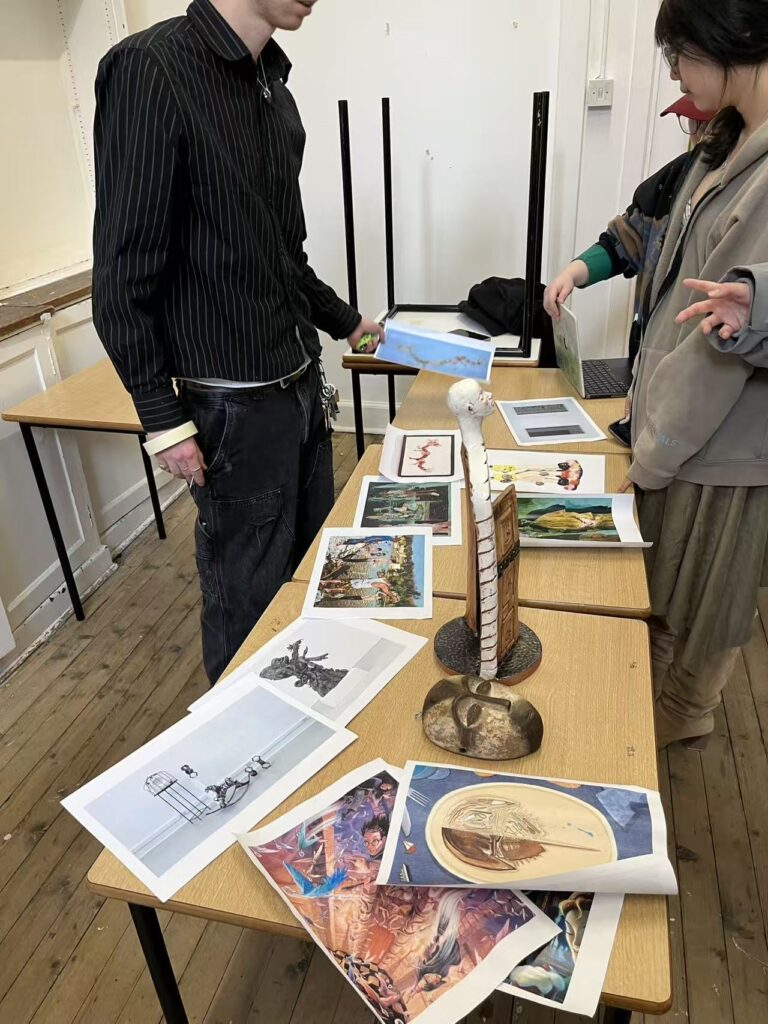
We conducted our first offline exhibition setup practice. Each member brought an artwork or a copy of a work. From the initial classification of the works, the reconstruction of the exhibition narrative, to making on-site adjustments based on the actual size of the exhibits and the visual presentation effect, we gained practical experience in exhibition setup. During the setup process, we placed particular emphasis on the efficient utilization of space and the optimization of the viewing experience.

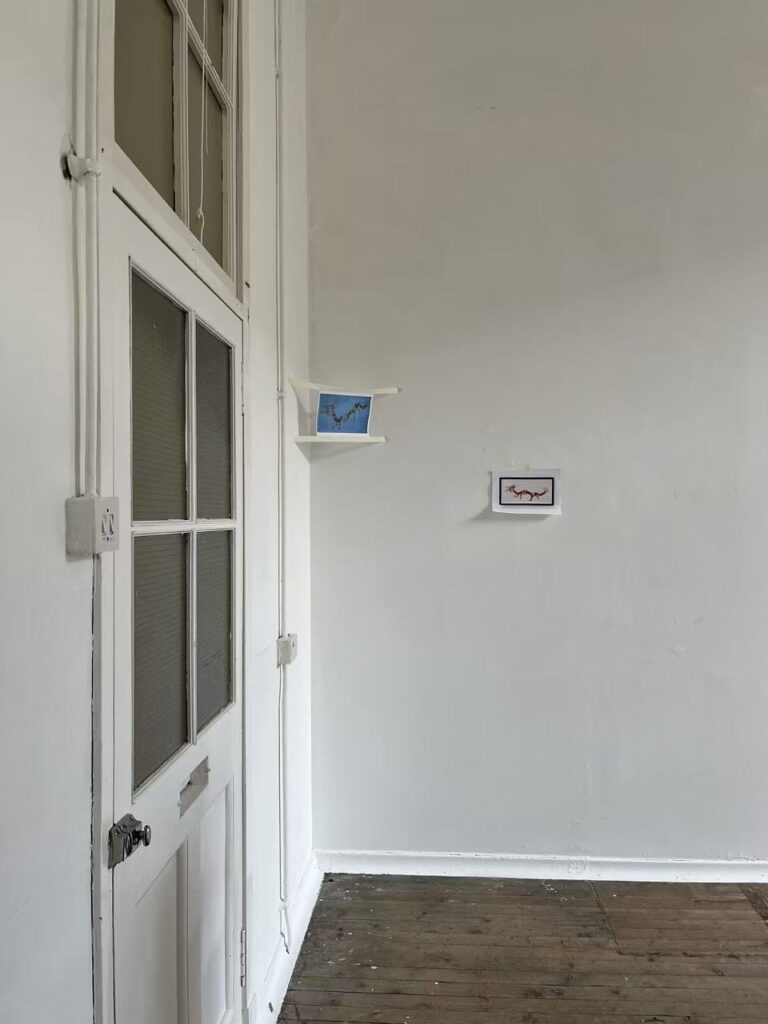
We chose to display multimedia works in the corner areas to save exhibition space and make the layout more compact and reasonable.

For larger-sized exhibits, we specially reserved a longer viewing distance to ensure that viewers could fully appreciate the visual expression of the works.

We also attempted to connect the themes of installation art, paintings, and photography, not limiting ourselves to individual works, but designing the flow lines from an overall perspective to make the narrative logic of the entire exhibition more coherent, and creating an organic whole where each work echoes and responds to the others.


Curatorial Pitch

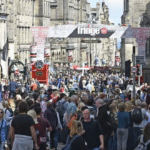
Royal Mile during Fringe Festival

While strolling along the streets of Edinburgh, you might be able to sense those unspoken boundaries – they quietly delineate who belongs here, who can stay, and who feels like an outsider. My curatorial project “The Intangible Boundaries of Edinburgh” presents these hidden dividing lines through a self-guided outdoor “wanderlust exhibition” based on the city’s public transportation.

There is no need for expensive gallery tickets – just a Lothian Bus Day Pass (adult £6, family £13). The 35 bus is not just a means of transportation; it is also a “commute link” that connects various exhibition sites. Their seats themselves are deeply involved in the issues of public space: every moment of passengers’ sitting, staying, or observing is an unspoken dialogue with the urban public space. The linear movement of the bus serves as a natural transition between exhibition sites, making “commuting” no longer just a simple movement, but also a part of the exhibition.

Lothian Bus Route 35

Lothian Bus Route 35

AR technology will be the core element throughout the exhibition. It will not only be embedded in each exhibition site, but also embedded in a series of mini augmented reality landscapes along with the street scenes during the bus journey. Visitors can interact with them through simple mobile phone operations, making the commuting process full of artistic perception.

This bus will take you through 6 stops, and each of the 6 exhibition sites corresponds to a unique invisible boundary. Based on critical space theory, drawing on the viewpoints of Doreen Massey and Henri Lefebvre, public space is regarded as a place of power struggle. The focus is on three key themes: tourist gentrification, invisible space rules, and space production.

Edinburgh map

Exhibition Site Overview Map


My collaboration concept with the target artist is as follows:
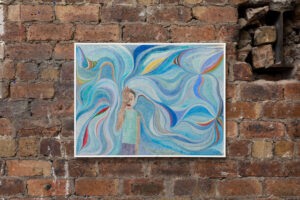
Firstly, it is Chris Johanson. The emotional color and organic quality in his works can evoke the audience’s perception of the surrounding space and guide them to re-examine the theme of “harmony between ideals and environment”. I plan to invite him to create a work for Princes Street (Tourism Capital Boundary Station), drawing on the creation form of his work “Impermanence #9” (2025, acrylic and house paint on recycled canvas, 57.2×76.5×2 cm). By presenting the daily colors and textures, I aim to show the collision between the tourist consumption scene of Princes Street and the local daily life, allowing the audience to have an intuitive experience of the erosion of tourism capital on the daily space.Impermanence #9 (Ron from the past says hello to me in the present), 2025, Acrylic and house paint on recycled canvas, 57.2 × 76.5 x 2 cm

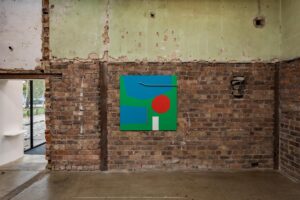
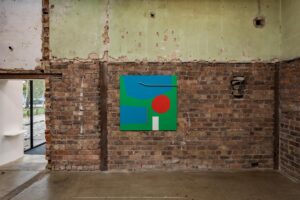
The second one is Toby Paterson, a local Scottish artist who is skilled at responding to specific spatial structures with abstract visual language. He constructed a city perception landscape between reality and concept through the overlapping of shapes and layers. I plan to collaborate with him to create a work for Waverley Bridge (Transportation Power Node Station), producing a distinctive geometric floor sticker. Through the direction of lines and the overlapping of layers, I will visualize the “guiding pedestrian flow lines” of this station. At the same time, I will also use AR technology to construct a similar visual layering effect, allowing participants to intuitively perceive the implicit control of infrastructure on space flow.Toby Paterson The Modern Institute, Aird's Lane Bricks Space 15:11:2024—15:01:2025

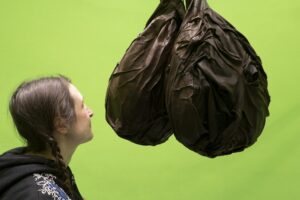
The third one is Clara Ursitti. Her works use smell as the medium to stimulate the audience’s experience of the spatial environment. I plan to invite her to create an olfactory intervention installation for Holyrood Park (a natural/city boundary site). The initial concept is to set up two sets of contrasting smells – the commercial atmosphere of the tourist area (coffee aroma, spice smell in the souvenir store) and the daily atmosphere of the residential area (bread aroma, grass and plant aroma), allowing the audience to intuitively experience the spatial differences through the smell, in line with the core theme of the exhibition “Invisible Spatial Boundaries”.Clara Ursitti Amik, 2022

In addition, students from the Theater and Performance Practice department of the University of Glasgow will perform slow-paced shows on the Royal Mile, thereby visually depicting the normal local life that has been infinitely accelerated due to the tourism economy.

At Leith Walk and Ocean Terminal, interactive environmental protection activities that do not harm the environment are set up for the audience to participate in. Using local materials, collage artworks for ideal public spaces are created on-site. At the same time, a sand painting creation session for the future public spaces is organized on the sand, allowing the public to participate in the imagination and construction of public spaces.

All the sites are wheelchair-accessible. The artistic interventions are all temporary. Documentations are recorded through low-cost methods such as photography and visitor feedback. Meanwhile, as an outdoor exhibition, I have conducted risk assessments for multiple potential exhibition sites and AR devices in buses to ensure the safety of the artworks and interactive installations.

Edinburgh Bus 35 Exhibition Interchange Map

Edinburgh Bus 35 Exhibition Interchange Map


Week 5-The practices of the three artists and my project logic

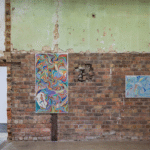
Chris Johanson The Modern Institute, Aird's Lane Bricks Space 07/11/2025—14/01/2026

The core focus of this week is to have the first communication with the mentor regarding the “artwork selection” and “implementation of practical operations” as key issues. Regarding the artist research, I have initially selected three artists.

Chris Johanson, in his exhibition at The Modern Institute, presented profound thoughts on the relationship between daily life and the environment. The emotional colors and organic nature in his works aroused the viewers’ perception of the surrounding space, guiding us to re-examine the theme of “harmony between aspiration and the environment”. For my project, this attention to the subtle relationship between the field and the experience aligns with my attempt to make the audience feel the “daily order of urban public space” again.

Impermanence #9 (Ron from the past says hello to me in the present), 2025, Acrylic and house paint on recycled canvas, 57.2 × 76.5 x 2 cm

Toby Paterson from Scotland, a local, responded to the specific spatial structure with abstract visual language. In his “Interior Garden” at Bricks Space, he constructed a city perception landscape between reality and concept through the overlapping of shapes and layers. Paterson’s approach inspired me to think about how to visualize the movement trajectories, rhythms, and intangible spatial boundaries in my exhibition through visual layering. I considered constructing similar layers in the AR environment to allow participants to experience that “commuting behavior itself is also an art form”.

Installation view, Against Time, Glasgow International 2018

Clara Ursitti’s olfactory art practice provides an expansion in other sensory levels. Her works use smell as a medium to stimulate the experience of the spatial environment. This offers another way of thinking for my project: whether smell can enhance people’s awareness of the usage patterns of public spaces. Perhaps a “smell installation” could be added at a certain exhibition point, such as contrasting the commercial atmosphere of tourist areas (coffee aroma, souvenir stores’ spices) with the daily atmosphere of residential areas (bread aroma, grass and plant scents), allowing viewers to intuitively feel the spatial differences through smell, thereby echoing the theme of “implicit spatial boundaries” in the exhibition. But this is just a preliminary idea, and I still need to continue relevant checks.

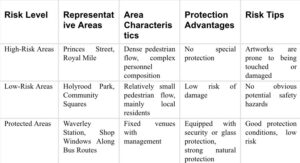
However, as we have reached this point, I have discovered new problems. Since it is an outdoor exhibition, considering the safety of the artworks, I conducted risk assessments for several potential exhibition locations.

Edinburgh Exhibition Venue Risk Level Classification Table


Week 4-Equality Manifesto and AR Practice in Public Spaces

Finally, the part about the declara

This week, after a group discussion, I reflected on how the invisible boundaries of public spaces in Edinburgh were formed.

These normalizations did not occur suddenly but were hidden within the details of daily space usage. For instance, in core tourist areas such as the Royal Mile and Princes Street, where there are many tourists, local residents tend to avoid these areas and shift their daily leisure activities to other non-tourist core areas. Another example is during the Edinburgh Festival, some public squares in the city center are occupied by performances and tourists, so local residents choose to travel at off-peak times and only return to these public spaces during the off-season. The local residents’ active avoidance has made the stratification of public space usage seem natural. However, its essence is actually a compromise between the equal use of public spaces and the capital value of the tourism economy.

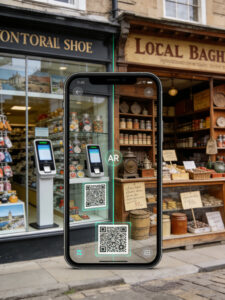
I really like the proposal for embedding AR in the group discussion. I will consider creating some lightweight street view displays where AR superimposed dual street views can be seen by scanning the code. For example, on the left is the current tourist store, and on the right is the local grocery store before the capital transformation. This makes the invisible boundaries visible.

Lightweight AR Visualizations for Edinburgh

Lightweight AR Visualizations for Edinburgh

Finally, the part about the declaration in the class and the collective discussion also gave me a lot of thoughts. The exhibition declaration should transform from a slogan into executable principles. Based on the inspiration from the group discussion, I came up with the following points:

1. Reject “sorting of space value”; the value of public spaces should not be defined by the tourism consumption capacity, but by the daily needs of all users.

2. Oppose the implicit discipline of “tourists exclusive during peak season and residents returning during off-season”, the usage rights of public spaces should not have the default rule of “time-based compromise”, and no group should give up the space rights they should equally enjoy for the use needs of others.

3. Do not create opposition, but deconstruct the spatial distribution logic of capital and power collusion: make the “invisible stratification of usage rights” visible, and let all users jointly participate in defining the appearance of public spaces.


Week 3-Using Edinburgh as a mirror, we examine the invisible boundaries of public spaces.

Crowded streets of Edinburgh.

This week’s course, through further study of exhibition ethics and the inspiring personal insights of Talbot Rice gallery’s curator, James, on exhibition curation, has led me to have a deeper reflection on my exhibition project. I intend to clarify my third-week exhibition thinking by answering the five questions posed by James in class.


Why exhibit?

After reflecting on the exhibition form I conceived last week, I chose the structural imbalance of equality rights in public spaces in Edinburgh as the exhibition theme. This is not an abstract discussion but a reality confirmed by official policies. The new policy of the city council to increase tourist taxes starting from July 2026 has acknowledged the burden on public spaces caused by tourism growth. The implicit transfer of space usage rights during the Edinburgh Arts Festival also made the invisible boundaries of public spaces real. Inspired by the concept of “rejecting political silence” discussed in class, I hope to use art as a medium to awaken public reflection on the ownership of public space. This is a discussion without a standard answer.

What makes the exhibition interesting?

I set the exhibition route map as an autonomous check-in form, marking a point for each location visited. The interpretation rights are returned to the audience. And using the Edinburgh public transportation network as a connection form, a daily pass for public transportation can cover the entire route, which is both suitable for the relatively complete accessibility of the public transportation system in the local area and makes the exhibition an immersive experience. Taking a ride on the bus itself is also a way to perceive the power of public space.

Related to which main issues?

As Edinburgh is a local manifestation of the universal problem of “global public space equity”, its predicament is not an isolated case but a common contradiction of tourist cities worldwide. I hope to use Edinburgh as an entry point to explore the question of “for whom should public space serve”, rather than limiting the complaint to a single city.

Who is the target audience?

The core target audience I set is local residents who have experienced the changes in space rights. They are the most sensitive to the changes in space rights. Next is foreign tourists, who can discover the neglected boundaries from a stranger’s perspective. At the same time, students, researchers, and the disabled community who are concerned about social justice are also welcome.

The set criteria and moral red lines?

The moral line I set for myself is not to extend to sensitive political issues, not to spectacleize any group, and to reject ethical compromise. In terms of criteria, all exhibition points are adapted to public transportation and accessibility needs; the logic of choosing public exhibition points and the sources of evidence; equal presentation of all audience feedback, and rejection of value judgment. This is also the thinking I gained from the discussion on “dynamic balance of power and inclusiveness” in this week’s class.

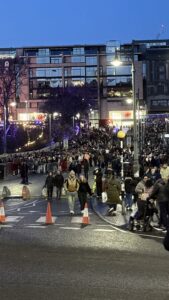
Prince Street crowded with people.

Crowded Princes Street, Edinburgh, 2025


Week 2-Preliminary Exploration of the Roaming Outdoor Exhibition

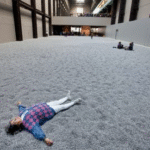
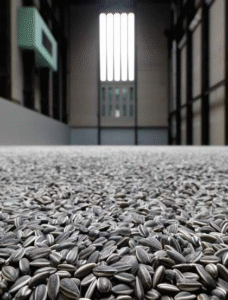
sunflower seeds This is a large-scale immersive art installation in the Turbine Hall of Tate Modern in London. The entire space is a towering, industrial-style building. The entire floor of the exhibition hall is covered with hundreds of millions of handcrafted porcelain sunflower seeds. A person wearing a blue and pink checkered sweater and white pants is lying spread-eagle on the seeds, and in the distance, two other people are sitting and relaxing on this surface.

During the Week 2 course, I noticed several key words. Here, I would like to share with you my thoughts on the deep connection of phrases, some issues I discovered, and some inspirations for my own curatorial ideas.

The first one is “dematerialization”, which marks a shift in artistic practice. Art is no longer confined to physical objects; it now focuses more on concepts and processes. This transformation has opened up new channels for artists and groups that have been marginalized in the traditional art system to express themselves, and to some extent, has loosened the inherent “central-periphery” model.

Then there is “Contemporaneity”, a theory that precisely depicts the current diverse but unequal global situation. This complex reality has given rise to new forms, such as organized Networks, and some large group exhibitions, especially international ones, respond to the challenges brought by globalization by establishing decentralized connections.

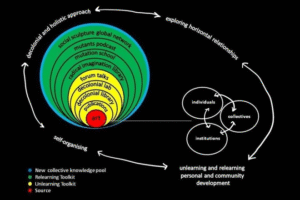
“Decoloniality” and “Intersectionality” are important tools for implementing ideas. Platforms, such as “Counterspace”, not only build a decolonisation toolkit and resource network, but also want to fundamentally change the power structure of the art world.

Counterspace This is a diagram on a black background. At its center is a red "art"—this is the starting point. Around it are layered sections (like rings) with things like publications, decolonial libraries, and forum talks. Arrows and text show: This project uses a "decolonial, holistic approach." It connects three groups—individuals, collectives, and institutions—through those layered sections. Its goals are to let the project organize itself, build equal "horizontal" relationships, and help people unlearn old ideas and relearn new ones. In the end, it aims to create a new shared knowledge pool.

Counterspace. Cultural Strategy, 2021. Commissioned by Cristina Morales. London.

Based on these understandings, I also raised a question for further reflection. When to go to a settlement as the core concept of curatorial practice, such asDocumenta Fifteen, into a large institutional framework, how can such “radical” ideas avoid being diluted by institutionalization? How can one effectively collaborate with mainstream art institutions to expand their influence without losing critical thinking?


In the afternoon group discussion, everyone shared their curatorial ideas. I also shared mine, although it’s still just an unfinished concept. I want to create a new style of exhibition viewing. My initial idea is to hold the exhibition outdoors, create a check-in map and distribute it to the audience, and connect multiple exhibition sites into a route. The audience can experience each recommended route one by one, just like completing a travel list, or they can design their own route. And finally reach the destination, connect the routes to complete your own storyline. This can enhance the audience’s sense of participation and autonomy, and at the same time guide them to think actively rather than passively accept preconceived viewpoints.

Finally, when looking for an artist for the class discussion in week 3, I noticed that Ai Weiwei’s work Sunflower Seeds“.This work, which was exhibited in theTurbine Hall of the Tate Modern in London in 2010, has greatly inspired me. It explores issues such as the individual and the collective, labor and power, with 100 million handcrafted ceramic sunflower seeds. The artist’s placement of the “sunflower”, a metaphor for the people in Chinese political propaganda, within the context of Western art galleries is itself a critical response to ethics and institutions, fully experiencing the profound thinking beneath the surface of the artwork.

The Unilever Series: Ai Weiwei Sunflower Seeds 2010 the interior of the Turbine Hall at Tate Modern with Ai Weiwei's installation of sunflower seeds

Ai Weiwei. Sunflower Seeds, 2010. Installation view, The Unilever Series, Turbine Hall, Tate Modern, London.