Curatorial Pitch
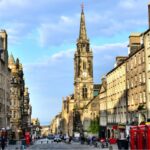
- Project Premise
The central question of this project is straightforward but difficult: for whom is public space actually allowed to function? I am interested in how openness is arranged, limited, and unevenly experienced, rather than assuming that public space is naturally shared. The issue cannot be reduced to a simple opposition between residents and tourists. What matters is how tourism, infrastructure, commercial visibility, and managed movement work together to shape public space. Some people remain at ease. Others are pushed towards the edge.
- Curatorial Format
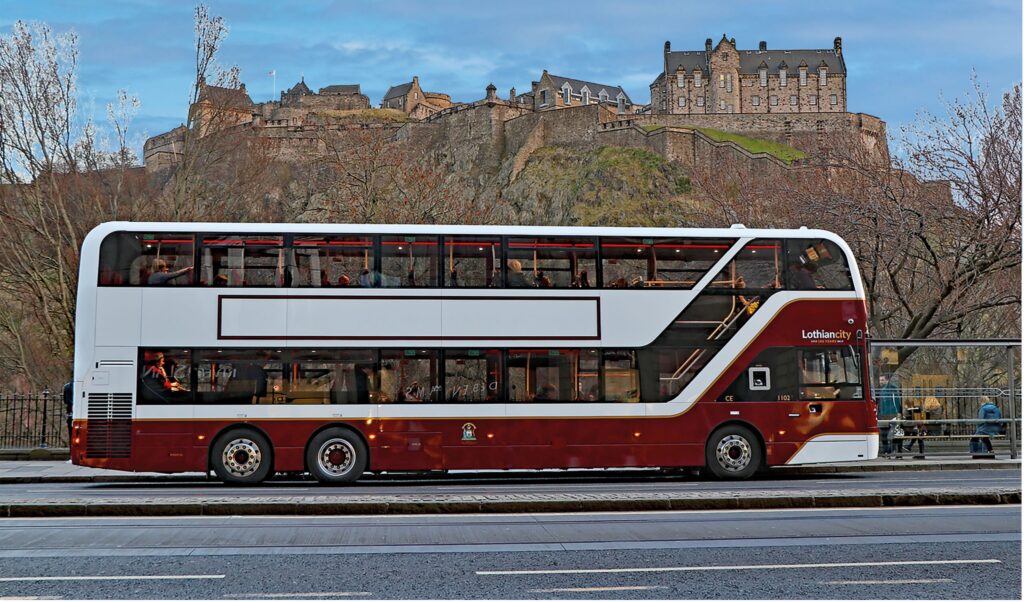
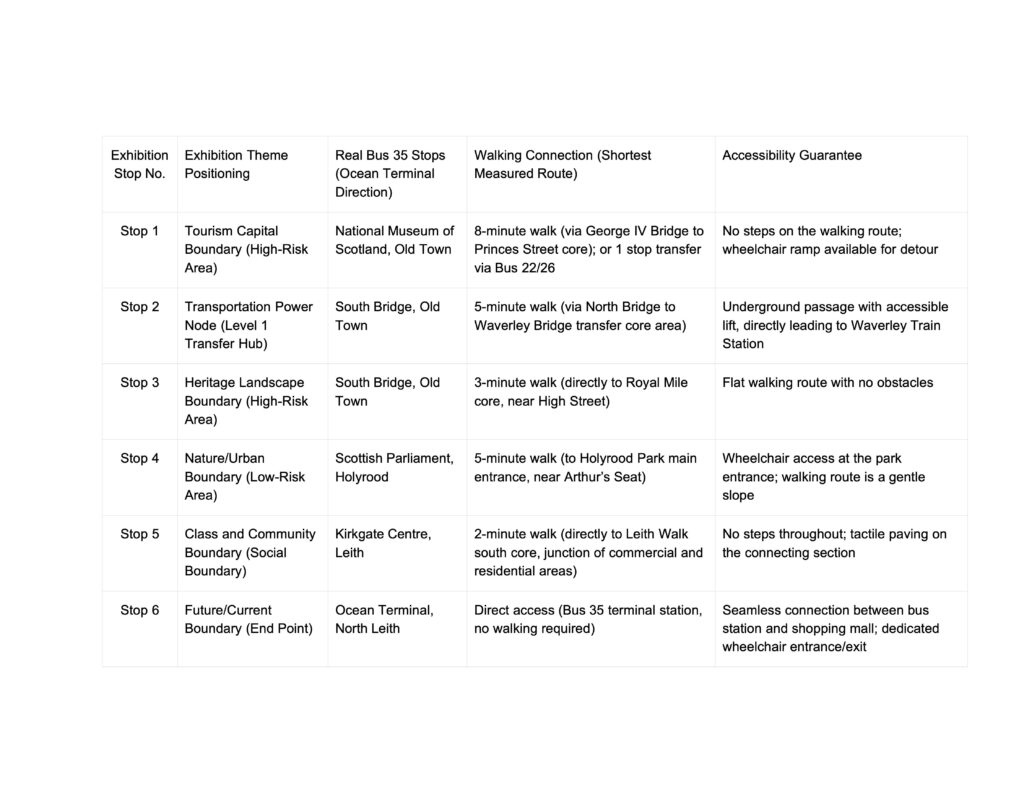
The project is designed as a self-guided outdoor exhibition linked through Edinburgh’s public transport network. Route 35 functions as the main structure connecting the sites. The bus is not only a practical device. It is part of the curatorial argument. The exhibition unfolds through infrastructure rather than simply taking place beside it.
- Why This Structure Is Necessary
The project adopts a non-linear structure because it should not depend on one fixed route or one authorized order of interpretation. Viewers may enter from different points, decide how long to stay, and connect the sites in their own way.
At the same time, readability still matters. A project without one dominant sequence can easily become fragmented. For that reason, route design, site prompts, and interpretive tools need to work harder. The main challenge is clear: the structure must be strong enough for dispersed entry to remain meaningful.
- Main Concerns
The project approaches its main concerns through three points of entry. First, it examines how tourism reshapes everyday public space, especially where commercial attraction starts to outweigh public need. Second, it focuses on rules that are rarely written down but still affect who feels able to stay, pause, or return. Third, it treats public space as socially produced rather than naturally neutral, and asks how management, infrastructure, and repeated patterns of movement organize space in practice.
- Theoretical Framework
The project is informed by critical spatial theory. Henri Lefebvre’s argument that space is socially produced gives me a way to understand public space as something built through power, use, and repetition rather than given in advance. Doreen Massey pushes this further. Her writing treats space as relational, contested, and always under negotiation. Together, these frameworks allow me to read Edinburgh as a city in which wider tensions become sharply visible.
- Site Logic
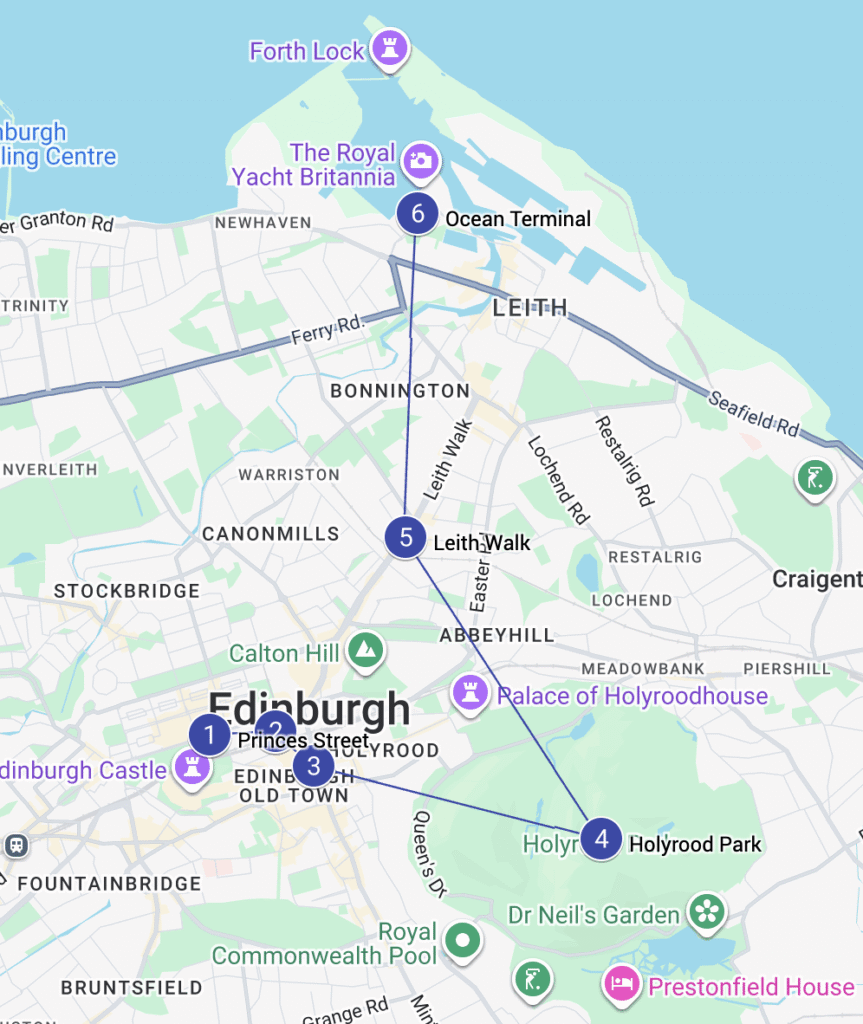
The project is currently organized around six sites in Edinburgh, linked through bus travel. The six-site structure is intended to register different forms of invisible boundary. Movement between sites is equally important. It creates comparison. It exposes uneven experience. It prevents the project from collapsing into a single example.
- AR as an Interpretive Method
AR is proposed here as an interpretive method. I am using it because it can bring different spatial layers into view at the same location and from the same perspective. At selected sites, viewers would be able to access simple AR overlays on their phones. A place that now appears stable and familiar could then be re-read as the result of commercial pressure, redirected movement, spatial replacement, and selective visibility. The point is not technological novelty. The point is to interrupt the assumption that the present condition of a site is natural.
- Indicative Artist Candidates
The project now has a relatively clear shortlist of artist candidates. These names function as realistic references through which I can test how different forms of intervention might support the argument of the project.
Chris Johanson
Chris Johanson is relevant because his work attends to everyday texture, emotional colour, and the relation between ordinary life and environment. What matters here is not formal similarity. His work offers a way of addressing subtle and affective tensions in public space, especially in places where daily urban life collides with commercial visibility.
Toby Paterson
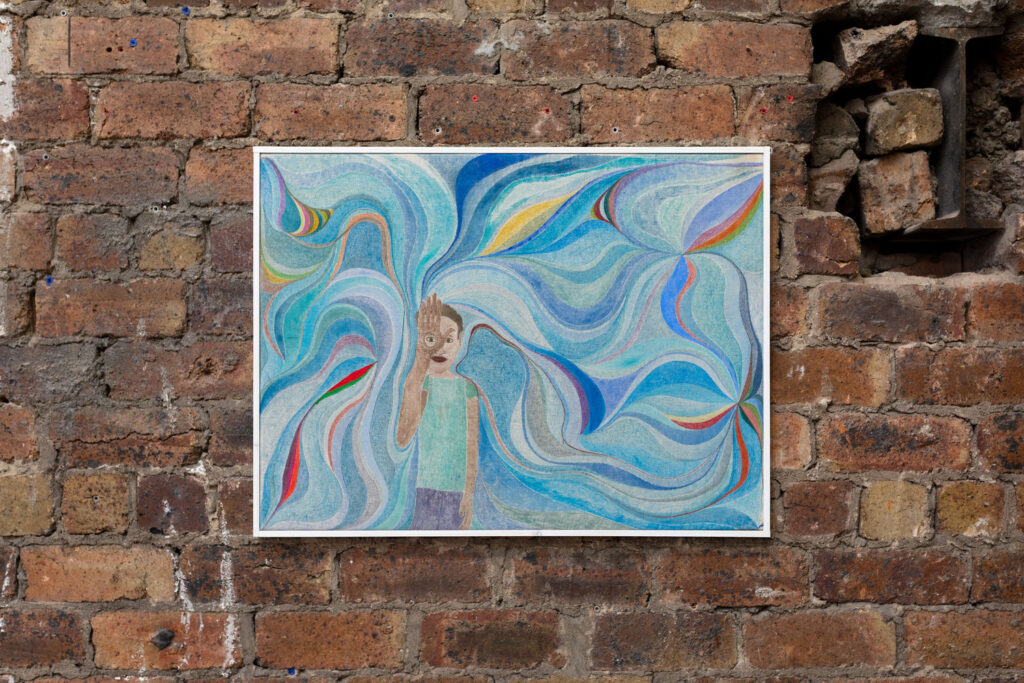
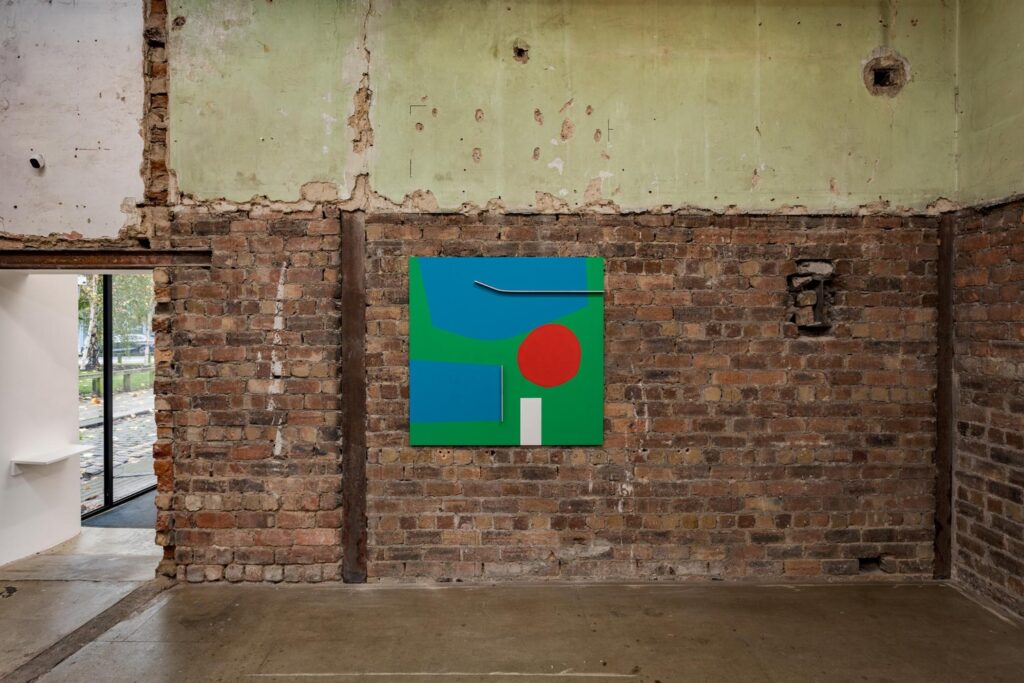
Toby Paterson is currently the strongest visual reference for the project. His abstract language responds directly to spatial structure, movement, and urban rhythm. The project needs a way to make pathways, circulation, and infrastructural order visible without falling back on simple explanation. Among the three candidates, his practice aligns most closely with the spatial and visual logic of the project.
Clara Ursitti
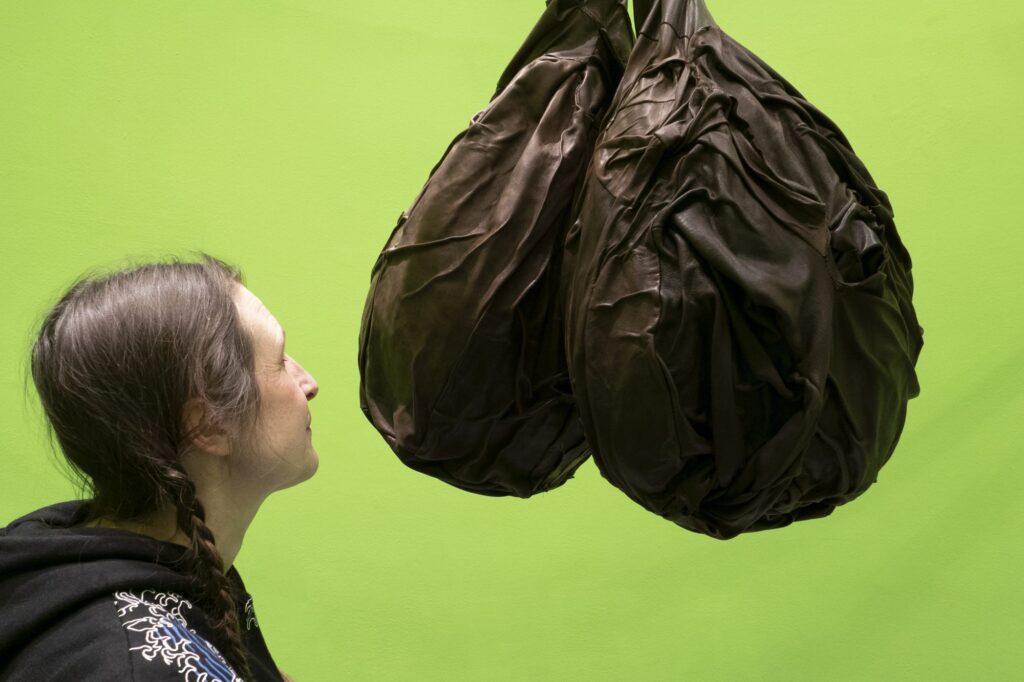
Clara Ursitti opens another valuable direction. Her scent-based work refuses to keep spatial experience within the visual. Smell can shape the atmosphere. It can also shift attention. At certain sites in this project, where managed public image and lived environmental experience do not fully match, sensory contrast may be a productive way of making that gap perceptible.
- Publics
The project is aimed mainly at local residents and visitors. It also addresses commuters, passers-by, and those who move through Edinburgh without necessarily questioning how that movement is organized.
- Practical and Ethical Conditions
The proposal is intended as a temporary, low-impact, and accessible project. Interventions should remain lightweight. Routes need to stay publicly navigable. Accessibility must be treated as part of the curatorial method and considered from the start.
Because the project depends on connections between different sites, permission strategy, route planning, and risk awareness also become part of its critical structure. A public-space exhibition has to remain ethically and conceptually coherent if it is to hold together at all.
References
City of Edinburgh Council. “About the Edinburgh Visitor Levy.” Accessed 14 April 2026. https://www.edinburgh.gov.uk/business/visitor-levy-edinburgh.
City of Edinburgh Council. “The Scheme for the Edinburgh Visitor Levy.” Accessed 14 April 2026. https://www.edinburgh.gov.uk/business/scheme-edinburgh-visitor-levy.
Kester, Grant H. “Dialogical Aesthetics: A Critical Framework for Littoral Art.” Variant 2, no. 9 (Winter 1999/2000).
Fitzgerald, William, and Efrossini Spentzou, eds. The Production of Space in Latin Literature. First edition. Oxford: Oxford University Press, 2018.
Massey, Doreen. For Space. London: Sage, 2005.
McGillivray, David, Alba Colombo, and Xavier Villanueva. “Tensions and Disputes over Public Space in Festival Cities: Insights from Barcelona and Edinburgh.” Journal of Policy Research in Tourism, Leisure and Events (Abingdon) 14, no. 3 (September 2022): 229–41. https://doi.org/10.1080/19407963.2022.2032109.