WEEK 4: Institutional Reality and Curatorial Ideals

Overview

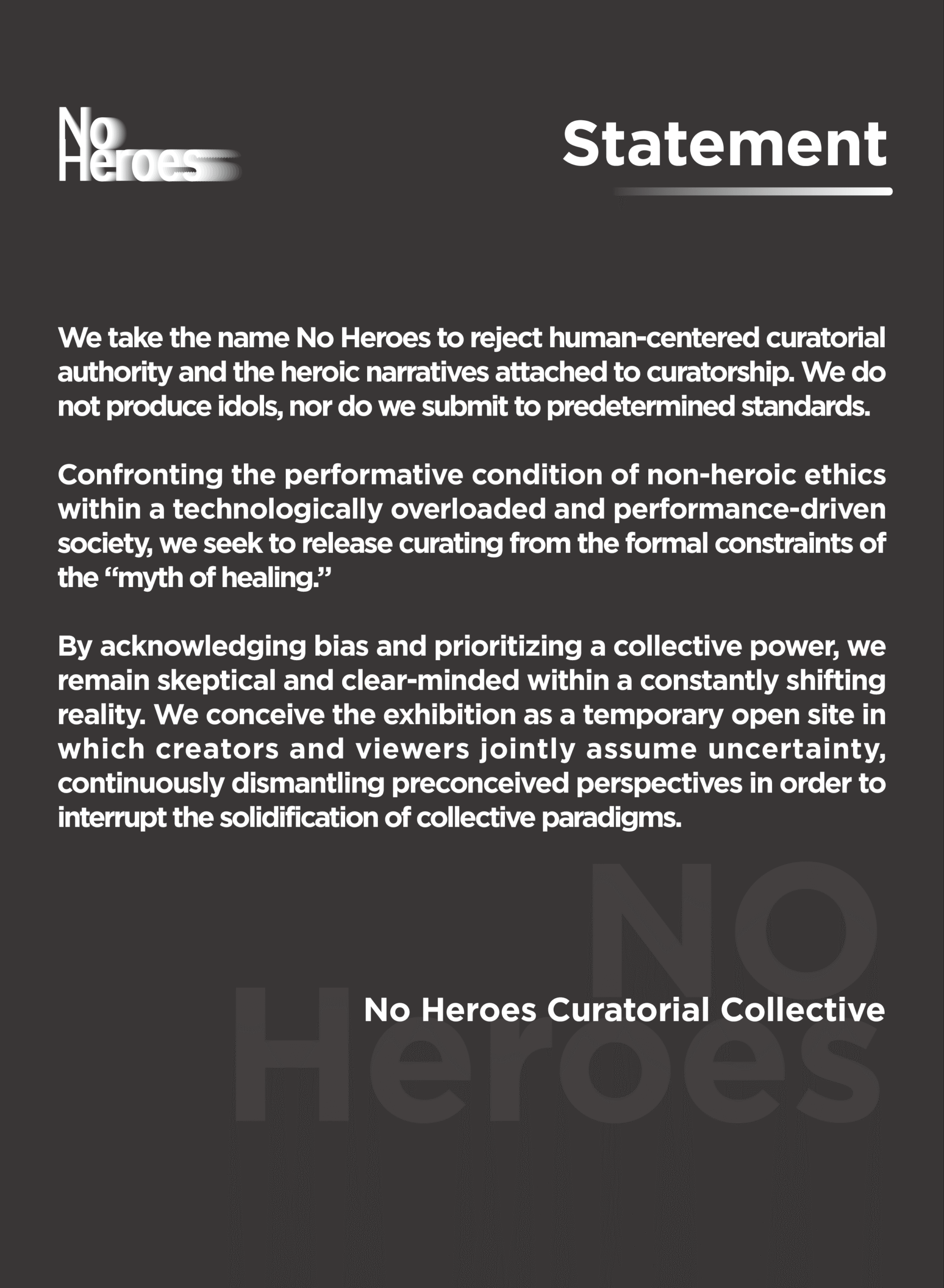
In the fourth week of the course, we visited Summerhall Arts. Sam Chapman will give a presentation on Summerhall Arts as a multi-arts curatorial space. Sam’s presentation covered viewpoints from aspects such as funding, artist support, and institutional characteristics. Meanwhile, the curatorial collective conducted a peer review of the exhibition themes and curatorial ideas of the members, and through collective decision-making, they determined the group name “No Heroes”, and formulated the Curatorial Collective Manifesto and statement.


The Execution in Institutional Reality
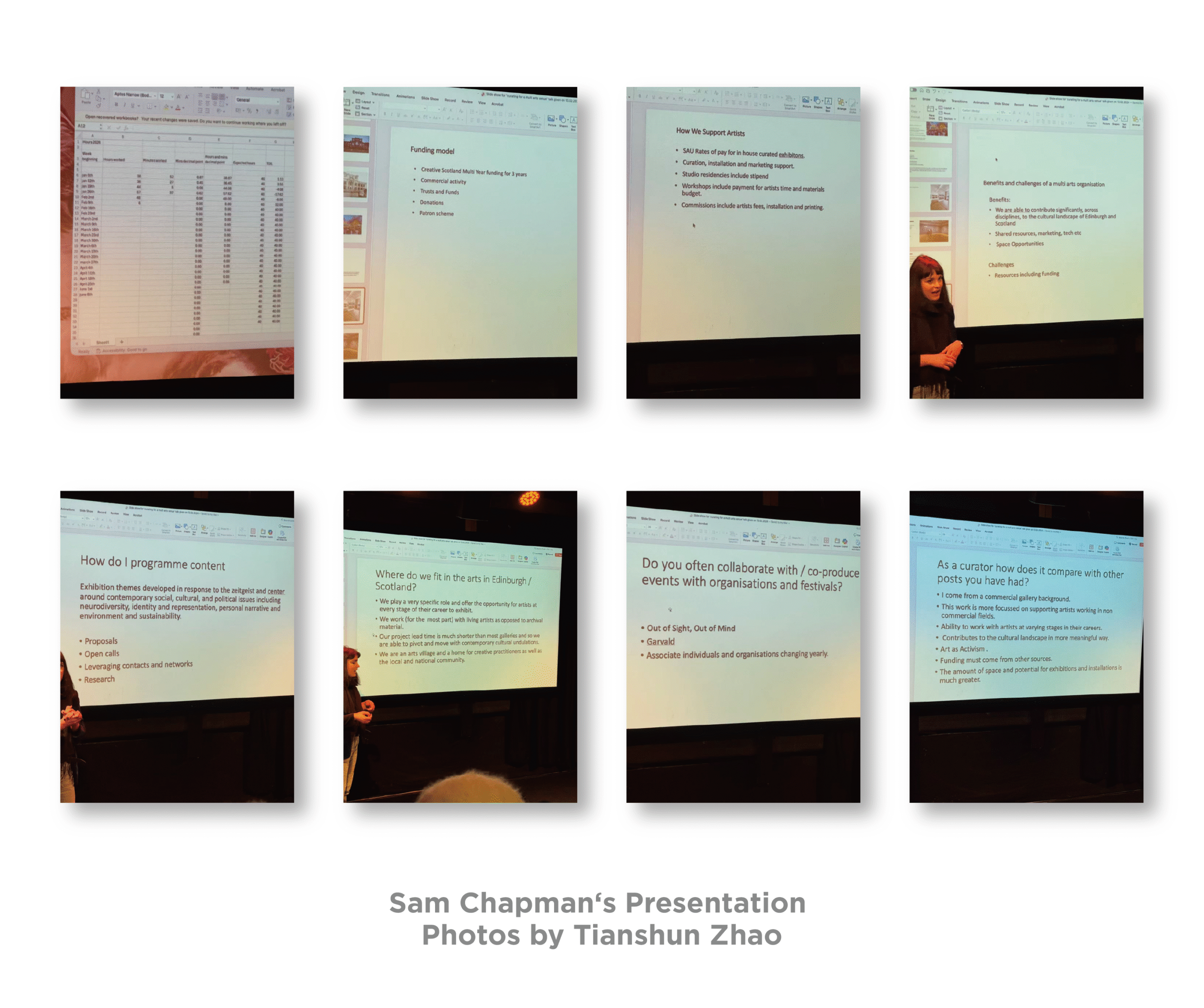
  • Multi-source Funding

Through a combination of public funding, commercial activities, foundations, donations and donor programs, the institution can maintain its sustainable operation and relative independence.

  • Artist Centred Support

In accordance with industry payment standards, we provide remuneration, production and professional support to artists in exhibitions, residencies, workshops and commissioned projects.

  • Flexible Multi-Arts Structure

Shared spaces and resources, along with shorter project cycles, enable institutions to respond quickly to cultural changes and support interdisciplinary practices.

  •  Non-Commercial Positioning

Unlike commercial galleries, it focuses on supporting non-commercial, experimental and socially engaged art, emphasizing the public and action-oriented of art.


The Group Collection of Curatorial Ideals
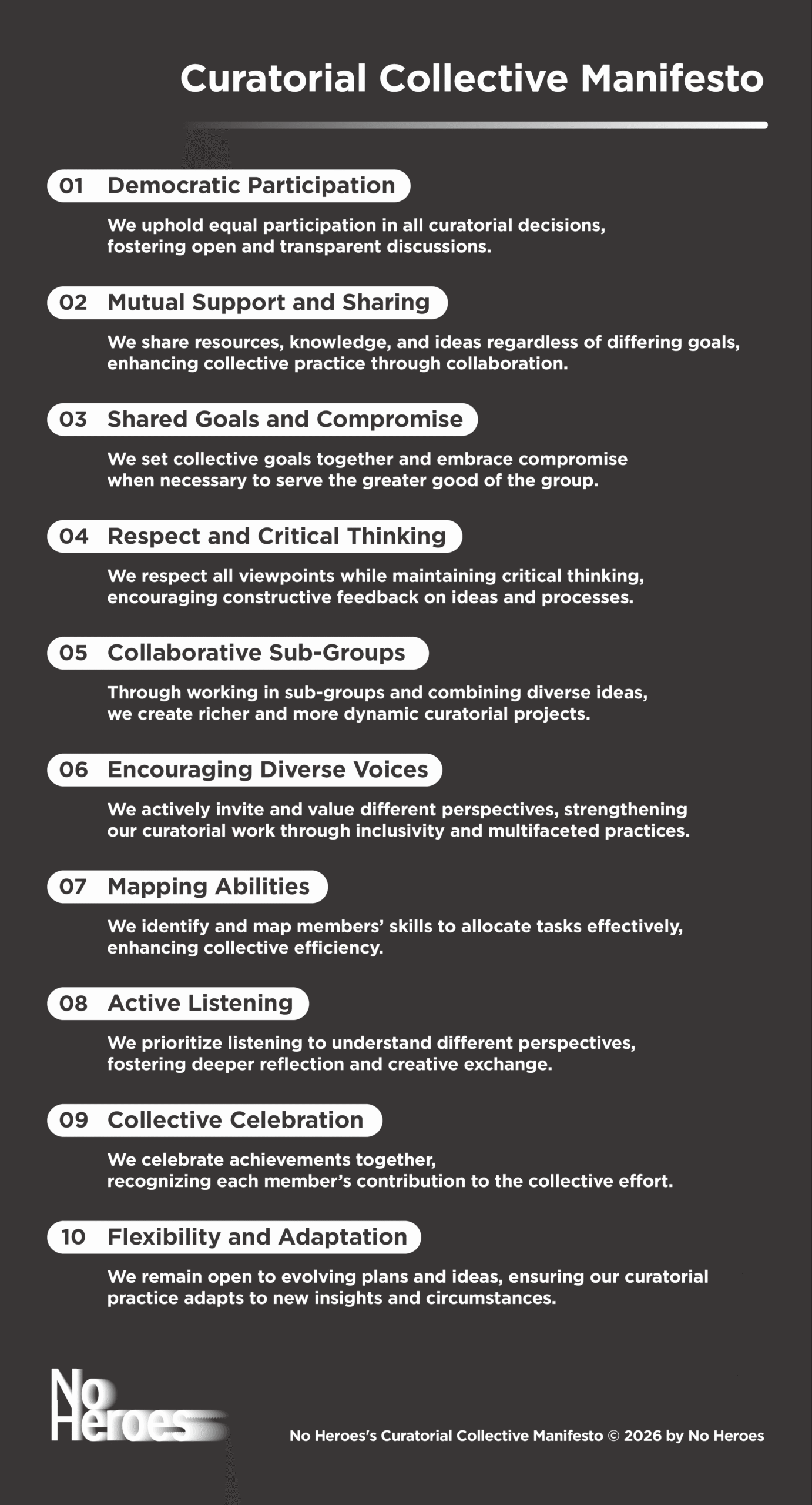
  • Anti-authoriality

Inspired by Roland Barthes’ “The Death of the Author” (1977), curating is no longer regarded as the expression of an individual’s intention, but rather as the temporary occupation of a discourse position.

  • Collective Subjectivity

In response to Haraway’s (1988) concept of situated knowledge and Latour’s (2005) theory of actor-networks, the curatorial subject is composed of people, institutions, objects, and relationships.

  • Critical Co-existence

In relation to Chantal Mouffe’s (2021) concept of antagonistic public space, curating is understood as a political arena that accommodates conflicts and differences, rather than a consensus-producing machine.

  • Anti-performative Logic

Based on the performance social critique by Byung-Chul Han (2015) and Andrea Fraser’s (2005) analysis of institutionalized artistic value, we reject the measurement of curatorial value by output and visibility.


Thoughts on Personal Curatorial Projects
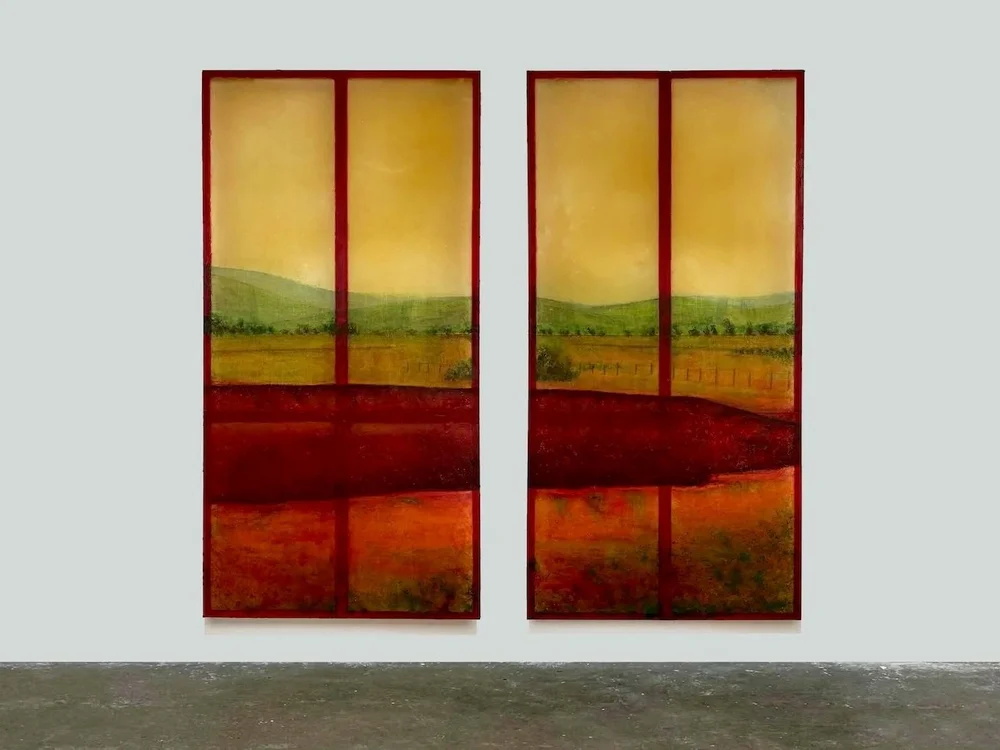
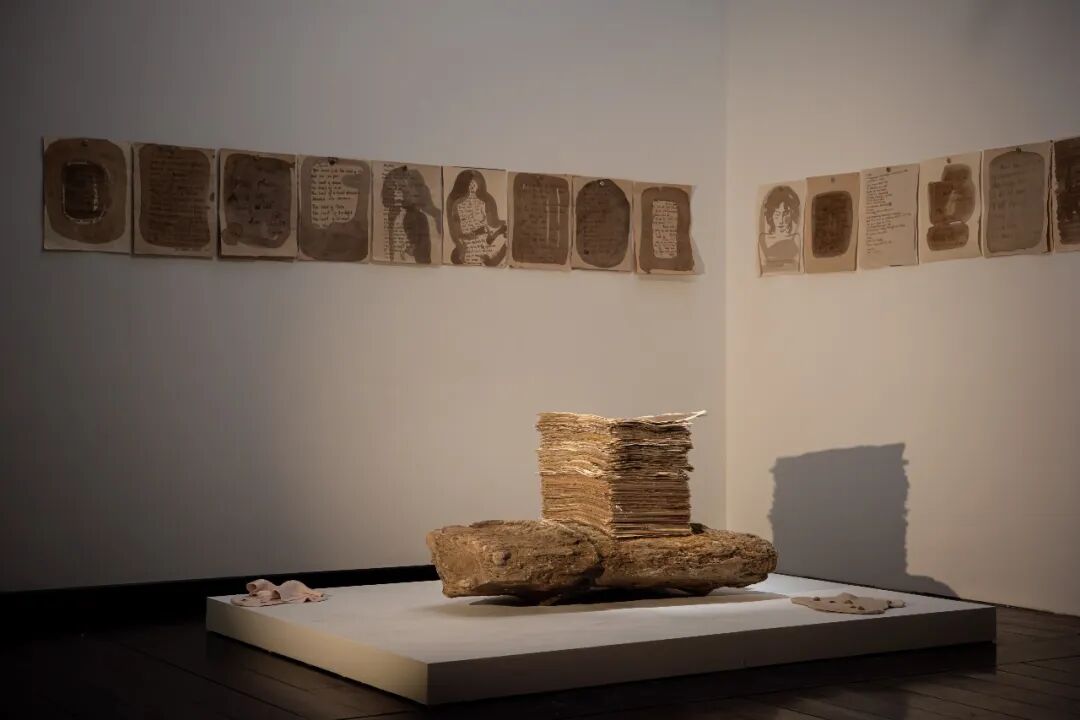
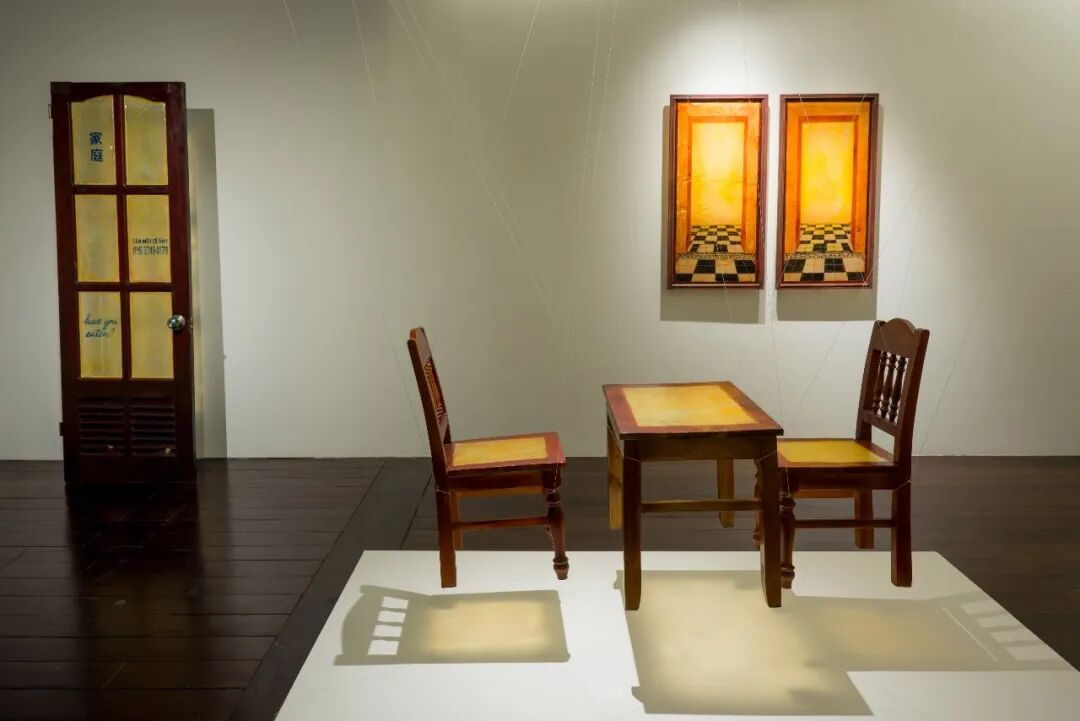
KV DUONG, Bomb Pond (Crater), 2025, Acrylic on latex, painted wooden stretcher 198 x 100 cm (x2),


  • DUONG KV is a Vietnamese artist born in Ho Chi Minh City and currently working in the UK.
  • He creates using latex, evoking the image of rubber plantations during French colonial rule in Vietnam. In “Bomb Pond”, he traced the scars of bomb craters during the Vietnam War, which have now turned into ponds, serving to awaken collective memories of the war.
  • He also possesses the identity attributes of the southern part of Vietnam and the global south.


Reference List

Barthes, R. (1977) ‘The death of the author’, in Image–Music–Text. Translated by S. Heath. New York: Hill & Wang, pp. 142–148.

Fraser, A. (2005) ‘From the critique of institutions to an institution of critique’, Artforum, 44(1), pp. 278–283.

Han, B.C. (2015) The Burnout Society. Translated by E. Butler. Stanford: Stanford University Press.

Haraway, D. (1988) ‘Situated knowledges: The science question in feminism and the privilege of partial perspective’, Feminist Studies, 14(3), pp. 575–599.

Latour, B. (2005) Reassembling the Social: An Introduction to Actor-Network-Theory. Oxford: Oxford University Press.

Mouffe, C. (2021) ‘Agonistic politics and artistic practices: Agonistic public spaces’, in LeGates, R. T. and Stout, F. (eds.) The City Reader. 7th edn. London: Routledge, pp. 312–316.
WEEK 3: Curatorial Ethics & Practice Aspects

Overview

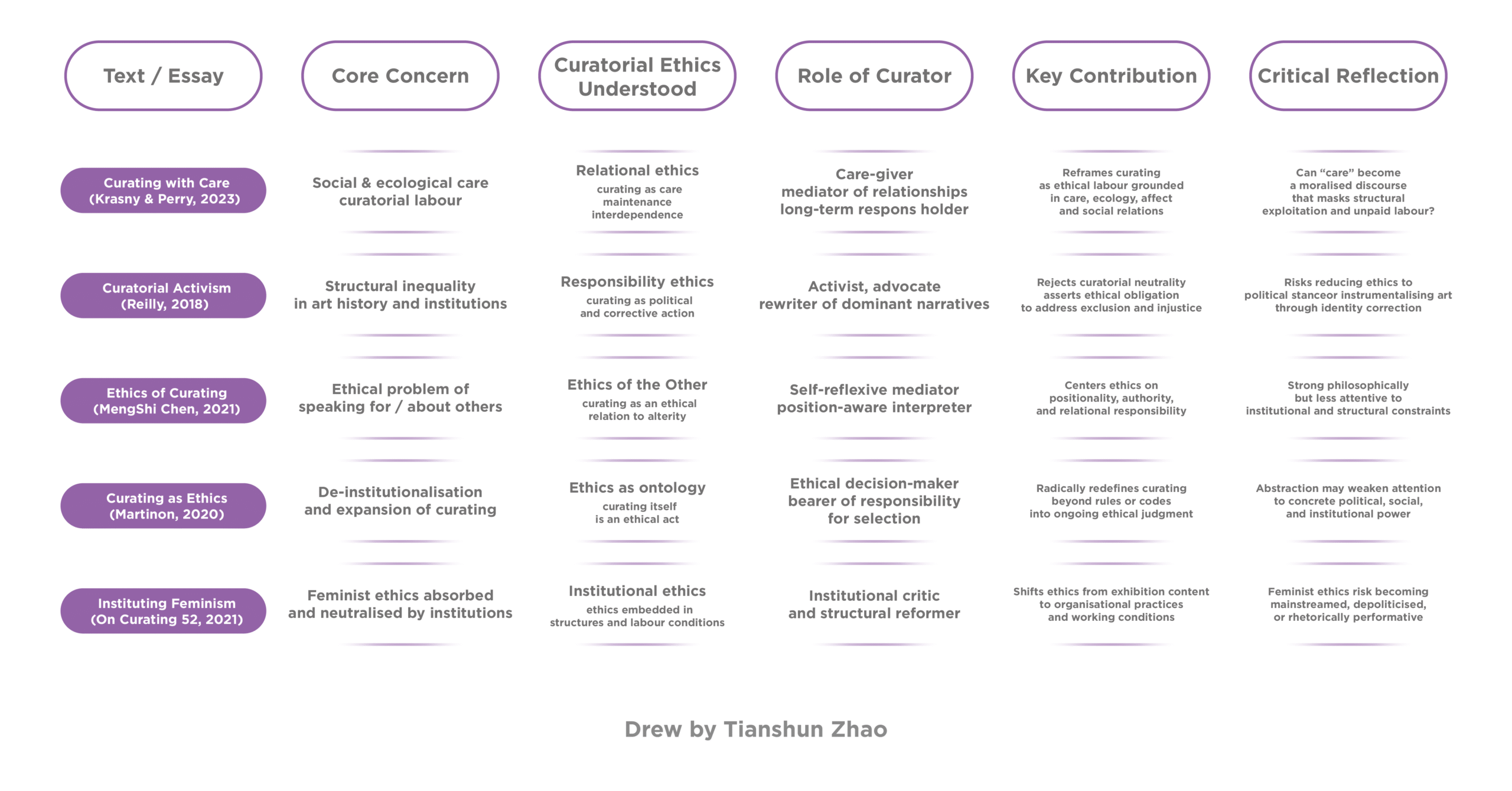
In the third week of the curatorial course, into the research aspect, curatorial ethics is not a set of fixed rules, but an ongoing, situational practice influenced by power, relationships, labor, politics, and responsibility in every curatorial decision. On the practical level, James Clegg began his discussion from the conceptual origin of the exhibition to the specific skills, covering aspects such as work analysis, target audience, exhibition budget, and required skills.


The Exploring of Curatorial Ethics

  • Curatorial ethics is non-standard and uncertain.
  • In my opinion, this is a non-curator-centered concept.
  • When “ethics” becomes the dominant discourse in the field of curating, is it losing its true critical power over power, institutions and capital?
  • This requires emphasizing the positionality of the curator.


The Suppose of Curatorial Practice

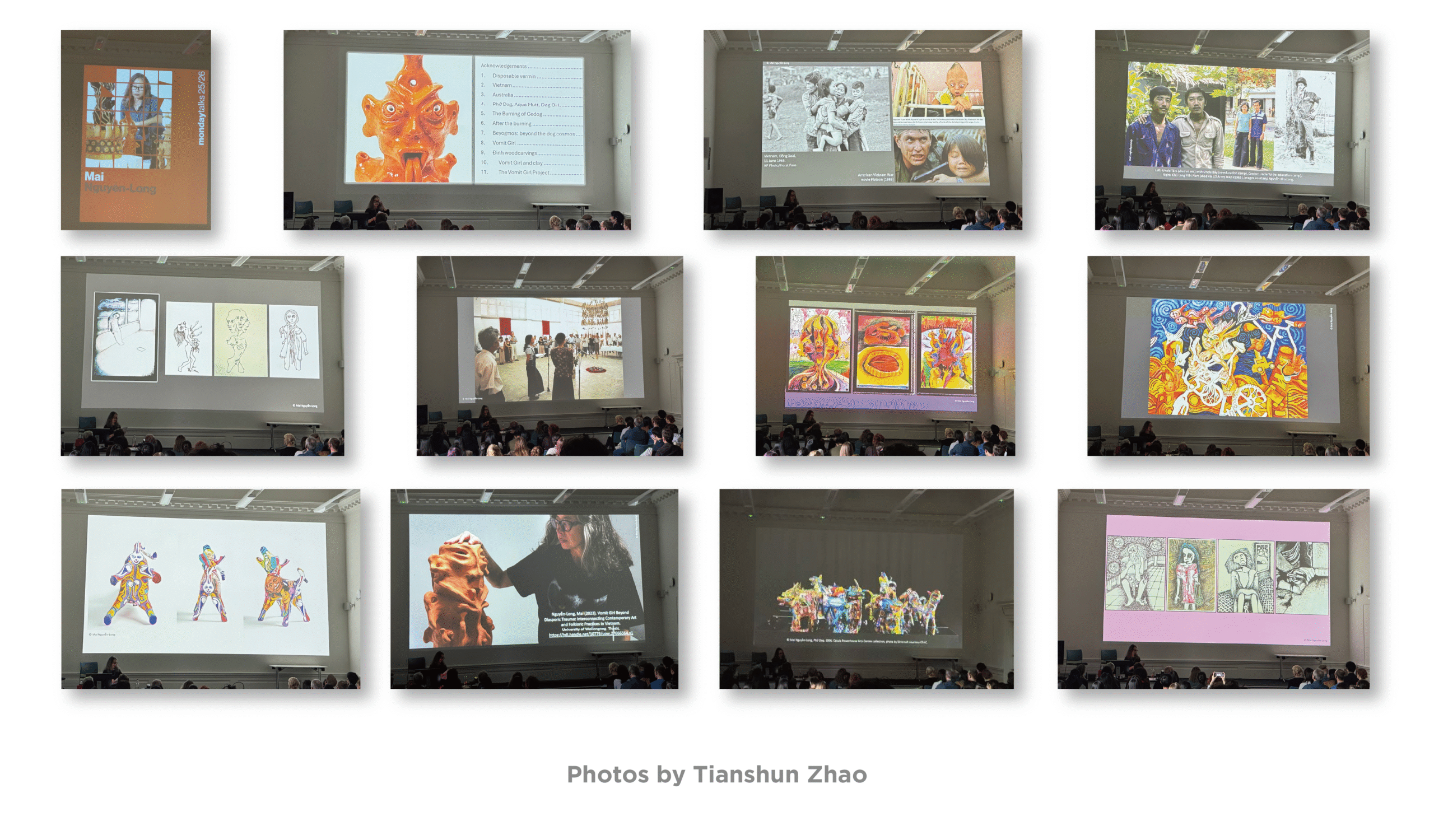
I plan to research and plan an exhibition project focusing on contemporary art from Vietnam. This idea originated from an ECA lecture last semester, where Vietnamese artist Mai Nguyen-Long presented his creations that revolve around the history of the Vietnam War and handmade ceramics.


Lam Na’s residency at the open studio “After the Great Harmony, Qian Ting Enters Dreams”
VAC Hanoi, from June 13th to July 6th, 2025
© 2025 Vietnam Art Collection.

Tang Jianrong (KV Duong) is exhibiting at the Open Studio “Welcome Home”
VAC Hanoi, from September 3rd to 14th, 2025
© 2025 Vietnam Art Collection. All rights reserved.

In my opinion, Vietnamese art is still in a state of waiting to be discovered at present. The emergence of the Vietnam Art Collection has made people start to pay attention to the parallelism of Vietnamese narratives. The local narratives and those of the overseas dispersed groups (such as Mai Nguyen-Long) jointly shape the image of Vietnam.


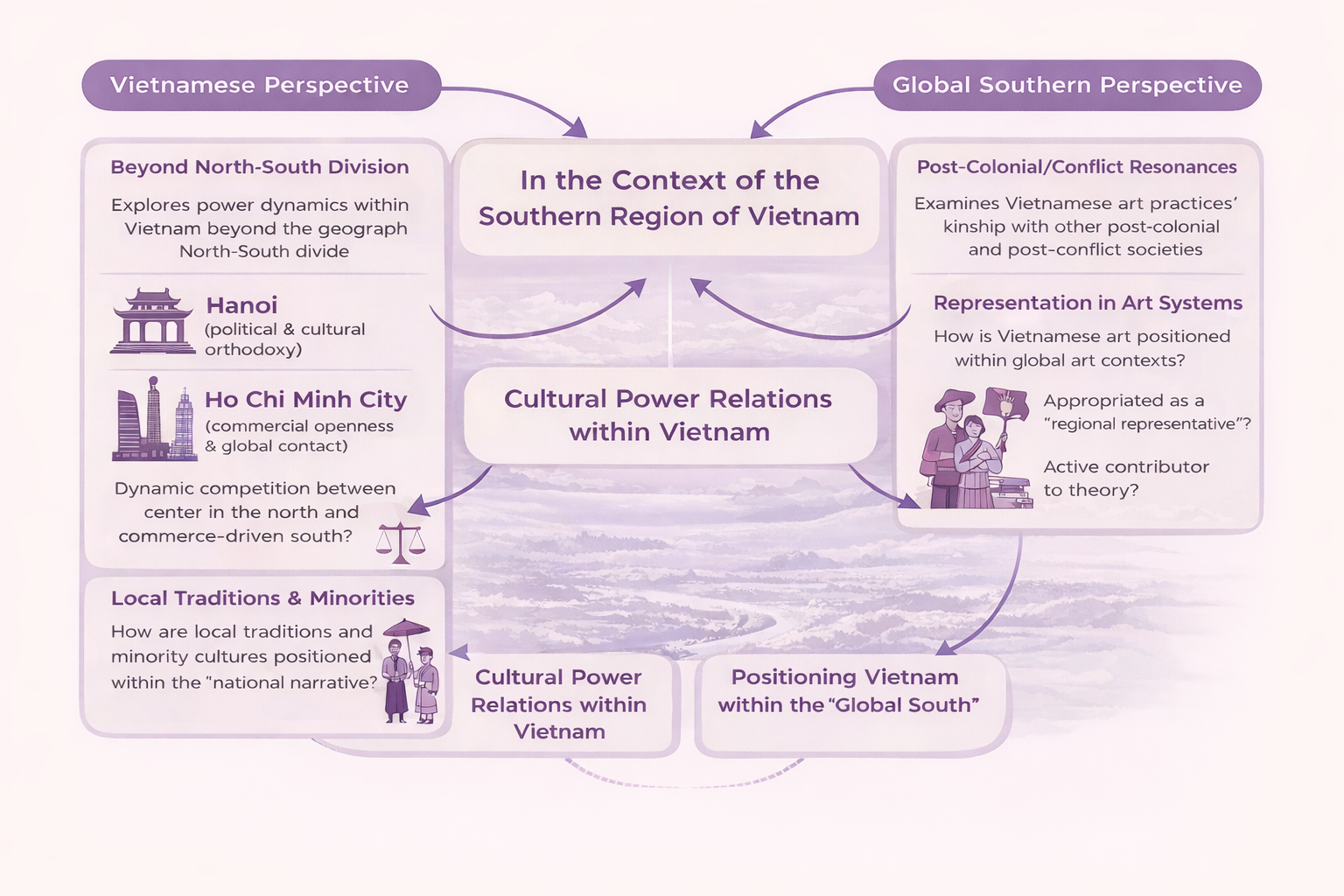
Southerness of Contemporary Vietnam
Image by: Tianshun Zhao
  • Research Path: The Domestic Southernness and Global Southernness of Vietnamese Art
  • Research Perspective: Local Narratives and Overseas Dispersed Narratives (Vietnam War, French Colonization)
  • Examine the curatorial presentation methods and narrative frameworks of Vietnamese art in major international exhibitions such as the Venice Biennale and Documenta.
  • Place Vietnamese contemporary art within the theoretical discourse of post-colonialism and global south, and investigate its international positioning and agency.

At the same time, from the perspective of the recent hot topic of southernness, how are the differences in the representation of contemporary Vietnamese art in the Global South and the Domestic South? We all know about Vietnam’s north-south issue.

Can it be extended from its domestic southernness to the context of the Global South? This might be what I want to explore in the exhibition.

And given the current state of Vietnamese politics, there has been a shift from a balance between the north and south to a balance among the various institutions. What impact will this have on cultural tendencies?


WEEK 2: Diversity of Curating Platforms & Organisations

Overview

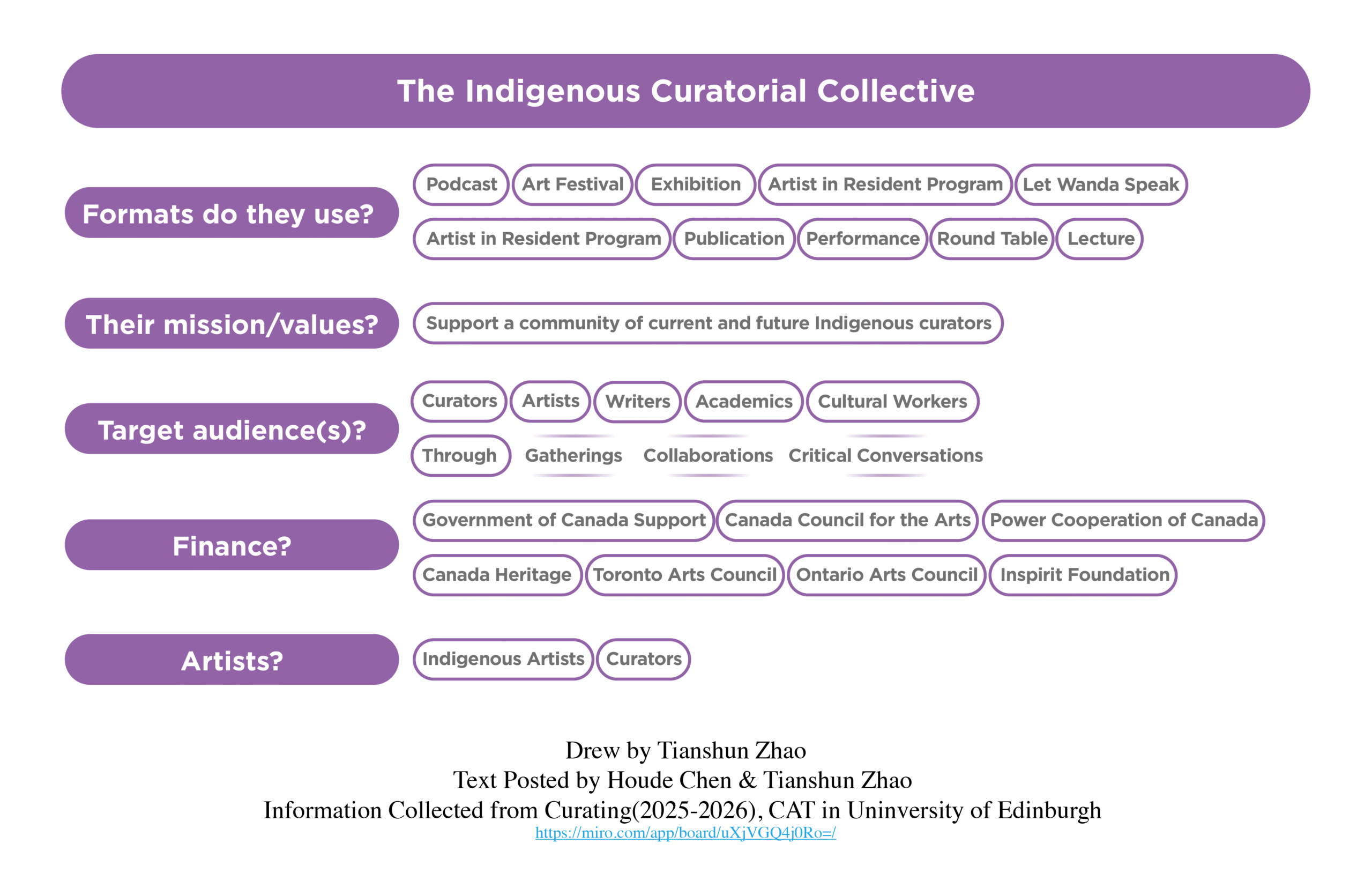
In the second week of the curatorial course, curating was presented as moving towards cultural practices with social participation and political reflection through diverse platforms and organizational forms, by critical perspectives and collective collaboration. In the Peer discussion, we discussed “Visual Arts Exhibitionary Complex” at the Fruitmarket Gallery, and in the afternoon, we added Gabi’s Group to the discussion, exploring “The Indigenous Curatorial Collective”.


The VAEC Analysis of Fruitmarket Gallery

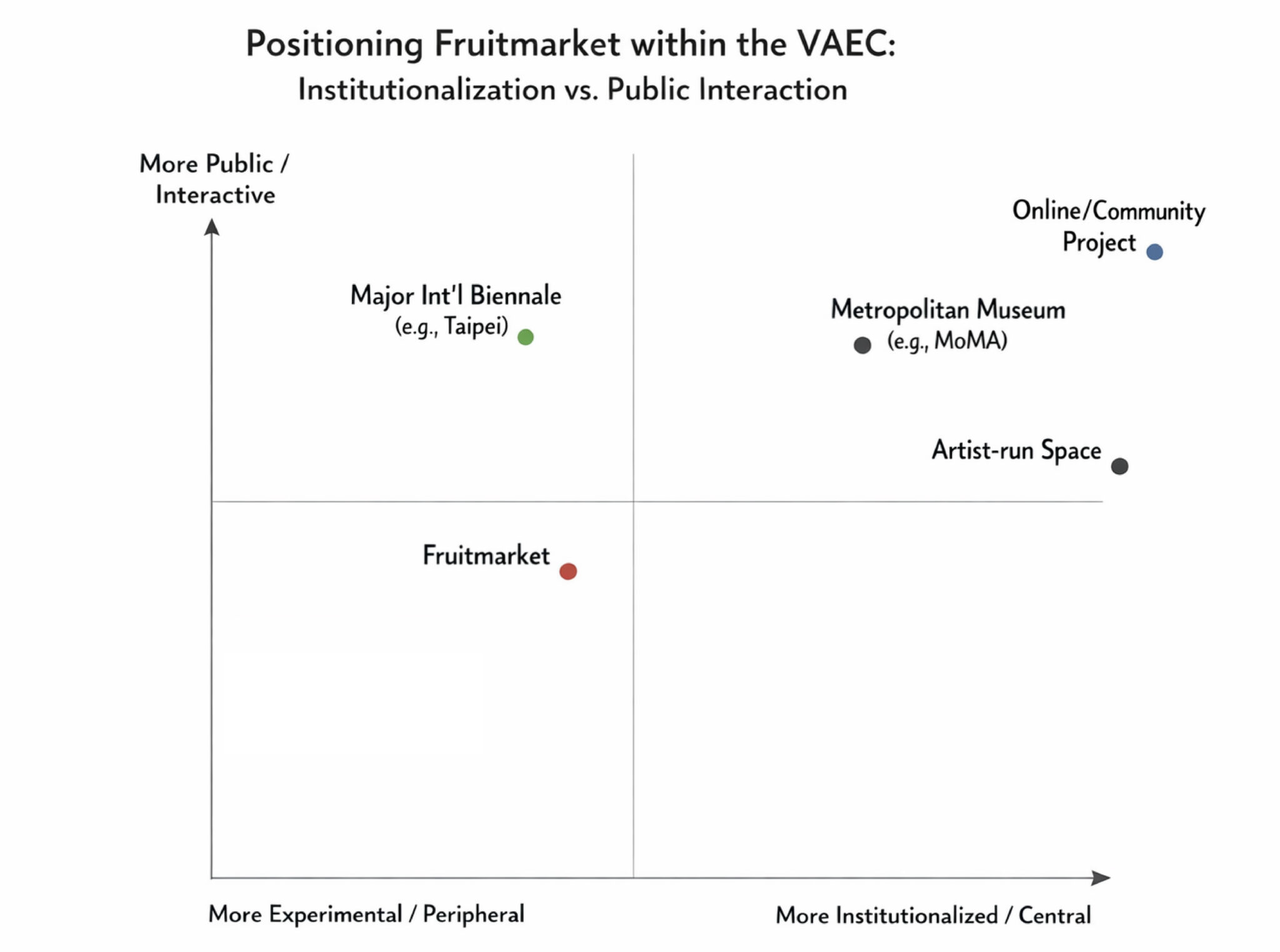
The Postioning Fruitmarket within the VAEC
Image by: Tianshun Zhao
  • A contemporary art gallery that is open to the public for free.
  • The core of its curatorial work: continuously establishing a space between artistic production and the public.
  • Through David Sherry’s solo exhibition of video works and the annual artist book fair, it can be seen that its focus is not only on the selection of artists, but also on designing diverse forms of interaction. The exhibition extends into live performances, and the book fair expands into workshops, making it a complex space that combines production, display, and social functions, reflecting continuous experimentation with public forms.
  • The chart shows that it achieves a balance between institutional stability and public openness, and directly influences the curatorial decisions.
  • As a registered charity organization, free access has shaped the project content and participation methods, prompting the curators to prioritize accessibility and community connection.
  • The inspiration lies in transforming space infrastructures such as bookstores and coffee shops into relational projects.
  • However, due to the lack of consideration for the impact of different funding sources and budget allocations, it can only indicate that it has reached a certain balance from the perspective of VAEC, rather than being the best example.


Thinking as a Curatorial Collective

  • Builds an ecosystem to support indigenous curators through various forms like podcasts, gatherings and publications.
  • The Core Decisions: fostering a professional community and promoting critical dialogue, seeking plans for art producers with indigenous identities to have more opportunities to present their works to the public, and providing institutional support (Let Wanda speak).
  • Inspires my personal research: how to build a sustainable and specific creative community with a limited budget.
  • I will draw on its ecological construction logic, but shift to a more lightweight form, such as planning a series of podcasts combined with mini roundtable discussions, focusing on documenting the formation process of conversations and relationship networks, which will serve as the core of my curatorial practice.


Welcome!

Welcome to your new blog site!

This is your first post. You can edit this or delete it and start blogging.

You should read the Terms of Use if you haven’t already.

For help and advice on getting started with a WordPress blog, see the Academic Blogging help pages.

Your blog is private by default

You can open your blog up to as many or as few people as you like in Dashboard > Settings > Reading > Site Visibility:

  • You can open your blog up to specific University members by adding them as users to your blog.
  • You can open your blog up to all University members who have an EASE login.
  • You can make you blog open to the world.


The featured image on this post comes from the University Collections. If you want to use more images in your blog posts, or perhaps use your own choice of image in your blog header, you can: