WEEK 4: Institutional Reality and Curatorial Ideals
Overview
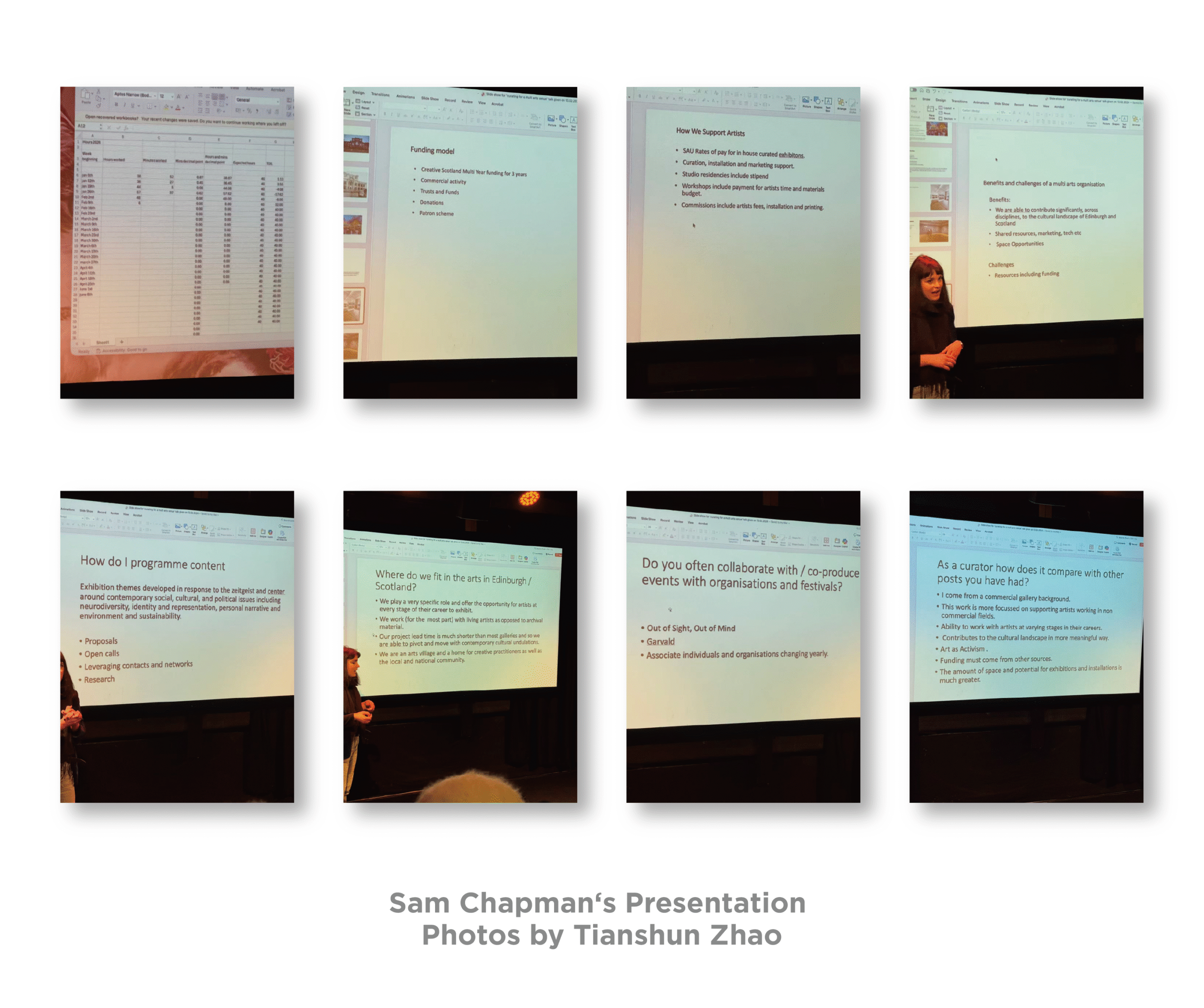
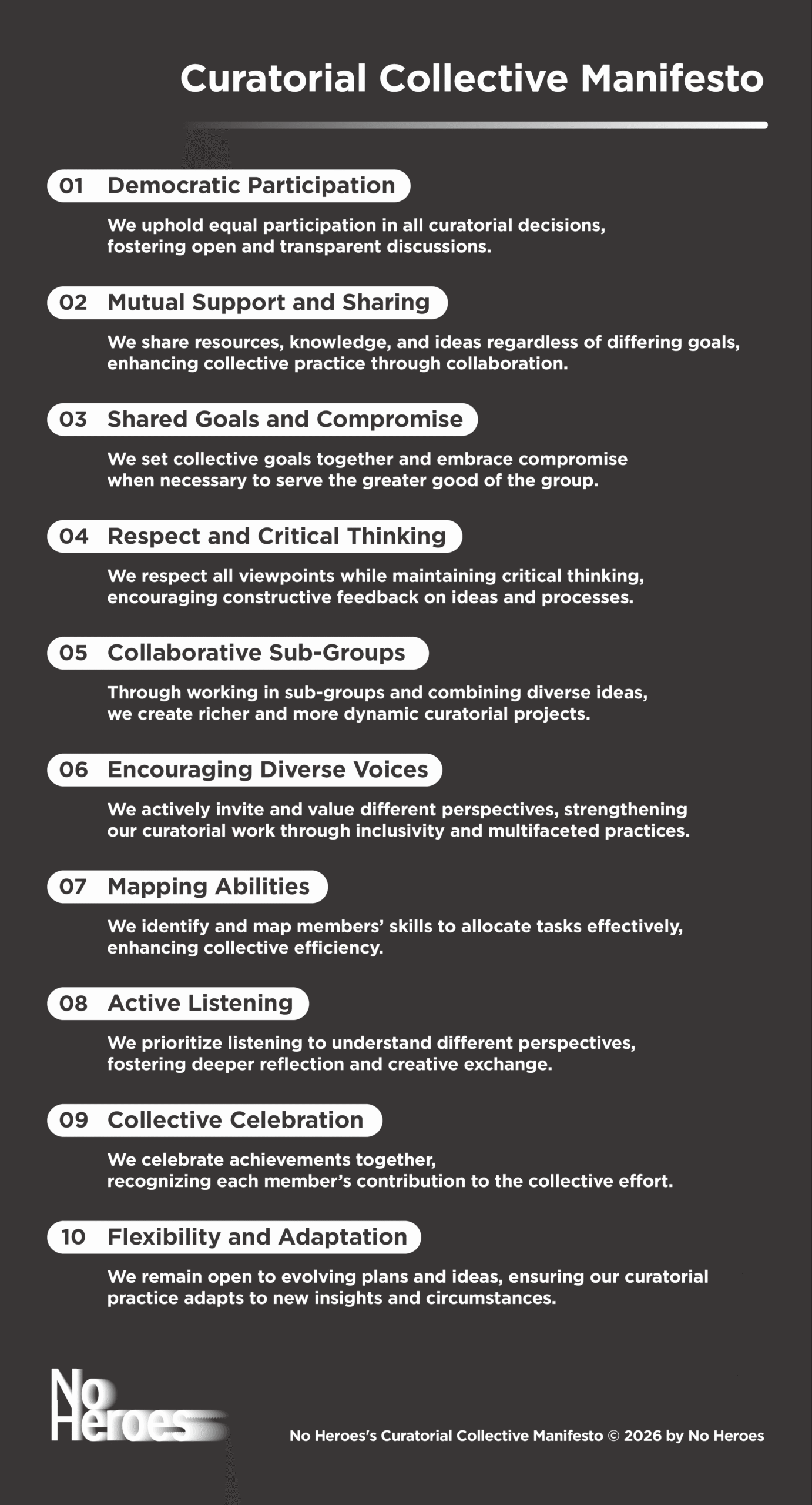
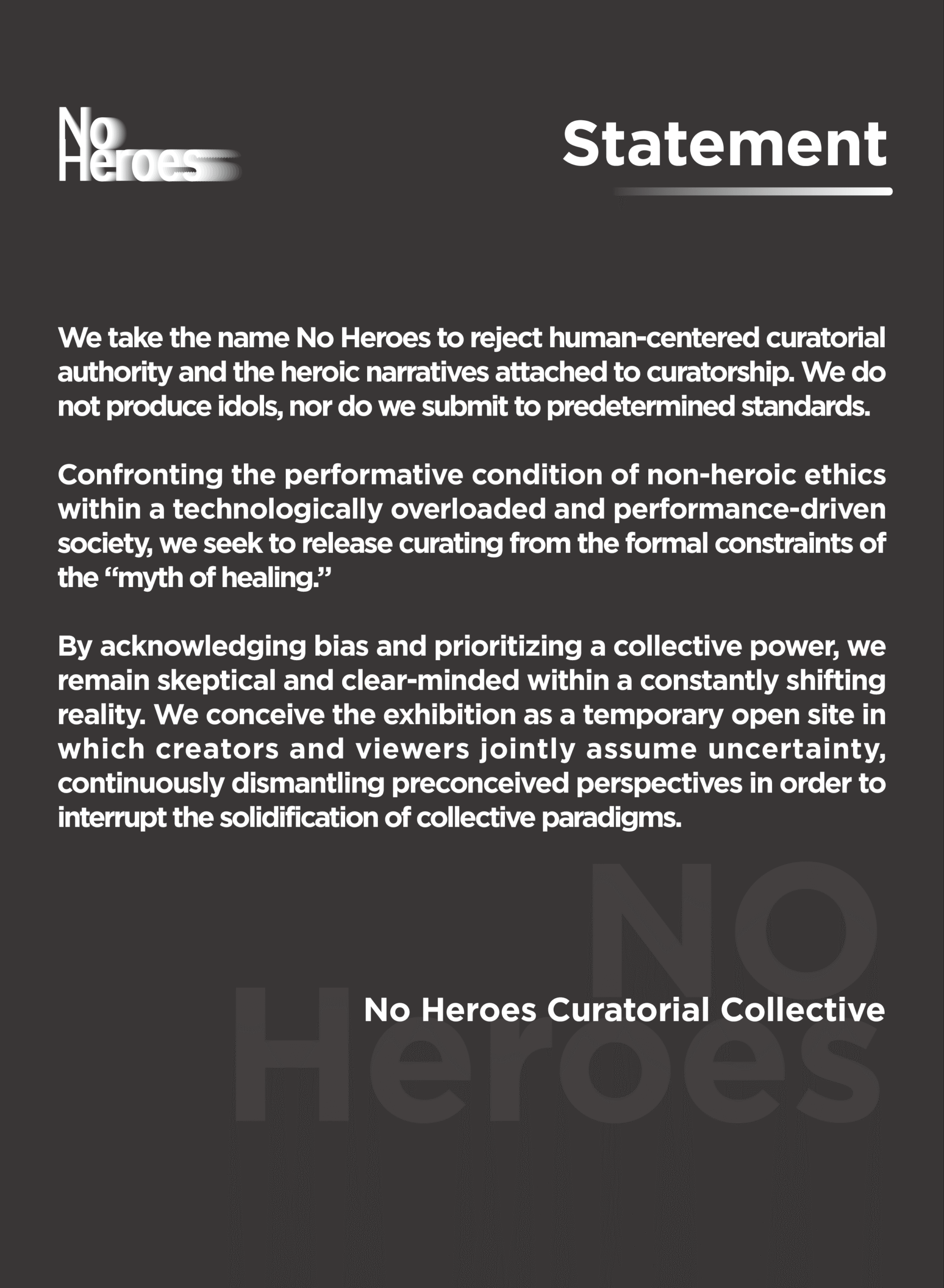
In the fourth week of the course, we visited Summerhall Arts. Sam Chapman will give a presentation on Summerhall Arts as a multi-arts curatorial space. Sam’s presentation covered viewpoints from aspects such as funding, artist support, and institutional characteristics. Meanwhile, the curatorial collective conducted a peer review of the exhibition themes and curatorial ideas of the members, and through collective decision-making, they determined the group name “No Heroes”, and formulated the Curatorial Collective Manifesto and statement.
The Execution in Institutional Reality
- Multi-source Funding
Through a combination of public funding, commercial activities, foundations, donations and donor programs, the institution can maintain its sustainable operation and relative independence.
- Artist Centred Support
In accordance with industry payment standards, we provide remuneration, production and professional support to artists in exhibitions, residencies, workshops and commissioned projects.
- Flexible Multi-Arts Structure
Shared spaces and resources, along with shorter project cycles, enable institutions to respond quickly to cultural changes and support interdisciplinary practices.
- Non-Commercial Positioning
Unlike commercial galleries, it focuses on supporting non-commercial, experimental and socially engaged art, emphasizing the public and action-oriented of art.
The Group Collection of Curatorial Ideals
- Anti-authoriality
Inspired by Roland Barthes’ “The Death of the Author” (1977), curating is no longer regarded as the expression of an individual’s intention, but rather as the temporary occupation of a discourse position.
- Collective Subjectivity
In response to Haraway’s (1988) concept of situated knowledge and Latour’s (2005) theory of actor-networks, the curatorial subject is composed of people, institutions, objects, and relationships.
- Critical Co-existence
In relation to Chantal Mouffe’s (2021) concept of antagonistic public space, curating is understood as a political arena that accommodates conflicts and differences, rather than a consensus-producing machine.
- Anti-performative Logic
Based on the performance social critique by Byung-Chul Han (2015) and Andrea Fraser’s (2005) analysis of institutionalized artistic value, we reject the measurement of curatorial value by output and visibility.
Thoughts on Personal Curatorial Projects
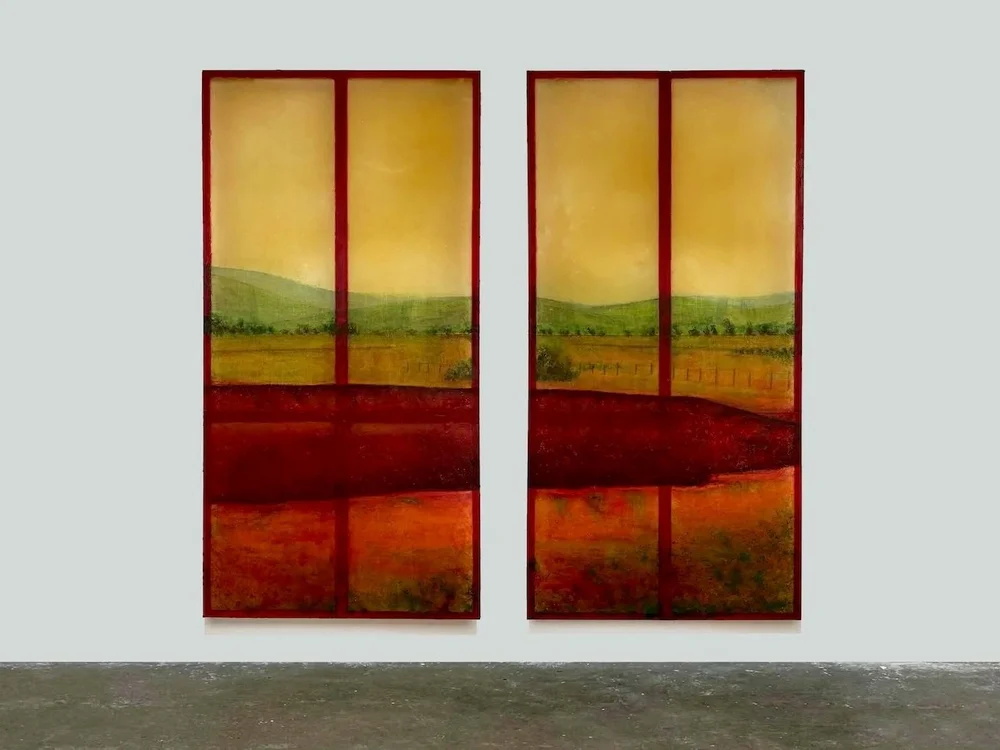
KV DUONG, Bomb Pond (Crater), 2025, Acrylic on latex, painted wooden stretcher 198 x 100 cm (x2),
- DUONG KV is a Vietnamese artist born in Ho Chi Minh City and currently working in the UK.
- He creates using latex, evoking the image of rubber plantations during French colonial rule in Vietnam. In “Bomb Pond”, he traced the scars of bomb craters during the Vietnam War, which have now turned into ponds, serving to awaken collective memories of the war.
- He also possesses the identity attributes of the southern part of Vietnam and the global south.
Reference List
Barthes, R. (1977) ‘The death of the author’, in Image–Music–Text. Translated by S. Heath. New York: Hill & Wang, pp. 142–148.
Fraser, A. (2005) ‘From the critique of institutions to an institution of critique’, Artforum, 44(1), pp. 278–283.
Han, B.C. (2015) The Burnout Society. Translated by E. Butler. Stanford: Stanford University Press.
Haraway, D. (1988) ‘Situated knowledges: The science question in feminism and the privilege of partial perspective’, Feminist Studies, 14(3), pp. 575–599.
Latour, B. (2005) Reassembling the Social: An Introduction to Actor-Network-Theory. Oxford: Oxford University Press.
Mouffe, C. (2021) ‘Agonistic politics and artistic practices: Agonistic public spaces’, in LeGates, R. T. and Stout, F. (eds.) The City Reader. 7th edn. London: Routledge, pp. 312–316.