Week 11- Final Reflections

Overall the duration of the course it has definitely challenged me in a lot of ways. I have definitely developed a new way of looking and analyzing the environment around and how impactful it can be. I think one of the most enjoyable things about this is listening and considering how environmental design is applicable within other disciplines.

Plastic Fantastic was a great theme in terms of understand that it is actually our interaction with objects that can create the harmfulness. Debating for falling back in love with plastic was definitely interesting but beneficial to understand a topic. This was the same for the first debate in in which I was arguing against ‘Designers have not yet come to terms with their complicity in the creation of the conditions of environmental crisis or with their environmental responsibility, nor have they yet reformed their practices accordingly.’ There was many point i made with reference to Interior Design and Architecture which created a good balance in my mind about how everything does have positives and negatives impacts, and that when analysing the debate it is to categorise which point has the most impact on the environment.

When thinking about this course and reflecting on the conversion and discussions i have been a part of it is clear to me that we are moving towards a better future with environmental design at the conscious forefront of that, well at least the creative world are. This is spurred on with a passionate generation who are ready to make an impact and make the necessary changes. A clear example of this is the on going protests against oil. This may be called dramatic or inconvenient but what we are doing to the planet is worse and it deserves our effort and respect to help.

Week 10 – Futures.

This week we asked to find a brand that defines ecological and environmental design. I looked at Emeco. This is a American funiture brand that Enviromental policy is too ‘focused on sustainability in the form of recycled materials and longevity. Since 1944, Emeco has been building chairs from at least 80 per cent recycled aluminium, and any scrap left over from the manufacturing process is also recycled.’

111 Navy Chair


Workshop

As a student we should be looking to start to be able to decide who we want to be as designers and crucially begin a part of this generation, how we impact the environment positively. Looking to create our 5 design principles is a key starting place I was really influenced by last weeks reading Ecological Design’ by Sim Van Der Ryn and Stuart Cowan.

1- Using local materials.

2- something that’s futureproof/ permanence, if not can what is the lifeline?

No concrete structures is there another way.

3- when we take ecological costs into consideration then we start to design with nature

4- designing with community at the forefront.

5- Refuse, reduce, reuse, or repurpose.


The class’s manifesto

Work-in-progress combined:

  1. Design for the future using the past. Use existing materials in circulation and knowledge and ideas to develop future ones to benefit the environment. Find recycling methods for all waste.
  2. Design following and for nature. Nature has already figured out the most successful way to thrive, let’s copy. Create for all, human and non-human. Eliminate the binary opposition between humans and nature. Let us breathe with the earth.
  3. Design to link up – Interlink between different sectors and processes. Become circular. Good design is a natural continuation. Understand the lifecycle of what is created.
  4. Take responsibility. Be critical about projects, be transparent where designs have failed, boycott carbon-heavy clients. Acknowledge the balance between designers & stakeholders. Recognize the systems at work.
  5. Respect the material.
  6. Design with place in mind. Acknowledge and respect what’s already there. Design should be a reflection of the context of its location. No one size fits all! Consider the local climate, and embrace the skills of local people and materials from that specific area.
  7. Un/non-design. Conserve, leave alone, don’t make, don’t take up space, and even subtract (rather than add)!


References 

Sim Van der Ryn, Stuart Cowan. Ecological Design, Tenth Anniversary Edition. 10th ed. Durham: Island Press, 2013. Print.

Eight design brands leading the way in sustainability


Week 9- Anthropocene? Captialocene?

Focusing on the reading for this week as it posed a lot of interesting discussion within the tutorials around the theme of Anthropocene and Captialocene.

The discussion posed many interesting topics as below.

1.How do the authors define Ecological Design? See their text/prose and also the table where they compare with what they call ‘conventional’ design. Is it a useful definition? What do you think?

Ecological Design –

We define ecological design as “any form of design that minimizes environmentally destructive impacts by integrating itself with living processes.”

It respects species diversity, minimizes resource depletion, preserves nutrient and water cycles, maintains habitat quality, and attends to all the other preconditions of human and ecosystem health.

2. Pick one of the precedents discussed (in the sections where they look at the history of the field) that you think sounds interesting and do a quick 5mins of research on it.

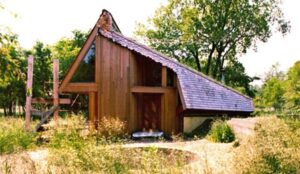
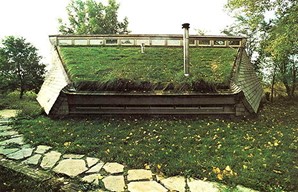
I choose the The Ouroboros House in Minneapolis. Which was mentioned in the reading and is a great project. This is what I presented to the class.

Ourobors is a greek mythic sperpent that would regenerate itself in its own skin. Represents a sustaible system.

Project Ouroboros was begun in 1973–the first solar house in the Upper Midwest.

The shape and orientation of the house are adapted closely to the Minnesota climate, which suffers from very cold and windy winters. This is why the project’s main goal was to develop heat insulation.

The building has a long south facing façade spanned with windows and solar panels, to absorb as much as sun as possible. It does also have a large overhand which during the sunny summer months shields the building from the sun acting as a cooling aid.

Earth is piled against the north, east, and west walls. The sod roof slopes backward almost to the level of the ground, protecting the house against fierce north and west winds. The walls and roof have at least nine inches of fiberglass insulation throughout. In winter, snow drifts collect on the roof and around these walls to provide extra insulation where it is needed.

This building is a design that encapsulates ecological design and reflects the environment around.

3. (Specifically in relation to Nature’s Geometry) What do they mean by ‘scale linking’? Why is it important?

Scale Linking – What we do at one scale has subtle impacts, both negative and positive, at many other scales. Scale linking reminds us of the wider environmental consequences of our designs.

References  

https://www.dennisrhollowayarchitect.com/ProjectOuroborosSouth.html

Sim Van der Ryn, Stuart Cowan. Ecological Design, Tenth Anniversary Edition. 10th ed. Durham: Island Press, 2013. Print.


Week 8- Plastic Fantastic

This week we focused on the Plastic Fantastic theme. I thought this was a really interesting concept for debate week as plastic is totally villainised so it would be interesting to view and then argue the other side.

I enjoyed the lecture as it didn’t just demonise plastic it instead showed our it our attitudes and use of plastic which has led to the devastating effects it is having. The timeline of this was helpful. It showed when plastic had became ‘cheap’ and environmentally friendly.

Debate – For – Should we fall in love with plastic again. 

While plastics can contain harmful elements, plastic offers numerous benefits in our daily lives. Hospitals since the uptake of plastic as a main material have became significantly more hygienic. Due to the ability to add chemicals to plastic is can become elastic and soft. Allowing to replace glass bottles and rubbing tubing which are both bacterial hubs for options like blood bags and plastic pipes, significantly reducing the risk of infection.

low production costs, malleability, and lightweight nature contribute to reduced fuel consumption, aiding environmental conservation.

88 million tonnes of food is wasted ever year which massively contributes to carbon emissions. Plastic packaging dramatically reduces food waste as the plastic both protects and gives extra time for the produce to be in transit.

According to the British Plastics Federation, as we have seen an increase in light weight plastic car parts, there has been a saving of around 3,000 liters of fuel required for these cars.

In terms of construction using durable plastic pipes they can last 100 years which requires a lot less repairs, interventions and replacement than traditional materials. Its corrosion resistance ensures longevity, discouraging premature disposal.

Overall I think there is a lot of ways plastic have benefited our lives which is why is has become a problem, because it has helped our lives but it doesn’t help our environment and our world. Instead we must look to a regeneration of plastic with environmentally conscious plastic at the forefront.


Week 7 – Materialism

This week we looked at Materialism, and specifically the the vitality of matter.

Reading and Tutorial. 

Reading the preface was useful as Bennet describes Vibrant Matter as the liveliness and energy in all ‘things’ not just thing we would decide are living. Once we break this barrier down the world around us become infinitely full of vitality.

The reading this week was a complicated read. As the topic of vitality how that attaches to matter is complex. But I think in terms of pollution it is crazy how we chose as humans to ignore things that do no directly effect us. “How, for example, would patterns of consumption change if we faced not litter, rubbish, trash, or “the recycling,” but an accumulating pile of lively and potentially dangerous matter?”

“What issues would surround stem cell research in the absence of the assumption that the only source of vitality in matter is a soul or spirit?”

The idea that the vitality of a matter is based on how we perceived it and the social aspect. As she said ‘assumption that the only source of vitality in matter is a soul or spirit?” enforces this idea that we perceive matter to have importance if we can see how it a has soul and spirit that we can relate to. Instead of how each object has its own purpose and journey that we may not b able to relate to but that shouldn’t deter its vitality. The idea of how if I throw away rubbish, I will believe it doesn’t have an effect on me personally and I cant relate to that even though that piece of rubbish has.

Vibrancy of matter – every matter is as important; everything has their own form of agency and life. Inmate objects made up of different compounds and interact with everything different and will continue do to this even after we are ‘finished’ with or discard it, it will continue to exist and interact etc.

Vital materialism is the idea that every material has a vital regardless of how lifeless it appears to be.

The vitality of matter is again dependent on how on we perceive it socially. As an example, a family heirloom may just be a pot technically but the value we attach to it changes it vitality.

References 

JANE BENNETT. Vibrant Matter: A Political Ecology of Things. Duke University Press, 2010. Web.


Week 6 – Biblography

This week I was able to focus on researching a topic specific my discipline, Interior Design. I wanted to look into how the industry designs in regards to sustainability and the problem that interior specifically face of refurbishments. How can we start designing to last. How to we design to fit to purposes. Should we be refurbishing just based of preference changes.

Obeidat et al, (2022), ‘ The role of sustainable interior design and its impact on customer’s behavior in commercial environments’, IOP Conference Series: Earth and Environmental Science, vol. 1026.

 The ethos of this piece helps us to understand that even thought we are aware of an issue and the potential impacts it is happening there is an aim to reduce the damage that is caused from renovating with non recycled materials. By starting to introduce recycled materials into the interior design industry and thus our ecosystems we can provide the starting place or continuation of smart sustainable practices. Refuse, reduce, reuse, or repurpose can have a seriously positive impact if we push them.

Vavanou, Antonia, Yair Schwartz, and Dejan Mumovic. “The Life Cycle Impact of Refurbishment Packages on Residential Buildings with Different Initial Thermal Conditions.” Journal of housing and the built environment 37.2 (2022): 951–1000. Web.

This book goes into the details that we currently have existing building as the largest portion of the housing stock in the UK. Being able to refurbish those houses in order to make them fit for purpose is of major importance, as using these existing buildings can play a key role in reducing carbon omissions. “This study evaluates a range of retrofit approaches (simple, medium, and deep), in terms of Life Cycle Carbon Footprint applied on a terraced house—one of the most common housing archetypes in London.” Looking into each house to determine its refurbishment status, never refurbished, refurbished with compliance in 1979 and in 2000 building regs. It also touches on a key point that easy retrofit packages may have fast short term results but leave the building issues such as poor thermal conditions which are not helpful in the current climates. These can however result in quick CO2 savings, Deep retrofit packages and treatment of relatively new buildings should be implemented at a later stage, to push buildings further to Zero–Carbon target.

Baker, Nick (Nick Vashon). The Handbook of Sustainable Refurbishment : Non-Domestic Buildings / Nick V. Baker. London ; Earthscan, 2009. Web.

I think it is crucial to include a book that proves there is work being done to educate the ways of achieving or at least improving the way we construct and work with refurbishments.


Bibliography 

Baker, Nick (Nick Vashon). The Handbook of Sustainable Refurbishment : Non-Domestic Buildings / Nick V. Baker. London ; Earthscan, 2009. Web.

Obeidat et al, (2022), ‘ The role of sustainable interior design and its impact on customer’s behavior in commercial environments’, IOP Conference Series: Earth and Environmental Science, vol. 1026.

Vavanou, Antonia, Yair Schwartz, and Dejan Mumovic. “The Life Cycle Impact of Refurbishment Packages on Residential Buildings with Different Initial Thermal Conditions.” Journal of housing and the built environment 37.2 (2022): 951–1000. Web.


Week 5 – Social and Environmental Justice.


Week 4 – Why consider the stories of stuff.

In this week’s lecture we were introduction to the ideas revolving around the story of materials, commodities and ‘stuff’. And the overall theme of labour, Social Justice and Environmental Design. Everything changes and this explores why something is the way is and ultimate is if has ended why.

The reading for the week was ‘Cradle to Cradle’ by Braungart and McDonough. It has a focus of the environmental cycle that a product goes on and how each element can have a end state of either negative or positive impact on the environment.

Within the text the discussed idea of biological metabolisms. This concept was really interesting, the things are designed to go back to nature because of its biological compound. The opposite of this is Technical Metabolism, the objects are can go back into the industrial world with limited waste. The struggle begins between these two things as it is hard to integrate metabolisms together with our understanding of production and thus consumption, causing it to enter the cradle to cradle cycle.

Tutorial 

Talking about the reading my group used the example of cars and how they fit into his cradle to cradle ideology. As a car is made up of lots of components it is easy to know that yes, many parts will be reused and repurposed for other cars etc. but there is also an argument that the rest/ potential majority of the parts cannot be reused and don’t return to the industry. They also can’t re enter nature as they are chemically hazardous. Cars ending up in landfill is not a good enough answer. Disassembling and categorising the parts into materials would create a better opportunity for recycled car parts.

Reference List:

-Braungart, M. and McDonough, W. (2008) Cradle to cradle: Remaking the Way We Make Thing. London: Vintage books.


Week 3 – The times we are living in.

This week within the theme of Experience and the Environment we looked at our direct interactions and experience with it. While also looking into the relationship with the man made world and ‘nature’.

The lecture had some hard hitting moments of how our man made world is continuously damaging the planet, and ultimately in my opinion disrespecting our home. Our lives are so connected intertwined with the planet and we cannot keep ignoring or pretending that we are not having a devastating impact.

Within the Workshop we were to find elements and examples of nature and culture interacting. This was a interesting way to reshape what we are seeing in front us.

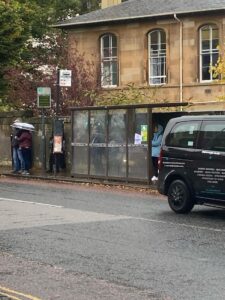
Shelter – This Que I thought was really  interesting, especially as it raining. Man made shelters such as Bus stops were perhaps an obvious example but seeing natures way of shelters (trees,) posed an interesting thought. Watching people use trees to shelter as almost a last resort showed how we have only utilise what our environment has to offer when we desperately meed to. But also that clearly we have instinctive nature to protect ourselves and use natural resources. There is no give and take, it is just give.

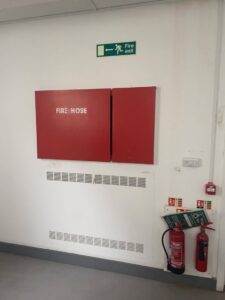
Fire – Looking at the multiple fire hoses and extinguishers within the art school made me realise it was a clear example of our engagement which such a prominent part of nature. In this case how perhaps in our society we view fire as a threat instead a great tool of our environment. Something we flight against, not that we ultise.

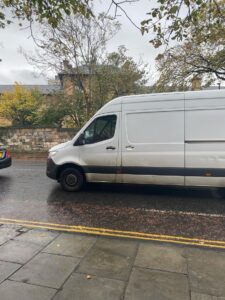
Radio – In this image there is a man in his car blaring the radio. I thought this was an interesting mix between between both radio and boundaries. This man believes his music is only impacting him, and due to his van he has created a visual and physical boundary. But this does not stop the sound from crossing the boundary and impacting the external environment. I thought this was a great example of how we don’t actually see the impact we having on the world. All the micro scale follow ons that happen due to our actions.


Week 2 – Theme 1 – Experience and the Environment.

This week we dove into the content of the course looking at the first theme; Experience and the Environment. And also read an article written by design historians Kjetil Fallan and Finn Arne Jorgensen. The article includes a range of topics surrounding Environmental Design Histories from various authors.

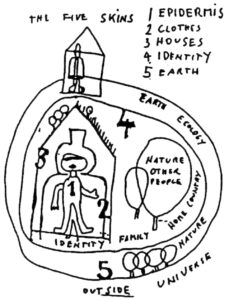
Looking back quickly at the Lecture, I thought the diagram gave a good representation of how we should view the different layers of the environment. This was slightly new way of understanding it for me so I think it is important to note that as my previous experience Environmental studies focused on the third layer – Houses.

A key thing I took from this lecture and then was followed up by the reading was the idea of this capital N in Nature. I thought this was a really interesting, and my understanding of it was that the Western world has created this ideology that we as humans are separate from nature. This lead me to a interesting thought; within the food marketing industry the word ‘natural’ that we see labelled on foods and drinks can be placed on pretty much anything as it is not particularity regulated.  This allows for companies to market and manipulate their packaging which is essentially green washing. I think this relevant in this conversation as it demonstrates how in a range of industries this word Nature and Natural has been manipulated and now conforms to whatever these major companies need it to mean as portrayed within the reading; “most everyday encounters with the natural world take place through mass produced culture”.

The uptake in SUV’s also adds to this idea, these “Gas guzzling traffic behemoth”. As these 4 wheeler are marketed through commercials and photo shoots as the Cars to explore wildlife and escape into nature, they in fact have the opposite effect. The blatant manipulation in these commercials is so bold as they are filmed off road-ing which almost encourages people to destroys micro habitats and disturb peaceful environments.

The statement from William Rollins on postmodern environment consciousness “this postmodern means “no boundaries” in people’s exploitation of the environment”  posed the question to me, has the same thing happened with the word Environment as it has with Nature?