Highways and liminal spaces in Canadian crime writing
Yesterday, I had a post take-off on Threads when I said that my PhD is on the liminal qualities of the Canadian highway. I had asked if anyone had taken videos of any highway drives, that I would love to see them. Then, 144 comment later, I found myself with a treasure trove of highway videos from across Canada. Bleak snowy drives in Manitoba, crispy blue skies through the BC mountains, dark roads in Quebec piled with snow as plows inched ahead. Everyone had videos to share.

Some of my favourite videos were ones where there was music playing in the car, while the road ahead had skiffs of snow swirling across it. In one video, a Celine Dion song is playing. In another, the Radiohead song Spectre blares through the speakers. In a haunting video in Manitoba, someone recorded passing a car in a ditch with zero visibility. It wasn’t just videos either. Many people posted photos of their recent highway journeys.
Highways as liminal spaces
In my PhD thesis, I make the argument that highways are liminal spaces, and there is a reason they often appear as symbols in Canadian crime fiction. Canadians spend a lot of time on long highway drives, and these long drives become somehow connected to our national identity. In many cases, we don’t have a choice. If we want to go somewhere in Canada, we often need to drive.
In the comments, I also got asked about liminality. What is it?
-
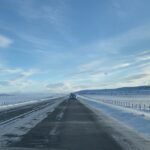
- Winter highway to Southern Alberta

-
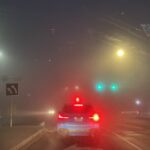
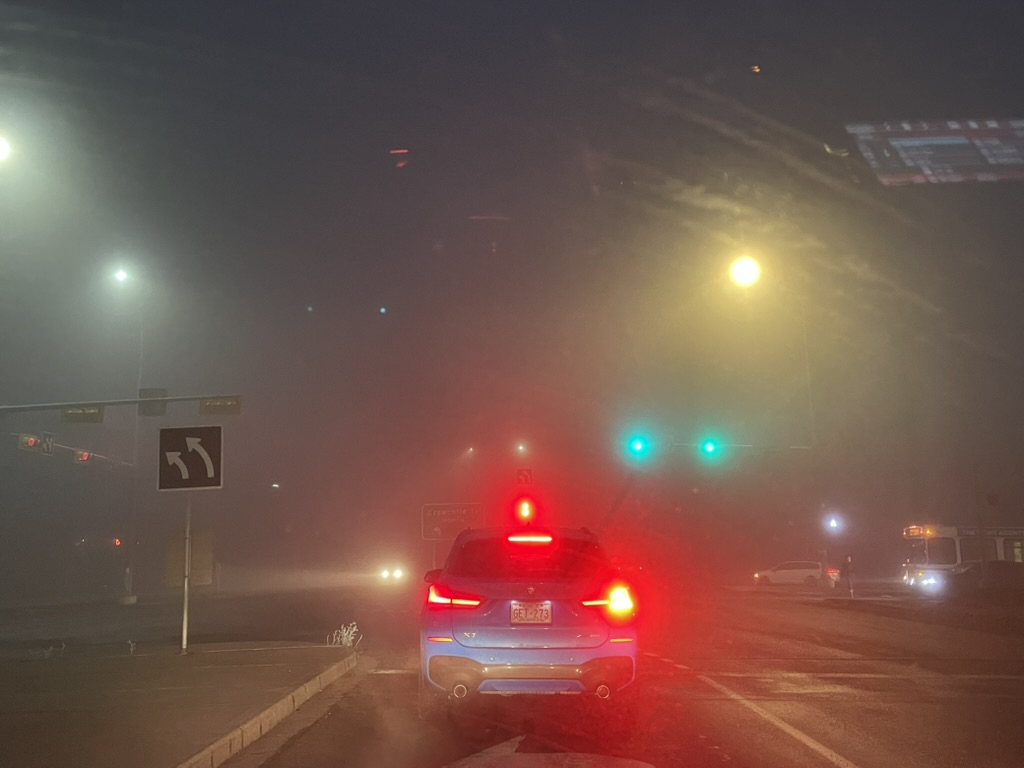
- Snowy city roads
-

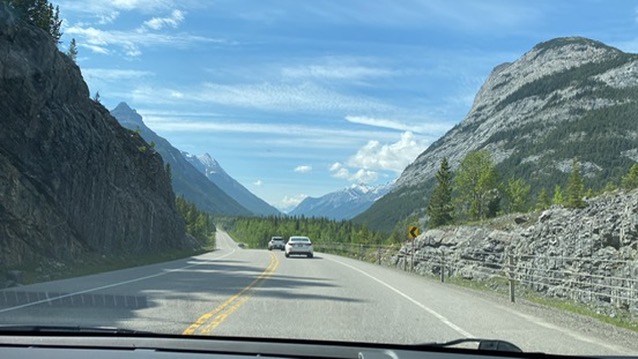
- Mountain highway to BC
There is plenty of scholarly research on it, but skipping through the academic stuff, liminality is basically the production of unease. It is space, or geography, or a place, that produces anxiety. Something is unsettling about liminal places.
The Canadian highway, even in good weather, can be very unsettling. Our highway trips are long, and it’s not unusual to spend two or more hours on the highway. Sometimes four. Sometimes twelve. As you drive, you get further and further away from home even though you are technically still home. You’re in Canada.
Fears manifest
On the highway, garrison mentality kicks in – the fear of the unknown. Canada is mostly tight-knit garrisoned cities and communities, and once you leave the safety of the city, fears can manifest. It’s also dangerous to be driving on the highway. It’s not unusual to pass cars in the ditch, evidence of accidents, construction work, snow clearing plows, or large transport trucks. There are erratic drivers, dudes in trucks who swerve and tailgate aggressively, or trailers that are poorly hitched and driving too slow.
-

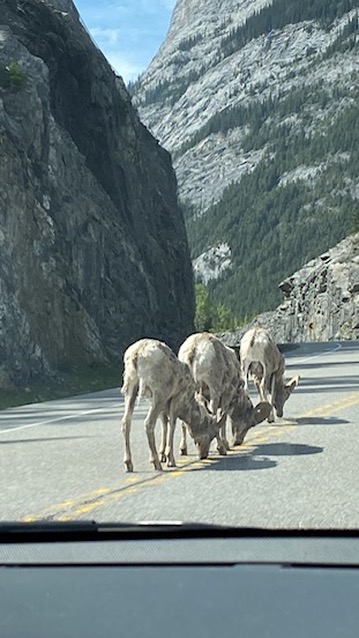
- Sheep on the road
-
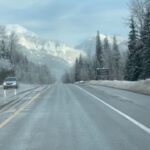
- Slick roads

-
- Prairie highways
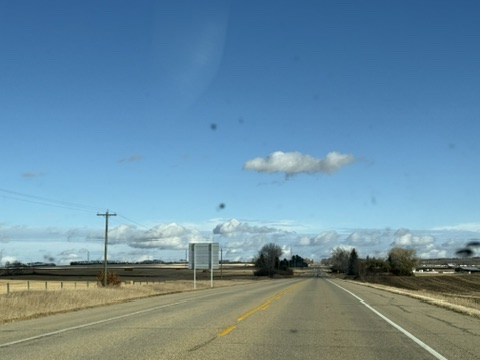
The scenery of the highway also changes. In the daylight, there might be blue skies and colourful fall leaves with long grasses, but at night, the scenery changes. Now, it’s only a stark black road, a few blue highway signs, and the white centre line which is visible. Animals come out and dart across the road. Even in the daylight, while driving you might encounter wild horses, mountain goats, moose, elk or sheep, which would be the equivalent of hitting a brick wall if you weren’t paying attention.
The settler-invader experience on the highway is contrasted with how Indigenous people view the same symbol. Highways have come to represent sites of mourning, grief, and immeasurable pain, as Indigenous women have gone missing along highways. These roads bring settlers into places they don’t belong, almost like a conveyor belt of misery, where the settler is free to leave, but the damage remains for the Indigenous people to sort out. I talk about the concept of the colonial moment, which can be felt pretty close to my home because I live only a few minutes from the Tsuut’ina reserve. My grandfather loves going to the Grey Eagle casino, and as you drive into the reserve, the settler passes through the colonial moment, the geographic point where the land was never colonized by settlers. It is the site of Canada’s original landscape.
Highways and the Canadian identity
In my research, I examined three Canadian crime novels: Bone Black by Carol Rose Goldeneagle, City of the Lost by Kelley Armstrong, and Still Mine by Amy Stuart because I was curious why the highway was so present in these books, why highways even appeared on the cover, and what the connection was between crime, highways, and the Canadian identity.
My research wasn’t a literature analysis (though I did do some), it was a critical reflexive where I examined what other authors did, and what I was doing, to engage with liminal spaces. I wanted to know what techniques I was using to convey the Canadian highway, and why I was compelled to use a liminal space in my novel in the first place. The opening scene of my book takes place on a highway, and I used Highway 8 from Calgary to Bragg Creek prominently throughout the narrative.
There are more liminal places than just highways (of course), but this symbol seemed to pop up in Canadian writing time and time again. There wasn’t a shortage of books featuring Canadian highways. And this makes sense when I think about my threads post. We film our highway journey’s unprompted. Why? Are we documenting something for future use? Are we revisiting these journey’s? Is there something so haunting, eerie or unsettling, that we need to capture these drives? Is it boredom? Awe? Confusion? Fear?
Margaret Atwood talks about Canadian’s constant negotiation with the weather in her academic book Survival where she categorizes Canadian literature into various themes related to survival. Atwood’s says Canada is a place where we “find ourselves lost” and Justin D. Edwards, another researcher on Gothic Studies, wrote that locating “Canadian-ness” produces anxiety. It could be that filming highways is part of our identity-seeking project.
Send me your highway videos
If you have Canadian highway videos you want to share to support my research, you can find me on Threads and post your videos!