Highways and liminal spaces in Canadian crime writing

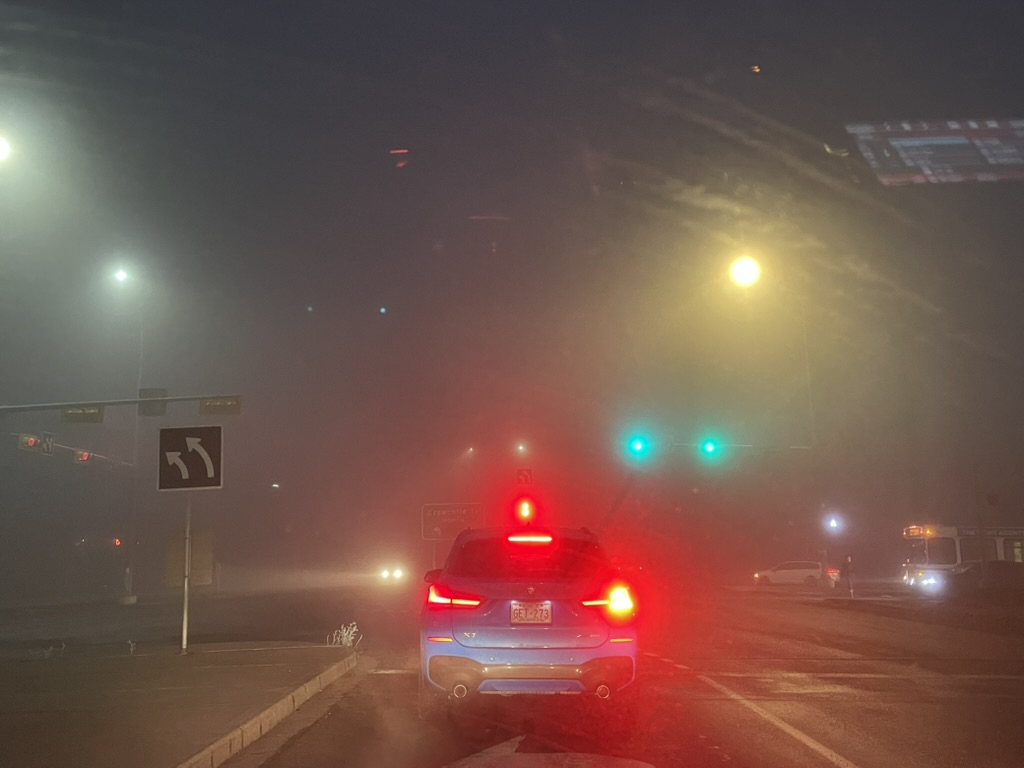
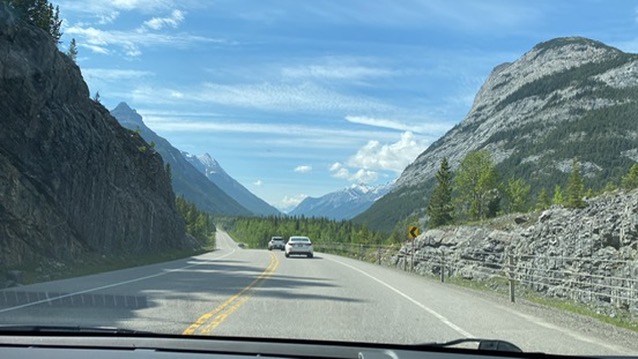
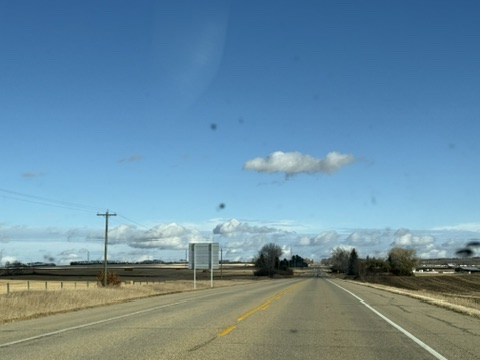
Yesterday, I had a post take-off on Threads when I said that my PhD is on the liminal qualities of the Canadian highway. I had asked if anyone had taken videos of any highway drives, that I would love to see them. Then, 144 comment later, I found myself with a treasure trove of highway videos from across Canada. Bleak snowy drives in Manitoba, crispy blue skies through the BC mountains, dark roads in Quebec piled with snow as plows inched ahead. Everyone had videos to share.


A thread post that reads: My PhD is on the liminal qualities of the Canadian highway, so if you took videos of your highway drives this Christmas, I would love to see them! Winter highways in Canada are eerie and haunting non-spaces and I use video recordings to help me write about them.


Some of my favourite videos were ones where there was music playing in the car, while the road ahead had skiffs of snow swirling across it. In one video, a Celine Dion song is playing. In another, the Radiohead song Spectre blares through the speakers. In a haunting video in Manitoba, someone recorded passing a car in a ditch with zero visibility. It wasn’t just videos either. Many people posted photos of their recent highway journeys.

Highways as liminal spaces

In my PhD thesis, I make the argument that highways are liminal spaces, and there is a reason they often appear as symbols in Canadian crime fiction. Canadians spend a lot of time on long highway drives, and these long drives become somehow connected to our national identity. In many cases, we don’t have a choice. If we want to go somewhere in Canada, we often need to drive.

In the comments, I also got asked about liminality. What is it? 

There is plenty of scholarly research on it, but skipping through the academic stuff, liminality is basically the production of unease. It is space, or geography, or a place, that produces anxiety. Something is unsettling about liminal places.

The Canadian highway, even in good weather, can be very unsettling. Our highway trips are long, and it’s not unusual to spend two or more hours on the highway. Sometimes four. Sometimes twelve. As you drive, you get further and further away from home even though you are technically still home. You’re in Canada.

Fears manifest

On the highway, garrison mentality kicks in – the fear of the unknown. Canada is mostly tight-knit garrisoned cities and communities, and once you leave the safety of the city, fears can manifest. It’s also dangerous to be driving on the highway. It’s not unusual to pass cars in the ditch, evidence of accidents, construction work, snow clearing plows, or large transport trucks. There are erratic drivers, dudes in trucks who swerve and tailgate aggressively, or trailers that are poorly hitched and driving too slow.

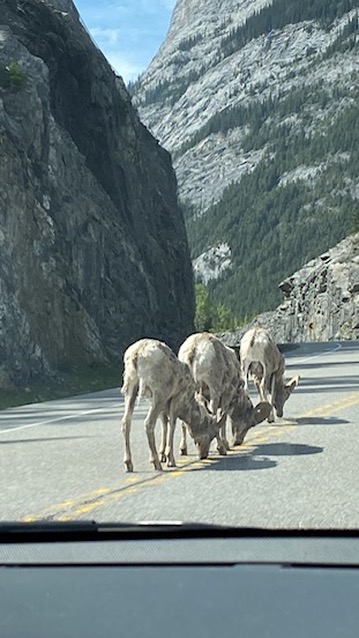
The scenery of the highway also changes. In the daylight, there might be blue skies and colourful fall leaves with long grasses, but at night, the scenery changes. Now, it’s only a stark black road, a few blue highway signs, and the white centre line which is visible. Animals come out and dart across the road. Even in the daylight, while driving you might encounter wild horses, mountain goats, moose, elk or sheep, which would be the equivalent of hitting a brick wall if you weren’t paying attention.

The settler-invader experience on the highway is contrasted with how Indigenous people view the same symbol. Highways have come to represent sites of mourning, grief, and immeasurable pain, as Indigenous women have gone missing along highways. These roads bring settlers into places they don’t belong, almost like a conveyor belt of misery, where the settler is free to leave, but the damage remains for the Indigenous people to sort out. I talk about the concept of the colonial moment, which can be felt pretty close to my home because I live only a few minutes from the Tsuut’ina reserve. My grandfather loves going to the Grey Eagle casino, and as you drive into the reserve, the settler passes through the colonial moment, the geographic point where the land was never colonized by settlers. It is the site of Canada’s original landscape.

Highways and the Canadian identity

In my research, I examined three Canadian crime novels: Bone Black by Carol Rose Goldeneagle, City of the Lost by Kelley Armstrong, and Still Mine by Amy Stuart because I was curious why the highway was so present in these books, why highways even appeared on the cover, and what the connection was between crime, highways, and the Canadian identity.

My research wasn’t a literature analysis (though I did do some), it was a critical reflexive where I examined what other authors did, and what I was doing, to engage with liminal spaces. I wanted to know what techniques I was using to convey the Canadian highway, and why I was compelled to use a liminal space in my novel in the first place. The opening scene of my book takes place on a highway, and I used Highway 8 from Calgary to Bragg Creek prominently throughout the narrative.

There are more liminal places than just highways (of course), but this symbol seemed to pop up in Canadian writing time and time again. There wasn’t a shortage of books featuring Canadian highways. And this makes sense when I think about my threads post. We film our highway journey’s unprompted. Why? Are we documenting something for future use? Are we revisiting these journey’s? Is there something so haunting, eerie or unsettling, that we need to capture these drives? Is it boredom? Awe? Confusion? Fear?

Margaret Atwood talks about Canadian’s constant negotiation with the weather in her academic book Survival where she categorizes Canadian literature into various themes related to survival. Atwood’s says Canada is a place where we “find ourselves lost” and Justin D. Edwards, another researcher on Gothic Studies, wrote that locating “Canadian-ness” produces anxiety. It could be that filming highways is part of our identity-seeking project.

Send me your highway videos

If you have Canadian highway videos you want to share to support my research, you can find me on Threads and post your videos!



How I’m preparing for my VIVA or PhD defence in creative writing

There is a date booked in the calendar. My viva, also known as my PhD defence, is scheduled for January 19, 2026 which is an auspicious date for me because it’s also my grandma’s birthday. Prior to submitting my thesis, I had enrolled in the Viva Survivor course offered by the university which outlined what a student could generally expect in their viva. The course was valuable in the sense that it cleared up frequent misconceptions about what a viva is (and what it isn’t). And the instructor gave some useful tips on how to prepare.


Figuring out what the viva is

The first step for me was really figuring out what a viva is. The University of Edinburgh tells students that along with the presentation of our written work, the viva forms the grounds for the award of our doctoral degree. It is essentially an oral examination of my doctoral thesis, but the term viva conjures up all sorts of ideas in the imagination. Will it be like something from a courtroom movie scene? Is it a presentation? Will I be grilled or cross-examined? The answer to these is – no.

My viva will take place in 50 George Square, the same building where all of my classes have been. Nothing scary about that. When I was preparing for my thesis submission, I actually had a detailed conversation with the admin team and asked if I could pick the room (something no one had requested before). But, I thought, the room itself might influence how I feel during the viva (after all, my research is on setting and place) so I selected the room on the third floor with the stunning view of Arthur’s Seat.

View of Arthur’s Seat

One of the key takeaways from the Viva Survivor course is that the oral examination is intended to make sure I am the author of the work. It might seem kind of obvious that I was the author, but particularly in the age of AI, the examiners need to know that I am the person who created my thesis. It was explained to me that the viva is more like a thoughtful discussion of my research. the motivation of the session is to explore my significant original contribution, unpack the how and why of my research, and examine my capability as a researcher.

What I’m doing to prepare

Given that my viva will be unique to me, it does make it slightly difficult to prepare for because no one previously can tell me exactly what I’ll be asked. My supervisor, Dr Jane Alexander, did send me some questions that she thinks will be likely to surface for the field of creative writing, and my thesis in particular.

For my novel, she suggested preparing to answer questions such as:

  • Your choice of the police procedural genre, its limitations and possibilities, and your approach to working within / pushing at the edges of that genre
  • The dynamics of plot, character, theme and literary place – how these intersected in your novel
  • Your process, and in particular the development of your instantaneous capturing technique – how might you further develop this, or how might other creative practitioners build on it?
  • What you’ve learned and how you’ve developed along the way
  • What you’ve learned from the writers you’ve focused on in the critical
  • Other influences on your creative work
  • Aspects of the novel I’m most proud of, and why; consider if there are any weak spots in the manuscript, and how you might talk about these
  • What your objectives are as an artist and where you want to go next


For my critical element, she also recommended preparing for these questions:


The viva podcast plan

Given that I can’t take anything but my thesis into the examination room, my plan to prepare is to essentially record a podcast of me replying to these questions. In that way, I can listen back to myself with a) zero preparation b) some preparation and c) with annotations and notes.

I want to hear myself talking through the questions, and looking for ways to enhance my responses and connect them to the page numbers of the thesis itself. I don’t want to reply like I’m referencing a dictionary, like “as you’ll see on page 191” but more so I know where in the text I’m pulling my ideas from.

My supervisor also encouraged me to think beyond my thesis, to demonstrate knowledge of outside of what is exactly on the page. I can assume the examiners have read the thesis, so they don’t need me to recite it back to them. Rather, the idea is to go “off script” in a sense and discuss ideas beyond what I have put into the document itself.


Annotations and further research

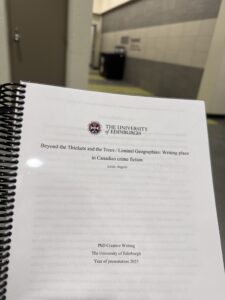
In addition to my podcast plan, I will also be making annotated notes within the document and highlighting certain sections that I think might be relevant (or likely to be discussed). I’ll also do a cursory scan for any new research into setting and creative writing that may have materialized since I submitted my thesis. I had the University of Calgary (where I have been teaching this past semester) print and spiral bind my thesis for me, so I have a nice copy to take with me into the room.

My printed and bound copy

If I have time, I also want to read the books of my examiners just to get familiar with their own writing style. I will have one external examiner from a UK university, an internal examiner from the University of Edinburgh, a non-examining chair who will make sure all guidelines are being followed, as well as my own supervisor who will essentially sit there and observe. It is optional to have your supervisor attend, and some students feel more comfortable without their supervisor present, but for me, I felt having my supervisor attend would be a meaningful experience.

My goal is to take about two weeks to prepare, spending about two hours a day on re-familiarizing myself with my research and noting down ideas. It’s not a study-cram-session at all, but rather a methodical process to dip back into my thesis and my research, and basically re-fresh my memory.

Practicing the format

The format of the viva usually lasts about two hours, and there are some extra things I want to do to make sure I have the experience that I want. For example, I want to pick a certain outfit and think about how I want to dress for the viva. I want to have a post-viva plan (some people go to the pub, or others might have a post-viva party). I also want to think about what I will need in the room, my thesis, a tea, a water, etc. I also want to re-read the viva guidelines and rules to make sure I’m following the right structure. For example, I want to understand if a question might be too far off-topic or if I need to alert the non-examining chair about something. My viva will be in the afternoon, so I want to think about what my morning ritual might be. Do I want to eat breakfast at my lucky cafe? Do I want to get my hair done? These are all small things that will influence my feelings for the day. I had a very specific goal for my NITS and VIVA submission, because I wanted to feel cool, calm and collected going in. I want the same for my viva.


So, what will I do after I finish my PhD?

There is a question I get all the time. Every year, for the past four years, someone has asked me some version of this mystifying question.

“But what will you do when you finish your PhD?”

“So obviously you’re going to teach at the university when you finish?”

“Tell me, have you got a plan for when you finish your PhD?”

I would like to believe that most people are genuinely curious about my career plans, but to be honest, this question isn’t always asked in good faith. Does anybody really care what I want to do with my PhD? What if I did it just for fun, and I don’t have any plans at all. Is that an acceptable answer? (No, it’s not — I tried that answer once and there was a lot of stunned confusion).

There is another sentiment behind this question. Because what people often want to know is: Why did I waste all that time and money on a PhD if I can’t actually use it for anything?

They want reassurance that the end result must be: money, fame, notoriety, something! That I must have some master plan. Because if I don’t have a plan, then clearly I did something incredibly stupid.

Wouldn’t that be funny?

If a PhD is meant to signify that I am smart, yet I wasted my money on something I can’t use, then – aha! I have actually done something very dim-witted. It is the absolute gotchcha moment for people who never really believed in me in the first place <insert shrug here>.

And it’s why — when someone asks me this question — I don’t usually tell them the truth. I don’t specifically lie, but if the question seems motivated by a deep-desire to prove that I have wasted my time and money, then it’s my belief that they don’t deserve to know the real answer. I know the cards I have been dealt at the poker game of post-doctoral life, but that doesn’t mean I have to show them. Throughout the whole doctoral process, I have learned that some people want the worst for me. They want me to fail. Or their support is only available until they are proven right when my plans don’t work out, and I’ll have to return to a corporate job so life can finally go back to “normal”. In their mind: I have made a bet, and lost. Thank god they didn’t make the same mistake as me!

But, I haven’t made any mistakes. And I haven’t failed. Even though, I have genuinely experienced a lot of failure. I’m not afraid of failure. And weirdly, I feel closer to my dreams now than I have before.

Still, I am cautious about who is allowed to hold my dreams. These are wiggly things. Squirmy manifestations that feel like holding jelly in your hands. Dreams are runny, and easily bruised. So, I am more careful about who deserves to hear them. It matters because there are people who pretend to care about my dreams, when what they really want is to simply feel smugly smarter than me for a moment.

Maybe a PhD is a waste, but mine wasn’t

Most people who start a PhD aren’t motivated by proving they are super-mega-smart. It’s not an IQ test. And it’s not like winning an Olympic medal. I was never looking for intelligence validation. And seriously, nobody really cares about getting the title of “doctor” especially since we aren’t medical doctors. I always say that anyone can start a PhD, but not everyone can finish one. And now that I’m nearing the end of my degree, I can tell you that the only qualities you need to finish a doctoral degree are: curiosity, self-motivation and time management.

These sound like pretty simple qualities but, take these traits to their most extreme ends, and push them to the absolute limit, and you will find that alot of people who do PhD’s for the wrong reason, will often give up.


The postgraduate room on the 4th floor 50 George Square


Can you be so self-motivated that you will work full-time, travel every six weeks, manage two calendars in two time zones, schedule your emails, and apply for over fifty scholarships knowing you will lose most of them? Can you be so curious that you will continue to pursue your craft in the face of unrelenting rejection for years, yet continue to believe in yourself when you see others succeeding, even while you are struggling? Can you challenge yourself to go deeper into your own creative practice while also getting multiple rejections on days like your birthday? Can you manage your time to maintain friendships, family, and romantic relationships? Will you remember holidays and birthdays, schedule down-time, and hug your friend when her mother dies, make her food, and send her the last recording you took of her mom a year later when she is under the weight of crushing sadness? Push these qualities to their most extreme and then ask if it’s all worth it just to be called doctor? The ego simply cannot last. I’ve never seen it. What I have seen are students who push ahead when they are miserable, and that misery is the opposite of what you want to feel.

Because in my mind, a PhD is a manifestation of self-love. There is so much love required to take on a project to pursue your own curiosity, interests, and inner-reflections. You must love yourself enough to know when to take a break, to reach out to your supervisor for help, to admit you don’t know something, and to talk to other PhD students who are in similar situations. A PhD is ultimately a pursuit of love. My own research is self-reflective: yes, I am writing a crime novel. And yes, I am examining the craft of setting and liminal places. But why?

I wanted to write a story set in my own city, and through that story, I wanted to examine my own internal beliefs, morals, and ethics. In some ways, I wanted to write about my own life, and my own upbringing in a city that hasn’t always been kind to me, or to others. I am motivated by a deeper understanding of how and why I am creative in the first place. Where does my creativity come from? And what tools am I using? What questions do I have about society, my nation, and my perceptions of what I am witnessing? Do I have the skill and creative capability to put my thoughts and feelings into a fictional narrative?

A PhD is about self-love

There are absolutely students who hate their PhD’s. They don’t like their supervisors. They are frustrated with their topic. Or they are unhappy with the results of their work. Maybe they were pressured or expected to complete higher education. Maybe their parents wanted it. Or they were scared to get a job in the “real world”. Maybe academia is a place where they feel comfortable and accepted, or maybe the university is a place to hide or seek refuge. PhD’s can be gruelling, frustrating, weird, and painful. But they can also be fruitful, inspiring, challenging, and illuminating.

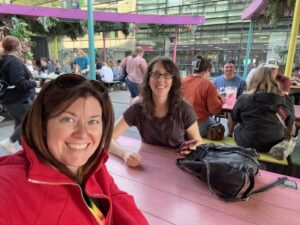
Hanging out with Nadine and talking PhD’s at the Edinburgh Street Food Market


I don’t think I could have made the decisions I made unless I pursued this degree out of a motivation for self-love and discovery. I have explored the inner recesses of my brain, and the corners of my heart, to really untangle the meaning behind my work, and the motivation for doing a doctoral degree in the first place. My choices are also not just mine. My mother, who I had lunch with today, never saw herself as someone smart or talented. She was never encouraged to go to school, or pursue her own creativity. Her coworkers think she is a millionaire for “paying for my education” but in reality, it is my hard work of applying for scholarships and grants, plus my own “future work” that is paying the bill. Nobody handed a blank cheque to me. And they never will.

But that hasn’t stopped me.

Even if my PhD results in nothing: No job. No money. No keynote speeches. No critical acclaim. It doesn’t matter. My degree was a pursuit of love. Of my own curiosity. Of my own artistic practice. I put pause on my artistic dreams in my teenaged years because I took the safer path of a career in advertising and then in public relations. Believe it or not, but I originally was accepted into art school for glassblowing. And I backed out of it. Then later, feeling slightly out of place at a PR agency in Toronto, I took a night class in culinary school because I love food and cooking (and quickly learned I was not cut out for it – mad respect to the chefs). It was years later when I got an undergraduate degree in communications before I did the crazy thing, and threw a hail mary, and applied for creative writing at Edinburgh. Was I always dreaming of an academic life? No. Never. I didn’t know it was even an option. I wanted to be a writer. And an artist. But a funny thing happened in Edinburgh. The city believed in me. And then an even more curious thing happened. I believed more in myself.


Deadpool leaked my teenaged superhero novel

Did Deadpool leak my novel? Yes and no. Frustrated with studios stalling on his project, Canadian Ryan Reynolds admitted leaking test footage to see if audiences would respond to his work. Now, he was a movie star before this happened, and clearly I am not. But leaking my novel feels exhilarating even if no one ends up reading it. I did have agent interest in the novel, but I wasn’t convinced that they were the right career fits for me. So, even though the book sat in my laptop for six years, and everyone tells you not to release your own work, I am in my punk era and I’m doing it anyways.

I’m crime writer now, but there is a pretty strong YA-to-Crime pipeline for authors. In 2016, I had this delusional dream to write a novel thinking it would get published immediately, and this would be my new career within the next year. I was going to be a YA writer and that-was-that.

I used the early chapters of a dystopian novel as part of my portfolio to get into the University of Edinburgh’s creative writing program, and they accepted me. Obviously this was a good sign, and my writing career was imminently awaiting, right? RIGHT?

Writing books is hard

So, flash forward to 2017 and writing a novel is harder than you think (unless you are AI and it takes 10 minutes). I wanted to write a great book – all by myself, thank you! So, I played around with my dystopian tech concept, and created some pretty cool characters, but I had no real plan and I was getting lost in my own narrative. I can’t remember if I was assigned a writing exercise, or if the idea popped into my head, but I switched gears after the first semester into a teenaged superhero concept where everyone had a useless superpower. That was my original idea anyway. Remember, this is the height of the Deadpool fandom, and Canadian snark was pretty popular. I was ready to capitalize on it. Thanks, Ryan!

The totally awesome book concept everyone would love

The concept was a comedy adventure-style novel that went from a small town to the neon streets of Tokyo, where a group of teenagers discover their own powers and have to fight off demons who are attempting to steal them. Of course, the central protagonist needed a mission – and while she was getting stronger, her dad was getting weaker – and a brain tumor threatened to kill him. With a demons tracking her every move, she takes a gamble to go in search of the cure–and her friends go along with her.

The dialogue is (what I think) makes the book sing. But obviously, I am not a teenager anymore, and I don’t talk Gen Z slang so I’ve run the risk of ageing out of who the reader might be. Is it a tween? a teen? a twenty-something? a nostalgic 30-something? But the book has important themes including sexual consent, a cast of diverse and queer characters, and a healthy teen-parent relationship.

I didn’t put loads of effort into querying after I passed on the one agent, so the novel went from something in my laptop, to something in my folder system, to being pushed out of my mind. I moved on to other writing.

A lightbulb moment when I was super pissed off

But, after I had a really frustrating experience with a writing prize contest which will not be named–I found a new resolve. My friends and family have been asking me constantly about my writing, when is the book out? when can I read it? And since 2018 I have had to tell them…nothing.

I decided to crack open my book folder, and re-read what I wrote. Was it horrible? That was the first question. And surprisingly, no… it was still pretty good. I did delete 257 instances of the word ‘just’ which was a smart idea. But, why not put it out there? At this point, I’m already running a ramshackle publishing company for short fiction (it is real) and my graphic design skills have drastically improved. Light bulb. Let’s leak it.

I was already ruminating about creating a pen name after that contest-that-wont-be-named. It was suggested that I was being too desperate, too pick-me, as a writer…it was suggested that I was not mysterious enough as a writer, so I thought a pen name would be a fresh start, and no one could judge it.

ChatGPT offered up some available names, a bio, and a backstory that sounds very similar to me but is also definitely not me (wink). At this point, I’ve been getting paralyzed by putting my writing out there because the feelings of being judged as a failure were messing with my brain.

But the pen name feels delightful. She doesn’t care what her former boss in 2012 thinks of her. She doesn’t have a boss. Or anyone. She’s a stock photo in the wilderness with a dog and a degree. She is happy and unbothered, hiking around, and writing her books. Good for her, I say.

Leaking versus publishing

Indie publishing is the new ‘cooler’ phrase for self-publishing on Amazon but much like Ryan Reynolds, I’m basically leaking the novel as an e-book. Leaking is cool. It’s punk. Nobody wants anything until someone else wants it, right? So, in my head, I am leaking this highly secure, super secretive, awesome book and hoping it finds a bunch of teenagers who don’t think my 2017 idea of a teen is too lame.

And you can get only unlock a copy by answering this riddle.


How to query a Canadian crime novel

I’m now at the point of the writer’s journey where I look back at what I’ve made, and think: it’s time to get serious. But querying agents is such a bizarre feeling. It is especially weird because I have spent my career in advertising and PR, so I have won and lost many pitches over the years.

But it is SO MUCH harder for my to pitch my own writing than it is for me to pitch someone else’s. I’ve been mulling this over because I want to know WHY!!!  And let me tell you: I have basically come full circle in my logic because I have essentially justified why PR exists in the first place.

It is so impossibly difficult to synthesize my own creative work because it is so much bigger in my head. I need someone else to do it. I need a professional.

I can’t erase what I know about the novel. Or what’s coming next. Bluntly put: I know too much.

How I solved my query problem

My process has been to reverse engineer my brain to allow me to pitch my own writing. To do that, I needed an alter ego for the novel. Not me, someone else. A pen name. A new identity. Enter ChatGPT. I asked for a gender neutral author name, something haunting and cryptic, and also available as a social media handle on instagram and threads.

I started asking my new alter ego a few questions:

  • Do I focus on the detective’s journey where she has left Edinburgh to pursue a big career change but finds nothing about failure and regret?
  • Do I talk about the haunting and liminal setting which is unique to the story?
  • Or do I bring up the political and societal issues operating in the narrative?
  • What about the multiple suspects, the true crime podcast, her best friend, or the obnoxious work colleague threatening her job?

Narrowing down the plot was a challenge. I had to focus the pitch (for my alter ego) so agents would understand the concept, the genre, the stakes, and the vibes. They needed to know where the story fits in the book market.

Believe it or not, the trick worked. I tricked myself into thinking someone else wrote my own novel.

A too big novel

One of the added challenges is that I am also using this novel as my PhD thesis. Thus, I have woven multiple layers of story-within-a-story so that the reader is getting a Michelin star 10-course meal with intricate elements dotted everywhere. It’s a big novel with a digestible word count, just like those tiny portions you get at a fine dining restaurant. Small, but flavourful. I pack a punch.

The novel is a story, but it’s also a commentary on police inaction and a toxic culture which reflects the harms of policing in Canada. I chose not to glorify the detective-as-hero. In fact, the critical element of my PhD thesis is a reflexive exercise on how I’m evolving the concept of a detective protagonist (and addressing the ‘hero’ problem) and how creative writers can build liminal spaces and create nebulous settings.

Reinventing what’s been done

I am also re-imagining what the police procedural can be. I’ve chosen to take the elements of crime writing from the golden age (think Sherlock Holmes) into the anti-racist age. That means confronting all the horrific shit police have been doing, including abusing their power and killing innocent people.

Black authors like Chester Himes have been writing about systemic racism in policing since the 1950s, and putting the victim’s perspective as a central element of the novel. But as far as I can tell, white authors are not doing the work to examine the same system from within, and I haven’t found examples of crime novels dismantling internalized prejudices of anti-blackness, or anti-Indigneous sentiments.

One thing I’ve experienced in the query trenches is disquieting feedback from UK agents. They have praised my novel and my writing, but so far, they are uncomfortable representing the issue-based criminal element. When it comes to discussions on race, “white discomfort” is nothing new, but it seems white nationalism is still swept under the rug in the UK. Whereas in Canada and the US, it’s parading and wailing around in the streets.

Querying is a task

All of this is to say that querying this type of novel is a task and this part of the writing journey isn’t for the weak. And the reality is, the agent who believes in this novel will also have to believe in me.

I’m also struggling with being extremely patient as I know it’s better to wait for a great agent than to go with whoever randomly comes my way. I need to have standards but sometimes it is very difficult turning down offers. I already declined representation back in 2018 for my YA novel, and now that I have recently re-read that manuscript, I am very glad I didn’t pursue it. My YA novel is pretty good, but it isn’t great. It isn’t earth-shattering. I still think it deserves a home on a bookshelf, or in an e-reader, but it’s not my debut novel. It’s destined for another alter ego somewhere out there.

And so I keep on writing

Here are some of the new novels/projects coming down the pipeline:

  • A university student accepts money transfers from a killer in her class. 💰Contemporary psychological thriller where Scream meets Venmo.
  • After a divorce, a 30-something woman gives her dream of being a Michelin-star chef another shot. But when a former flame opens a restaurant down the street, everything changes. A foodie-romance where The Bear meets The Notebook. (currently this is written as a film script)
  • A model disappears in Greece after an online date, and her high-powered friends go on a mission to find her – but they uncover a dark secret instead. Dark comedy/thriller. It’s My Sister the Serial Killer meets Sex and The City.


Lewis Hamilton and all the weird things that happened when I finished my novel

Beyond the Thickets and The Trees will be the first novel-length manuscript that I’ve ever really finished – as in, finished, finished. Since the age of 28, I’ve written two novels that I’ve given up on, was too confused by, or not confident enough in. My first novel embarrassingly titled Hacker Girl, is a dystopian tech novel set in London. The second book, The Strange Adventures of Jupiter Black, is an ensemble cast of high school teenagers who discover their town’s water supply is suppressing their superpowers. These books have sat drafted, usually around 90 per cent, and I’ve simply slowly drifted and slinked away from them. I’ve been too frozen by my own creative process to reach the finish line, and stumped by what to do next.

Reaching the final page

But now, I’ve come to the final page of Beyond the Thickets and The Trees, which I hope will be my debut novel. I wanted to talk openly about what the end process has been like for me because – shit got weird. Like real weird. Already the creative process is nebulous and confusing (like where do my ideas come from?) and I’ve been very thankful for my spontaneous way of working. I just floor it and something has always happened.

But that’s not how I finished my novel.

And the way that I have found my way through the murk of this book has been revealing, unusual, and bizarre. I had always assumed the way I had to finish my novel was the exact same way I started – relying on spontaneous creativity to get me through.

My books all start the same way

At the onset, I will get vivid bursts of a scene with fully-formed characters, so I can start writing from a blank page immediately. The energy from this burst is so powerful that it sustains me to the mid-point of a narrative: my characters have come to life, backstories written, settings created, and the story world pops out of my brain of its own accord. I’m often chasing it.

The opening line of the story is the most important thing I write. It is unmovable. And unchangeable. Then, at the middle stage, there’s a slow burn. Ideas build on eachother, they overlap, and many come to me at night. I keep a notepad by my pillow and scribble down all of the things that pop into my brain right before it wants to shut-off. The next morning I get the fun exercise of deciphering my illegible notes.

But the end?

I’ve never made it to the final lap before.

I had no clue something strange was about to happen.

Vivid and symbolic dreams

In the spring of 2024, I was pushing myself hard to finish the book by the end of the year. And around that time, I began having vivid dreams that centered around a prominent figure. Each dream was a variation of the same scenario. If this is a safe space, I’ll tell you about the scenarios and the dreams, their meaning (as I interpreted it), and why I think this happened to me.

I don’t know if I should be embarrassed by these dreams or not but – this was my subconscious talking, and she had a lot to tell me.

My large format acrylic painting titled Dripping Girl which I painted in 2002 at the age of 19.

In the dream scenario, I am always making a large format piece of art, and it is either a painting, a glass sculpture, or metal items to feature in glass sculptures, such as daggers or swords, and the production of my art puts me on a path of meeting Lewis Hamilton, a British Formula 1 driver. Many of these dreams take place at a glass studio in Venice, Italy—a place I have visited, but they have also taken place in other European cities, and the Canadian ski resort of Revelstoke, BC.

The dream always involves us discussing, viewing or interpreting the art pieces I have made, which are fully-formed, complete with titles and descriptions. In real-life, I can recall each ‘dream world’ piece with total clarity, and have envisioned over twenty pieces—which I have kept a list of in my Notes App.

I warned you this was gonna get weird.

My subconscious has even created poetry about these ‘dream world’ art pieces, some of which I have transcribed in real life including the poem, On a Champagne Day.

At first I thought, okay maybe the algorithm is serving me up too much F1 content, but the dreams have nothing to do with car racing. But they do have everything to do with race.

An anti-racist crime novel?

The Coutt’s Border Blockade from Feb. 2, 2022 (Source: CBC)


I didn’t immediately connect my dreams to the subject-matter in my novel, but as I reached the final chapter and looked back at the story, I could assess the vastness of my creative decision-making. The villain, both explicit and implicit, is the monstrous resurgence of white supremacy in Canada. It is an abrasive scouring pad that scratches at the characters, settings, and liminal spaces throughout the narrative. Over the past few years, I have seen the ominous and unsettling manifestation of how white supremacy operates in Canada, both hidden and in plain view. I’ve witnessed how easily it festers, gets justified and goes unaddressed. In writing a crime novel, I had to ask myself serious questions: Should a cop still be a hero? What then, was the purpose of a detective? And who is the hero? What are the structures I can put in place to take the crime novel from the golden age (with an all-knowing detective with intellectual prowess) and usher in an anti-racist age of crime fiction?

I was never going to make cop-aganda. But I also had no intention of conjuring a story so vague that nobody knew where I stood on the matter of police brutality, police inaction, and the cop-as-hero trope. If readers believe that art, and the artist, can be separated….in fiction, let me tell you. No they can’t. I have to answer for the decisions I made in this novel, full-stop.

As a writer, and a crime writer at that, I was not going to function as a silent sentinel for white supremacy. Artistically, it would have been stupid and foolish to blindly re-create a systemically oppressive system and chalk it up to the status quo, or out of boredom and laziness, be tempted by the cop-as-hero trope because …that’s how white systems work. Margaret Atwood asks, “who does our boredom serve?” Systems thrive when left uninterrupted and unquestioned. Even if I failed at my goal, or fell short of what I aimed to create — I feel I got as close as I could, with the talent I have, to push the crime novel forward.

Taking on daggers

I knew from the start that I wanted to explore the ugly manifestation of white supremacy, themes of anti-racism, along with sexism and discrimination. But, I still didn’t understand the appearance of Lewis Hamilton and his connection to these vivid art pieces in my dreams. So, I did something unconventional and I asked ChatGPT (Can A.I. do dream analysis? Time to find out) – And this is what it said.

“The focus on creating art inspired by racial abuse suggests a profound empathy and desire to advocate for justice and awareness. From a young age, Hamilton encountered racial abuse and discrimination, both in his personal life and within the racing community. He has spoken about being the only person of colour at racing events, facing racial slurs, and experiencing systemic biases that made his journey more challenging. Hamilton has often been a lone advocate for diversity within Formula One, facing resistance when pushing for inclusivity.” – ChatGPT

Oof. That hit me. Hamilton had been silently taking on daggers for over twenty years, doing his “talking on the track” – possibly terrified of doing it into a microphone. Speaking out as a young driver meant risking sponsorships, his job, his dream. Behind the scenes, he was advocating for change within a systemic hellscape that he couldn’t always see, but he could sure as hell feel. It conjured the same energy and emotions that kicked off my story in the first place. Injustice. Trauma. Fear. The very small shards of abuse he was willing to share publicly sounded like beyond bullying to me, it felt like cruelty.

I sat with these feelings, and noticed that ChatGPT had served me up a YouTube video from 2023, featuring Hamilton on a podcast with Jay Sheddy. At first I thought, oh god, this thing is an hour long. But, I was still trying to understand the symbolic role Hamilton was playing. Was it simply that I was getting inspiration from a professional athlete or cultural figure? That seemed too surface-level, and too simple.


Is there closure at the end? or just a new beginning?

While intermittently watching Hamilton’s interview, I created the final scenes, wrote the last words of dialogue, and typed out the final phrase in the novel. It took me several days, not only to finish watching the interview (I paused many times) but also to squeeze out whatever I had in me, to shape the ending of the story. At the same time, I wrote a much longer journal entry on how I connected significantly and seriously, with the stories Hamilton was willing to share.

The novel was done.

But it was not the ending I had first anticipated.

It was something more haunting, more intentional and metaphorical than the straight-forward end plot I had once drafted. Was there a bigger symbolic meaning behind Hamilton’s appearance in these dreams? Were his life experiences tangling with my own, and contributing to how the novel finally concluded? What else was the dream world demanding I make? I can’t be certain.

Hamilton’s restrained stories, cautious speech, and guarded emotions are warranted. If he is speaking out now, perhaps that comfort level has changed over the years. As a writer, I’m in a different situation. It’s important that I tackle my own fears, question my own perceptions, and speak into that microphone. When I get that pang of doubt, I pay attention. I remind myself of what is on the other side of fear: freedom.

But, despite my confidence at times, my fears are real and warranted too. I’m not from a wealthy family, and I have no financial safety net to catch me if I stumble. My early childhood was spent in a low-income housing block, with a single parent, and very few girls my age. I was often in the minority group, a white kid surrounded by new immigrant families and neighbours who were making Canada their new home. But, I never found the discrimination and pain that Hamilton describes in his childhood council estate, my community was full of kindness, tolerance and generosity. And we were all in alliance against our common enemy — the building fire alarm.

Over the years, I have pushed through my fears. At 17, I moved across the country to go to an arts college. After a break-up, I backpacked solo through Australia and New Zealand, and years later, trekked for days through the remote forest of Japan. At 25, I learned to scuba dive and snowboard. In my early 30’s, I moved to Scotland with six weeks notice to do a master’s degree. But speckled in these risks have been periods of extreme caution, sticking to a day job, and working second (and third) jobs on top of it to pay for my own education. I have already sacrificed a lot to pursue a dream of being a writer. Other blog posts will tell you about how hard I fought for scholarships and funding. Some people in my life took it personally that I dared to rise above my station and chase a higher education – a master’s and a PhD at a prestigious university overseas. Such dreams never find their way into those draughty housing blocks on the stark Canadian landscape.

But I said, fuck it.

At this moment, there is no way of knowing if this novel will get published. I hope it does.

Because when I read it, I hear my voice saying all the things I want to say. I see all those hidden details where I’ve expressed how I’ve long felt. I am not the protagonist in the story – that is far from the truth and much too simple. I am the whole world of the novel. I’m every dish in the sink, every mug of tea that’s gone cold, and every bleak and snowy highway ahead.

I’ve put everything of myself in those pages. There’s nothing else for me to do.