During the development process, we worked with sensors to capture interaction data, particularly subtle changes related to breathing and pressure.
At an early stage, we expected the sensor data to be straightforward and easy to use. However, the actual output appeared as continuous, fluctuating waveforms rather than clear, discrete values. This made it difficult to directly integrate the data into our interaction system.
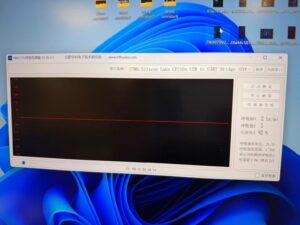
When connecting the sensors to TouchDesigner, this issue became more apparent. Our interaction logic required stable and readable inputs, but the raw data was too complex and inconsistent to be used effectively.
Instead of trying to preserve all the original data, we decided to simplify it. We translated the continuous signals into basic numerical values by defining thresholds. For example, certain ranges of data were converted into distinct states, such as different levels of intensity.

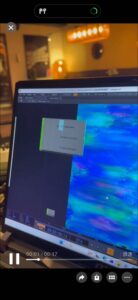
This process was not just a technical adjustment, but also a conceptual decision. By simplifying the data, we were effectively deciding what aspects of the interaction were important and what could be ignored.
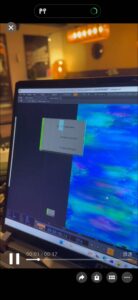
Through this, I realized that data in interactive systems is not neutral. It is always shaped, filtered, and interpreted before becoming part of an experience. What the audience encounters is not raw data, but a designed version of it.
Throughout the project, my contributions focused on device design and assembly, user testing observation, data organisation, and on-site installation.
Working on the physical construction of the installation required translating abstract ideas into tangible structures. At the same time, dealing with sensors and data meant constantly negotiating between technical limitations and desired interaction outcomes.
During user testing and the exhibition, observing participants became an important part of the process. Rather than evaluating whether the system worked “correctly,” I focused on how people behaved within it—how they hesitated, explored, or adapted to uncertainty.
Looking back, the project was not only about building a functioning system, but also about shaping an experience through a combination of material, technical, and behavioural decisions. Each part of the process influenced how the final interaction was perceived.